EPHA1-special Monoklonaler Antikörper
EPHA1-special Monoklonal Antikörper für ELISA
Wirt / Isotyp
Maus / IgG1
Getestete Reaktivität
human
Anwendung
ELISA
Konjugation
Unkonjugiert
CloneNo.
5F9G11
Kat-Nr. : 60155-3-Ig
Synonyme
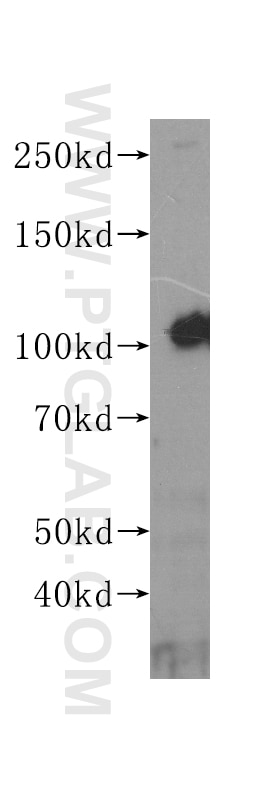
Geprüfte Anwendungen
Produktinformation
60155-3-Ig bindet in ELISA EPHA1-special und zeigt Reaktivität mit human
| Getestete Reaktivität | human |
| Wirt / Isotyp | Maus / IgG1 |
| Klonalität | Monoklonal |
| Typ | Antikörper |
| Immunogen | Peptid |
| Vollständiger Name | EPH receptor A1 |
| Berechnetes Molekulargewicht | 108 kDa |
| GenBank-Zugangsnummer | BC130291 |
| Gene symbol | EPHA1 |
| Gene ID (NCBI) | 2041 |
| Konjugation | Unkonjugiert |
| Form | Liquid |
| Reinigungsmethode | Protein-G-Reinigung |
| Lagerungspuffer | PBS with 0.02% sodium azide and 50% glycerol |
| Lagerungsbedingungen | Bei -20°C lagern. Nach dem Versand ein Jahr lang stabil Aliquotieren ist bei -20oC Lagerung nicht notwendig. 20ul Größen enthalten 0,1% BSA. |
Hintergrundinformationen
EPHA1, also named as EPH, EPHT and EPHT1, belongs to ephrin receptor subfamily of the protein-tyrosine kinase family. EPH and EPH-related receptors have been implicated in mediating developmental events, particularly in the nervous system. Receptors in the EPH subfamily typically have a single kinase domain and an extracellular region containing a Cys-rich domain and 2 fibronectin type III repeats. Ligands in the ephrin-A subclass, including the prototype family member ephrin-A1 (B61), are membrane associated through glycosylphosphatidyl-inositol linkages, whereas ephrin-B subclass consists of ligands with transmembrane domains. The general role of the Eph family is in mediating repulsive cell-cell interaction.

