

Tested Applications
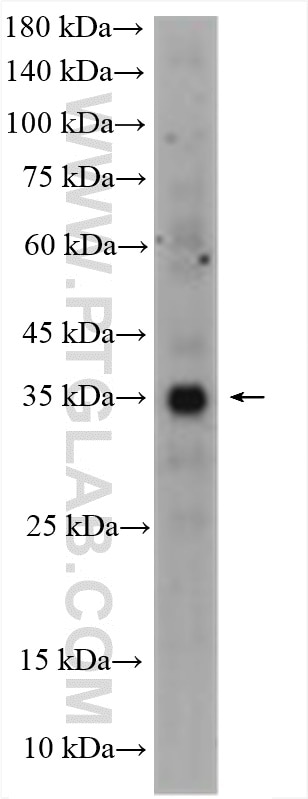
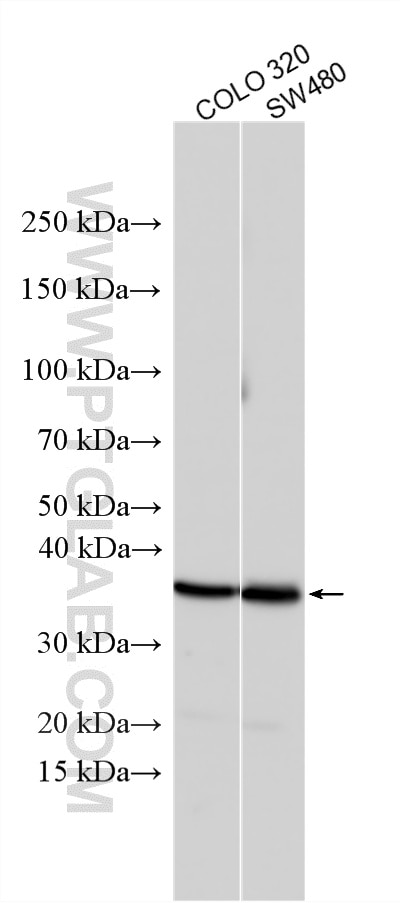
| Positive WB detected in | COLO 320 cells, pig tonsil tissue |
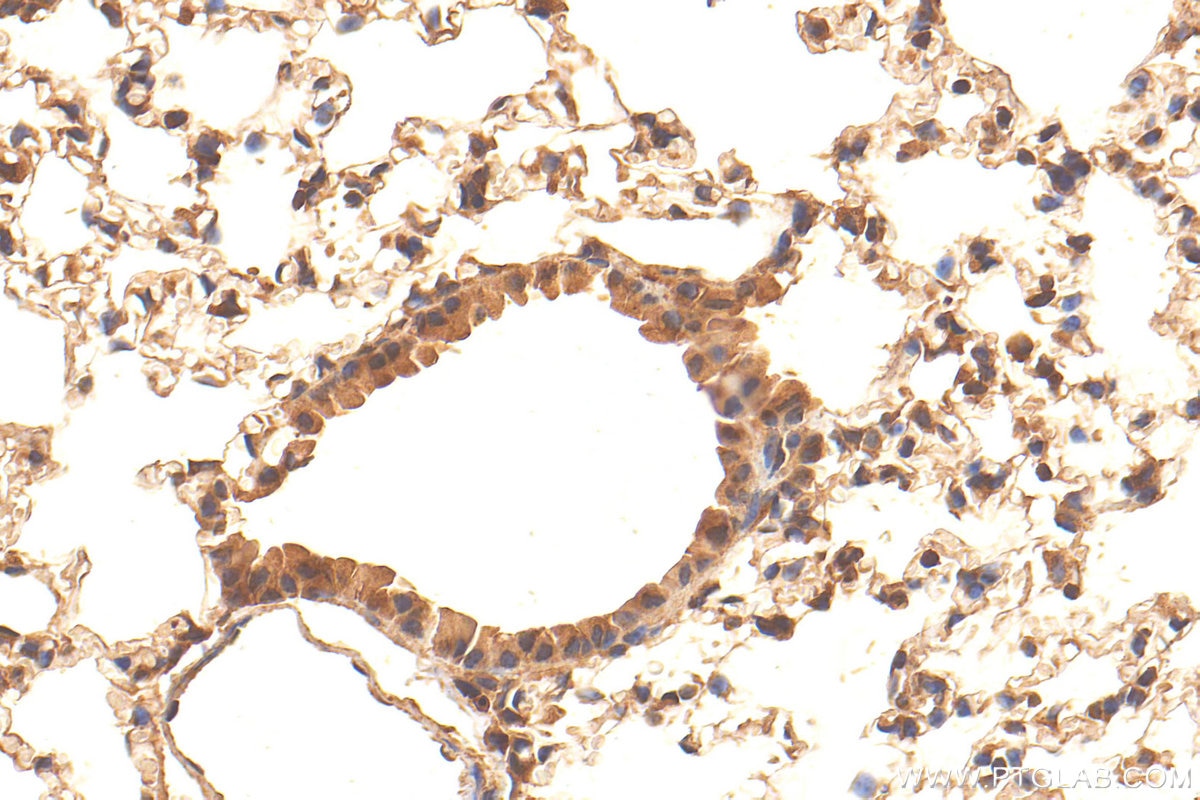
| Positive IHC detected in | mouse lung tissue Note: suggested antigen retrieval with TE buffer pH 9.0; (*) Alternatively, antigen retrieval may be performed with citrate buffer pH 6.0 |
Recommended dilution
| Application | Dilution |
|---|---|
| Western Blot (WB) | WB : 1:500-1:1000 |
| Immunohistochemistry (IHC) | IHC : 1:200-1:1000 |
| It is recommended that this reagent should be titrated in each testing system to obtain optimal results. | |
| Sample-dependent, Check data in validation data gallery. | |
Product Information
11594-1-AP targets ACP5 in WB, IHC, IF, ELISA applications and shows reactivity with human, mouse, pig samples.
| Tested Reactivity | human, mouse, pig |
| Cited Reactivity | human, mouse, rat |
| Host / Isotype | Rabbit / IgG |
| Class | Polyclonal |
| Type | Antibody |
| Immunogen |
CatNo: Ag2065 Product name: Recombinant human ACP5 protein Source: e coli.-derived, PGEX-4T Tag: GST Domain: 1-325 aa of BC025414 Sequence: MDMWTALLILQALLLPSLADGATPALRFVAVGDWGGVPNAPFHTAREMANAKEIARTVQILGADFILSLGDNFYFTGVQDINDKRFQETFEDVFSDRSLRKVPWYVLAGNHDHLGNVSAQIAYSKISKRWNFPSPFYRLHFKIPQTNVSVAIFMLDTVTLCGNSDDFLSQQPERPRDVKLARTQLSWLKKQLAAAREDYVLVAGHYPVWSIAEHGPTHCLVKQLRPLLATYGVTAYLCGHDHNLQYLQDENGVGYVLSGAGNFMDPSKRHQRKVPNGYLRFHYGTEDSLGGFAYVEISSKEMTVTYIEASGKSLFKTRLPRRARP Predict reactive species |
| Full Name | acid phosphatase 5, tartrate resistant |
| Calculated Molecular Weight | 325 aa, 37 kDa |
| Observed Molecular Weight | 35 kDa |
| GenBank Accession Number | BC025414 |
| Gene Symbol | ACP5 |
| Gene ID (NCBI) | 54 |
| RRID | AB_2877781 |
| Conjugate | Unconjugated |
| Form | Liquid |
| Purification Method | Antigen affinity purification |
| UNIPROT ID | P13686 |
| Storage Buffer | PBS with 0.02% sodium azide and 50% glycerol, pH 7.3. |
| Storage Conditions | Store at -20°C. Stable for one year after shipment. Aliquoting is unnecessary for -20oC storage. 20ul sizes contain 0.1% BSA. |
Background Information
ACP5(acid phosphatase 5, tartrate resistant) is also named as TRAP, TrATPase and belongs to the metallophosphoesterase superfamily. It is an iron-containing glycoprotein with a molecular mass of approximately 34 kD. ACP5 is a histochemical marker of the osteoclast. It is also characteristic of monohistiocytes, particularly alveolar macrophages, and is associated with diverse pathological conditions, including hairy cell leukemia and AIDS encephalopathy.(PMID:10639488).
Protocols
| Product Specific Protocols | |
|---|---|
| IHC protocol for ACP5 antibody 11594-1-AP | Download protocol |
| WB protocol for ACP5 antibody 11594-1-AP | Download protocol |
| Standard Protocols | |
|---|---|
| Click here to view our Standard Protocols |
Publications
What published studies show
The anti-ACP5 (TRAP5) antibody (Cat# 11594-1-AP) has 42 total citations published in journals including Nature Communications, Bioactive Materials, Advanced Science, FASEB Journal, Hypertension, iScience, Journal of Advanced Research, Redox Biology, Frontiers in Pharmacology, International Immunopharmacology, and Bone. Associated research fields include osteoclastogenesis, osteoporosis, periodontitis, bone regeneration, inflammatory bone disease, rheumatoid arthritis, pulmonary fibrosis, and oncology (lung adenocarcinoma, gastric cancer, giant cell tumor of bone).
| Species | Application | Title |
|---|---|---|
Bioact Mater Bacteria-responsive DNAgel system for targeted delivery of photothermally enhanced MXene/MoS(2) in the treatment of pyogenic osteomyelitis. | ||
Bioact Mater Bisphosphonate-based hydrogel mediates biomimetic negative feedback regulation of osteoclastic activity to promote bone regeneration. | ||
Bioact Mater An ultrasound-driven PLGA/Zn-KNN hybrid piezoelectric scaffold with direct and immunoregulatory antibacterial activity for bone infection | ||
Bone Res Human peripheral osteoclast-precursor-development patterns reveal the significance of RPS17-dependent ribosome synthesis to Ankylosing Spondylitis lesions. | ||
Nat Commun Tartrate-resistant acid phosphatase 5 promotes pulmonary fibrosis by modulating β-catenin signaling.
| ||
Int J Oral Sci Periodontitis-associated salivary microbiota exacerbates systemic osteoclastogenesis via gut modulation and tryptophan metabolism suppression in ovariectomized mice. |

