

Tested Applications
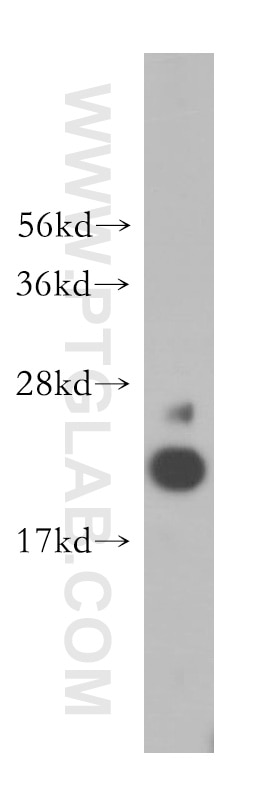
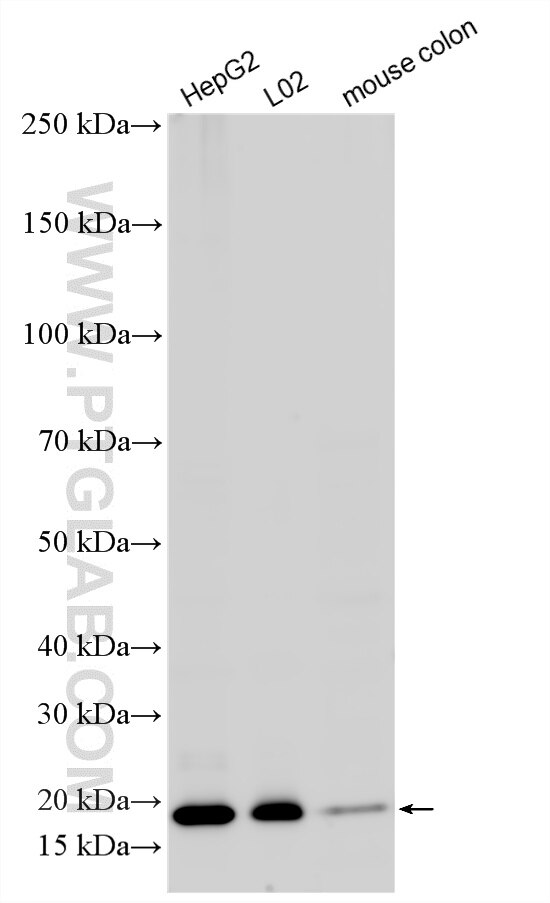
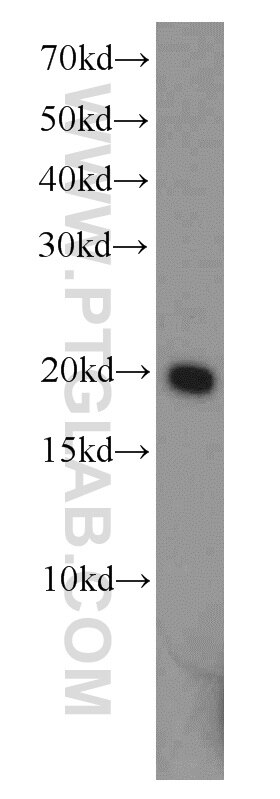
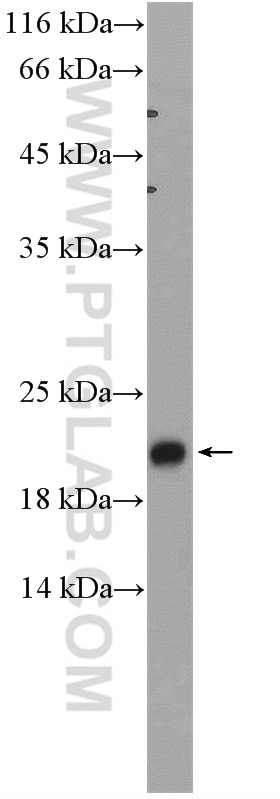
| Positive WB detected in | HepG2 cells, human testis tissue, rat colon tissue, L02 cells, mouse colon tissue |
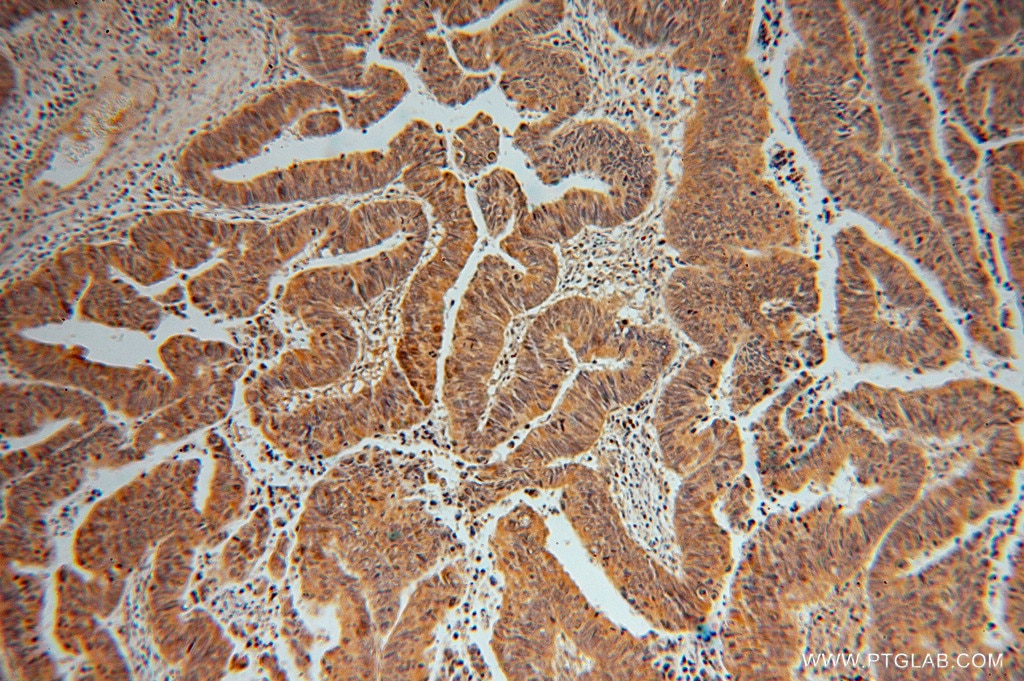
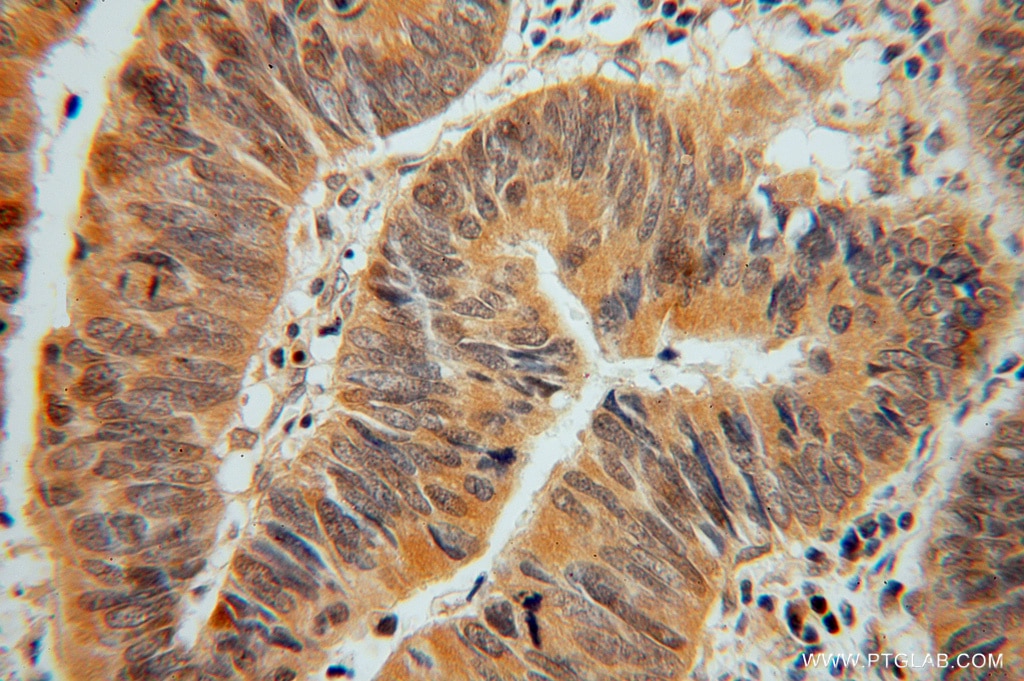
| Positive IHC detected in | human colon cancer tissue Note: suggested antigen retrieval with TE buffer pH 9.0; (*) Alternatively, antigen retrieval may be performed with citrate buffer pH 6.0 |
Recommended dilution
| Application | Dilution |
|---|---|
| Western Blot (WB) | WB : 1:1000-1:6000 |
| Immunohistochemistry (IHC) | IHC : 1:20-1:200 |
| It is recommended that this reagent should be titrated in each testing system to obtain optimal results. | |
| Sample-dependent, Check data in validation data gallery. | |
Product Information
15133-1-AP targets ADI1 in WB, IHC, ELISA applications and shows reactivity with human, mouse, rat samples.
| Tested Reactivity | human, mouse, rat |
| Cited Reactivity | human |
| Host / Isotype | Rabbit / IgG |
| Class | Polyclonal |
| Type | Antibody |
| Immunogen |
CatNo: Ag7274 Product name: Recombinant human ADI1 protein Source: e coli.-derived, PGEX-4T Tag: GST Domain: 1-179 aa of BC001467 Sequence: MVQAWYMDDAPGDPRQPHRPDPGRPVGLEQLRRLGVLYWKLDADKYENDPELEKIRRERNYSWMDIITICKDKLPNYEEKIKMFYEEHLHLDDEIRYILDGSGYFDVRDKEDQWIRIFMEKGDMVTLPAGIYHRFTVDEKNYTKAMRLFVGEPVWTAYNRPADHFEARGQYVKFLAQTA Predict reactive species |
| Full Name | acireductone dioxygenase 1 |
| Calculated Molecular Weight | 21 kDa |
| Observed Molecular Weight | 20 kDa |
| GenBank Accession Number | BC001467 |
| Gene Symbol | ADI1 |
| Gene ID (NCBI) | 55256 |
| RRID | AB_2305014 |
| Conjugate | Unconjugated |
| Form | Liquid |
| Purification Method | Antigen affinity purification |
| UNIPROT ID | Q9BV57 |
| Storage Buffer | PBS with 0.02% sodium azide and 50% glycerol, pH 7.3. |
| Storage Conditions | Store at -20°C. Stable for one year after shipment. Aliquoting is unnecessary for -20oC storage. 20ul sizes contain 0.1% BSA. |
Background Information
ADI1(acireductone dioxygenase 1 ) is also named as SIPL, ARD, APL1, HMFT1638, MTCBP-1, FLJ10913, MTCBP1 and belongs to the acireductone dioxygenase (ARD) family. It catalyzes the formation of formate and 2-keto-4-methylthiobutyrate (KMTB) from 1,2-dihydroxy-3-keto-5-methylthiopentene (DHK-MTPene).The downregulation of ADI1 protein expression in human prostate cancer specimens argues that ADI1 potentially inhibits the growth that occurs during prostate cancer progression(PMID:17786183). It has 2 isoforms produced by alternative splicing.
Protocols
| Product Specific Protocols | |
|---|---|
| IHC protocol for ADI1 antibody 15133-1-AP | Download protocol |
| WB protocol for ADI1 antibody 15133-1-AP | Download protocol |
| Standard Protocols | |
|---|---|
| Click here to view our Standard Protocols |
Publications
What published studies show
The ADI1 Polyclonal antibody (Cat# 15133-1-AP) has 3 total citations. These appear in Journal of Cell Biology, Oncotarget, and Biochemical and Biophysical Research Communications. The associated research fields include pancreatic tumor cell metastasis, hepatoma targeting and oncolytic therapy, and experimental pancreatitis susceptibility.
| Species | Application | Title |
|---|---|---|
J Cell Biol Pancreatic tumor cell metastasis is restricted by MT1-MMP binding protein MTCBP-1. | ||
Oncotarget Arginine deiminase expressed in vivo, driven by human telomerase reverse transcriptase promoter, displays high hepatoma targeting and oncolytic efficiency. | ||
Biochem Biophys Res Commun Clusterin and Pycr1 alterations associate with strain and model differences in susceptibility to experimental pancreatitis. |

