
Tested Applications
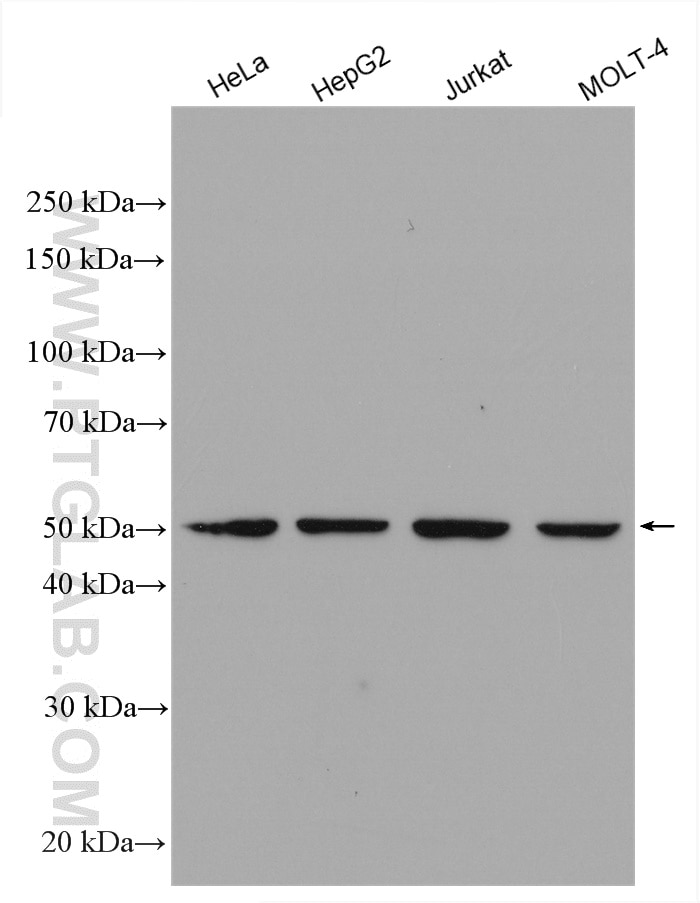
| Positive WB detected in | HeLa cells, HepG2 cells, Jurkat cells, MOLT-4 cells |
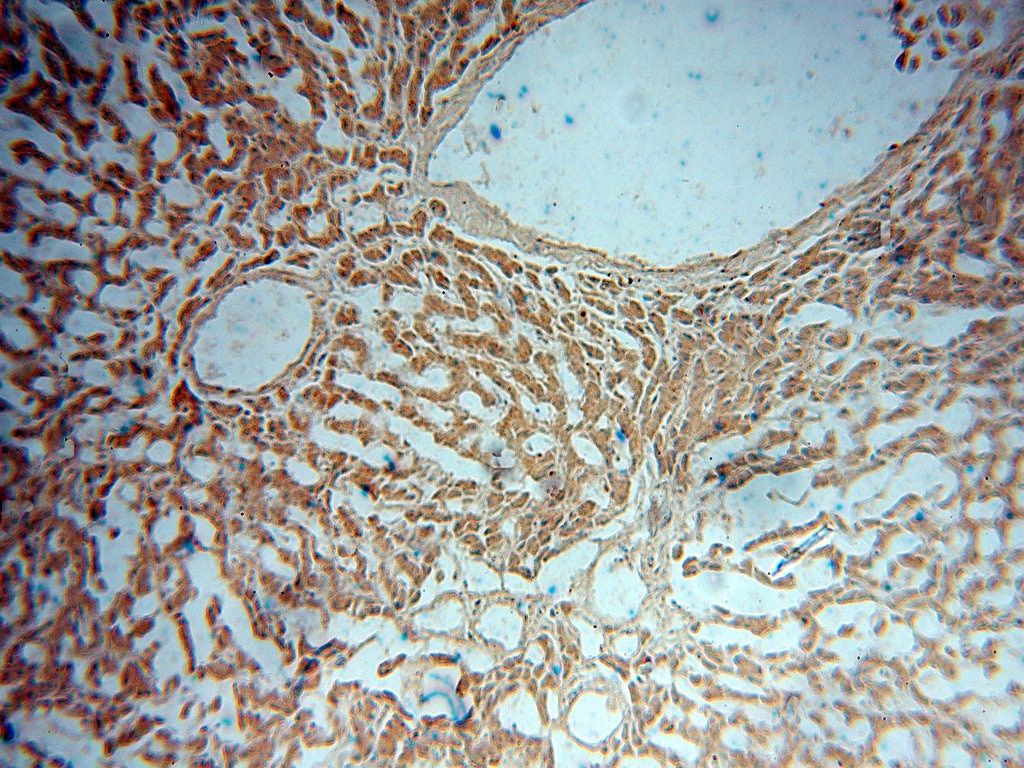
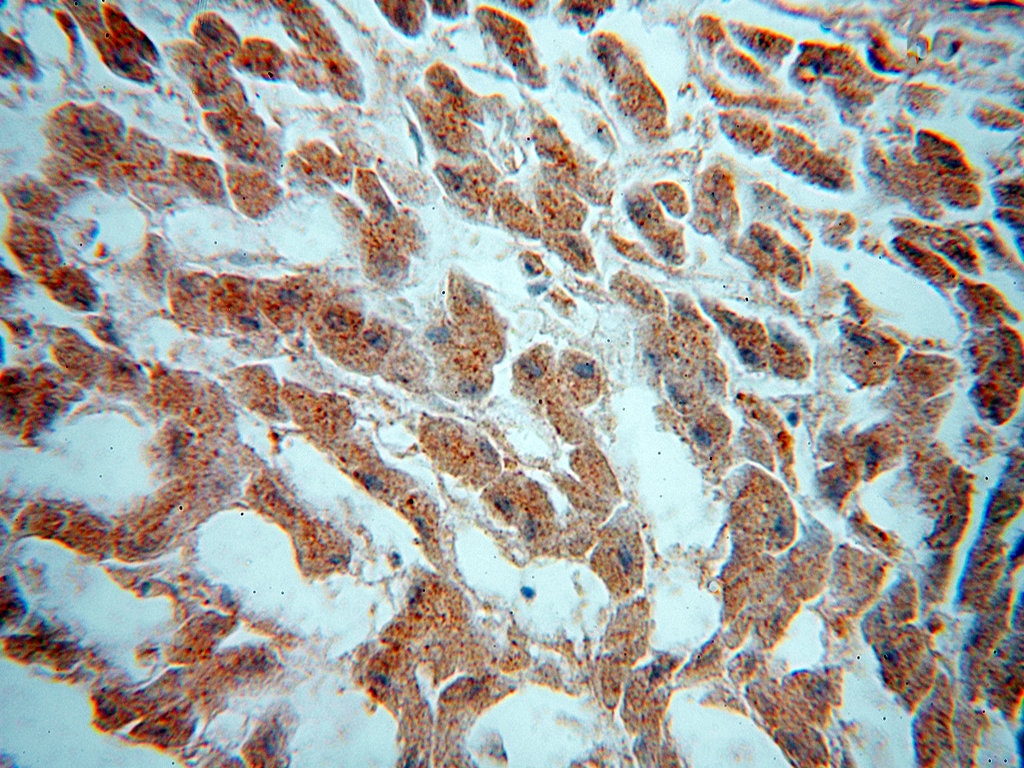
| Positive IHC detected in | human liver tissue Note: suggested antigen retrieval with TE buffer pH 9.0; (*) Alternatively, antigen retrieval may be performed with citrate buffer pH 6.0 |
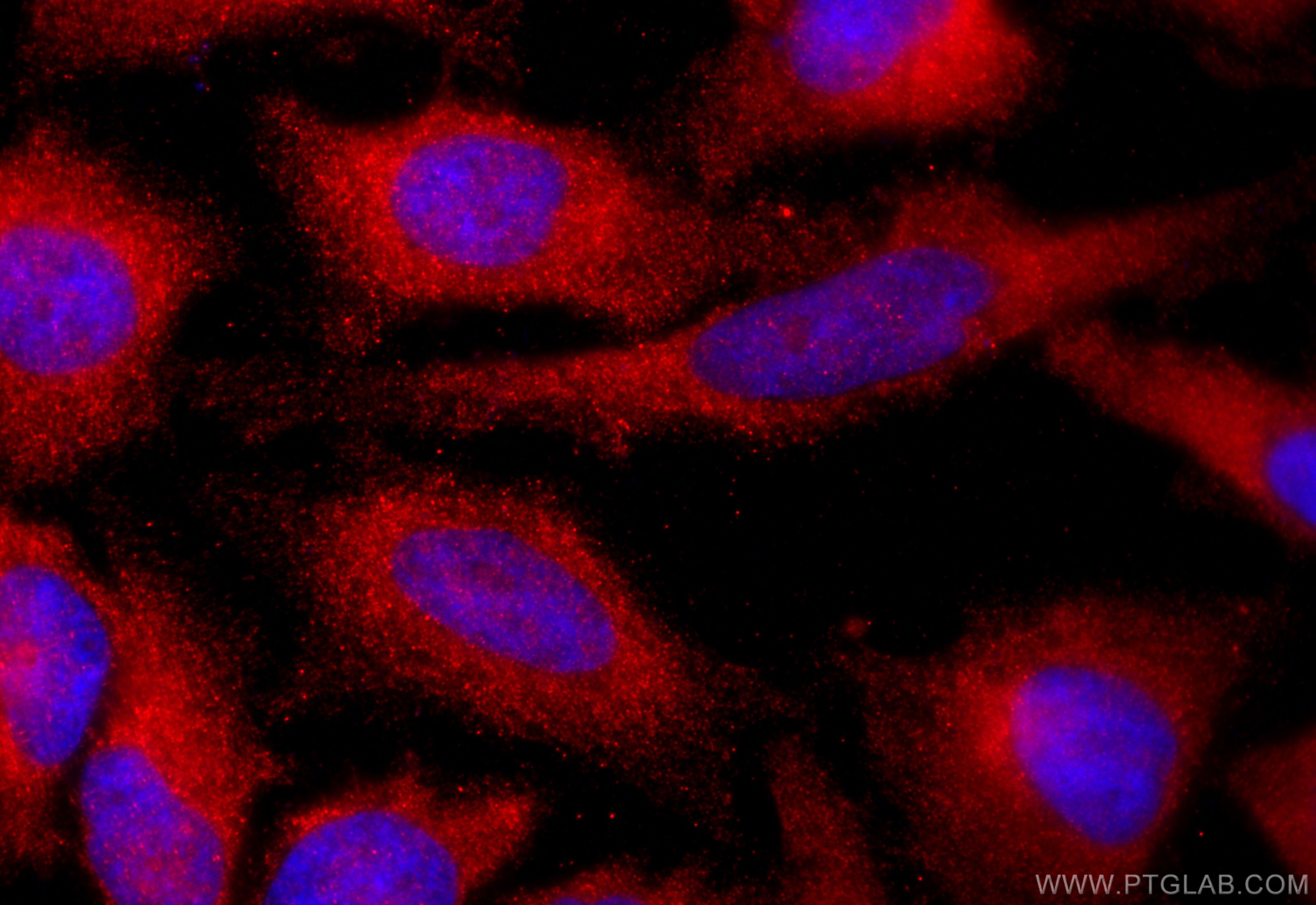
| Positive IF/ICC detected in | HeLa cells |
Recommended dilution
| Application | Dilution |
|---|---|
| Western Blot (WB) | WB : 1:500-1:2000 |
| Immunohistochemistry (IHC) | IHC : 1:20-1:200 |
| Immunofluorescence (IF)/ICC | IF/ICC : 1:50-1:500 |
| It is recommended that this reagent should be titrated in each testing system to obtain optimal results. | |
| Sample-dependent, Check data in validation data gallery. | |
Product Information
15639-1-AP targets ADPGK in WB, IHC, IF/ICC, ELISA applications and shows reactivity with human, mouse, rat samples.
| Tested Reactivity | human, mouse, rat |
| Cited Reactivity | human, mouse |
| Host / Isotype | Rabbit / IgG |
| Class | Polyclonal |
| Type | Antibody |
| Immunogen |
CatNo: Ag8105 Product name: Recombinant human ADPGK protein Source: e coli.-derived, PGEX-4T Tag: GST Domain: 148-497 aa of BC006112 Sequence: EFPGAQHYVGGNAALIGQKFAANSDLKVLLCGPVGPKLHELLDDNVFVPPESLQEVDEFHLILEYQAGEEWGQLKAPHANRFIFSHDLSNGAMNMLEVFVSSLEEFQPDLVVLSGLHMMEGQSKELQRKRLLEVVTSISDIPTGIPVHLELASMTNRELMSSIVHQQVFPAVTSLGLNEQELLFLTQSASGPHSSLSSWNGVPDVGMVSDILFWILKEHGRSKSRASDLTRIHFHTLVYHILATVDGHWANQLAAVAAGARVAGTQACATETIDTSRVSLRAPQEFMTSHSEAGSRIVLNPNKPVVEWHREGISFHFTPVLVCKDPIRTVGLGDAISAEGLFYSEVHPHY Predict reactive species |
| Full Name | ADP-dependent glucokinase |
| Calculated Molecular Weight | 497 aa, 54 kDa |
| Observed Molecular Weight | 51 kDa |
| GenBank Accession Number | BC006112 |
| Gene Symbol | ADPGK |
| Gene ID (NCBI) | 83440 |
| RRID | AB_2224911 |
| Conjugate | Unconjugated |
| Form | Liquid |
| Purification Method | Antigen affinity purification |
| UNIPROT ID | Q9BRR6 |
| Storage Buffer | PBS with 0.02% sodium azide and 50% glycerol, pH 7.3. |
| Storage Conditions | Store at -20°C. Stable for one year after shipment. Aliquoting is unnecessary for -20oC storage. 20ul sizes contain 0.1% BSA. |
Background Information
ADP-dependent glucokinase (ADPGK) has frst been described 1994 in hyperthermophilic archaea as a novel glucose-phosphorylating enzyme dependent on ADP (adenosine diphosphate) instead of ATP (adenosine triphosphate). Highest ADPGK expression is found in immune cells of both myeloid and lymphoid lineages. Catalyzes the phosphorylation of D-glucose to D-glucose 6-phosphate using ADP as the phosphate donor. GDP and CDP can replace ADP, but with reduced efficiency (By similarity).
Protocols
| Product Specific Protocols | |
|---|---|
| IF protocol for ADPGK antibody 15639-1-AP | Download protocol |
| IHC protocol for ADPGK antibody 15639-1-AP | Download protocol |
| WB protocol for ADPGK antibody 15639-1-AP | Download protocol |
| Standard Protocols | |
|---|---|
| Click here to view our Standard Protocols |
Publications
What published studies show
| Species | Application | Title |
|---|---|---|
Front Mol Neurosci Quantitative Proteomic Analysis of Mouse Sciatic Nerve Reveals Post-injury Upregulation of ADP-Dependent Glucokinase Promoting Macrophage Phagocytosis. | ||
Biomaterials P-Pev: micelle-like complexes transformed from tumor extracellular vesicles by PEG-PE for personalized therapeutic tumor vaccine | ||
medRxiv Molecular and clinical characterization of a founder mutation causing G6PC3 deficiency. | ||
Res Sq Molecular and clinical characterization of a founder mutation causing G6PC3 deficiency | ||
Front Oncol Machine learning-based analysis identifies glucose metabolism-related genes ADPGK as potential diagnostic biomarkers for clear cell renal cell carcinoma.
| ||
J Clin Immunol Molecular and Clinical Characterization of a Founder Mutation Causing G6PC3 Deficiency |

