
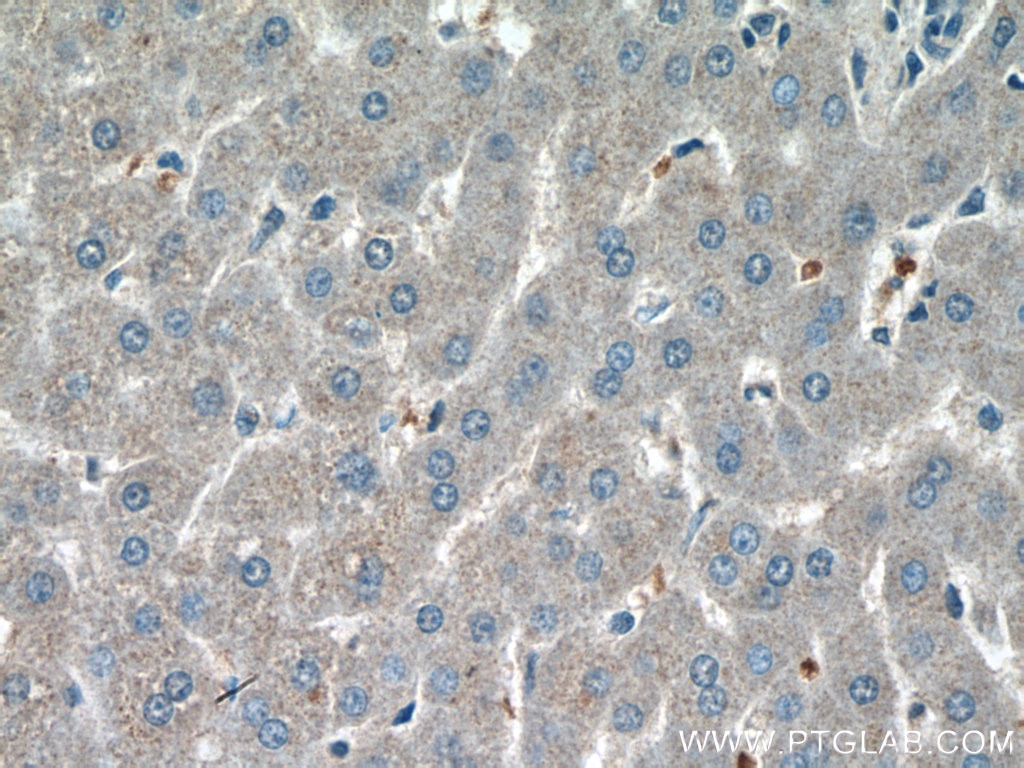

Tested Applications
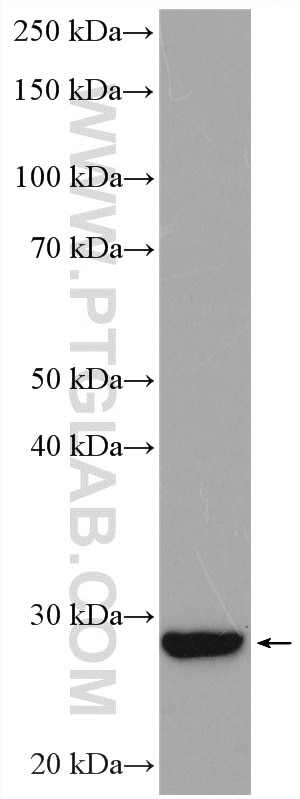
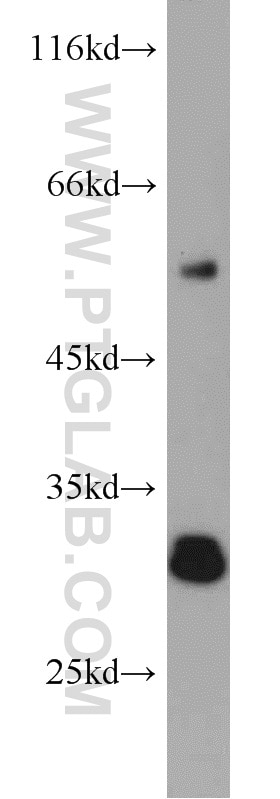
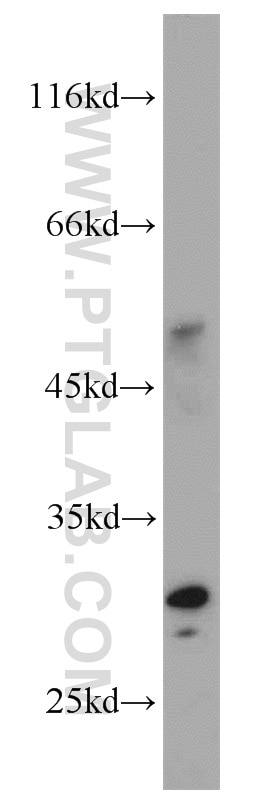
| Positive WB detected in | mouse kidney tissue, mouse liver tissue, human liver tissue |
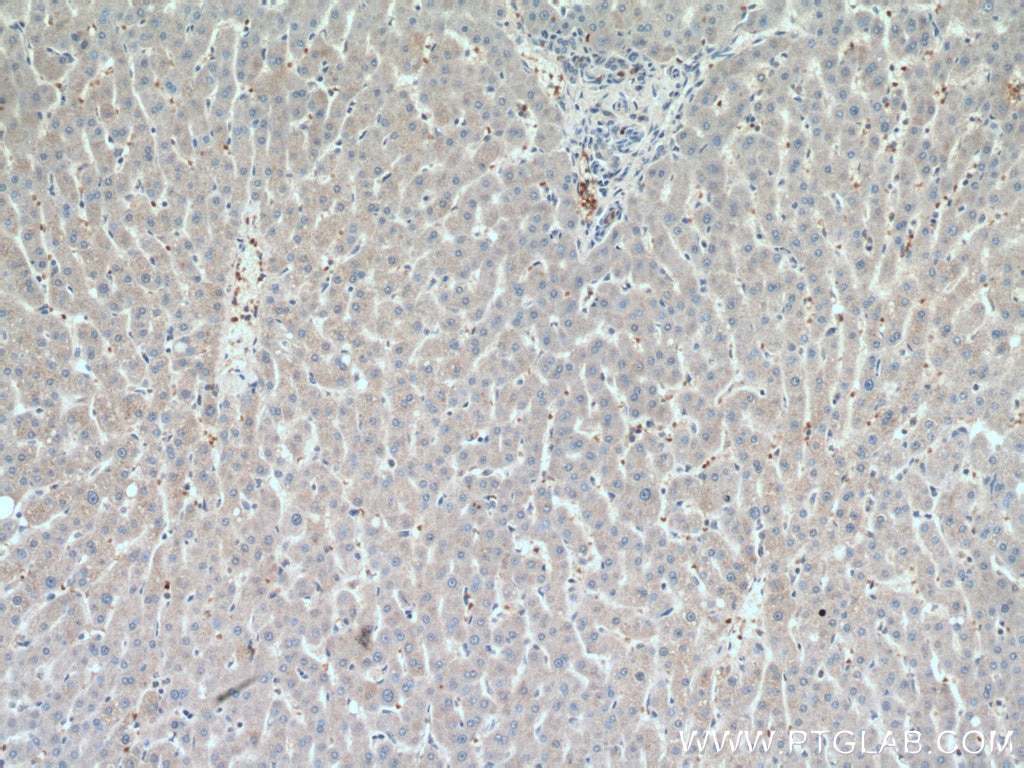
| Positive IHC detected in | human liver tissue Note: suggested antigen retrieval with TE buffer pH 9.0; (*) Alternatively, antigen retrieval may be performed with citrate buffer pH 6.0 |
Recommended dilution
| Application | Dilution |
|---|---|
| Western Blot (WB) | WB : 1:500-1:2000 |
| Immunohistochemistry (IHC) | IHC : 1:50-1:500 |
| It is recommended that this reagent should be titrated in each testing system to obtain optimal results. | |
| Sample-dependent, Check data in validation data gallery. | |
Product Information
19522-1-AP targets AFMID in WB, IHC, ELISA applications and shows reactivity with human, mouse samples.
| Tested Reactivity | human, mouse |
| Cited Reactivity | human, mouse |
| Host / Isotype | Rabbit / IgG |
| Class | Polyclonal |
| Type | Antibody |
| Immunogen |
Peptide Predict reactive species |
| Full Name | arylformamidase |
| Calculated Molecular Weight | 35 kDa |
| Observed Molecular Weight | 30 kDa |
| GenBank Accession Number | NM_001145526 |
| Gene Symbol | AFMID |
| Gene ID (NCBI) | 125061 |
| RRID | AB_11041712 |
| Conjugate | Unconjugated |
| Form | Liquid |
| Purification Method | Antigen affinity purification |
| UNIPROT ID | Q63HM1 |
| Storage Buffer | PBS with 0.02% sodium azide and 50% glycerol, pH 7.3. |
| Storage Conditions | Store at -20°C. Stable for one year after shipment. Aliquoting is unnecessary for -20oC storage. 20ul sizes contain 0.1% BSA. |
Background Information
AFMID,also named as KF, belongs to the AFMID family. AFMID catalyzes the hydrolysis of N-formyl-L-kynurenine to L-kynurenine, the second step in the conversion of tryptophan to nicotinic acid, NAD(H) and NADP(H). AFMID is required for elimination of toxic metabolites.
Protocols
| Product Specific Protocols | |
|---|---|
| IHC protocol for AFMID antibody 19522-1-AP | Download protocol |
| WB protocol for AFMID antibody 19522-1-AP | Download protocol |
| Standard Protocols | |
|---|---|
| Click here to view our Standard Protocols |
Publications
What published studies show
The AFMID Polyclonal antibody (Cat# 19522-1-AP) has 4 citations published in Cancer Cell, Genome Research, Journal of Proteome Research, and Molecular and Cellular Endocrinology. Research fields span liver tumorigenesis and DNA damage, hepatocellular carcinoma with TP53 mutations, renal proteomics and biomarker discovery, and hepatic NAD⁺ metabolism under high-fat diet conditions. All citations used Western blot as the application.
| Species | Application | Title |
|---|---|---|
Cancer Cell Inhibition of De Novo NAD(+) Synthesis by Oncogenic URI Causes Liver Tumorigenesis through DNA Damage.
| ||
Genome Res A human-specific switch of alternatively spliced AFMID isoforms contributes to TP53 mutations and tumor recurrence in hepatocellular carcinoma. | ||
J Proteome Res Proteomics Analysis of Renal Cell Line Caki-2 with AFMID Overexpression and Potential Biomarker Discovery in Urine | ||
Mol Cell Endocrinol Hepatic NAD+levels and NAMPT abundance are unaffected during prolonged high-fat diet consumption in C57BL/6JBomTac mice. |

