
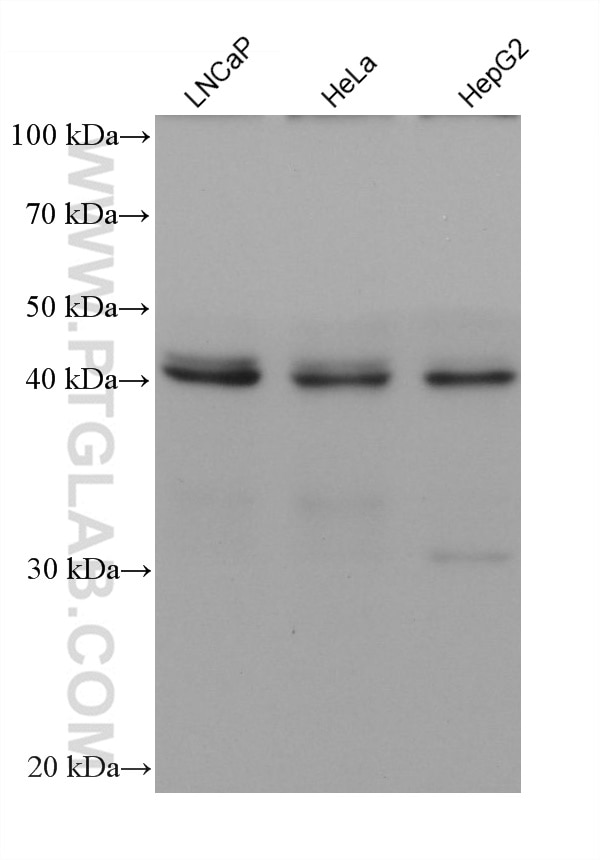
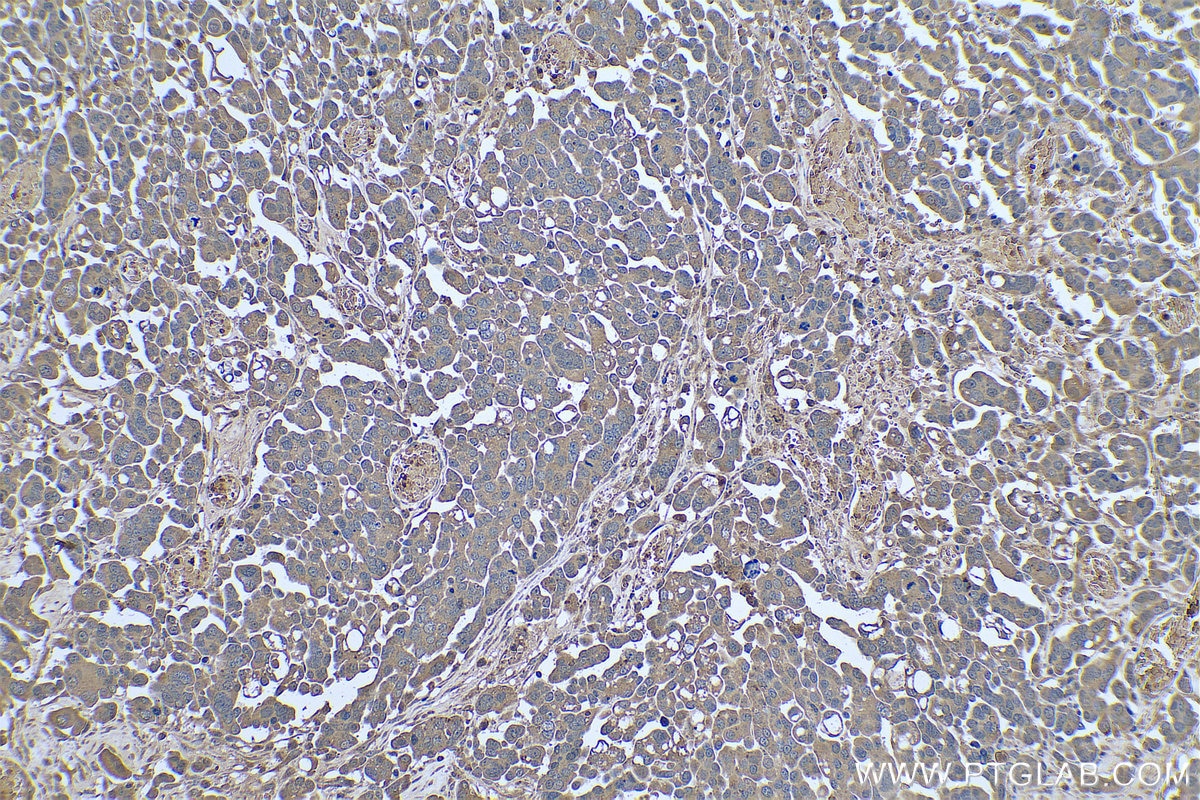
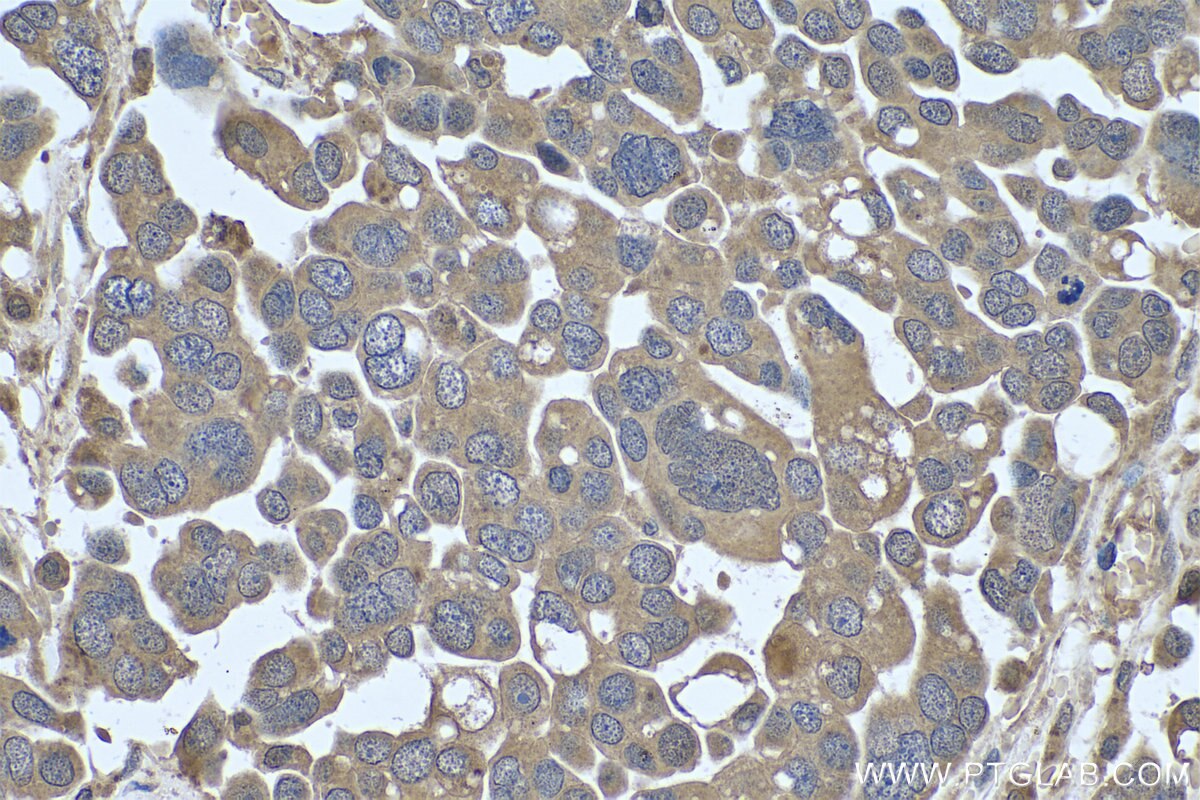
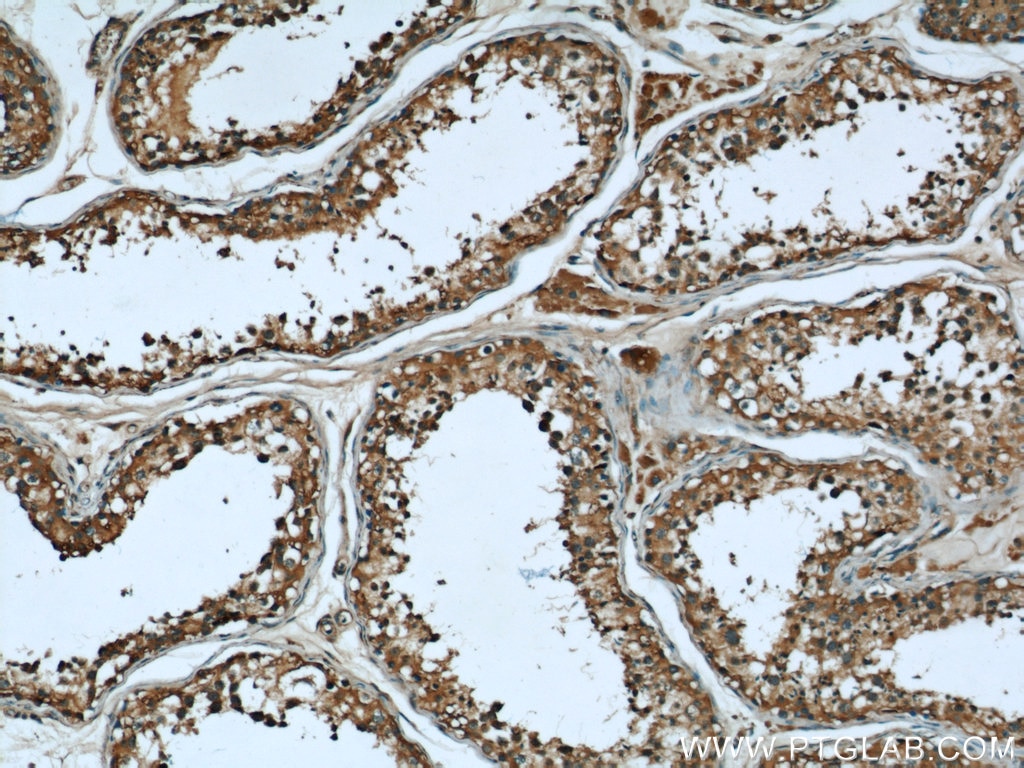

Tested Applications
| Positive WB detected in | LNCaP cells, HeLa cells, HepG2 cells |
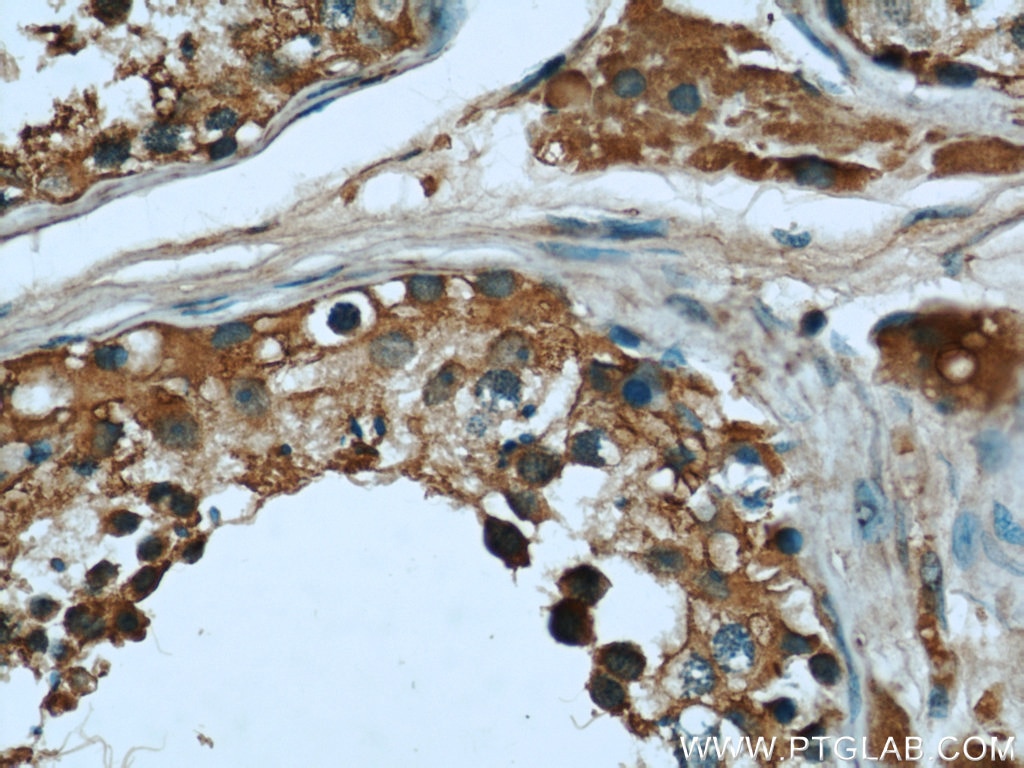
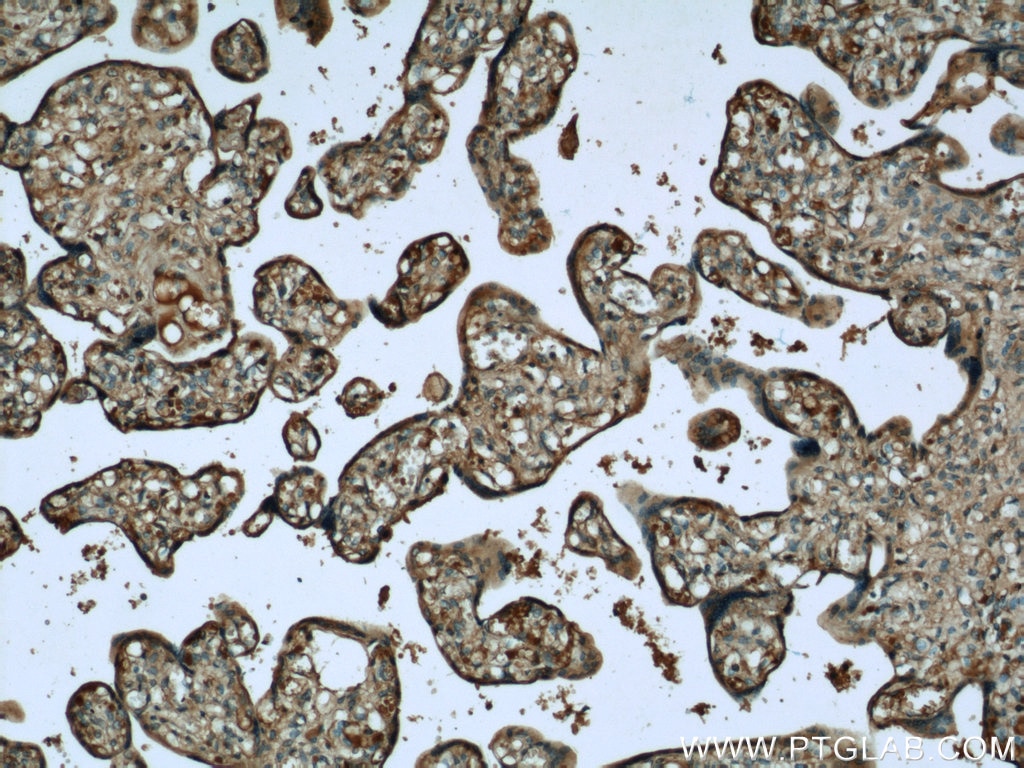
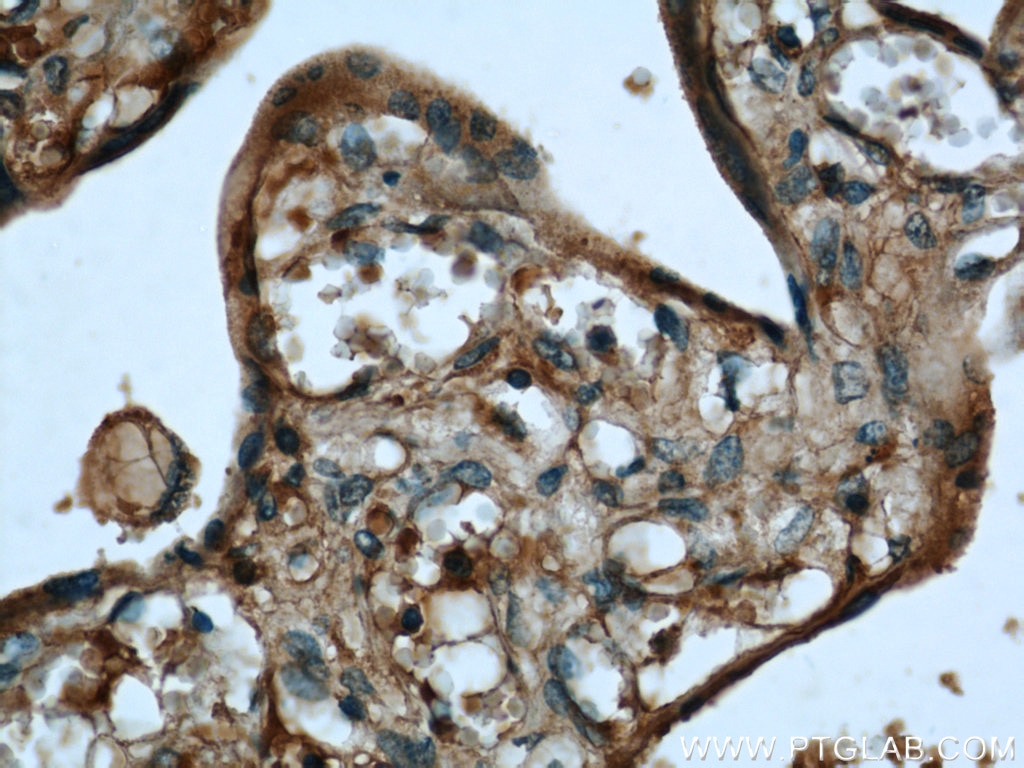
| Positive IHC detected in | human colon cancer tissue, human placenta tissue, human testis tissue Note: suggested antigen retrieval with TE buffer pH 9.0; (*) Alternatively, antigen retrieval may be performed with citrate buffer pH 6.0 |
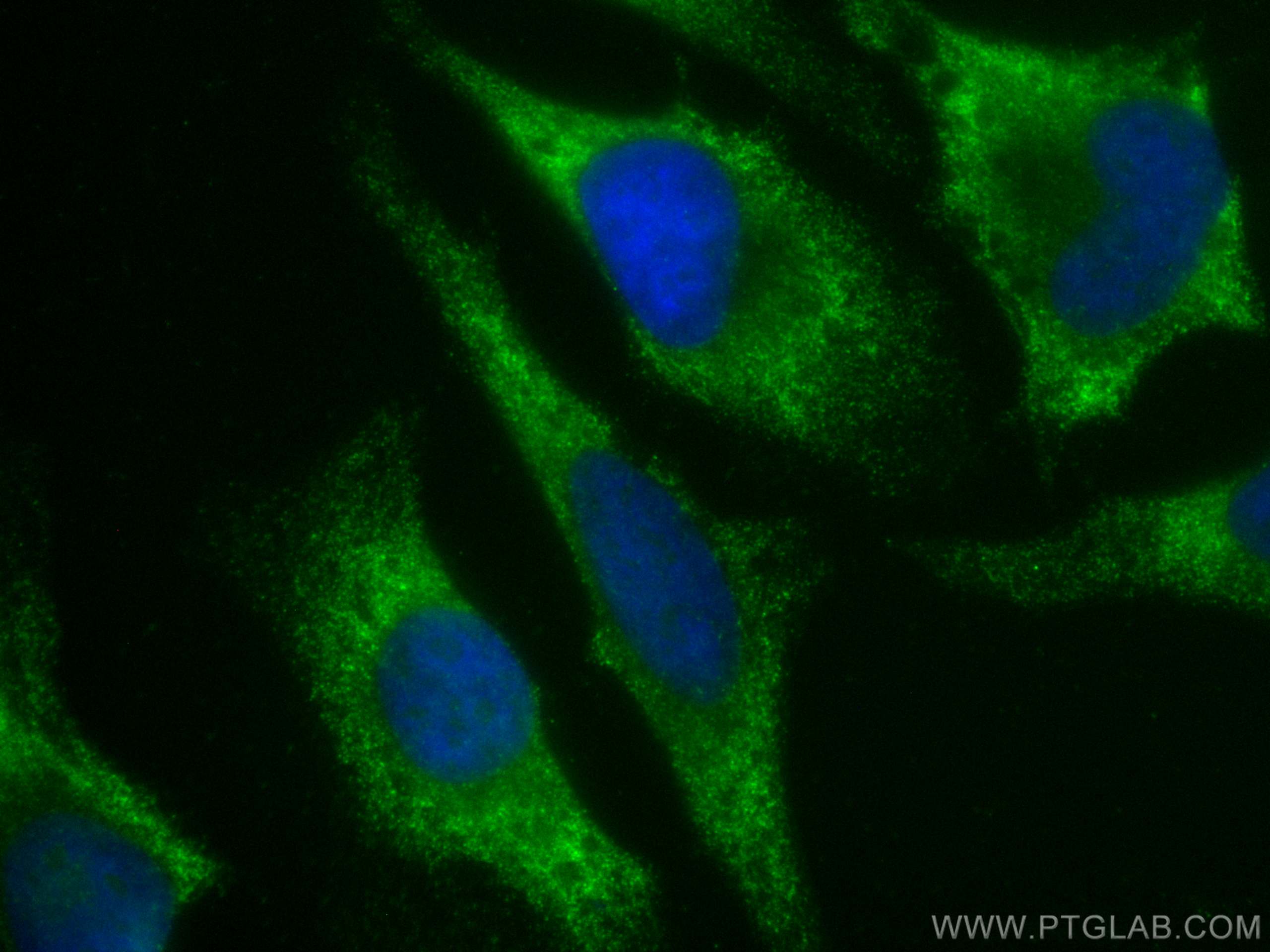
| Positive IF/ICC detected in | HeLa cells |
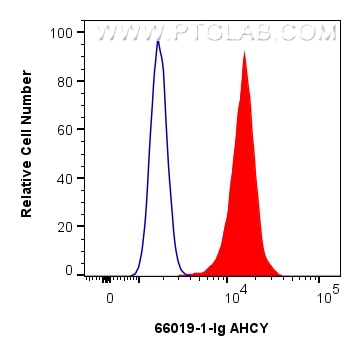
| Positive FC (Intra) detected in | HeLa cells |
Recommended dilution
| Application | Dilution |
|---|---|
| Western Blot (WB) | WB : 1:5000-1:50000 |
| Immunohistochemistry (IHC) | IHC : 1:1000-1:4000 |
| Immunofluorescence (IF)/ICC | IF/ICC : 1:2000-1:8000 |
| Flow Cytometry (FC) (INTRA) | FC (INTRA) : 0.25 ug per 10^6 cells in a 100 ul suspension |
| It is recommended that this reagent should be titrated in each testing system to obtain optimal results. | |
| Sample-dependent, Check data in validation data gallery. | |
Product Information
66019-1-Ig targets AHCY in WB, IHC, IF/ICC, FC (Intra), ELISA applications and shows reactivity with human samples.
| Tested Reactivity | human |
| Cited Reactivity | human |
| Host / Isotype | Mouse / IgG2b |
| Class | Monoclonal |
| Type | Antibody |
| Immunogen |
CatNo: Ag18036 Product name: Recombinant human AHCY protein Source: e coli.-derived, PET28a Tag: 6*His Domain: 116-432 aa of BC011606 Sequence: QTLYFKDGPLNMILDDGGDLTNLIHTKYPQLLPGIRGISEETTTGVHNLYKMMANGILKVPAINVNDSVTKSKFDNLYGCRESLIDGIKRATDVMIAGKVAVVAGYGDVGKGCAQALRGFGARVIITEIDPINALQAAMEGYEVTTMDEACQEGNIFVTTTGCIDIILGRHFEQMKDDAIVCNIGHFDVEIDVKWLNENAVEKVNIKPQVDRYRLKNGRRIILLAEGRLVNLGCAMGHPSFVMSNSFTNQVMAQIELWTHPDKYPVGVHFLPKKLDEAVAEAHLGKLNVKLTKLTEKQAQYLGMSCDGPFKPDHYRY Predict reactive species |
| Full Name | S-adenosylhomocysteine hydrolase |
| Calculated Molecular Weight | 48 kDa |
| Observed Molecular Weight | 48 kDa |
| GenBank Accession Number | BC011606 |
| Gene Symbol | AHCY |
| Gene ID (NCBI) | 191 |
| RRID | AB_11044194 |
| Conjugate | Unconjugated |
| Form | Liquid |
| Purification Method | Protein A purification |
| UNIPROT ID | P23526 |
| Storage Buffer | PBS with 0.02% sodium azide and 50% glycerol, pH 7.3. |
| Storage Conditions | Store at -20°C. Stable for one year after shipment. Aliquoting is unnecessary for -20oC storage. 20ul sizes contain 0.1% BSA. |
Background Information
AHCY, also named as SAHH, belongs to the adenosylhomocysteinase family. AHCY is a competitive inhibitor of S-adenosyl-L-methionine-dependent methyl transferase reactions; therefore AHCY may play a key role in the control of methylations via regulation of the intracellular concentration of adenosylhomocysteine. AHCY catalyzes the reversible hydrolysis of S-adenosylhomocysteine to adenosine and L-homocysteine.(PMID:21220475).
Protocols
| Product Specific Protocols | |
|---|---|
| FC protocol for AHCY antibody 66019-1-Ig | Download protocol |
| IF protocol for AHCY antibody 66019-1-Ig | Download protocol |
| IHC protocol for AHCY antibody 66019-1-Ig | Download protocol |
| WB protocol for AHCY antibody 66019-1-Ig | Download protocol |
| Standard Protocols | |
|---|---|
| Click here to view our Standard Protocols |
Publications
What published studies show
AHCY Monoclonal antibody (66019-1-Ig) has one citation. It was published in Cell Death & Differentiation (Impact Factor 13.6, August 2022) by Yankun Wang and colleagues, who explored the functional link between ferroptosis and proteasome-mediated degradation via quantitative reactive cysteinome profiling. The study used this antibody for Western blot (WB) analysis in human samples. The research field is cell death biology, specifically ferroptosis and protein degradation mechanisms.
| Species | Application | Title |
|---|---|---|
Cell Death Differ Quantitative reactive cysteinome profiling reveals a functional link between ferroptosis and proteasome-mediated degradation |

