

Tested Applications
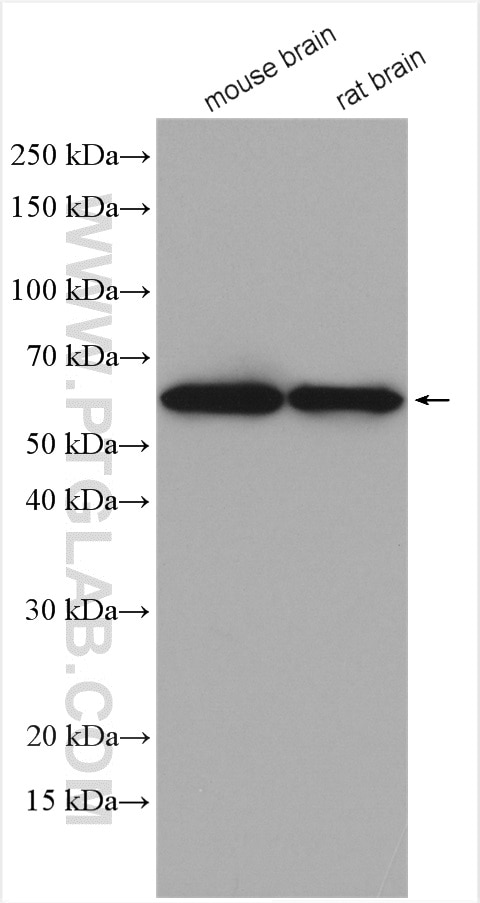
| Positive WB detected in | mouse brain tissue, rat brain tissue |
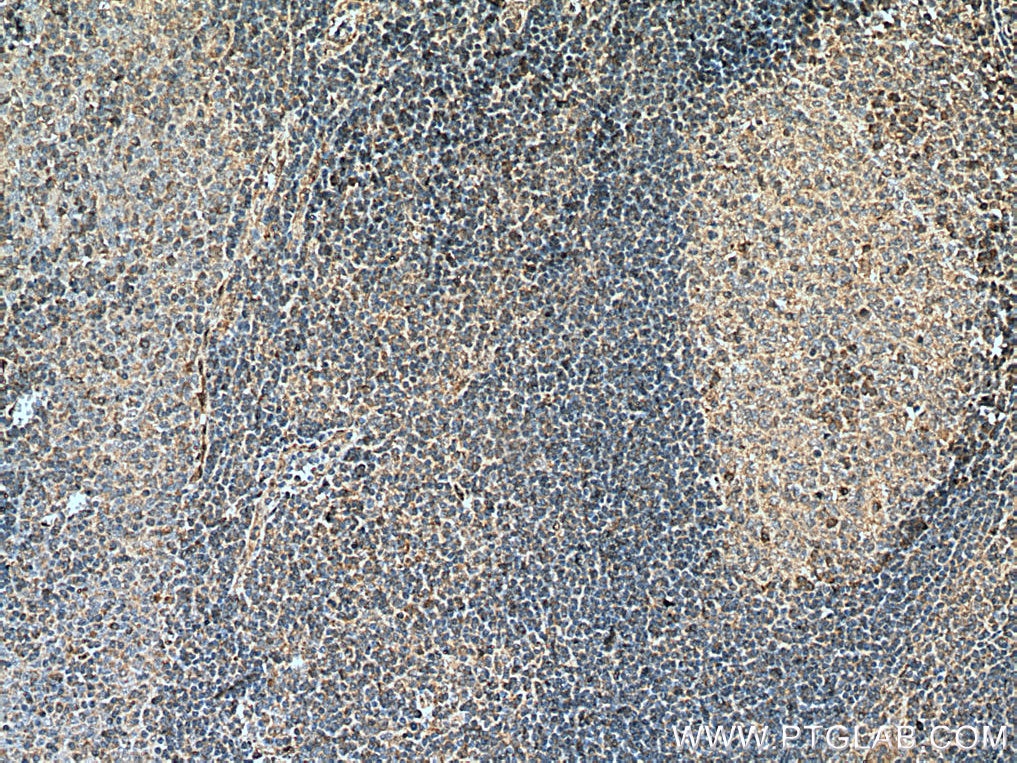
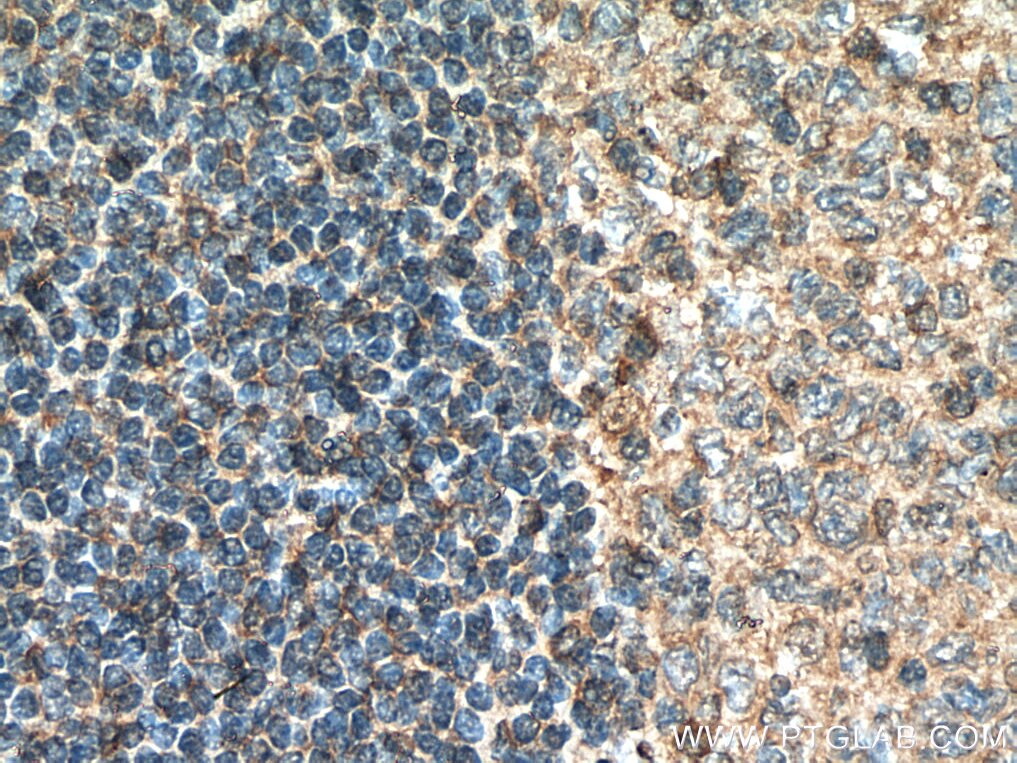
| Positive IHC detected in | human tonsillitis tissue Note: suggested antigen retrieval with TE buffer pH 9.0; (*) Alternatively, antigen retrieval may be performed with citrate buffer pH 6.0 |
Recommended dilution
| Application | Dilution |
|---|---|
| Western Blot (WB) | WB : 1:500-1:1000 |
| Immunohistochemistry (IHC) | IHC : 1:50-1:500 |
| It is recommended that this reagent should be titrated in each testing system to obtain optimal results. | |
| Sample-dependent, Check data in validation data gallery. | |
Product Information
21641-1-AP targets AKT3 in WB, IHC, CoIP, ELISA applications and shows reactivity with human, mouse, rat samples.
| Tested Reactivity | human, mouse, rat |
| Cited Reactivity | human, mouse |
| Host / Isotype | Rabbit / IgG |
| Class | Polyclonal |
| Type | Antibody |
| Immunogen |
CatNo: Ag16298 Product name: Recombinant human AKT3 protein Source: e coli.-derived, PGEX-4T Tag: GST Domain: 95-155 aa of BC121154 Sequence: REEWTEAIQAVADRLQRQEEERMNCSPTSQIDNIGEEEMDASTTHHKRKTMNDFDYLKLLG Predict reactive species |
| Full Name | v-akt murine thymoma viral oncogene homolog 3 (protein kinase B, gamma) |
| Calculated Molecular Weight | 465 aa, 54 kDa |
| Observed Molecular Weight | 60 kDa |
| GenBank Accession Number | BC121154 |
| Gene Symbol | AKT3 |
| Gene ID (NCBI) | 10000 |
| RRID | AB_10733649 |
| Conjugate | Unconjugated |
| Form | Liquid |
| Purification Method | Antigen affinity purification |
| UNIPROT ID | Q9Y243 |
| Storage Buffer | PBS with 0.02% sodium azide and 50% glycerol, pH 7.3. |
| Storage Conditions | Store at -20°C. Stable for one year after shipment. Aliquoting is unnecessary for -20oC storage. 20ul sizes contain 0.1% BSA. |
Background Information
AKT3, also named as PKBG, is one of 3 closely related serine/threonine-protein kinases (AKT1, AKT2 and AKT3) called the AKT kinase, and which regulate many processes including metabolism, proliferation, cell survival, growth and angiogenesis. AKT3 is a key modulator of several tumors like melanoma, glioma and ovarian cancer. Active AKT3 increases progressively during melanoma tumor progression with highest levels present in advanced-stage metastatic melanomas.
Protocols
| Product Specific Protocols | |
|---|---|
| IHC protocol for AKT3 antibody 21641-1-AP | Download protocol |
| WB protocol for AKT3 antibody 21641-1-AP | Download protocol |
| Standard Protocols | |
|---|---|
| Click here to view our Standard Protocols |
Publications
What published studies show
The AKT3 Polyclonal antibody (Cat# 21641-1-AP) has 20 citations across 18 journals, including Experimental Hematology & Oncology, Cancer Cell International, Virulence, Biomaterials Advances, CNS & Neurological Sciences – Therapeutics, Ecotoxicology and Environmental Safety, Clinical Epigenetics, Journal of Ovarian Research, Scientific Reports, Oncology Reports, Journal of Cellular and Molecular Medicine, Journal of Neurochemistry, Reproductive Biomedicine Online, Toxicology and Applied Pharmacology, Frontiers in Oncology, Cell Immunology, Bioengineered, and Nan Fang Medical University Journal. Research fields span oncology, neurology, inflammation, fibrosis, epigenetics, and immunology.
| Species | Application | Title |
|---|---|---|
Exp Hematol Oncol YTHDF1 promotes hepatocellular carcinoma progression via activating PI3K/AKT/mTOR signaling pathway and inducing epithelial-mesenchymal transition. | ||
Cancer Cell Int MiR-384 inhibits the proliferation of colorectal cancer by targeting AKT3. | ||
Cancer Cell Int NEK7 promotes gastric cancer progression as a cell proliferation regulator. | ||
Virulence Encephalomyocarditis virus impairs the blood-brain barrier by degrading tight junction proteins via AKT3-dependent autophagic and apoptotic pathways. | ||
Biomater Adv L-cysteine selenium nanoparticles induce apoptosis in ovarian cancer cells by activating the FOXO3a/GADD45A pathway. | ||
Ecotoxicol Environ Saf Mechanism through which the hsa-circ_0000992- hsa- miR- 936-AKT3 regulatory network promotes the PM2.5-induced inflammatory response in human bronchial epithelial cells |

