

Tested Applications
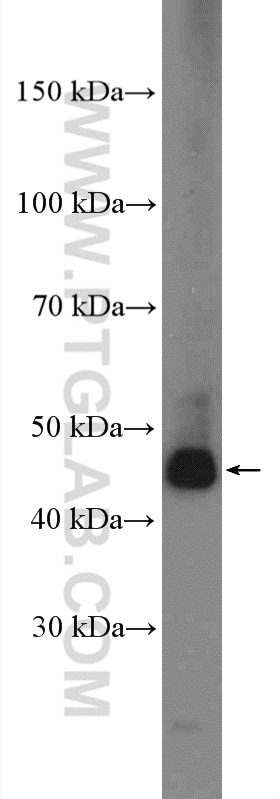
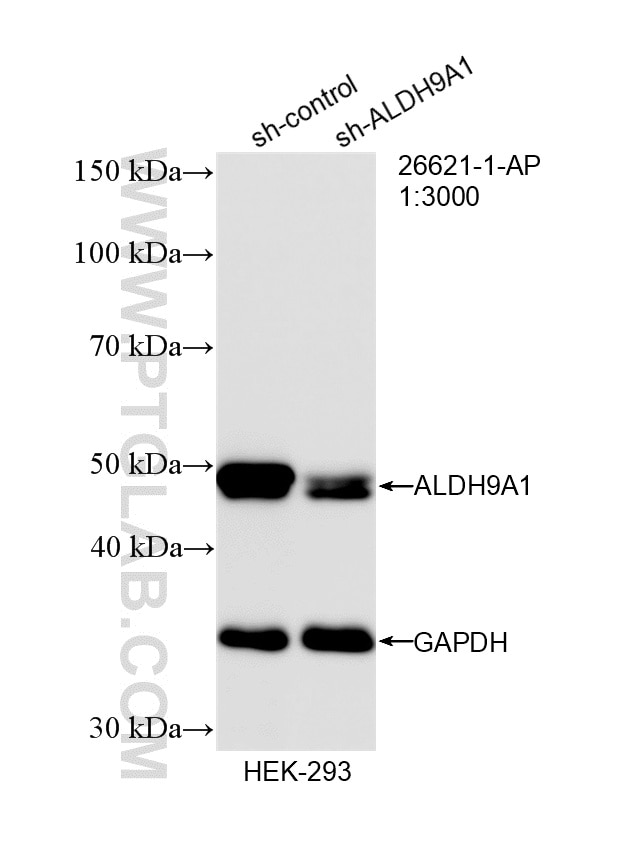
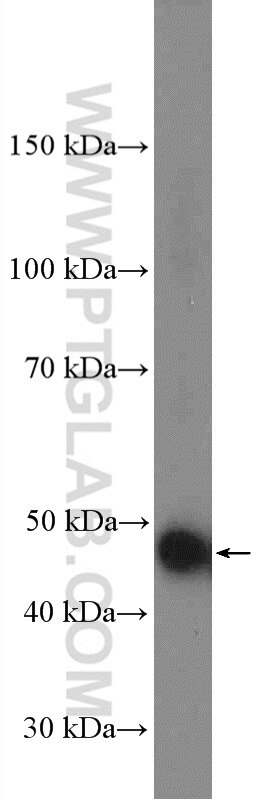
| Positive WB detected in | NIH/3T3 cells, HEK-293 cells |
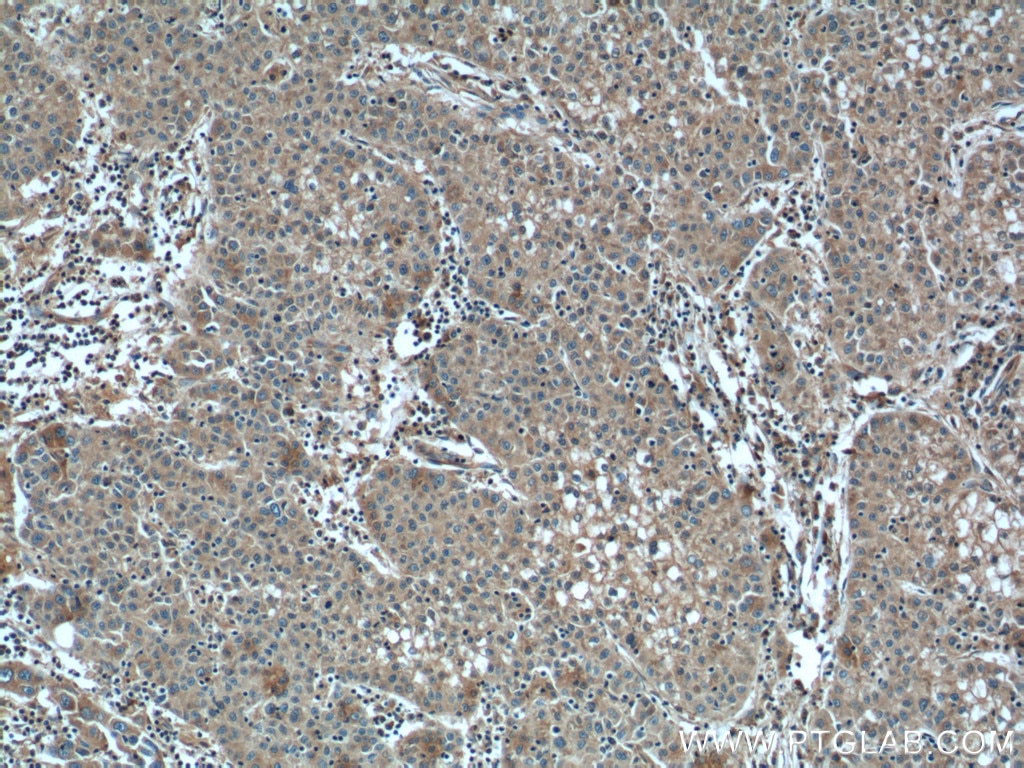
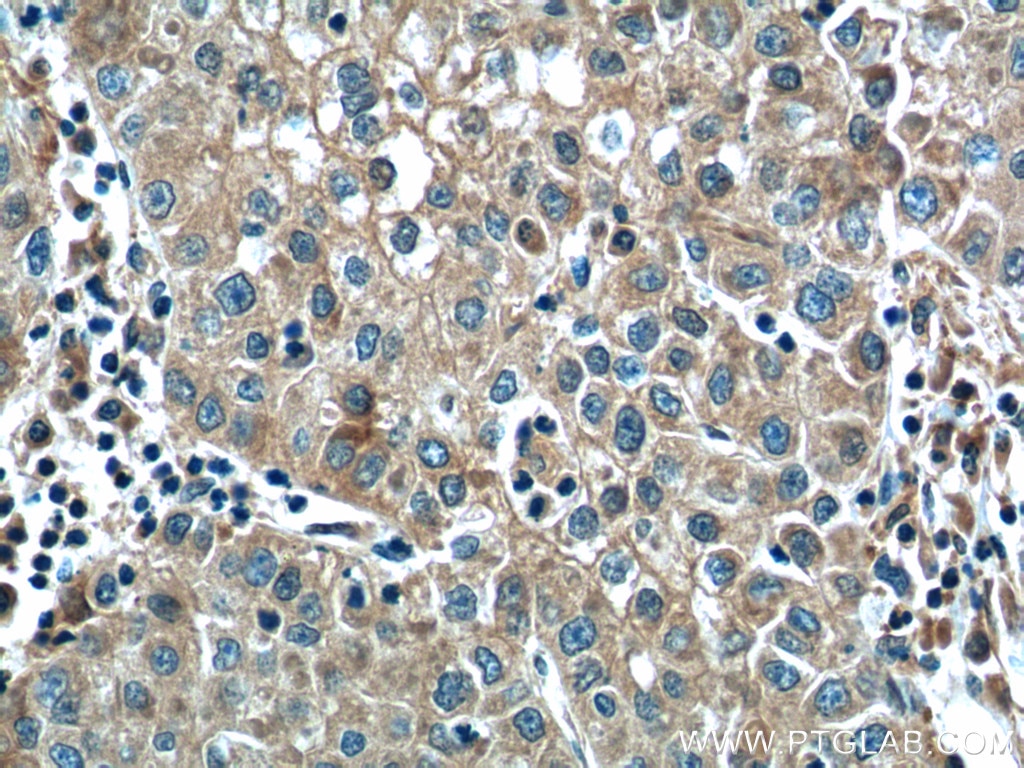
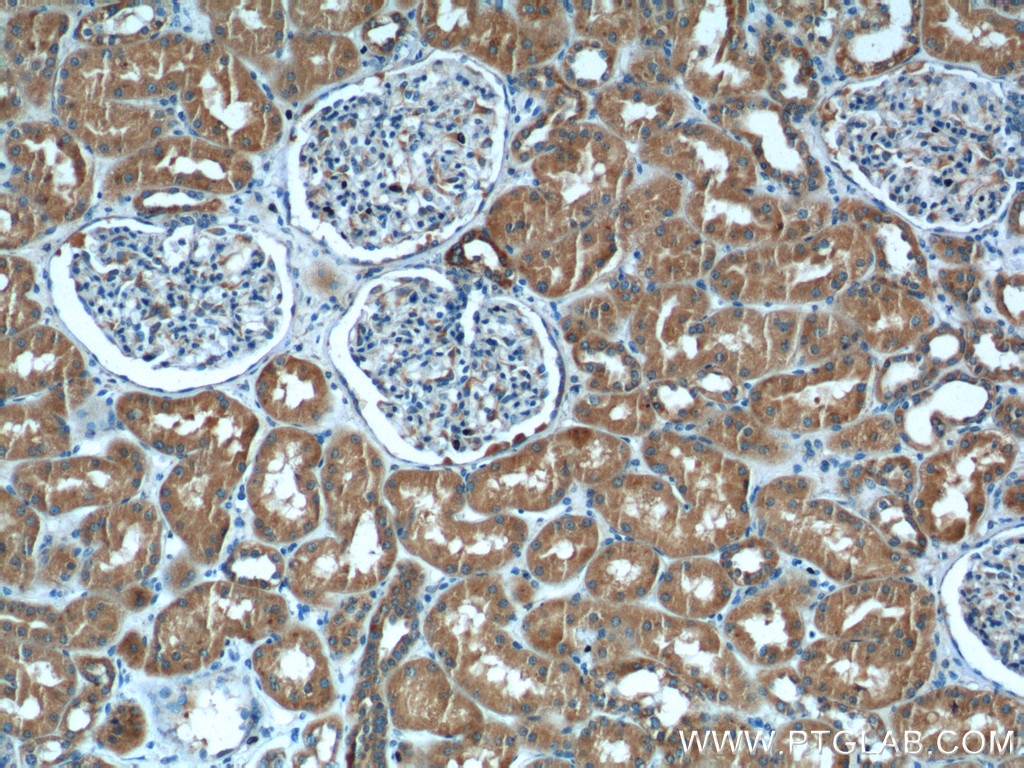
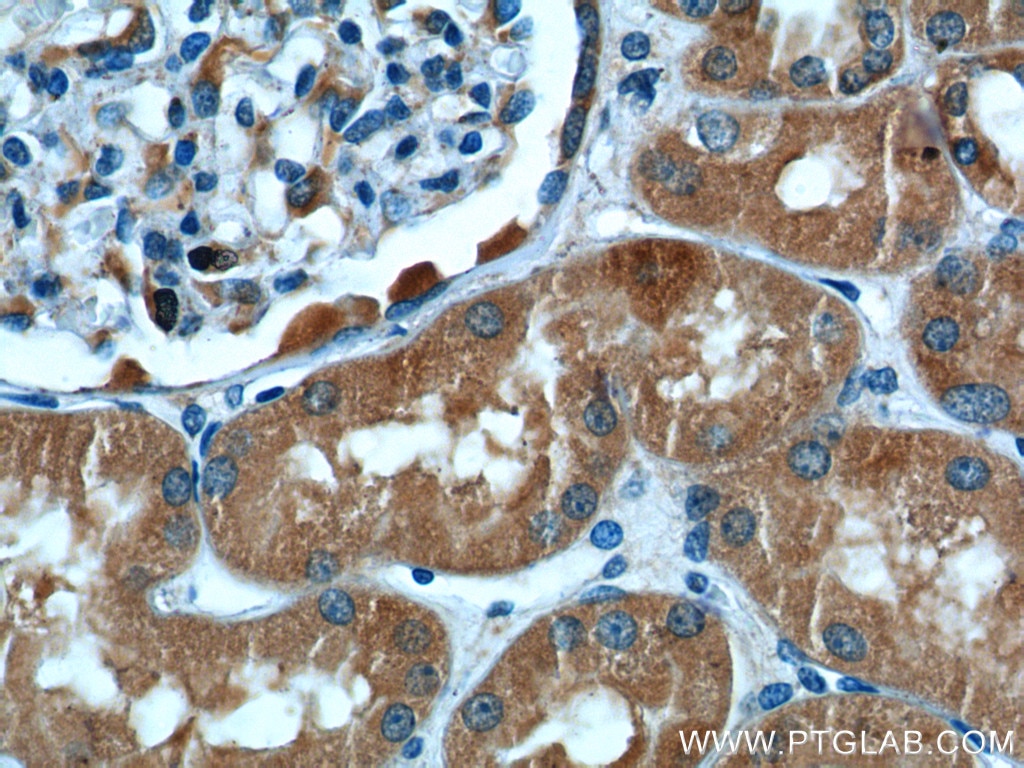
| Positive IHC detected in | human liver cancer tissue, human kidney tissue Note: suggested antigen retrieval with TE buffer pH 9.0; (*) Alternatively, antigen retrieval may be performed with citrate buffer pH 6.0 |
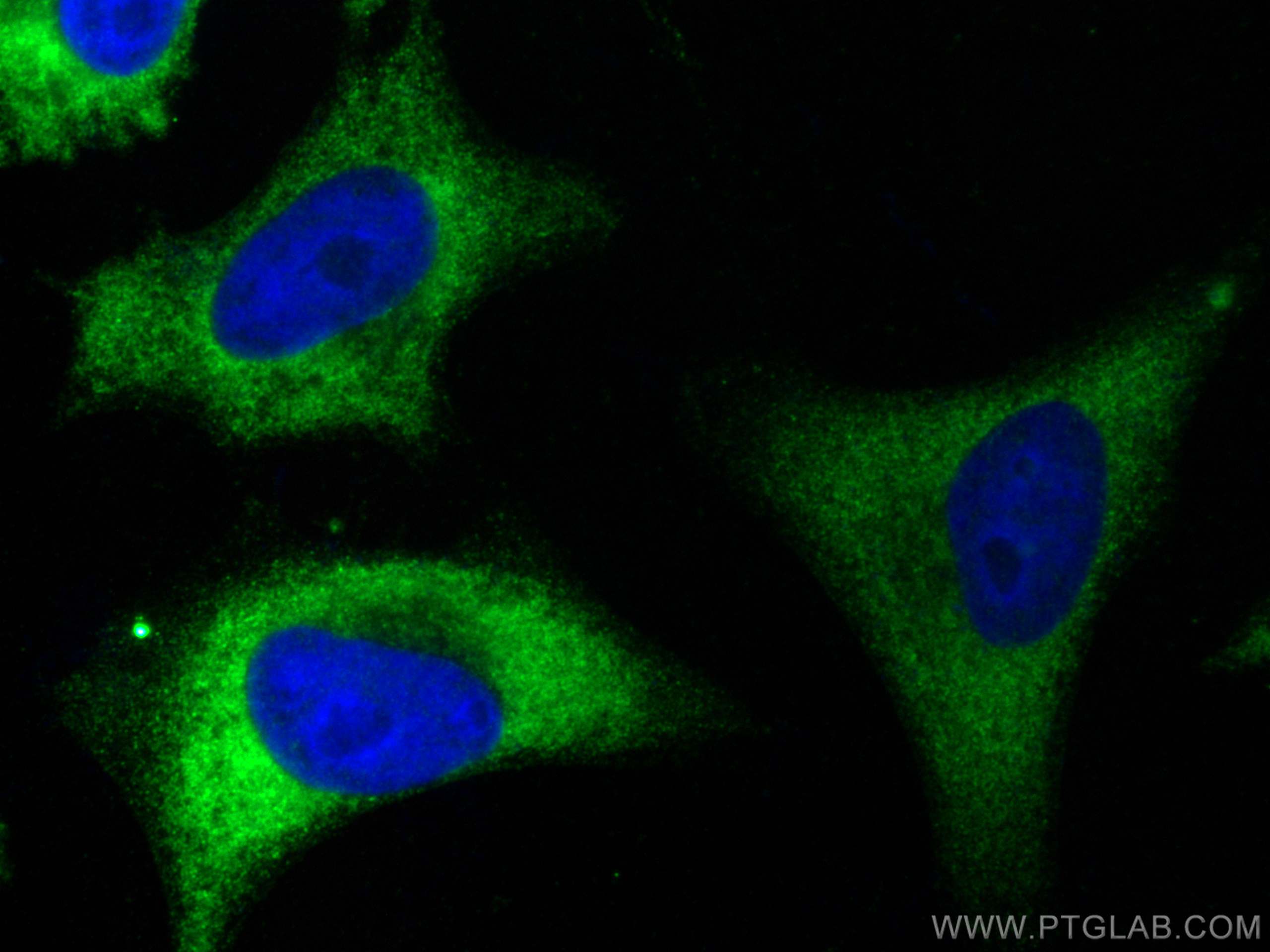
| Positive IF/ICC detected in | HeLa cells |
Recommended dilution
| Application | Dilution |
|---|---|
| Western Blot (WB) | WB : 1:500-1:2000 |
| Immunohistochemistry (IHC) | IHC : 1:100-1:400 |
| Immunofluorescence (IF)/ICC | IF/ICC : 1:50-1:500 |
| It is recommended that this reagent should be titrated in each testing system to obtain optimal results. | |
| Sample-dependent, Check data in validation data gallery. | |
Product Information
26621-1-AP targets ALDH9A1 in WB, IHC, IF/ICC, ELISA applications and shows reactivity with human, mouse samples.
| Tested Reactivity | human, mouse |
| Cited Reactivity | human |
| Host / Isotype | Rabbit / IgG |
| Class | Polyclonal |
| Type | Antibody |
| Immunogen |
CatNo: Ag24312 Product name: Recombinant human ALDH9A1 protein Source: e coli.-derived, PGEX-4T Tag: GST Domain: 285-412 aa of BC151140 Sequence: LIIFSDCDMNNAVKGALMANFLTQGQVCCNGTRVFVQKEILDKFTEEVVKQTQRIKIGDPLLEDTRMGPLINRPHLERVLGFVKVAKEQGAKVLCGGDIYVPEDPKLKDGYYMRPCVLTNCRDDMTCV Predict reactive species |
| Full Name | aldehyde dehydrogenase 9 family, member A1 |
| Calculated Molecular Weight | 518 aa, 56 kDa |
| Observed Molecular Weight | 46 kDa |
| GenBank Accession Number | BC151140 |
| Gene Symbol | ALDH9A1 |
| Gene ID (NCBI) | 223 |
| RRID | AB_2880577 |
| Conjugate | Unconjugated |
| Form | Liquid |
| Purification Method | Antigen affinity purification |
| UNIPROT ID | P49189 |
| Storage Buffer | PBS with 0.02% sodium azide and 50% glycerol, pH 7.3. |
| Storage Conditions | Store at -20°C. Stable for one year after shipment. Aliquoting is unnecessary for -20oC storage. 20ul sizes contain 0.1% BSA. |
Background Information
Aldehyde dehydrogenase 9 family member A1(ALDH9A1), belongs to the aldehyde dehydrogenase family of proteins. ALDH9A1 has a high activity for oxidation of gamma-aminobutyraldehyde and other amino aldehydes. ALDH9A1 catalyzes the dehydrogenation of gamma-aminobutyraldehyde to gamma-aminobutyric acid. ALDH9A1 has 3 isoforms with the molecular mass of 46-56 kDa.
Protocols
| Product Specific Protocols | |
|---|---|
| IF protocol for ALDH9A1 antibody 26621-1-AP | Download protocol |
| IHC protocol for ALDH9A1 antibody 26621-1-AP | Download protocol |
| WB protocol for ALDH9A1 antibody 26621-1-AP | Download protocol |
| Standard Protocols | |
|---|---|
| Click here to view our Standard Protocols |
Publications
What published studies show
The ALDH9A1 Polyclonal antibody (26621-1-AP) has 4 citations. It appears in the journals Cancers (Basel), Proteomes, Molecular Carcinogenesis, and bioRxiv. The research involving this antibody spans breast cancer brain metastasis, PTM crosstalk in mitochondrial proteins, prostate cancer progression and lipid accumulation, and colorectal cancer fatty acid oxidation. Common applications include Western blot and immunohistochemistry.
| Species | Application | Title |
|---|---|---|
Cancers (Basel) Mitochondrial Protein Cox7b Is a Metabolic Sensor Driving Brain-Specific Metastasis of Human Breast Cancer Cells | ||
Proteomes Utilizing Optimized Tools to Investigate PTM Crosstalk: Identifying Potential PTM Crosstalk of Acetylated Mitochondrial Proteins. | ||
Mol Carcinog C1QBP Promotes Prostate Cancer Progression and Lipid Accumulation by Negatively Regulating ALDH9A1
| ||
bioRxiv ALDH1B1 promotes mitochondrial γ-butyrobetaine biosynthesis and fatty acid oxidation in colorectal cancer. |

