

Tested Applications
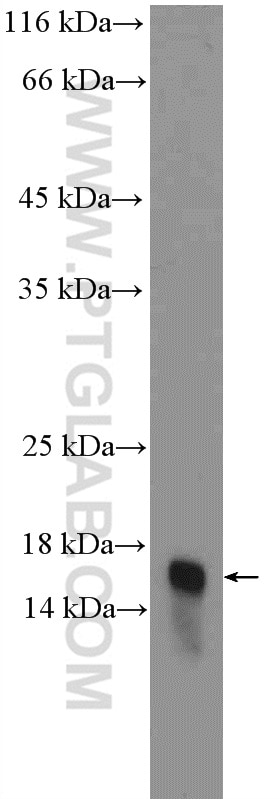
| Positive WB detected in | mouse pancreas tissue |
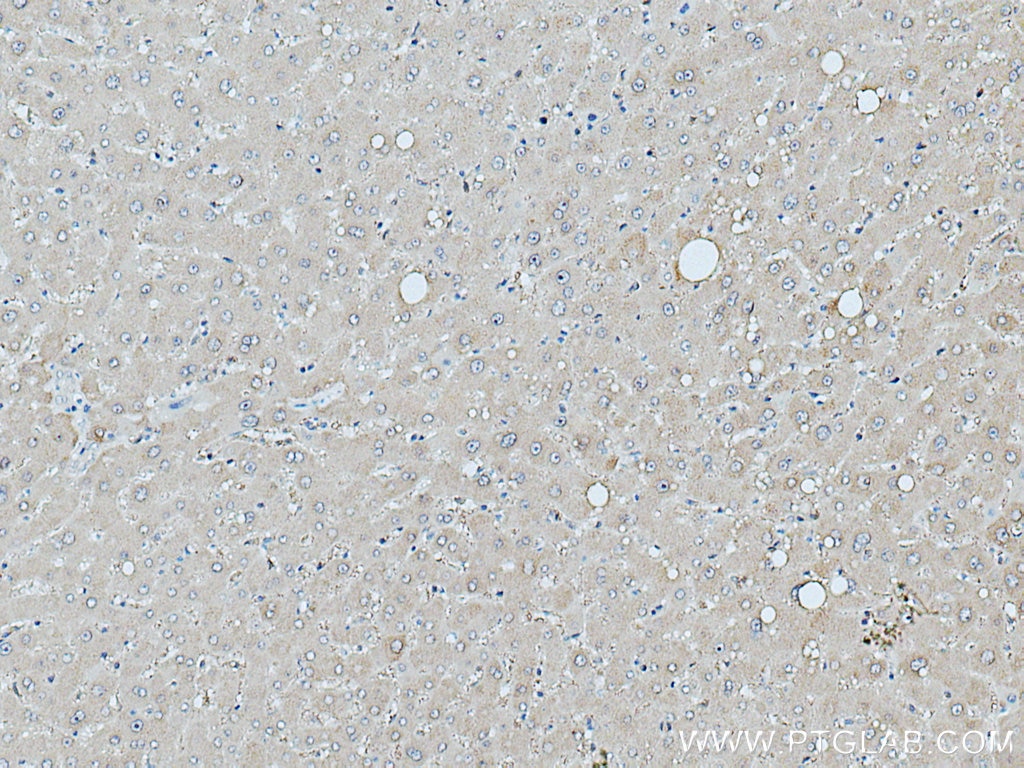
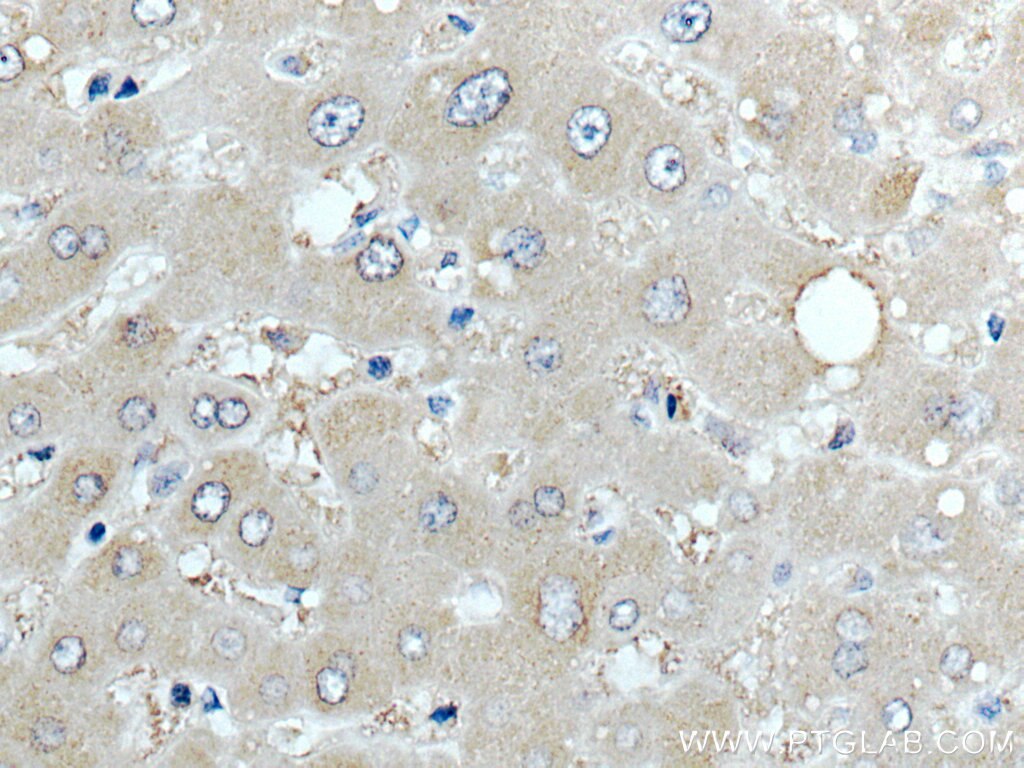
| Positive IHC detected in | human liver tissue Note: suggested antigen retrieval with TE buffer pH 9.0; (*) Alternatively, antigen retrieval may be performed with citrate buffer pH 6.0 |
Recommended dilution
| Application | Dilution |
|---|---|
| Western Blot (WB) | WB : 1:500-1:1000 |
| Immunohistochemistry (IHC) | IHC : 1:50-1:500 |
| It is recommended that this reagent should be titrated in each testing system to obtain optimal results. | |
| Sample-dependent, Check data in validation data gallery. | |
Product Information
10869-1-AP targets ARMET in WB, IHC, IF, ELISA applications and shows reactivity with human, mouse, rat samples.
| Tested Reactivity | human, mouse, rat |
| Cited Reactivity | human, mouse, rat |
| Host / Isotype | Rabbit / IgG |
| Class | Polyclonal |
| Type | Antibody |
| Immunogen |
CatNo: Ag1115 Product name: Recombinant human ARMET protein Source: e coli.-derived, PGEX-4T Tag: GST Domain: 1-182 aa of BC007282 Sequence: MRRMWATQGLAVALALSVLPGSRALRPGDCEVCISYLGRFYQDLKDRDVTFSPATIENELIKFCREARGKENRLCYYIGATDDAATKIINEVSKPLAHHIPVEKICEKLKKKDSQICELKYDKQIDLSTVDLKKLRVKELKKILDDWGETCKGCAEKSDYIRKINELMPKYAPKAASARTDL Predict reactive species |
| Full Name | arginine-rich, mutated in early stage tumors |
| Calculated Molecular Weight | 22 kDa |
| Observed Molecular Weight | 16 kDa |
| GenBank Accession Number | BC007282 |
| Gene Symbol | ARMET |
| Gene ID (NCBI) | 7873 |
| RRID | AB_2059300 |
| Conjugate | Unconjugated |
| Form | Liquid |
| Purification Method | Antigen affinity purification |
| UNIPROT ID | P55145 |
| Storage Buffer | PBS with 0.02% sodium azide and 50% glycerol, pH 7.3. |
| Storage Conditions | Store at -20°C. Stable for one year after shipment. Aliquoting is unnecessary for -20oC storage. 20ul sizes contain 0.1% BSA. |
Protocols
| Product Specific Protocols | |
|---|---|
| IHC protocol for ARMET antibody 10869-1-AP | Download protocol |
| WB protocol for ARMET antibody 10869-1-AP | Download protocol |
| Standard Protocols | |
|---|---|
| Click here to view our Standard Protocols |
Publications
What published studies show
The ARMET (MANF) Polyclonal antibody, catalog number 10869-1-AP, has 10 total citations. These appear in journals including Signal Transduction and Targeted Therapy, Nature Communications, Cell Death & Disease, Journal of the American Society of Nephrology, International Immunopharmacology, Journal of Hepatocellular Carcinoma, Frontiers in Oncology, Behavioural Brain Research, Pharmacology Biochemistry & Behavior, and European Journal of Oral Sciences. Research fields span hepatocellular carcinoma, endoplasmic reticulum stress, renal disease, neuroprotection, ischemia/reperfusion injury, colon cancer, diabetes, and inflammatory responses.
| Species | Application | Title |
|---|---|---|
Signal Transduct Target Ther Activation of Nerve Growth Factor signaling limits the response to lenvatinib in hepatocellular carcinoma | ||
Nat Commun Imbalanced unfolded protein response signaling contributes to 1-deoxysphingolipid retinal toxicity | ||
Cell Death Dis N6-methyladenosine-mediated upregulation of MANF promotes ER stress resistance in renal cell carcinoma | ||
J Am Soc Nephrol Mesencephalic Astrocyte-Derived Neurotrophic Factor as a Urine Biomarker for Endoplasmic Reticulum Stress-Related Kidney Diseases. | ||
Int Immunopharmacol Mesencephalic astrocyte-derived neurotrophic factor (MANF) alleviates cerebral ischemia/reperfusion injury in mice by regulating microglia polarization via A20/NF-κB pathway | ||
J Hepatocell Carcinoma Identification and Validation of Novel Biomarkers for Hepatocellular Carcinoma, Liver Fibrosis/Cirrhosis and Chronic Hepatitis B via Transcriptome Sequencing Technology. |

