
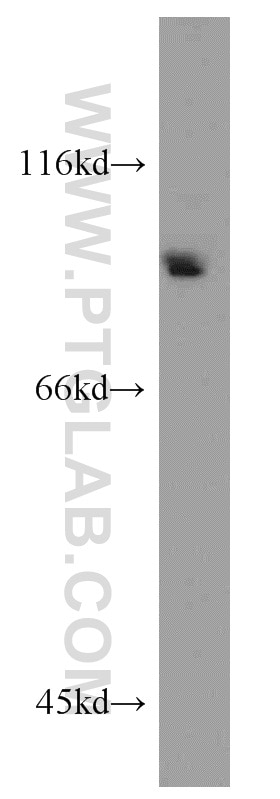
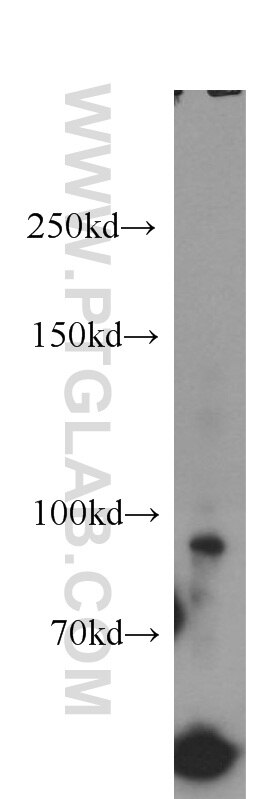

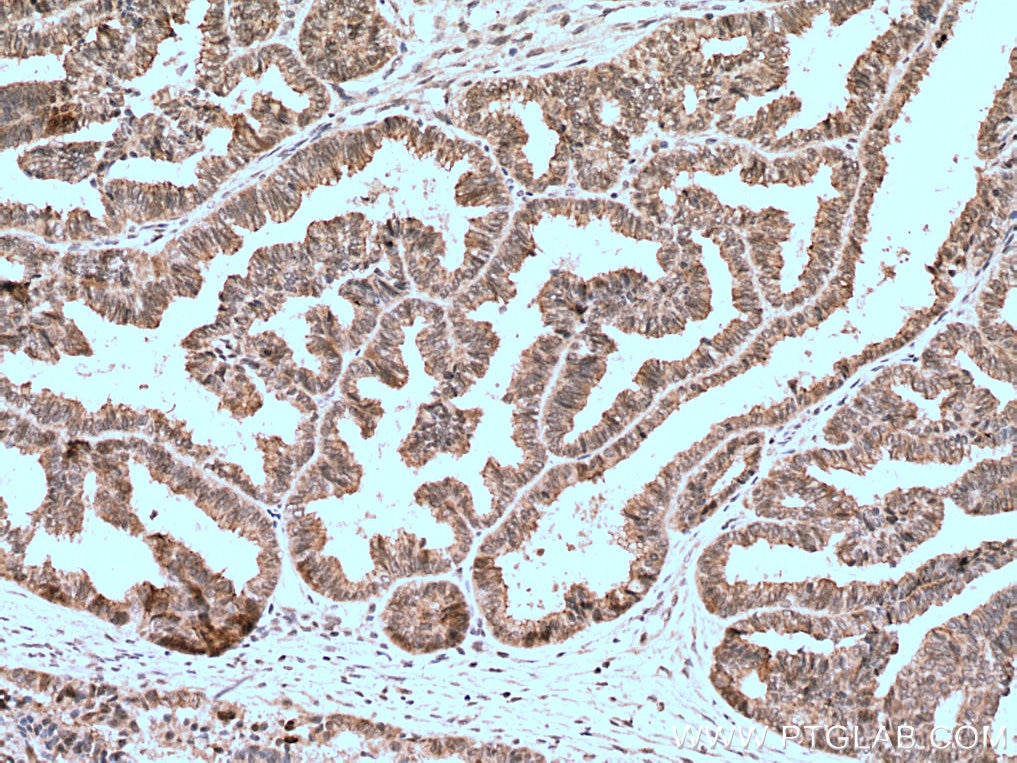
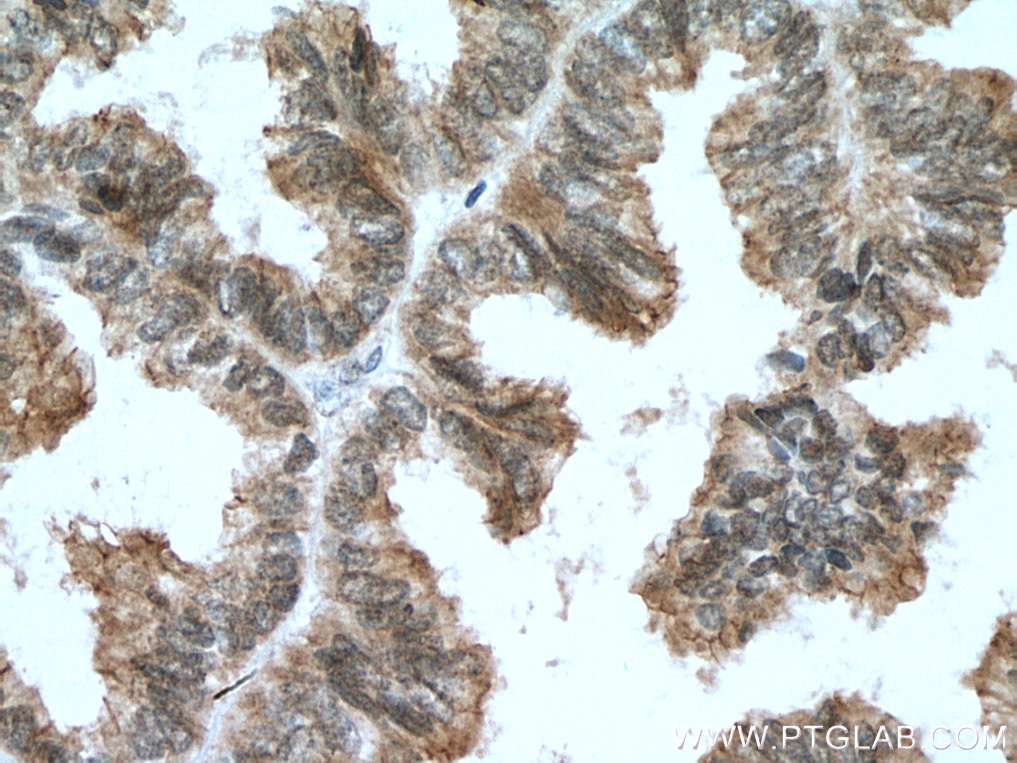
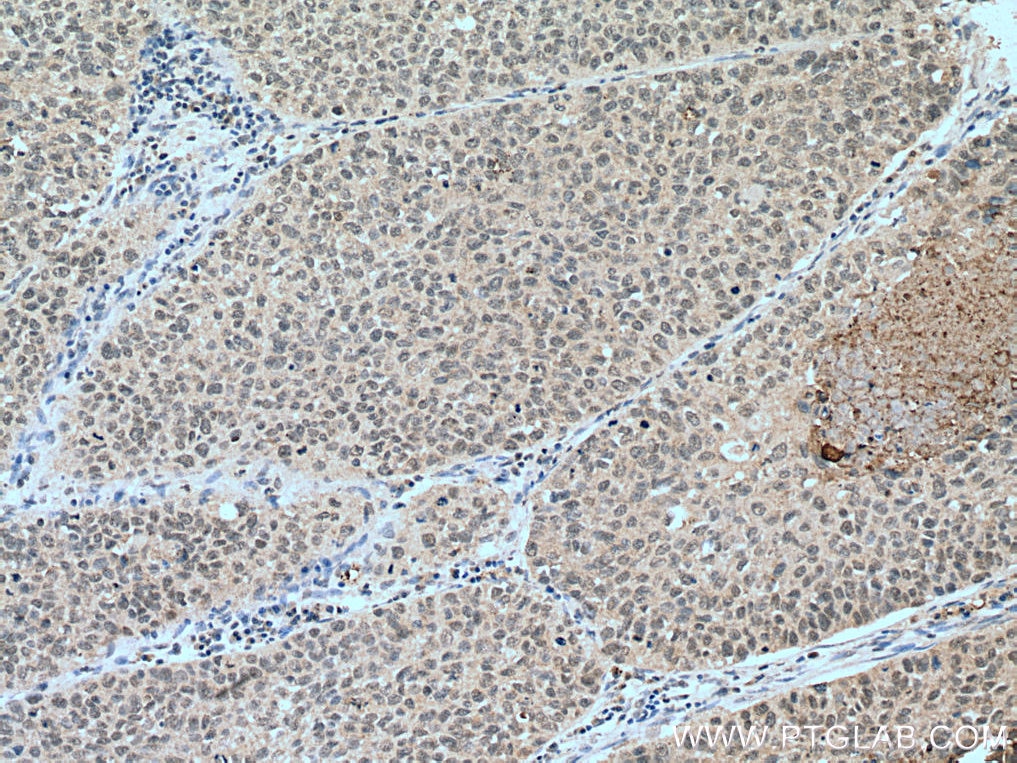
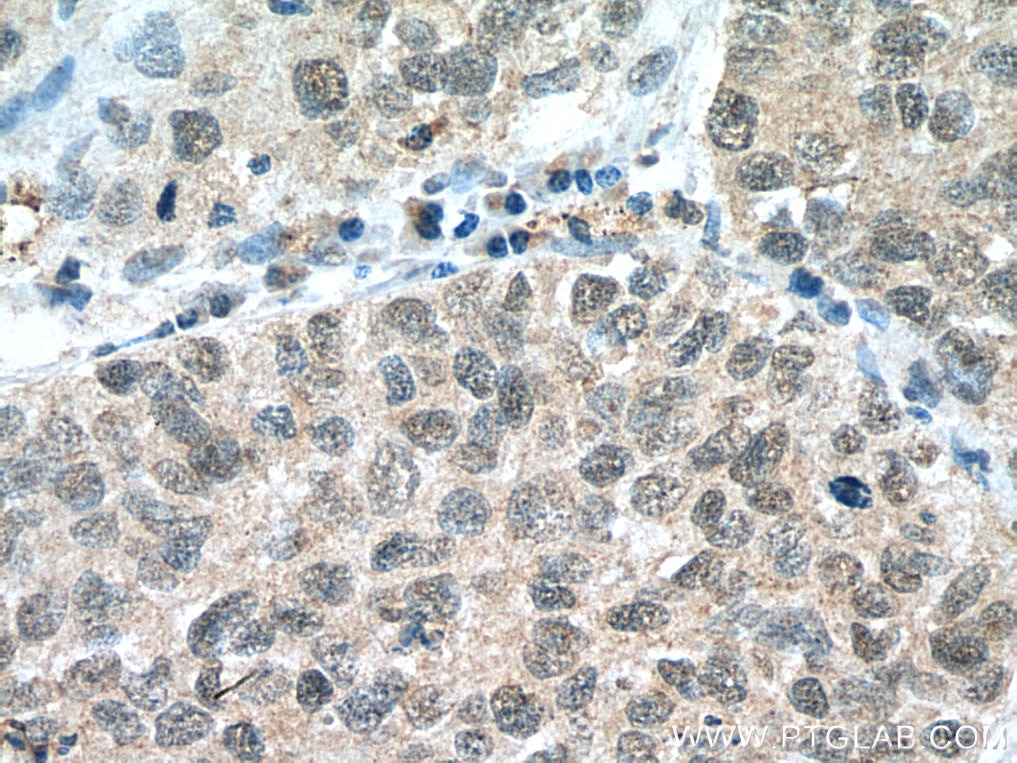

Tested Applications
| Positive WB detected in | A2780 cells, human placenta tissue |
| Positive IP detected in | HeLa cells |
| Positive IHC detected in | human ovary tumor tissue, human lung cancer tissue Note: suggested antigen retrieval with TE buffer pH 9.0; (*) Alternatively, antigen retrieval may be performed with citrate buffer pH 6.0 |
Recommended dilution
| Application | Dilution |
|---|---|
| Western Blot (WB) | WB : 1:500-1:1000 |
| Immunoprecipitation (IP) | IP : 0.5-4.0 ug for 1.0-3.0 mg of total protein lysate |
| Immunohistochemistry (IHC) | IHC : 1:50-1:500 |
| It is recommended that this reagent should be titrated in each testing system to obtain optimal results. | |
| Sample-dependent, Check data in validation data gallery. | |
Product Information
10398-1-AP targets BAP1 in WB, IHC, IF, IP, CoIP, ELISA applications and shows reactivity with human samples.
| Tested Reactivity | human |
| Cited Reactivity | human, mouse, rat |
| Host / Isotype | Rabbit / IgG |
| Class | Polyclonal |
| Type | Antibody |
| Immunogen |
CatNo: Ag0597 Product name: Recombinant human BAP1 protein Source: e coli.-derived, PGEX-4T Tag: GST Domain: 18-228 aa of BC001596 Sequence: LVEDFGVKGVQVEEIYDLQSKCQGPVYGFIFLFKWIEERRSRRKVSTLVDDTSVIDDDIVNNMFFAHQLIPNSCATHALLSVLLNCSSVDLGPTLSRMKDFTKGFSPESKGYAIGNAPELAKAHNSHARPEPRHLPEKQNGLSAVRTMEAFHFVSYVPITGRLFELDGLKVYPIDHGPWGEDEEWTDKARRVIMERIGLATAGEPYHDIRF Predict reactive species |
| Full Name | BRCA1 associated protein-1 (ubiquitin carboxy-terminal hydrolase) |
| Calculated Molecular Weight | 81-91 kDa |
| Observed Molecular Weight | 91 kDa |
| GenBank Accession Number | BC001596 |
| Gene Symbol | BAP1 |
| Gene ID (NCBI) | 8314 |
| RRID | AB_2180460 |
| Conjugate | Unconjugated |
| Form | Liquid |
| Purification Method | Antigen affinity purification |
| UNIPROT ID | Q92560 |
| Storage Buffer | PBS with 0.02% sodium azide and 50% glycerol, pH 7.3. |
| Storage Conditions | Store at -20°C. Stable for one year after shipment. Aliquoting is unnecessary for -20oC storage. 20ul sizes contain 0.1% BSA. |
Background Information
BRCA1-associated protein-1 (BAP1),also named as KIAA0272, hucep-6, DKFZp686N04275, FLJ35406, FLJ37180, HUCEP-13, is a deubiquitinating enzyme whose function in the control of the cell cycle requires both its deubiquitinating activity and nuclear localization(PMID:22374320). It helps to control cell proliferation by regulating HCFC1 protein levels and by associating with genes involved in the G(1)-S transition)(PMID:19188440). Defects in BAP1 may be a cause of mesothelioma malignant (MESOM)(PMID:21642991) and tumor predisposition syndrome (TPDS)(PMID:21874003). The all BAP1s except those of C. quinquefasciatus have a molecular mass of more than 90 kDa(PMID:22374320).
Protocols
| Product Specific Protocols | |
|---|---|
| IHC protocol for BAP1 antibody 10398-1-AP | Download protocol |
| IP protocol for BAP1 antibody 10398-1-AP | Download protocol |
| WB protocol for BAP1 antibody 10398-1-AP | Download protocol |
| Standard Protocols | |
|---|---|
| Click here to view our Standard Protocols |
Publications
What published studies show
I'll search for citations of catalog 10398-1-AP.The BAP1 Polyclonal antibody (catalog 10398-1-AP) has 8 total citations. Its published work appears in Nature Cell Biology, Cell Death & Disease, International Journal of Biological Sciences, Cancer Immunology Research, Cancer Cell International, Cellular Signalling, iScience, and BMC Cardiovascular Disorders. The research spans cancer biology (pancreatic cancer, gastric cancer, nasopharyngeal carcinoma), ferroptosis mechanisms, chromosomal instability and whole-genome doubling, deubiquitination in anti-cancer immunity, and septic cardiomyopathy. Applications documented include Western blot, immunoprecipitation, immunofluorescence, and immunohistochemistry across human, mouse, and rat samples.
| Species | Application | Title |
|---|---|---|
Nat Cell Biol TRACERx analysis identifies a role for FAT1 in regulating chromosomal instability and whole-genome doubling via Hippo signalling | ||
Cell Death Dis Conjugated fatty acids drive ferroptosis through chaperone-mediated autophagic degradation of GPX4 by targeting mitochondria | ||
Int J Biol Sci BAP1 Represses Sequential Activation of IRAKs and NF-κB Signaling in Pancreatic Cancer
| ||
Cancer Cell Int Hypoxia-induced BAP1 enhances erastin-induced ferroptosis in nasopharyngeal carcinoma by stabilizing H2A | ||
Cell Signal The SIRT6/BAP1/xCT signaling axis mediates ferroptosis in cisplatin-induced AKI |


