
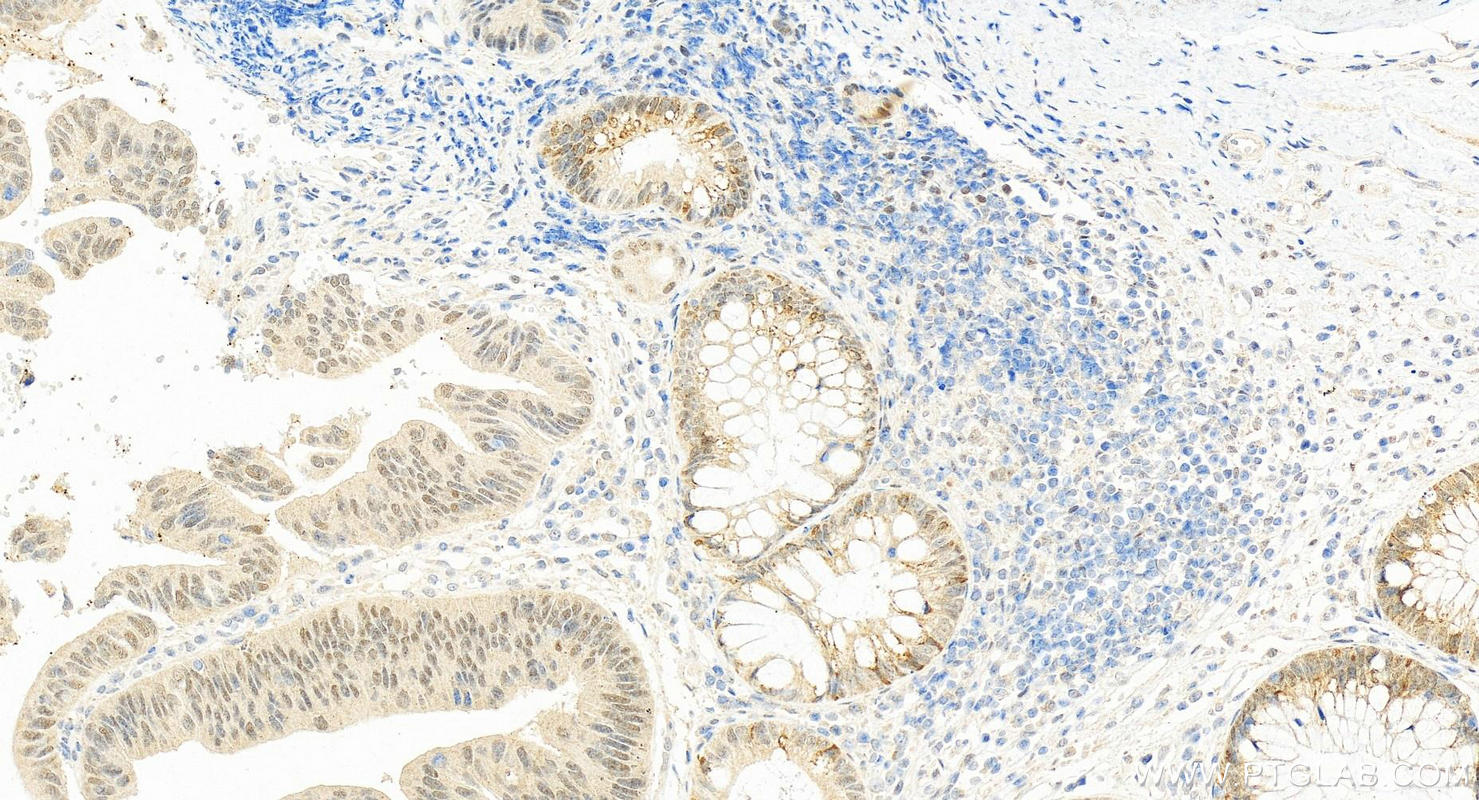
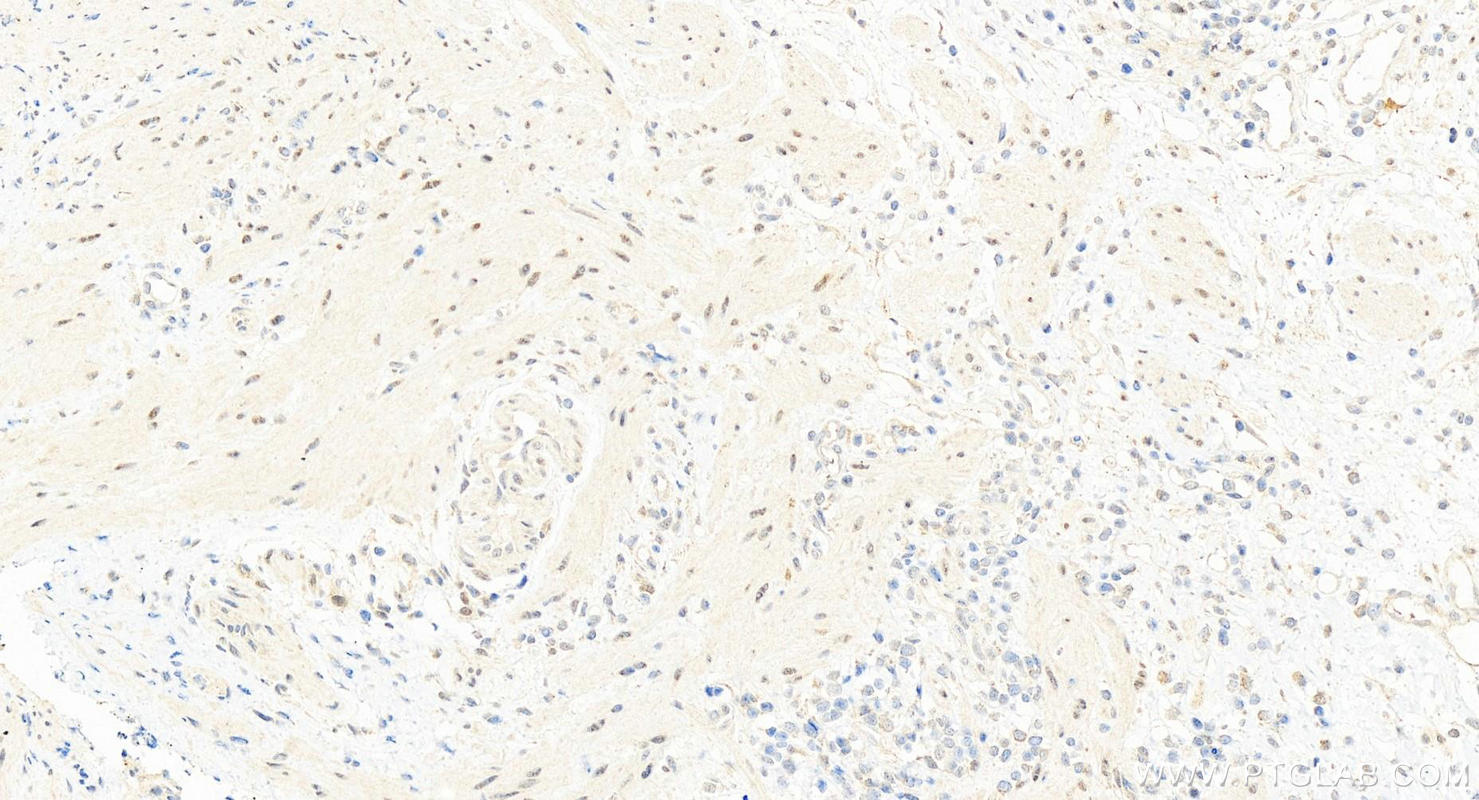
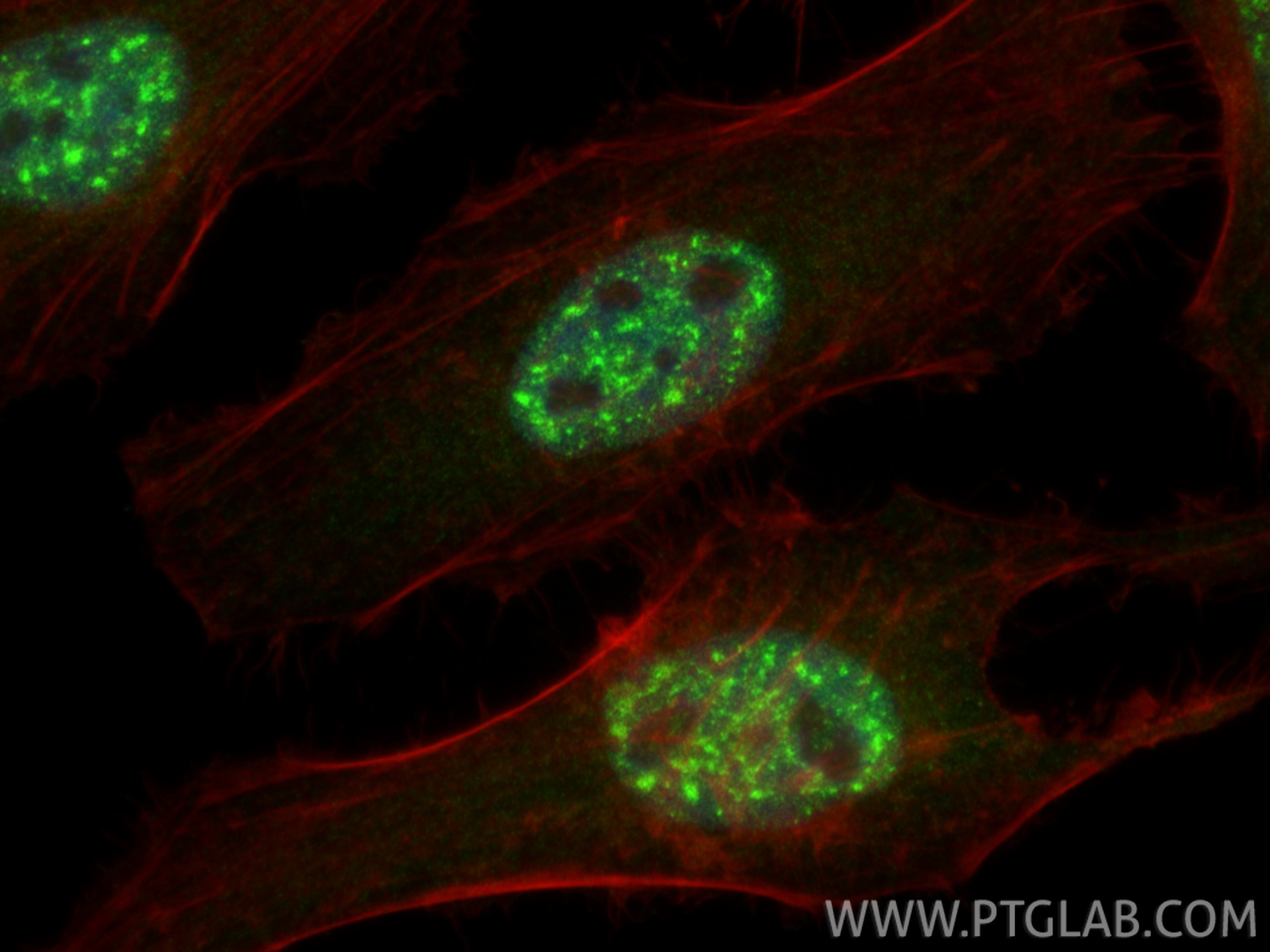

Tested Applications
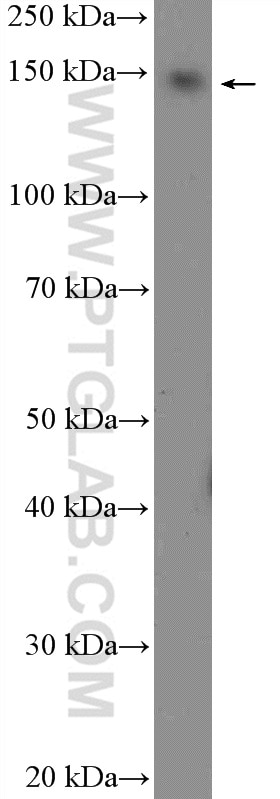
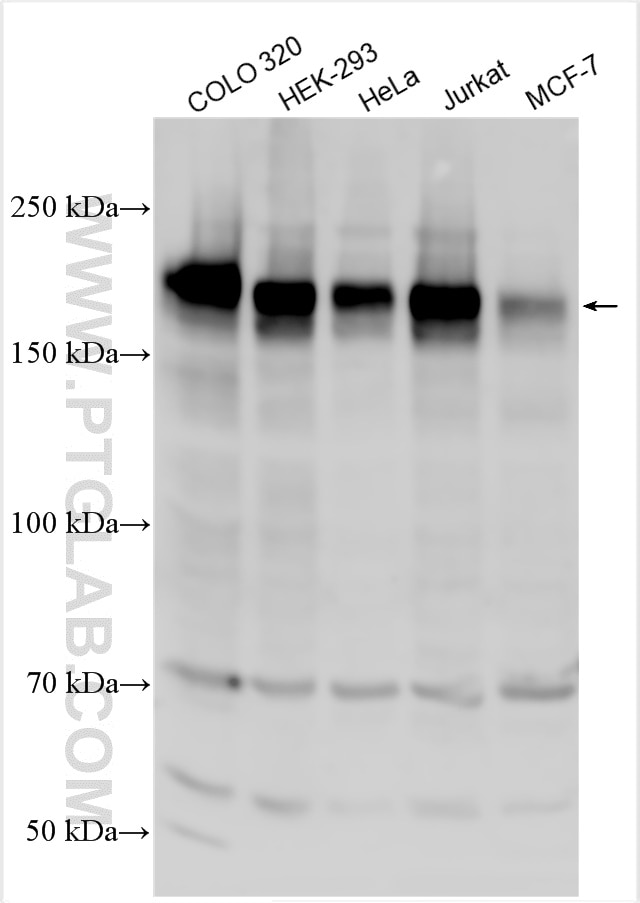
| Positive WB detected in | COLO 320 cells, Jurkat cells, HEK-293 cells, HeLa cells, MCF-7 cells |
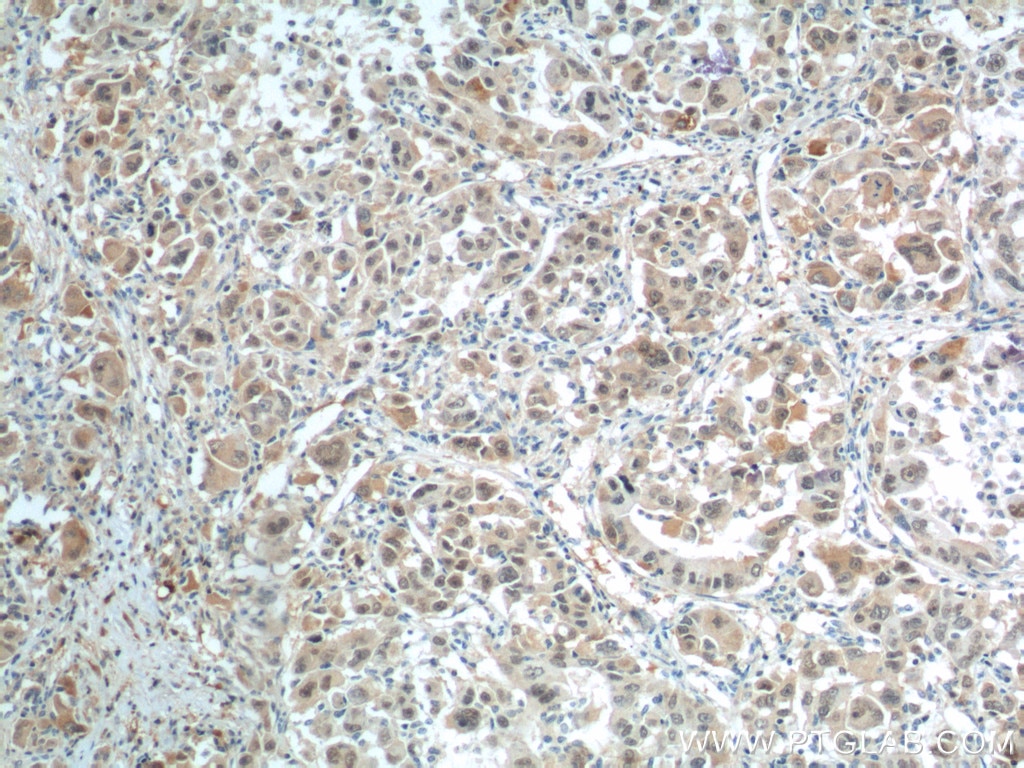
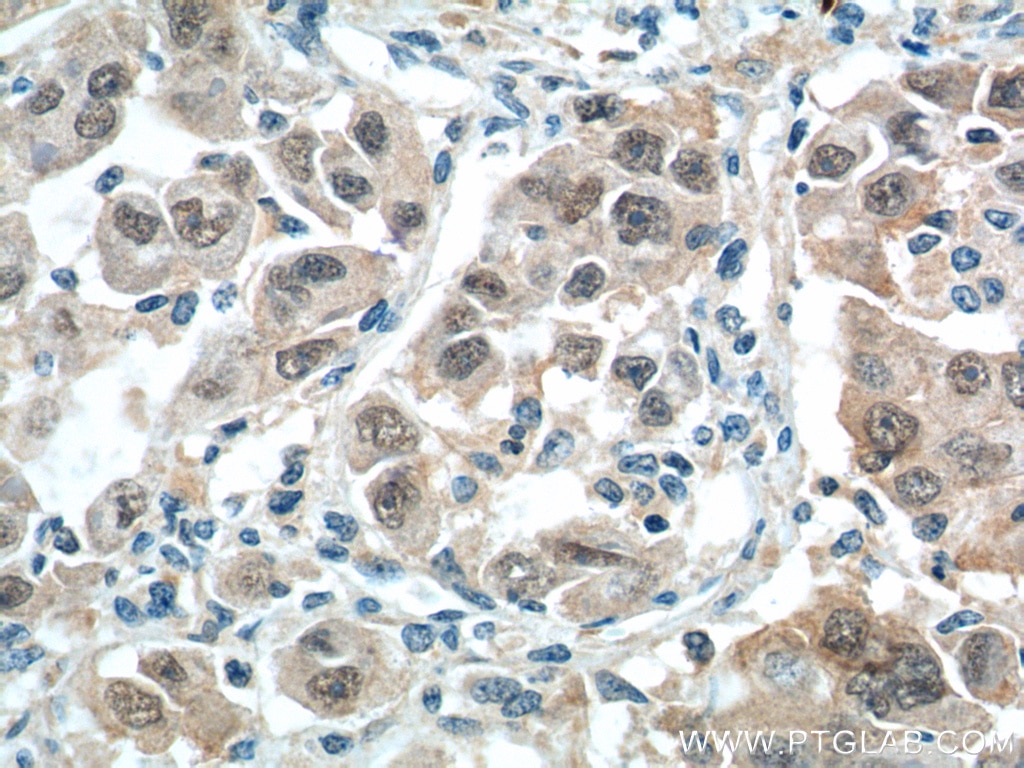
| Positive IHC detected in | human liver cancer tissue, human colon cancer tissue Note: suggested antigen retrieval with TE buffer pH 9.0; (*) Alternatively, antigen retrieval may be performed with citrate buffer pH 6.0 |
| Positive IF/ICC detected in | HeLa cells |
Recommended dilution
| Application | Dilution |
|---|---|
| Western Blot (WB) | WB : 1:500-1:3000 |
| Immunohistochemistry (IHC) | IHC : 1:20-1:200 |
| Immunofluorescence (IF)/ICC | IF/ICC : 1:50-1:500 |
| It is recommended that this reagent should be titrated in each testing system to obtain optimal results. | |
| Sample-dependent, Check data in validation data gallery. | |
Product Information
22947-1-AP targets BCL9 in WB, IHC, IF/ICC, IP, ELISA applications and shows reactivity with human samples.
| Tested Reactivity | human |
| Cited Reactivity | human, mouse |
| Host / Isotype | Rabbit / IgG |
| Class | Polyclonal |
| Type | Antibody |
| Immunogen |
CatNo: Ag19158 Product name: Recombinant human BCL9 protein Source: e coli.-derived, PGEX-4T Tag: GST Domain: 8-340 aa of BC116451 Sequence: VRSSPSGNTQSSPKSKQEVMVRPPTVMSPSGNPQLDSKFSNQGKQGGSASQSQPSPCDSKSGGHTPKALPGPGGSMGLKNGAGNGAKGKGKRERSISADSFDQRDPGTPNDDSDIKECNSADHIKSQDSQHTPHSMTPSNATAPRSSTPSHGQTTATEPTPAQKTPAKVVYVFSTEMANKAAEAVLKGQVETIVSFHIQNISNNKTERSTAPLNTQISALRNDPKPLPQQPPAPANQDQNSSQNTRLQPTPPIPAPAPKPAAPPRPLDRESPGVENKLIPSVGSPASSTPLPPDGTGPNSTPNNRAVTPVSQGSNSSSADPKAPPPPPVSSGE Predict reactive species |
| Full Name | B-cell CLL/lymphoma 9 |
| Calculated Molecular Weight | 1426 aa, 149 kDa |
| Observed Molecular Weight | 149 kDa |
| GenBank Accession Number | BC116451 |
| Gene Symbol | BCL9 |
| Gene ID (NCBI) | 607 |
| RRID | AB_2879189 |
| Conjugate | Unconjugated |
| Form | Liquid |
| Purification Method | Antigen affinity purification |
| UNIPROT ID | O00512 |
| Storage Buffer | PBS with 0.02% sodium azide and 50% glycerol, pH 7.3. |
| Storage Conditions | Store at -20°C. Stable for one year after shipment. Aliquoting is unnecessary for -20oC storage. 20ul sizes contain 0.1% BSA. |
Background Information
BCL9 is associated with B-cell acute lymphoblastic leukemia. It may be a target of translocation in B-cell malignancies with abnormalities of 1q21. Its function is unknown. The overexpression of BCL9 may be of pathogenic significance in B-cell malignancies.
Protocols
| Product Specific Protocols | |
|---|---|
| IF protocol for BCL9 antibody 22947-1-AP | Download protocol |
| IHC protocol for BCL9 antibody 22947-1-AP | Download protocol |
| WB protocol for BCL9 antibody 22947-1-AP | Download protocol |
| Standard Protocols | |
|---|---|
| Click here to view our Standard Protocols |
Publications
What published studies show
The BCL9 Polyclonal antibody (Cat# 22947-1-AP) has 5 citations published in Signal Transduction and Targeted Therapy, Nature Communications, Reproductive Biology and Endocrinology, Bioorganic Chemistry, and Journal of Biological Chemistry. The associated research fields include pulmonary fibrosis, tumor immunotherapy resistance, endometriosis, Wnt/β-catenin signaling pathway inhibition, and breast carcinogenesis.
| Species | Application | Title |
|---|---|---|
Signal Transduct Target Ther BCL9 inhibition promotes fibroblast lipogenesis by regulating macrophage-fibroblast interactions to attenuate pulmonary fibrosis | ||
Nat Commun Targeting tumor-intrinsic BCL9 reverses immunotherapy resistance by eliciting macrophage-mediated phagocytosis and antigen presentation | ||
Reprod Biol Endocrinol Exosomal AFAP1-AS1 binds to microRNA-15a-5p to promote the proliferation, migration, and invasion of ectopic endometrial stromal cells in endometriosis. | ||
Bioorg Chem Discovery of 2-(isoxazol-5-yl)phenyl 3,4-dihydroxybenzoate as a potential inhibitor for the Wnt/β-catenin pathway | ||
J Biol Chem USP9X-mediated deubiquitination of B cell CLL/lymphoma 9 potentiates Wnt signaling and promotes breast carcinogenesis. |

