
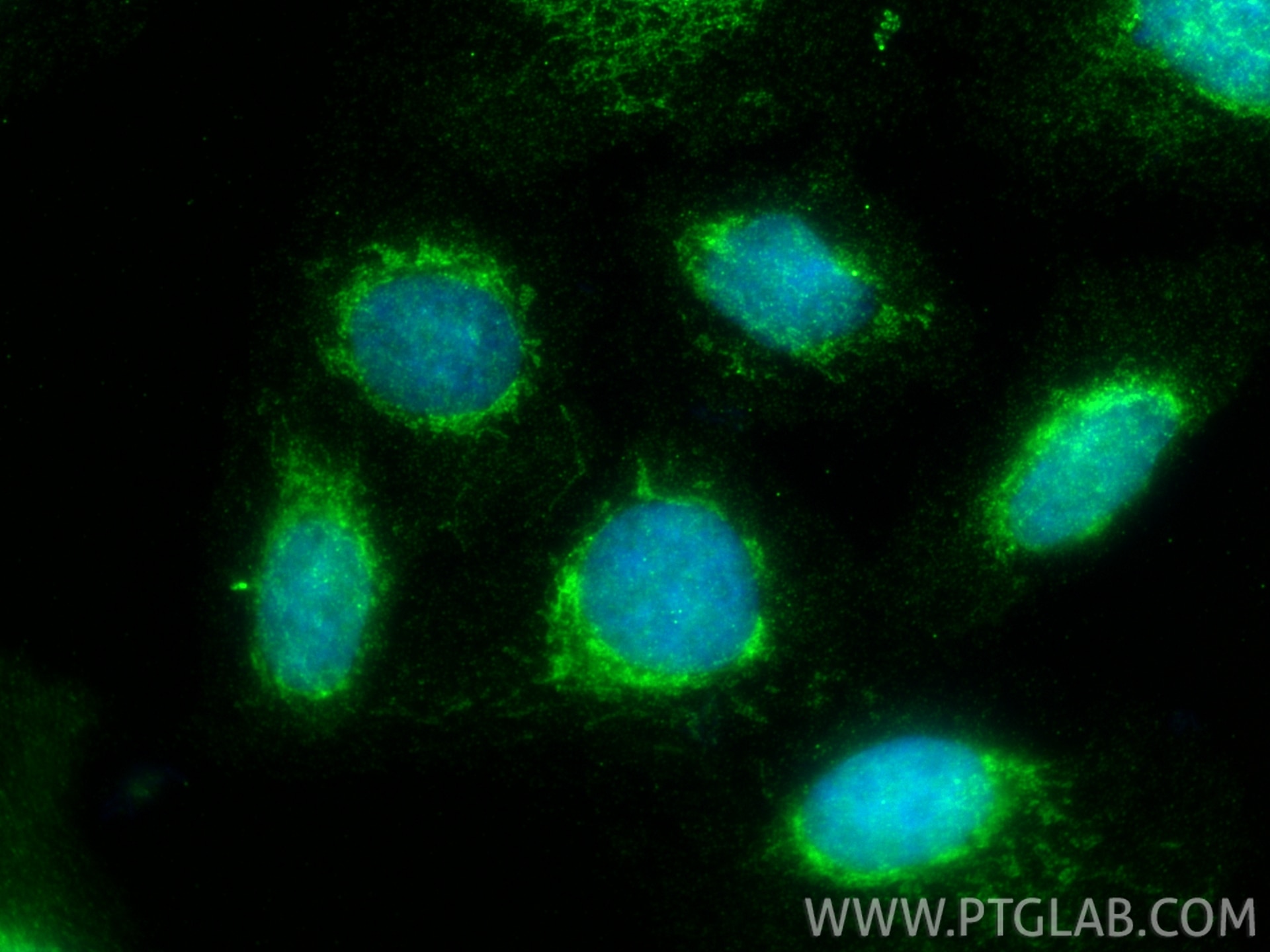

Tested Applications
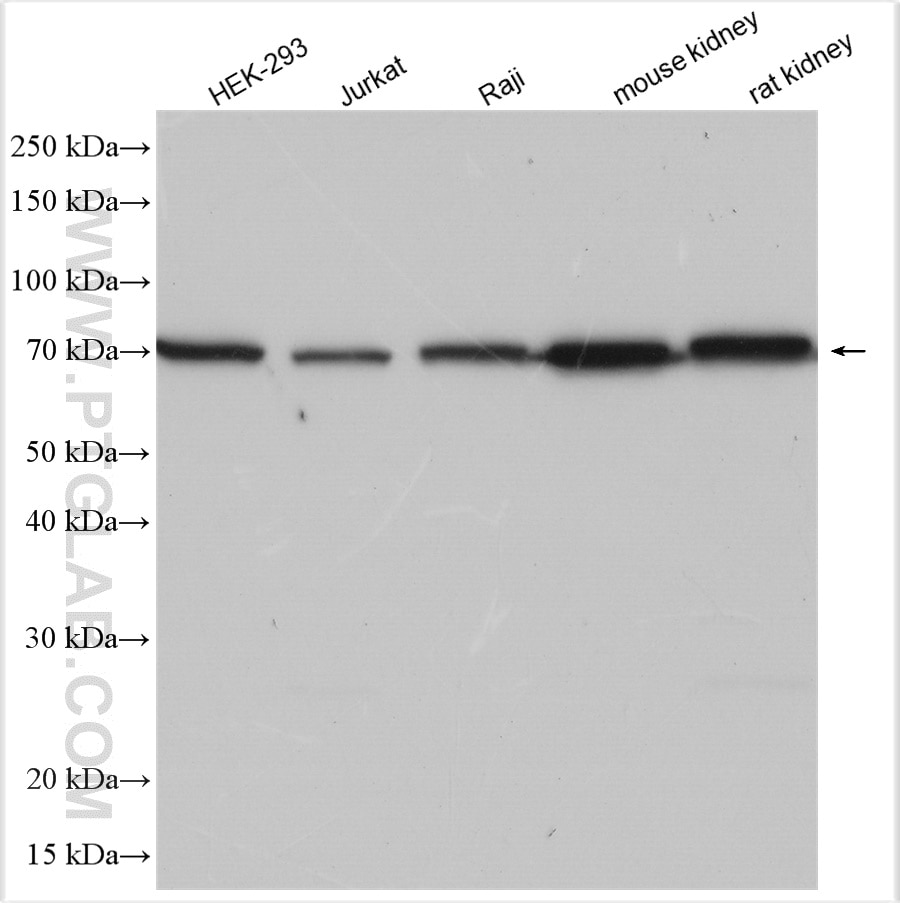
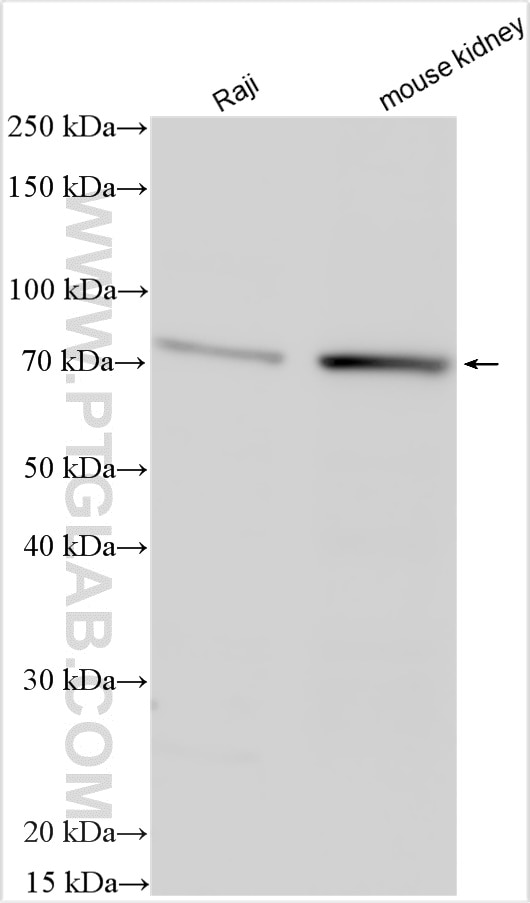
| Positive WB detected in | HEK-293 cells, Raji cells, mouse kidney tissue, Jurkat cells, rat kidney tissue |
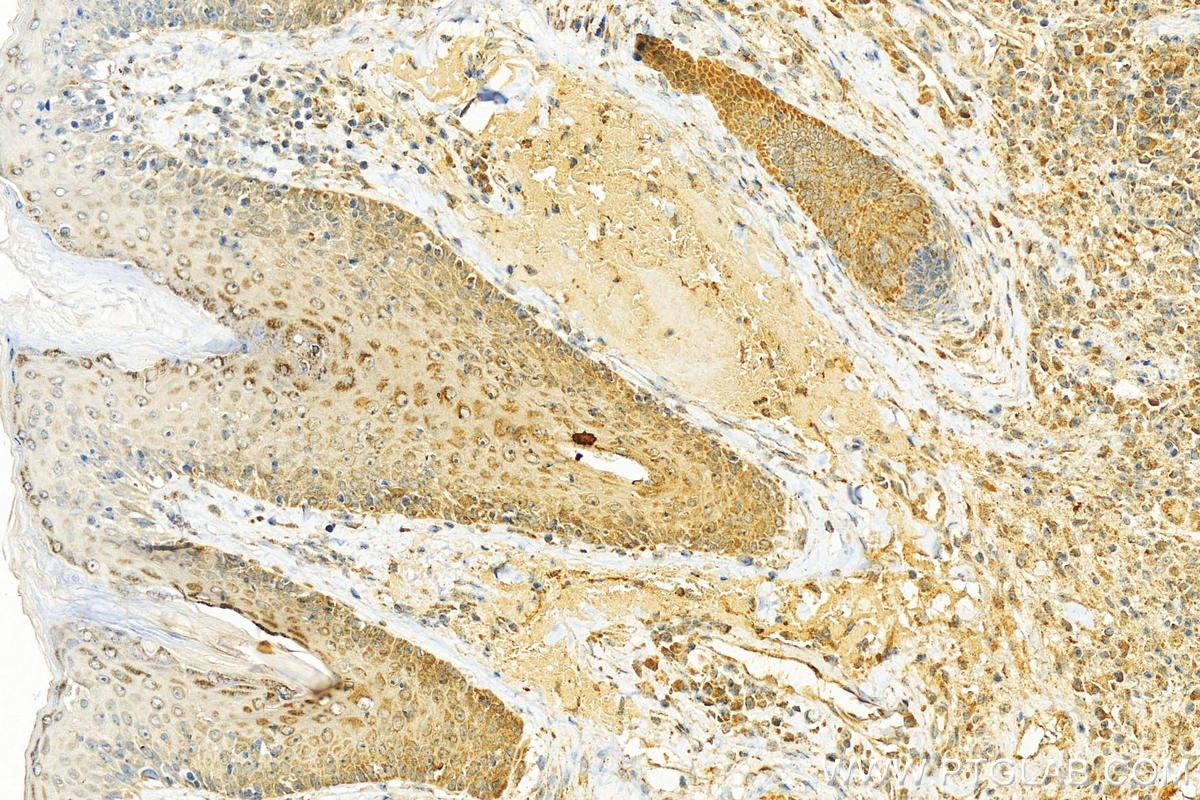
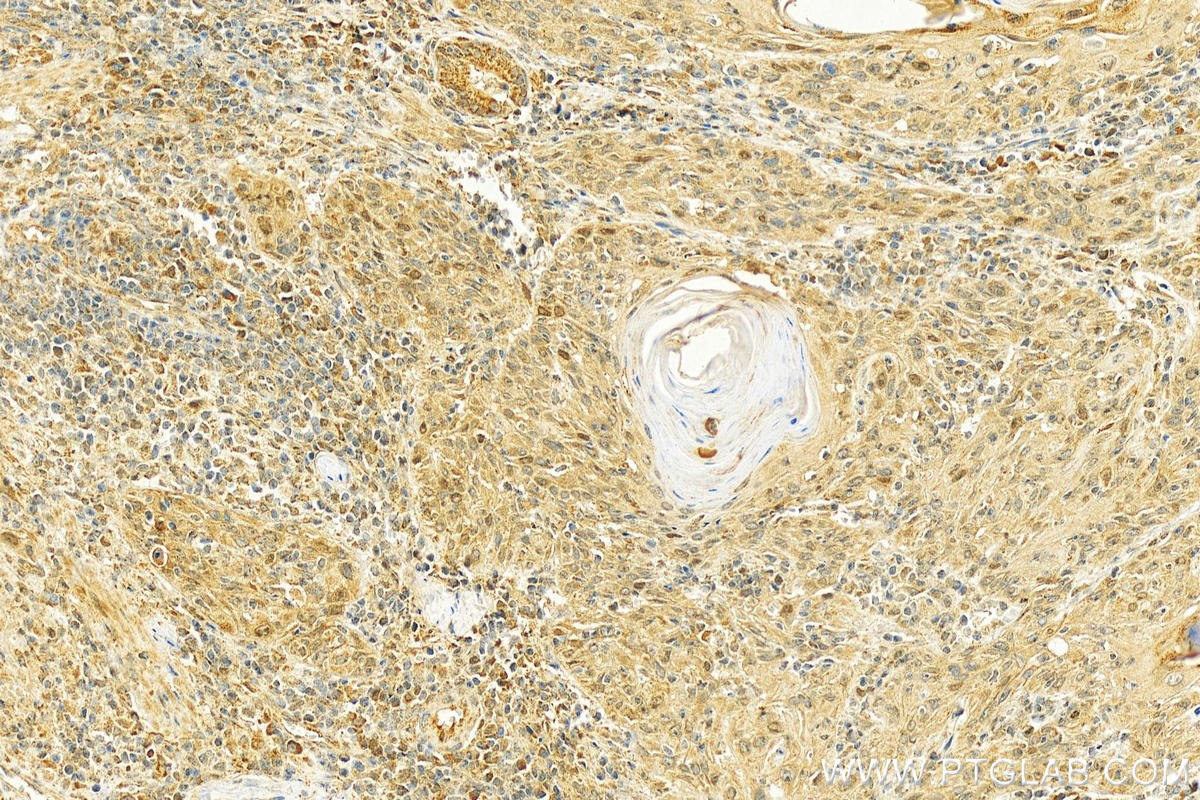
| Positive IHC detected in | human skin cancer tissue Note: suggested antigen retrieval with TE buffer pH 9.0; (*) Alternatively, antigen retrieval may be performed with citrate buffer pH 6.0 |
| Positive IF/ICC detected in | U2OS cells |
Recommended dilution
| Application | Dilution |
|---|---|
| Western Blot (WB) | WB : 1:500-1:3000 |
| Immunohistochemistry (IHC) | IHC : 1:150-1:600 |
| Immunofluorescence (IF)/ICC | IF/ICC : 1:200-1:800 |
| It is recommended that this reagent should be titrated in each testing system to obtain optimal results. | |
| Sample-dependent, Check data in validation data gallery. | |
Product Information
12986-1-AP targets BNIP3L in WB, IHC, IF/ICC, ELISA applications and shows reactivity with human, mouse, rat samples.
| Tested Reactivity | human, mouse, rat |
| Cited Reactivity | human, mouse, rat, pig, zebrafish |
| Host / Isotype | Rabbit / IgG |
| Class | Polyclonal |
| Type | Antibody |
| Immunogen |
CatNo: Ag3624 Product name: Recombinant human BNIP3L protein Source: e coli.-derived, PGEX-4T Tag: GST Domain: 1-219 aa of BC001559 Sequence: MSSHLVEPPPPLHNNNNNCEENEQSLPPPAGLNSSWVELPMNSSNGNDNGNGKNGGLEHVPSSSSIHNGDMEKILLDAQHESGQSSSRGSSHCDSPSPQEDGQIMFDVEMHTSRDHSSQSEEEVVEGEKEVEALKKSADWVSDWSSRPENIPPKEFHFRHPKRSVSLSMRKSGAMKKGGIFSAEFLKVFIPSLFLSHVLALGLGIYIGKRLSTPSASTY Predict reactive species |
| Full Name | BCL2/adenovirus E1B 19kDa interacting protein 3-like |
| Calculated Molecular Weight | 24 kDa |
| Observed Molecular Weight | 70 kDa |
| GenBank Accession Number | BC001559 |
| Gene Symbol | BNIP3L |
| Gene ID (NCBI) | 665 |
| RRID | AB_2877901 |
| Conjugate | Unconjugated |
| Form | Liquid |
| Purification Method | Antigen affinity purification |
| UNIPROT ID | O60238 |
| Storage Buffer | PBS with 0.02% sodium azide and 50% glycerol, pH 7.3. |
| Storage Conditions | Store at -20°C. Stable for one year after shipment. Aliquoting is unnecessary for -20oC storage. 20ul sizes contain 0.1% BSA. |
Background Information
BNIP3L, also named as BNIP3A, BNIP3H, NIX and NIP3L. Bnip3L is one of the BH3-containing pro-apoptotic proteins and that it targets the mitochondria when inducing apoptosis. It may function as a tumor suppressor. BNIP3L has Dimer form with MW ~70 kDa.
Protocols
| Product Specific Protocols | |
|---|---|
| IF protocol for BNIP3L antibody 12986-1-AP | Download protocol |
| IHC protocol for BNIP3L antibody 12986-1-AP | Download protocol |
| WB protocol for BNIP3L antibody 12986-1-AP | Download protocol |
| Standard Protocols | |
|---|---|
| Click here to view our Standard Protocols |
Publications
What published studies show
The BNIP3L Polyclonal Antibody (12986-1-AP) has 53 total citations appearing in journals including Autophagy, Nature Communications, Journal of Advanced Research, Journal of Experimental & Clinical Cancer Research, Cell Reports Medicine, Cell Reports, Free Radical Biology & Medicine, Antioxidants, Journal of Ginseng Research, Biomedicine & Pharmacotherapy, and eLife, among others. The cited studies center on mitophagy/autophagy, mitochondrial dysfunction and quality control, hypoxia signaling (HIF-1α/BNIP3L), ischemia-reperfusion injury, ferroptosis, aging and senescence, neuroprotection, cardiovascular and renal disease, viral replication (including SARS-CoV-2), and oncology.
| Species | Application | Title |
|---|---|---|
Autophagy Pestiviruses utilize pyrimidine metabolism to regulate mitophagy for viral replication. | ||
Autophagy Hypoxia-induced GPCPD1 depalmitoylation triggers mitophagy via regulating PRKN-mediated ubiquitination of VDAC1 | ||
Autophagy Autophagy loss impedes cancer-associated fibroblast activation via downregulating proline biosynthesis.
| ||
Autophagy Mitochondrial dysfunction and mitophagy defect triggered by heterozygous GBA mutations. | ||
Autophagy Classical swine fever virus hijacks ESCRT-III and VPS4A to promote phagophore closure for accelerating mitophagy. |

