
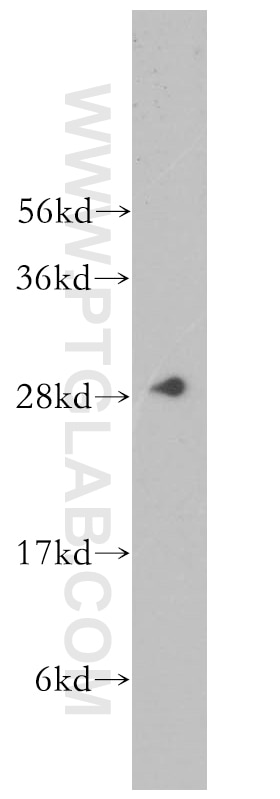
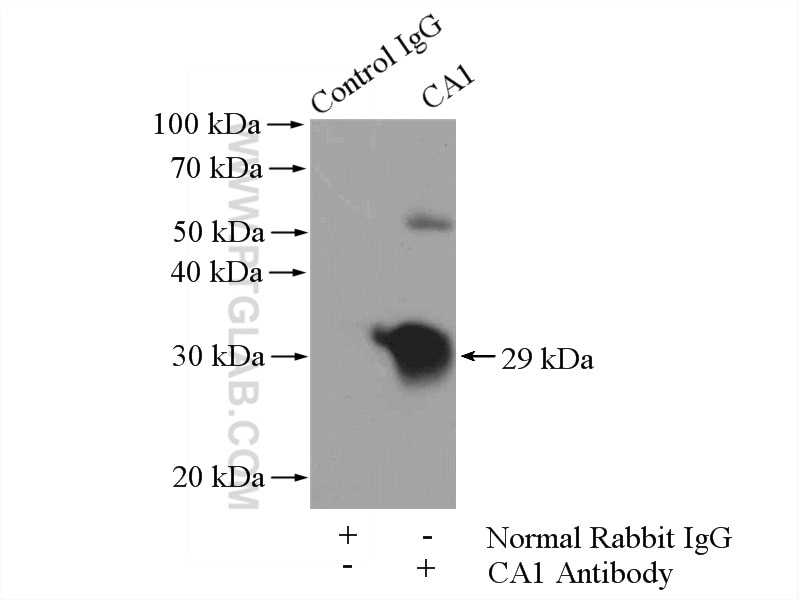
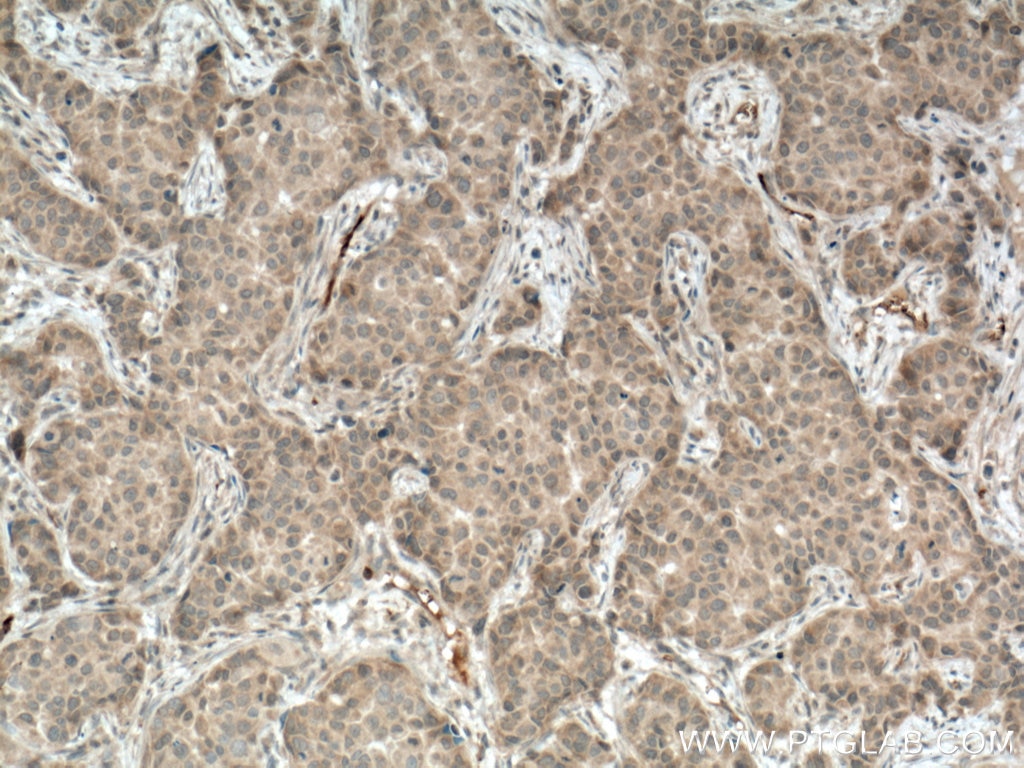
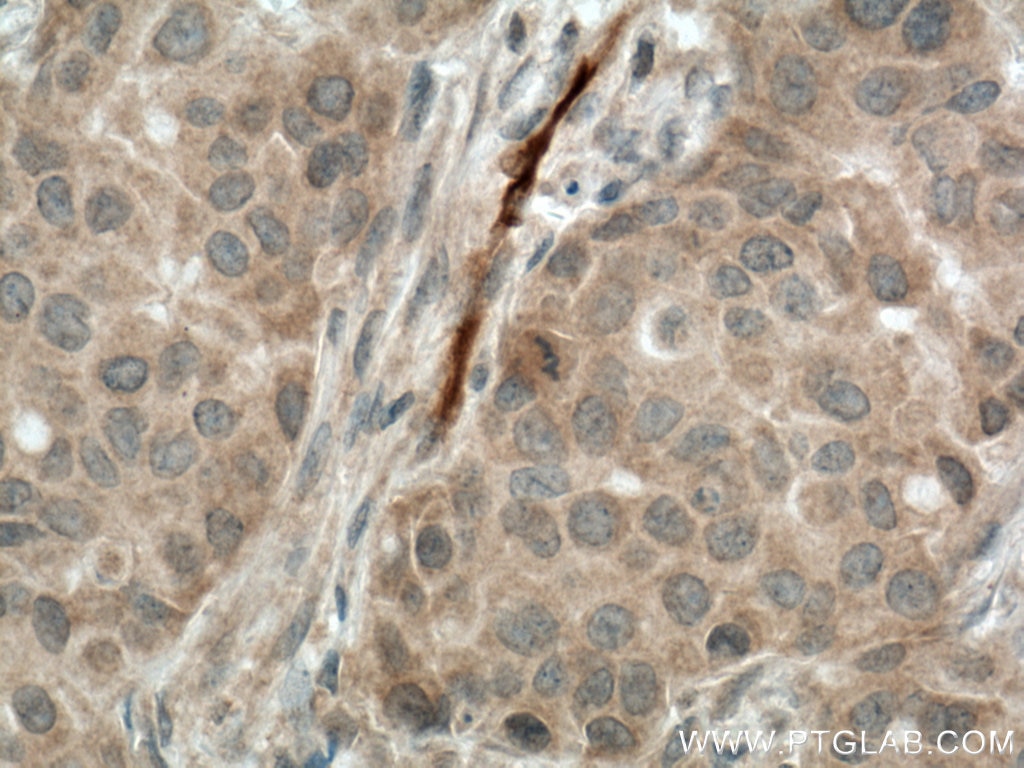
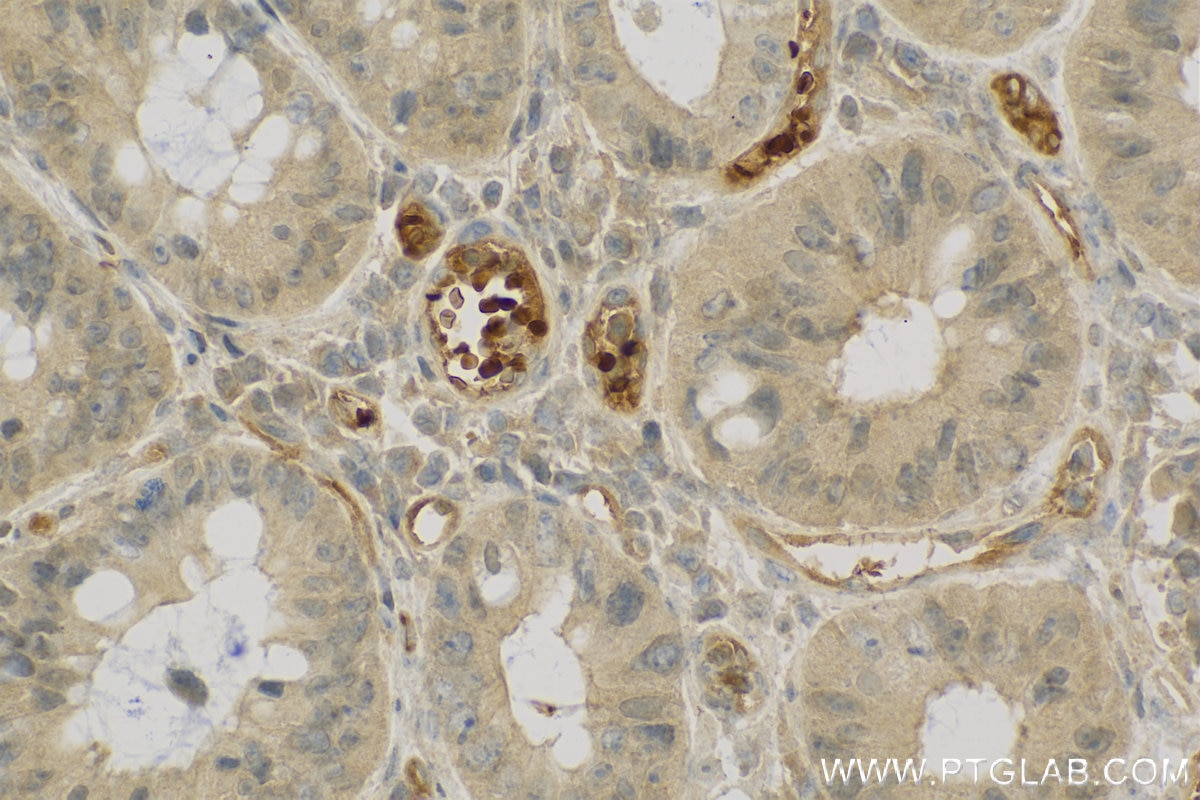

Tested Applications
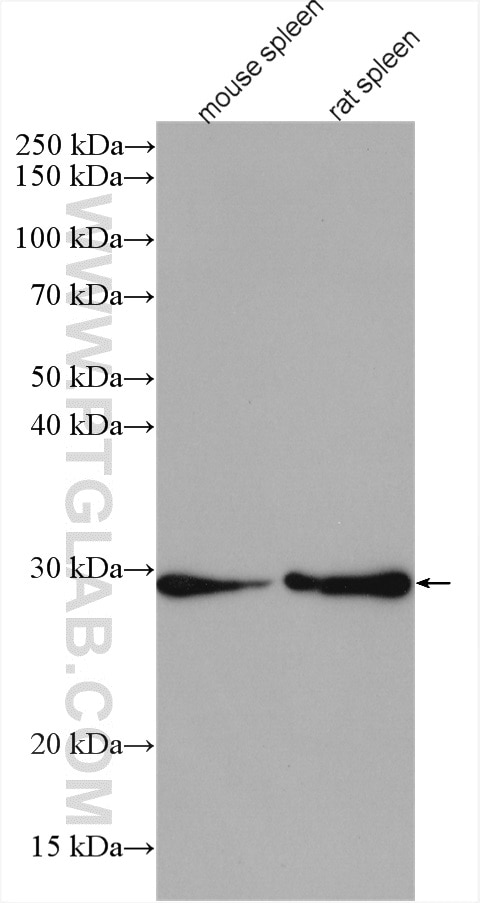
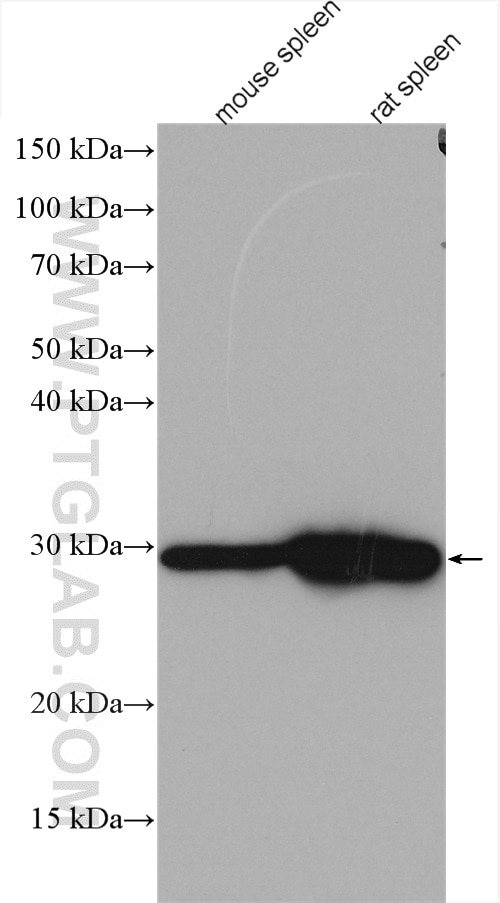
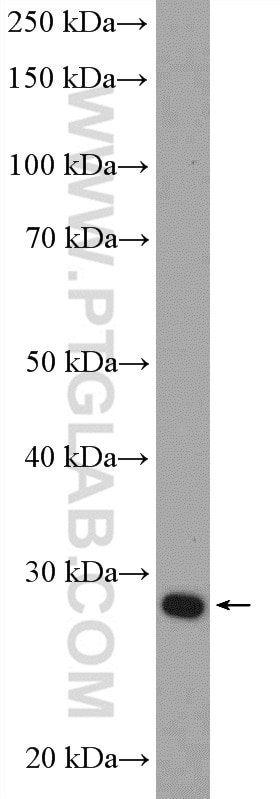
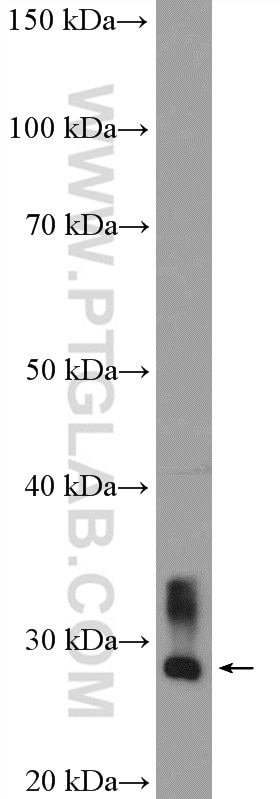
| Positive WB detected in | mouse spleen tissue, Jurkat cells, rat spleen tissue |
| Positive IP detected in | K-562 cells |
| Positive IHC detected in | human breast cancer tissue, human colon cancer tissue Note: suggested antigen retrieval with TE buffer pH 9.0; (*) Alternatively, antigen retrieval may be performed with citrate buffer pH 6.0 |
Recommended dilution
| Application | Dilution |
|---|---|
| Western Blot (WB) | WB : 1:500-1:3000 |
| Immunoprecipitation (IP) | IP : 0.5-4.0 ug for 1.0-3.0 mg of total protein lysate |
| Immunohistochemistry (IHC) | IHC : 1:50-1:500 |
| It is recommended that this reagent should be titrated in each testing system to obtain optimal results. | |
| Sample-dependent, Check data in validation data gallery. | |
Product Information
13198-2-AP targets Carbonic anhydrase 1/CA1 in WB, IHC, IF, IP, ELISA applications and shows reactivity with human, mouse, rat samples.
| Tested Reactivity | human, mouse, rat |
| Cited Reactivity | human, mouse, rat |
| Host / Isotype | Rabbit / IgG |
| Class | Polyclonal |
| Type | Antibody |
| Immunogen |
CatNo: Ag3932 Product name: Recombinant human CA1 protein Source: e coli.-derived, PGEX-4T Tag: GST Domain: 1-261 aa of BC027890 Sequence: MASPDWGYDDKNGPEQWSKLYPIANGNNQSPVDIKTSETKHDTSLKPISVSYNPATAKEIINVGHSFHVNFEDNDNRSVLKGGPFSDSYRLFQFHFHWGSTNEHGSEHTVDGVKYSAELHVAHWNSAKYSSLAEAASKADGLAVIGVLMKVGEANPKLQKVLDALQAIKTKGKRAPFTNFDPSTLLPSSLDFWTYPGSLTHPPLYESVTWIICKESISVSSEQLAQFRSLLSNVEGDNAVPMQHNNRPTQPLKGRTVRASF Predict reactive species |
| Full Name | carbonic anhydrase I |
| Calculated Molecular Weight | 261 aa, 29 kDa |
| Observed Molecular Weight | 29 kDa |
| GenBank Accession Number | BC027890 |
| Gene Symbol | CA1 |
| Gene ID (NCBI) | 759 |
| RRID | AB_2275041 |
| Conjugate | Unconjugated |
| Form | Liquid |
| Purification Method | Antigen affinity purification |
| UNIPROT ID | P00915 |
| Storage Buffer | PBS with 0.02% sodium azide and 50% glycerol, pH 7.3. |
| Storage Conditions | Store at -20°C. Stable for one year after shipment. Aliquoting is unnecessary for -20oC storage. 20ul sizes contain 0.1% BSA. |
Background Information
CA1(Carbonic anhydrase 1) is also named as CAB and belongs to the alpha-carbonic anhydrase family, which may reside in cytoplasm, in mitochondria, or in secretory granules, or associate with membranes in cell. It forms a large family of genes encoding zinc metalloenzymes of great physiologic importance. Extracellular CA1 mediates hemorrhagic retinal and cerebral vascular permeability through prekallikrein activation(PMID:17259996).
Protocols
| Product Specific Protocols | |
|---|---|
| IHC protocol for Carbonic anhydrase 1/CA1 antibody 13198-2-AP | Download protocol |
| IP protocol for Carbonic anhydrase 1/CA1 antibody 13198-2-AP | Download protocol |
| WB protocol for Carbonic anhydrase 1/CA1 antibody 13198-2-AP | Download protocol |
| Standard Protocols | |
|---|---|
| Click here to view our Standard Protocols |
Publications
What published studies show
Carbonic Anhydrase 1/CA1 Polyclonal Antibody (Cat# 13198-2-AP) has 12 citations published in journals including EBioMedicine, Microbiome, J Nanobiotechnology, Sci Rep, FASEB J, J Neurosci, Acta Neuropathol Commun, Front Pharmacol, Front Mol Neurosci, J Inflamm Res, J Ginseng Res, and Am J Physiol Lung Cell Mol Physiol. Research fields encompass ovarian cancer, colitis/IBD, cardiac injury, depressive disorder, vascular calcification, cystic fibrosis, enteric nervous system development, and stent restenosis.
| Species | Application | Title |
|---|---|---|
J Nanobiotechnology Coptis chinensis extracellular vesicles loaded with CA1-siRNA promote endothelial repair and stent restenosis therapy by regulating the PADI2 and NF-κB pathway.
| ||
Microbiome RhoB affects colitis through modulating cell signaling and intestinal microbiome | ||
EBioMedicine Proteomic profiling and molecular reclassification of high-grade serous ovarian cancer identifies prognostic subtypes and immunotherapy biomarkers. | ||
J Ginseng Res Ginsenoside Rg1 attenuates mechanical stress-induced cardiac injury via calcium sensing receptor-related pathway | ||
Acta Neuropathol Commun Upregulation of carbonic anhydrase 1 beneficial for depressive disorder
| ||
Front Pharmacol Calcium Sensing Receptor-Related Pathway Contributes to Cardiac Injury and the Mechanism of Astragaloside IV on Cardioprotection. |
Reviews
What customers say
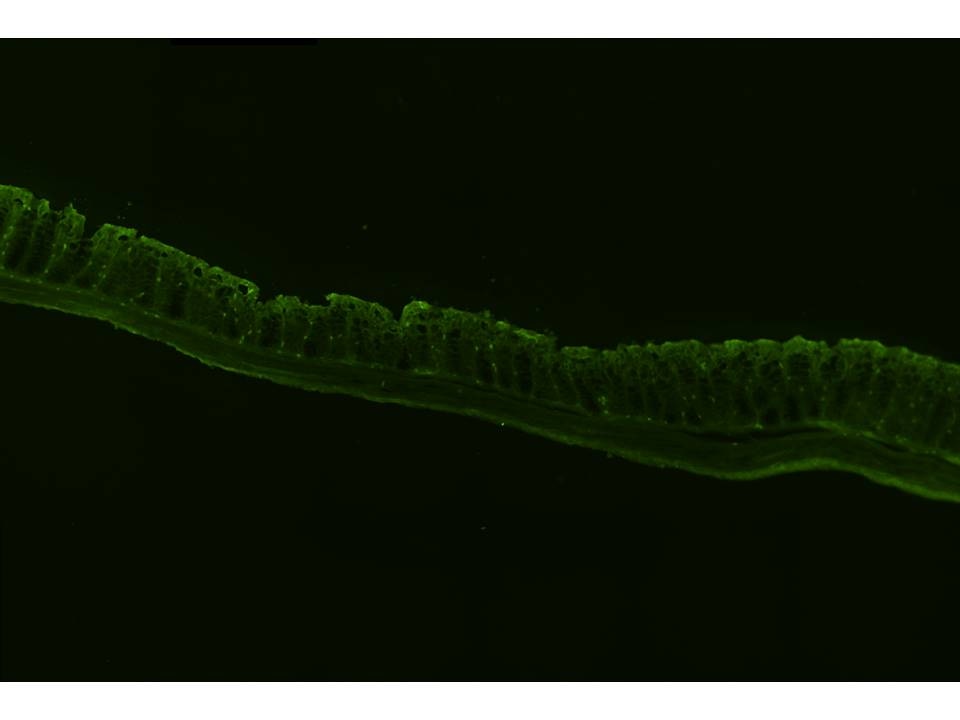
One reviewer (5/5 stars) used this CA-1 antibody on mouse colon tissue for Western blot and immunofluorescence. WB at 1:1000 produced very clean bands, and IF at 1:100 showed clear signal along the brush border. The reviewer noted some intracellular staining in a subset of cells and was uncertain whether it reflected non-specific binding or expression in a non-colonocyte cell type. Overall, the antibody performed well with good specificity and sensitivity in both applications.
The reviews below have been submitted by verified Proteintech customers who received an incentive for providing their feedback.
Brittany (Verified Customer) (09-27-2019) | Using the CA-1 primary antibody with mouse colon scrapes yielded very clean bands with western blotting. Immunofluorescence also gave a fairly clean, detectable signal, with CA-1 showing up along the brush border in mouse colon tissue. There were some cells that stained more intracellularly, and unsure if that was non-specific binding of the antibody, or another cell type other than colonocytes that expresses CA-1 intracellularly.
 |

