
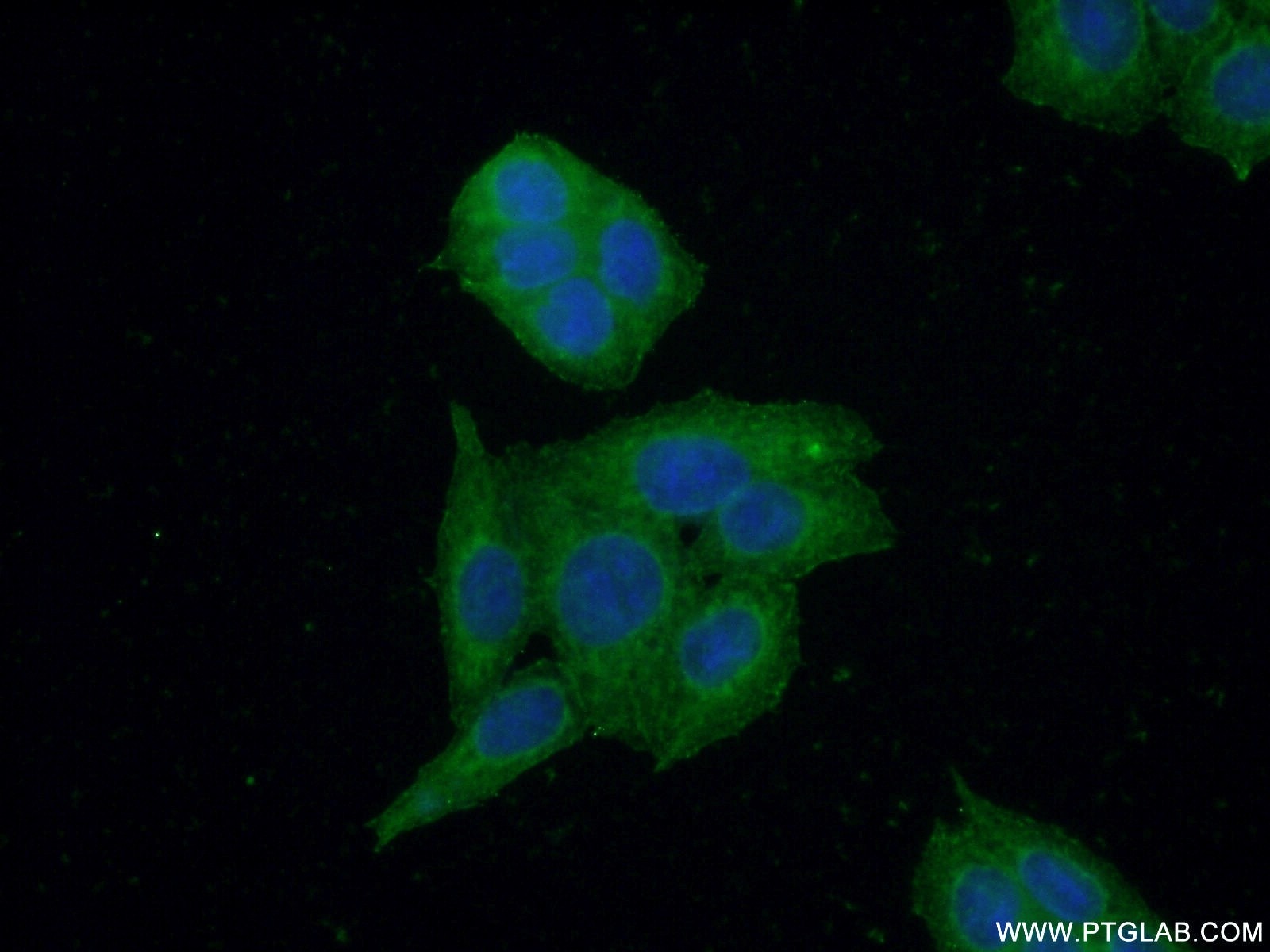

Tested Applications
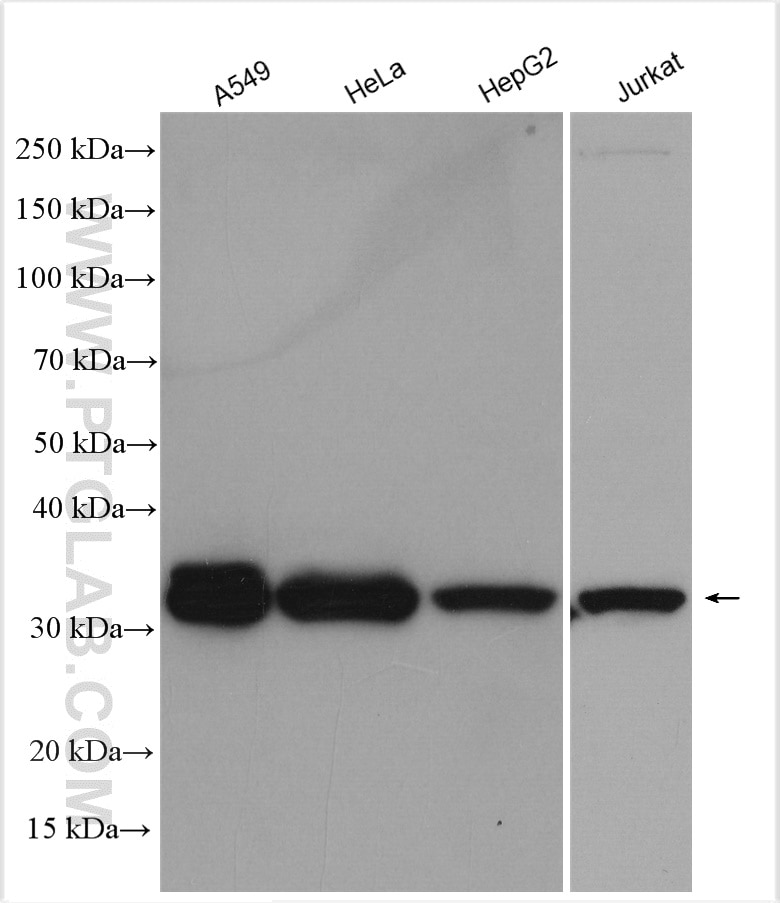
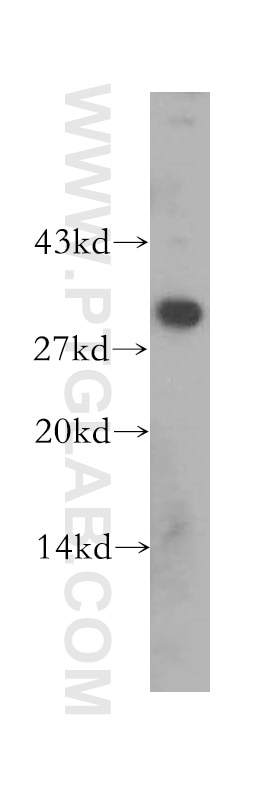
| Positive WB detected in | A549 cells, Jurkat cells, HeLa cells,HepG2 cells,Jurkat cells |
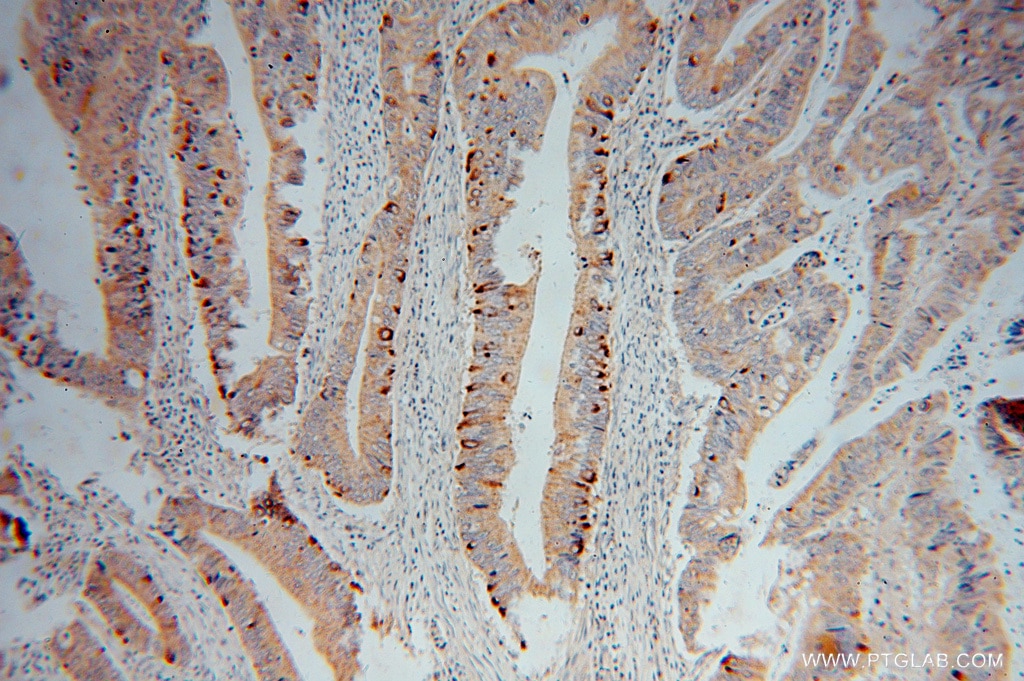
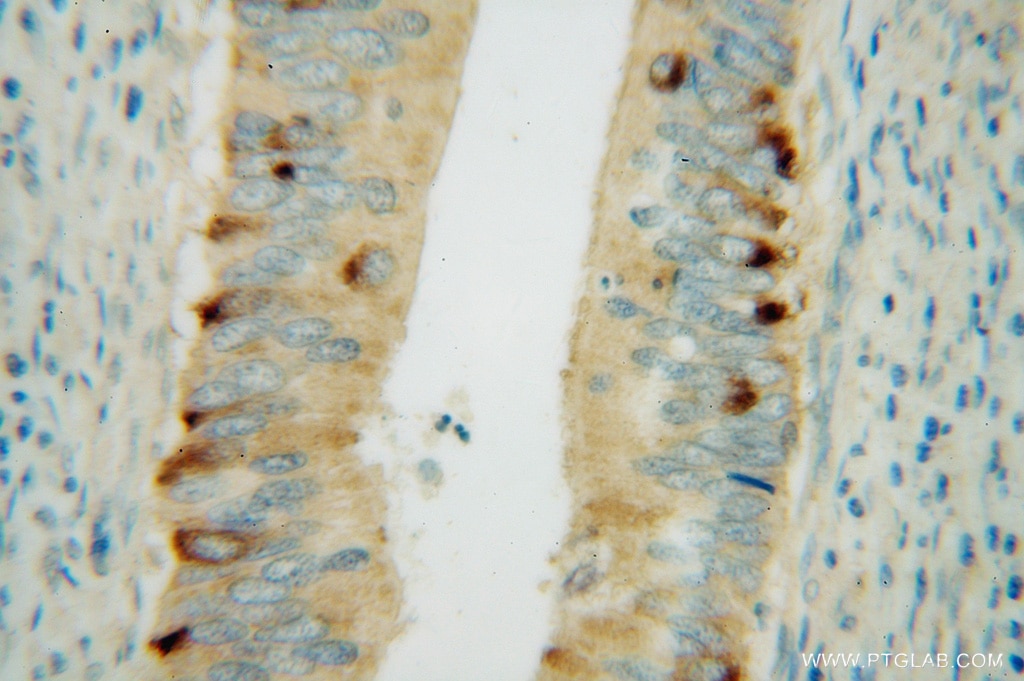
| Positive IHC detected in | human colon cancer tissue Note: suggested antigen retrieval with TE buffer pH 9.0; (*) Alternatively, antigen retrieval may be performed with citrate buffer pH 6.0 |
| Positive IF/ICC detected in | HeLa cells |
Recommended dilution
| Application | Dilution |
|---|---|
| Western Blot (WB) | WB : 1:2000-1:12000 |
| Immunohistochemistry (IHC) | IHC : 1:20-1:200 |
| Immunofluorescence (IF)/ICC | IF/ICC : 1:50-1:500 |
| It is recommended that this reagent should be titrated in each testing system to obtain optimal results. | |
| Sample-dependent, Check data in validation data gallery. | |
Product Information
15619-1-AP targets CBR3 in WB, IHC, IF/ICC, ELISA applications and shows reactivity with human samples.
| Tested Reactivity | human |
| Cited Reactivity | human, mouse, rat |
| Host / Isotype | Rabbit / IgG |
| Class | Polyclonal |
| Type | Antibody |
| Immunogen |
CatNo: Ag8039 Product name: Recombinant human CBR3 protein Source: e coli.-derived, PGEX-4T Tag: GST Domain: 1-277 aa of BC002812 Sequence: MSSCSRVALVTGANRGIGLAIARELCRQFSGDVVLTARDVARGQAAVQQLQAEGLSPRFHQLDIDDLQSIRALRDFLRKEYGGLNVLVNNAAVAFKSDDPMPFDIKAEMTLKTNFFATRNMCNELLPIMKPHGRVVNISSLQCLRAFENCSEDLQERFHSETLTEGDLVDLMKKFVEDTKNEVHEREGWPNSPYGVSKLGVTVLSRILARRLDEKRKADRILVNACCPGPVKTDMDGKDSIRTVEEGAETPVYLALLPPDATEPQGQLVHDKVVQNW Predict reactive species |
| Full Name | carbonyl reductase 3 |
| Calculated Molecular Weight | 31 kDa |
| Observed Molecular Weight | 31 kDa |
| GenBank Accession Number | BC002812 |
| Gene Symbol | CBR3 |
| Gene ID (NCBI) | 874 |
| RRID | AB_2070862 |
| Conjugate | Unconjugated |
| Form | Liquid |
| Purification Method | Antigen affinity purification |
| UNIPROT ID | O75828 |
| Storage Buffer | PBS with 0.02% sodium azide and 50% glycerol, pH 7.3. |
| Storage Conditions | Store at -20°C. Stable for one year after shipment. Aliquoting is unnecessary for -20oC storage. 20ul sizes contain 0.1% BSA. |
Background Information
CBR3(Carbonyl reductase [NADPH] 3), which Belongs to the short-chain dehydrogenases/reductases (SDR) family, has low NADPH-dependent oxidoreductase activity towards 4-benzoylpyridine and menadione (in vitro). The gene encodes a 31 kDa protein that can catalyze the reduction of many endogenous and xenobiotic carbonyl compounds, including steroids and prostaglandins. The deduced 277-amino acid CBR3 protein is 84% similar to the CBR1 protein(PMID:9740676).
Protocols
| Product Specific Protocols | |
|---|---|
| IF protocol for CBR3 antibody 15619-1-AP | Download protocol |
| IHC protocol for CBR3 antibody 15619-1-AP | Download protocol |
| WB protocol for CBR3 antibody 15619-1-AP | Download protocol |
| Standard Protocols | |
|---|---|
| Click here to view our Standard Protocols |
Publications
What published studies show
The CBR3 Polyclonal antibody (Cat# 15619-1-AP) has 6 citations published in Nature Communications, International Journal of Biological Macromolecules, Antioxidants & Redox Signaling, World Allergy Organization Journal, Carcinogenesis, and Biomolecules. Research fields span 20S proteasome regulation and allosteric inhibition, arginine-proline metabolism in glomerulopathies, mitochondrial-related gene signatures in chronic rhinosinusitis and periodontitis, and redox homeostasis in hepatocarcinogenesis. Applications include WB, IF, and IHC across human, mouse, and rat species.
| Species | Application | Title |
|---|---|---|
Nat Commun Allosteric regulation of the 20S proteasome by the Catalytic Core Regulators (CCRs) family | ||
Int J Biol Macromol Dysregulation of argininosuccinate synthase 1, phosphoenolpyruvate carboxykinase 1, and carbonyl reductase 3: Key arginine-proline metabolic mediators in mesangioproliferative glomerulopathies.
| ||
Antioxid Redox Signal Regulation of the 20S Proteasome by a Novel Family of Inhibitory Proteins. | ||
World Allergy Organ J Integrated machine learning and bioinformatic analysis of mitochondrial-related signature in chronic rhinosinusitis with nasal polyps | ||
Carcinogenesis Thioredoxin reductase 1 protects against chemically induced hepatocarcinogenesis via control of cellular redox homeostasis. | ||
Biomolecules Integrative Transcriptomics Reveals a Mitochondria-Related Gene Signature in Periodontitis. |

