
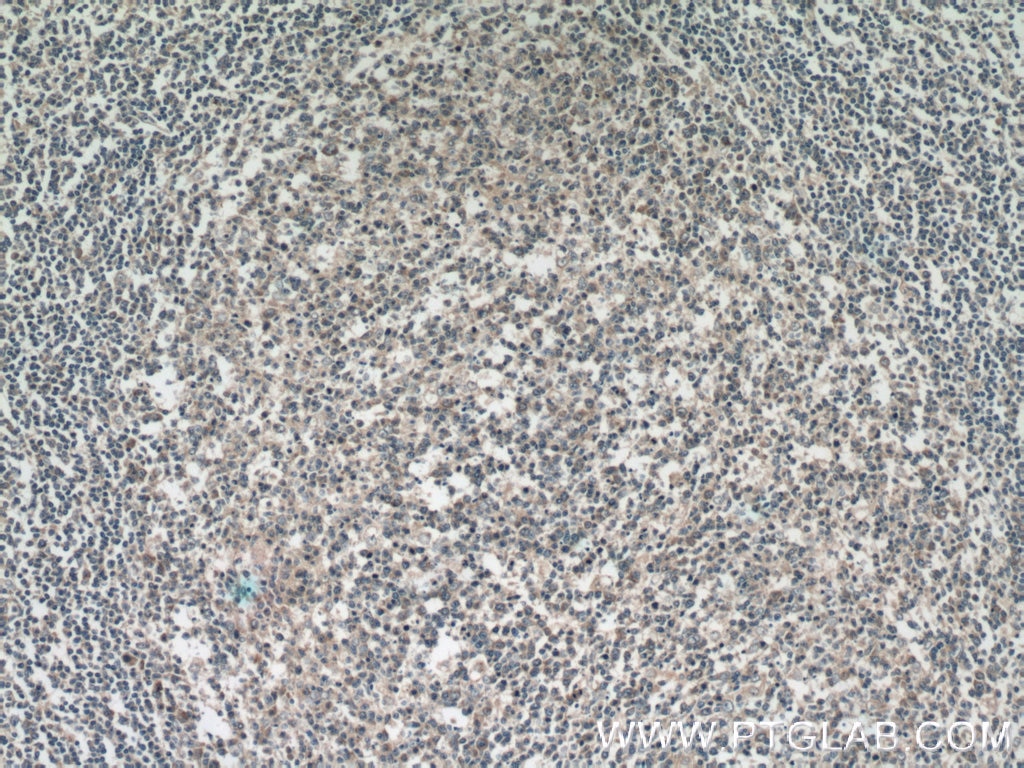
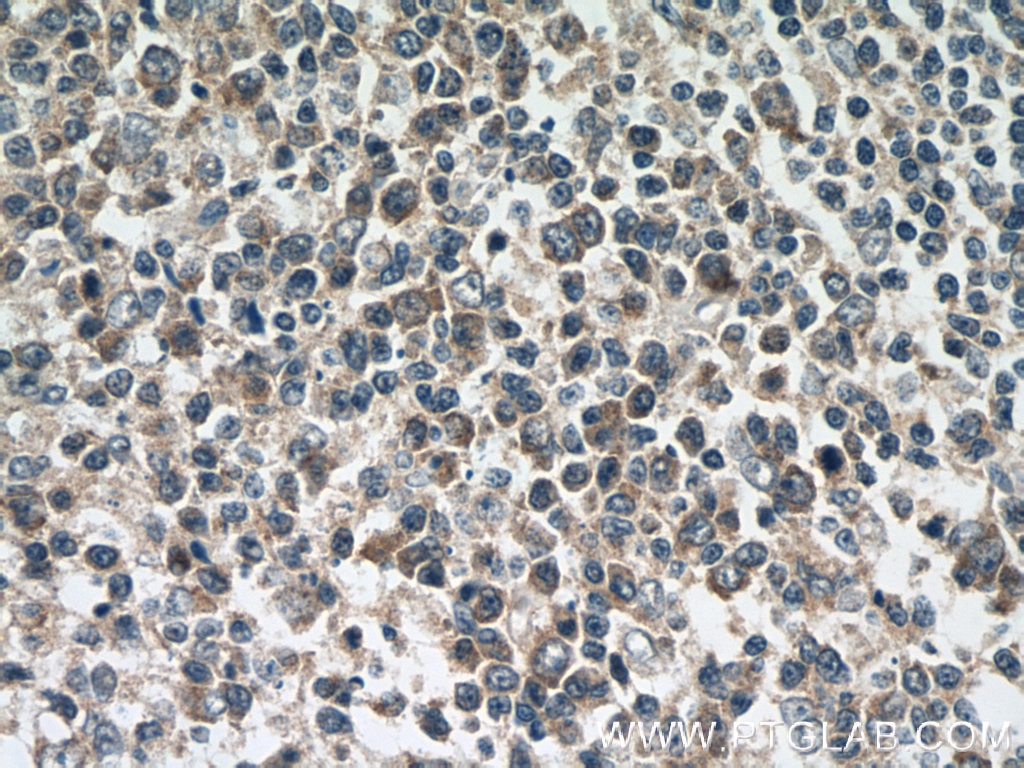
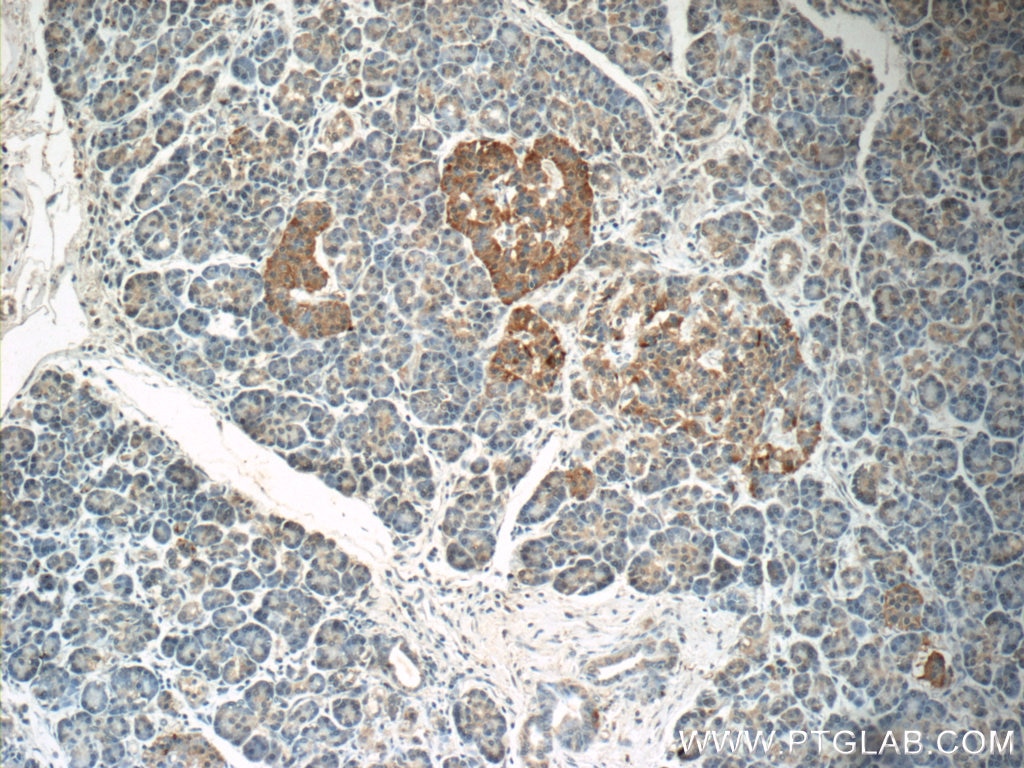
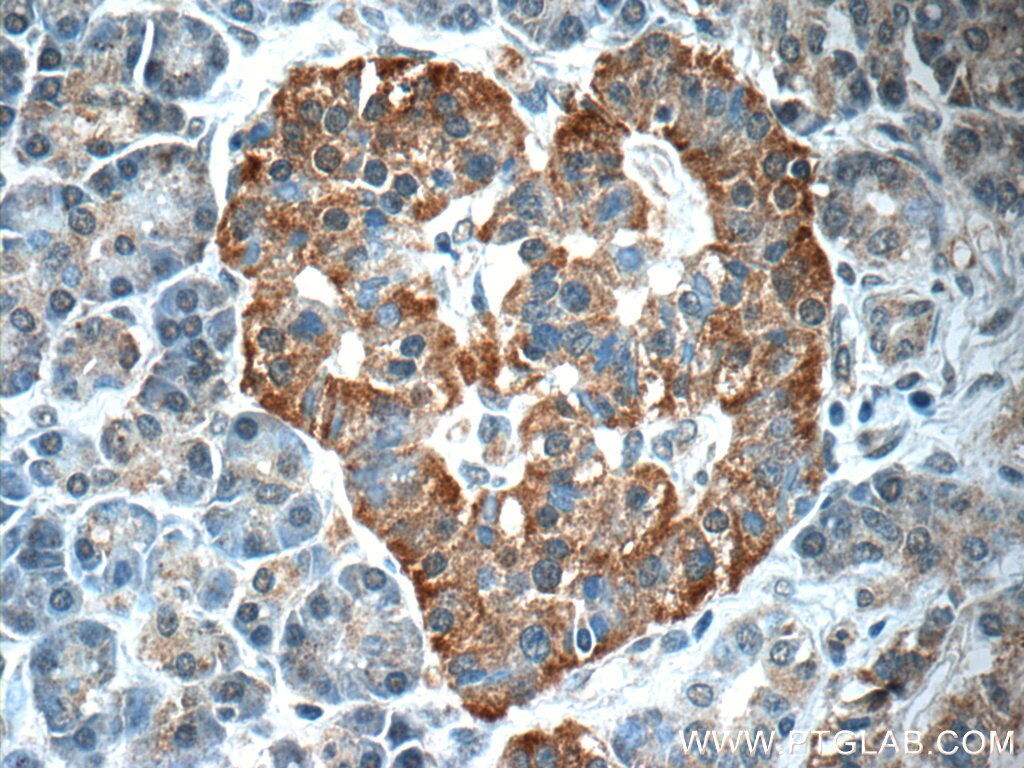
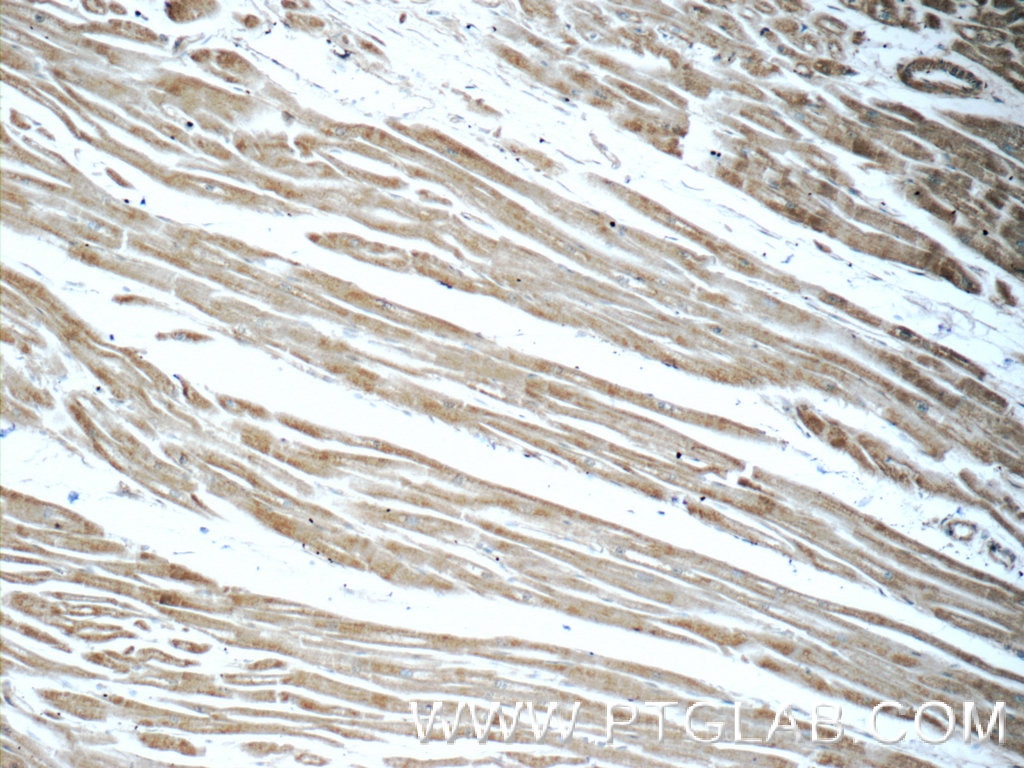
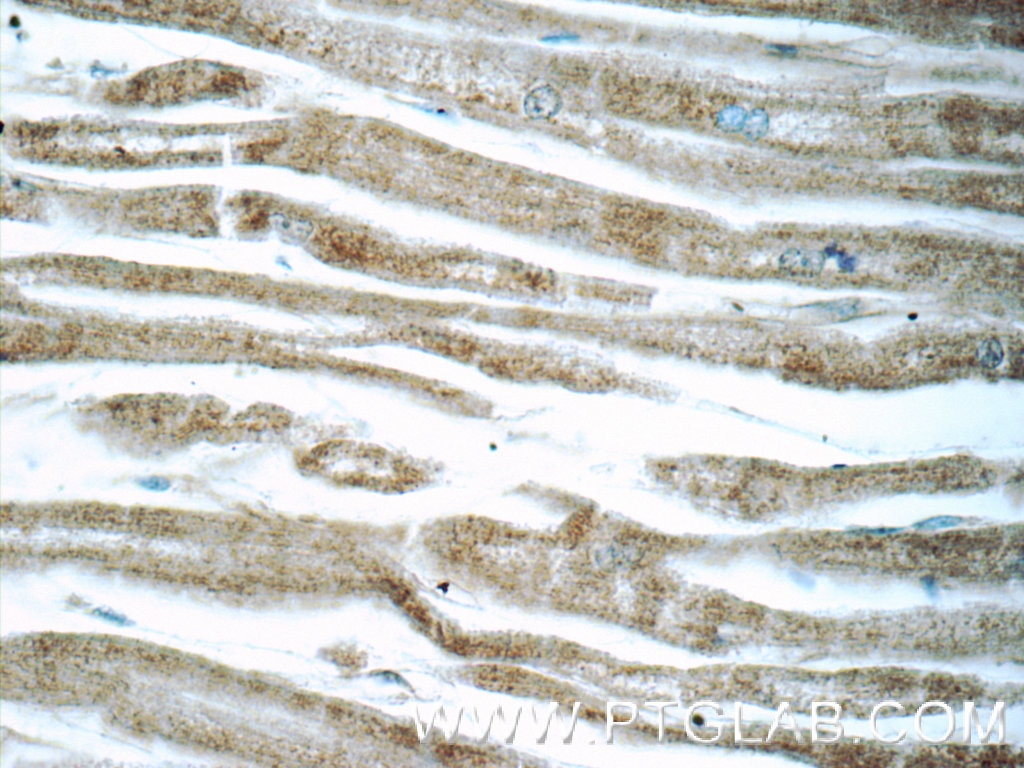
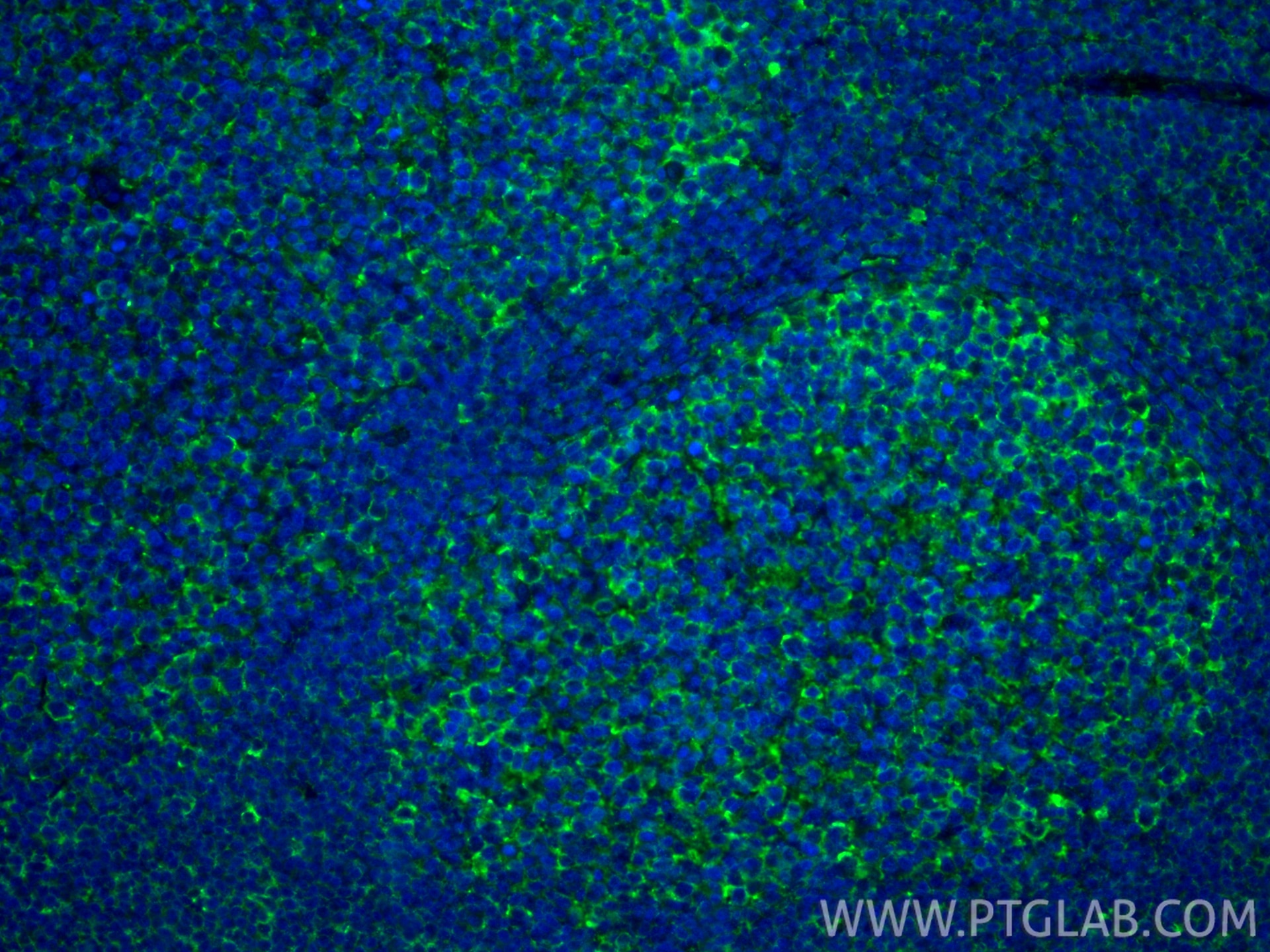

Tested Applications
| Positive IHC detected in | human tonsillitis tissue, human heart tissue, human pancreas tissue Note: suggested antigen retrieval with TE buffer pH 9.0; (*) Alternatively, antigen retrieval may be performed with citrate buffer pH 6.0 |
| Positive IF-P detected in | human tonsillitis tissue |
Recommended dilution
| Application | Dilution |
|---|---|
| Immunohistochemistry (IHC) | IHC : 1:50-1:500 |
| Immunofluorescence (IF)-P | IF-P : 1:200-1:800 |
| It is recommended that this reagent should be titrated in each testing system to obtain optimal results. | |
| Sample-dependent, Check data in validation data gallery. | |
Product Information
22303-1-AP targets CCL18/MIP-4 in IHC, IF-P, ELISA applications and shows reactivity with human samples.
| Tested Reactivity | human |
| Cited Reactivity | human |
| Host / Isotype | Rabbit / IgG |
| Class | Polyclonal |
| Type | Antibody |
| Immunogen |
Peptide Predict reactive species |
| Full Name | chemokine (C-C motif) ligand 18 (pulmonary and activation-regulated) |
| Calculated Molecular Weight | 10 kDa |
| GenBank Accession Number | NM_002988 |
| Gene Symbol | CCL18/MIP-4 |
| Gene ID (NCBI) | 6362 |
| RRID | AB_2879066 |
| Conjugate | Unconjugated |
| Form | Liquid |
| Purification Method | Antigen affinity purification |
| UNIPROT ID | P55774 |
| Storage Buffer | PBS with 0.02% sodium azide and 50% glycerol, pH 7.3. |
| Storage Conditions | Store at -20°C. Stable for one year after shipment. Aliquoting is unnecessary for -20oC storage. 20ul sizes contain 0.1% BSA. |
Background Information
CCL18 is a small cytokine belonging to the CC chemokine family. The effector functions that CCL18 exerts on the immune system is mainly on the adaptive immune system, while being produced and secreted mainly by innate immune system. Although the functions of CCL18 have been well studied in vitro, physiological effects of CCL18 in vivo have been difficult to characterize because there is no murine analog of CCL18. Only recently has the receptor for CCL18 been identified, and further characterization of CCL18 interactions with its receptor will lead to better understanding of the physiological role of CCL18 in humans.
Protocols
| Product Specific Protocols | |
|---|---|
| IF protocol for CCL18/MIP-4 antibody 22303-1-AP | Download protocol |
| IHC protocol for CCL18/MIP-4 antibody 22303-1-AP | Download protocol |
| Standard Protocols | |
|---|---|
| Click here to view our Standard Protocols |
Publications
What published studies show
The CCL18/MIP-4 Polyclonal antibody (Cat# 22303-1-AP) has 8 citations. These appear in journals including Nature Communications, Med, Journal of Allergy and Clinical Immunology, Arthritis & Rheumatology, Frontiers in Immunology, ACS Biomaterials Science & Engineering, iScience, and Journal of Cellular Physiology. Research fields span oncology (pancreatic, glioblastoma, and colorectal cancer), inflammatory bowel disease, chronic rhinosinusitis, scleroderma, and skin matrisome biology, with applications in IF and IHC.
| Species | Application | Title |
|---|---|---|
Nat Commun Single cell transcriptomic analyses implicate an immunosuppressive tumor microenvironment in pancreatic cancer liver metastasis | ||
Med Multimodal single-cell analyses reveal mechanisms of perianal fistula in diverse patients with Crohn's disease | ||
J Allergy Clin Immunol ALOX15+ M2 macrophages contribute to epithelial remodeling in eosinophilic chronic rhinosinusitis with nasal polyps | ||
Arthritis Rheumatol Specific targeting of the 5-hydroxytryptamine 2B receptor (5-HT2BR) demonstrates antifibrotic effects in murine models and ex vivo models of scleroderma skin | ||
Front Immunol Novel macrophage-related gene prognostic index for glioblastoma associated with M2 macrophages and T cell dysfunction | ||
ACS Biomater Sci Eng Matrisome Provides a Supportive Microenvironment for Skin Functions of Diverse Species. |

