
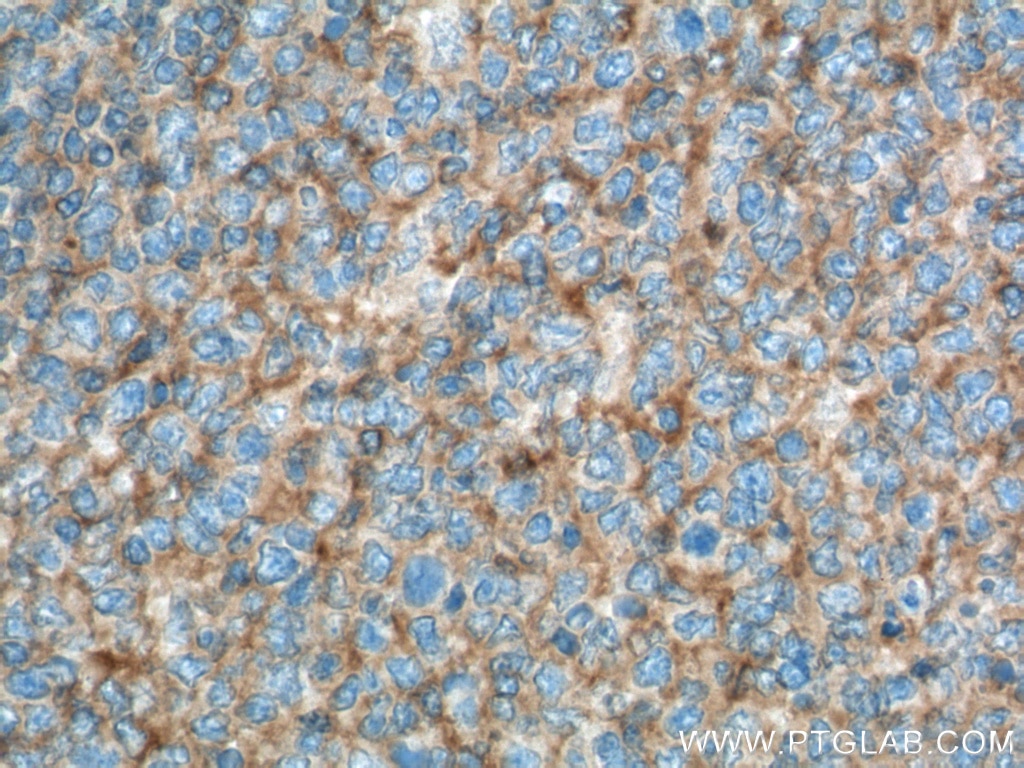

Tested Applications
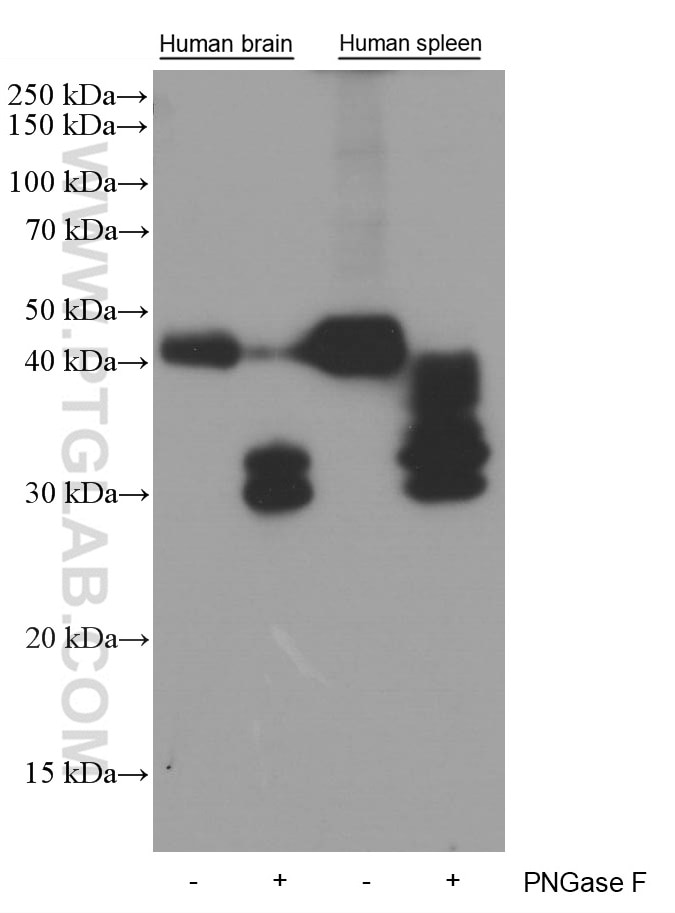
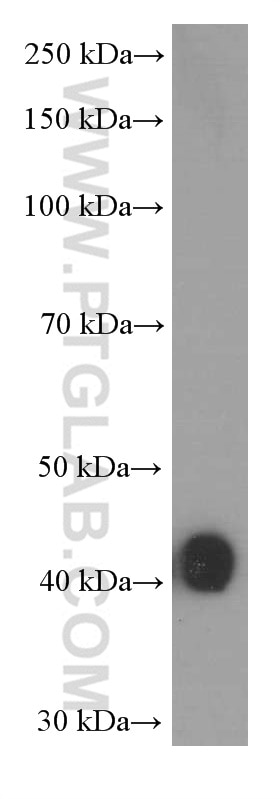
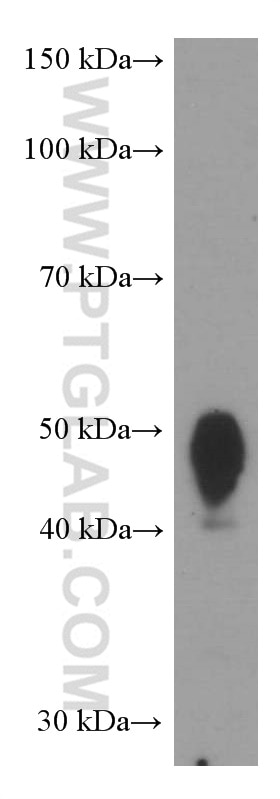
| Positive WB detected in | fetal human brain tissue, human spleen tissue |
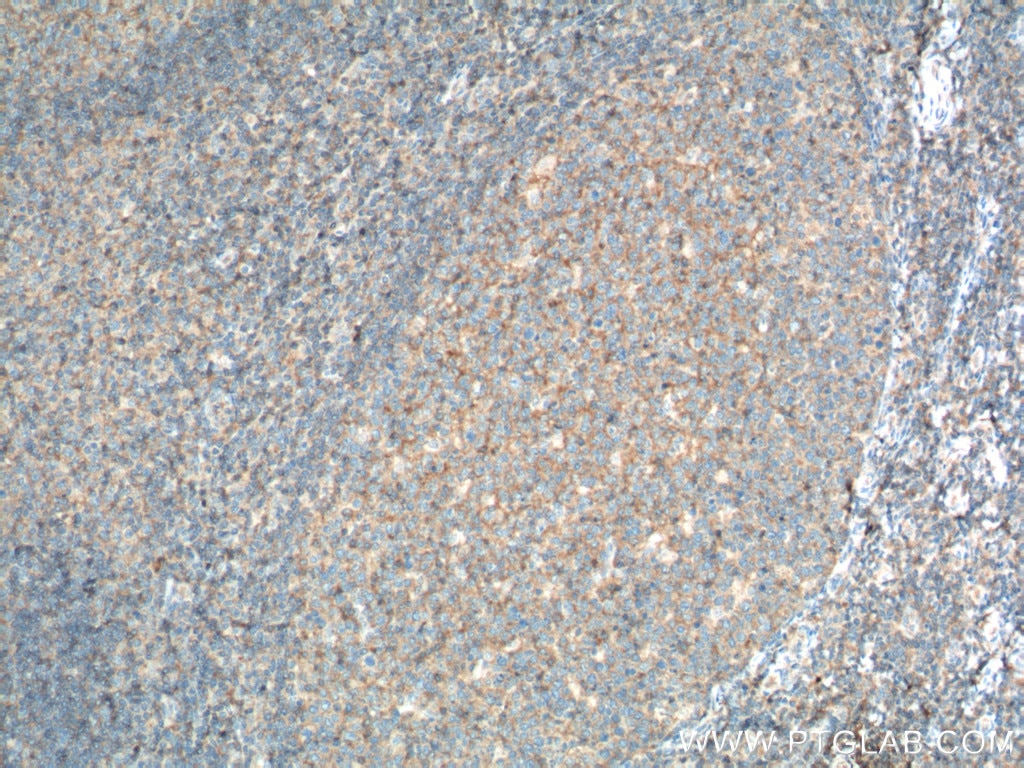
| Positive IHC detected in | human tonsillitis tissue Note: suggested antigen retrieval with TE buffer pH 9.0; (*) Alternatively, antigen retrieval may be performed with citrate buffer pH 6.0 |
Recommended dilution
| Application | Dilution |
|---|---|
| Western Blot (WB) | WB : 1:1000-1:4000 |
| Immunohistochemistry (IHC) | IHC : 1:50-1:500 |
| It is recommended that this reagent should be titrated in each testing system to obtain optimal results. | |
| Sample-dependent, Check data in validation data gallery. | |
Product Information
66282-1-Ig targets CD200 in WB, IHC, IF, ELISA applications and shows reactivity with human samples.
| Tested Reactivity | human |
| Cited Reactivity | human |
| Host / Isotype | Mouse / IgG1 |
| Class | Monoclonal |
| Type | Antibody |
| Immunogen |
CatNo: Ag5045 Product name: Recombinant human CD200 protein Source: e coli.-derived, PET28a Tag: 6*His Domain: 1-269 aa of BC022522 Sequence: MERLVIRMPFCHLSTYSLVWVMAAVVLCTAQVQVVTQDEREQLYTPASLKCSLQNAQEALIVTWQKKKAVSPENMVTFSENHGVVIQPAYKDKINITQLGLQNSTITFWNITLEDEGCYMCLFNTFGFGKISGTACLTVYVQPIVSLHYKFSEDHLNITCSATARPAPMVFWKVPRSGIENSTVTLSHPNGTTSVTSILHIKDPKNQVGKEVICQVLHLGTVTDFKQTVNKGYWFSVPLLLSIVSLVILLVLISILLYWKRHRNQDREP Predict reactive species |
| Full Name | CD200 molecule |
| Calculated Molecular Weight | 269 aa, 30 kDa |
| Observed Molecular Weight | 40-50 kDa |
| GenBank Accession Number | BC022522 |
| Gene Symbol | CD200 |
| Gene ID (NCBI) | 4345 |
| RRID | AB_2881665 |
| Conjugate | Unconjugated |
| Form | Liquid |
| Purification Method | Protein G purification |
| UNIPROT ID | P41217 |
| Storage Buffer | PBS with 0.02% sodium azide and 50% glycerol, pH 7.3. |
| Storage Conditions | Store at -20°C. Stable for one year after shipment. Aliquoting is unnecessary for -20oC storage. 20ul sizes contain 0.1% BSA. |
Background Information
CD200, also known as OX2, is a type I transmembrane glycoprotein that belongs to the immunoglobulin superfamily (PMID: 3032785). It contains two extracellular immunoglobulin domains, a transmembrane and a cytoplasmic domain. CD200 is expressed on a variety of cell types, including thymocytes, B lymphocytes, a subset of T lymphocytes, follicular dendritic cells, neurons, and endothelial cells (PMID: 3032785; 10981966). CD200 binds to its receptor, CD200R, which is primarily expressed by myeloid and T cell lineage (PMID: 15187158). The CD200-CD200R interaction plays a role in immunosuppression and suppression of anti-tumor immune responses (PMID: 22020332).
Protocols
| Product Specific Protocols | |
|---|---|
| IHC protocol for CD200 antibody 66282-1-Ig | Download protocol |
| WB protocol for CD200 antibody 66282-1-Ig | Download protocol |
| Standard Protocols | |
|---|---|
| Click here to view our Standard Protocols |
Publications
What published studies show
The CD200 Monoclonal antibody (66282-1-Ig) has 6 total citations in peer-reviewed journals. The citing journals include: Cell Reports (IF 7.7), Oncoimmunology (6.2), Scientific Reports (4.9), Cancers (4.8), Pediatric Surgery International (1.8), and Human Mutation (1.8). Applications cited span WB, IHC, and IF across human samples. Research fields are primarily oncology-focused: non-small cell lung cancer, EGFR-mutant lung adenocarcinoma, pancreatic cancer, neuroblastoma, and clear cell renal cell carcinoma, exploring CD200's prognostic and immunomodulatory roles within tumor immune microenvironments.
| Species | Application | Title |
|---|---|---|
Oncoimmunology CD200 and CD200R1 are differentially expressed and have differential prognostic roles in non-small cell lung cancer.
| ||
Sci Rep CD200-positive cancer associated fibroblasts augment the sensitivity of Epidermal Growth Factor Receptor mutation-positive lung adenocarcinomas to EGFR Tyrosine kinase inhibitors.
| ||
Cancers (Basel) Multiplex Quantitative Analysis of Tumor-Infiltrating Lymphocytes, Cancer-Associated Fibroblasts, and CD200 in Pancreatic Cancer. | ||
Pediatr Surg Int CD200 expression predicts poor prognosis in neuroblastoma: a potential biomarker for treatment stratification-a retrospective cohort study.
| ||
Hum Mutat A Tertiary Lymphoid Structure-Derived Prognostic Signature Integrates Immune Microenvironment and Mutational Landscapes in Clear Cell Renal Cell Carcinoma. |

