

Tested Applications
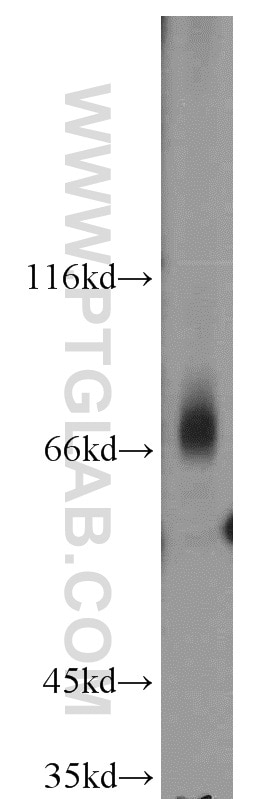
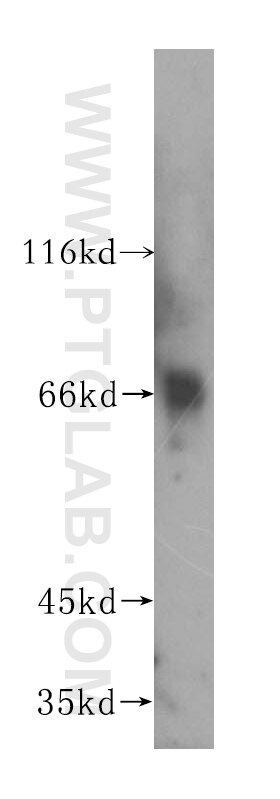
| Positive WB detected in | Jurkat cells, mouse liver tissue |
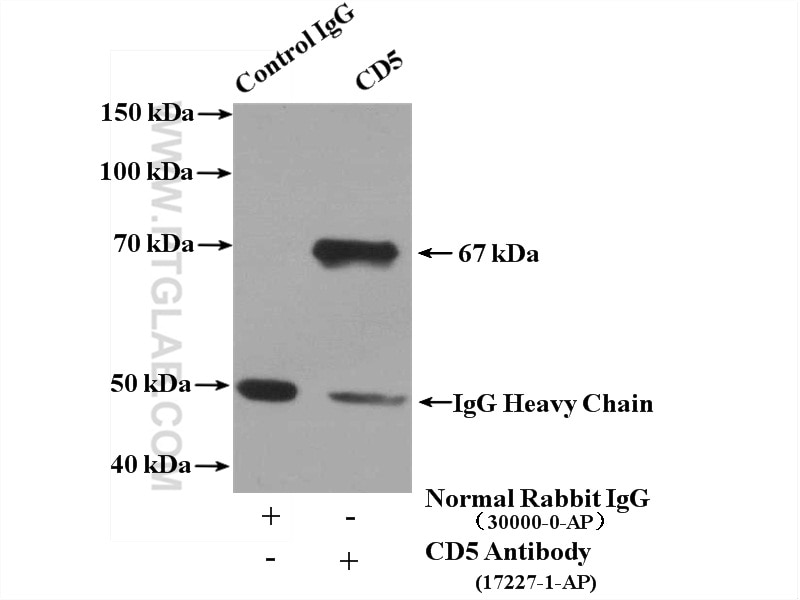
| Positive IP detected in | mouse liver tissue |
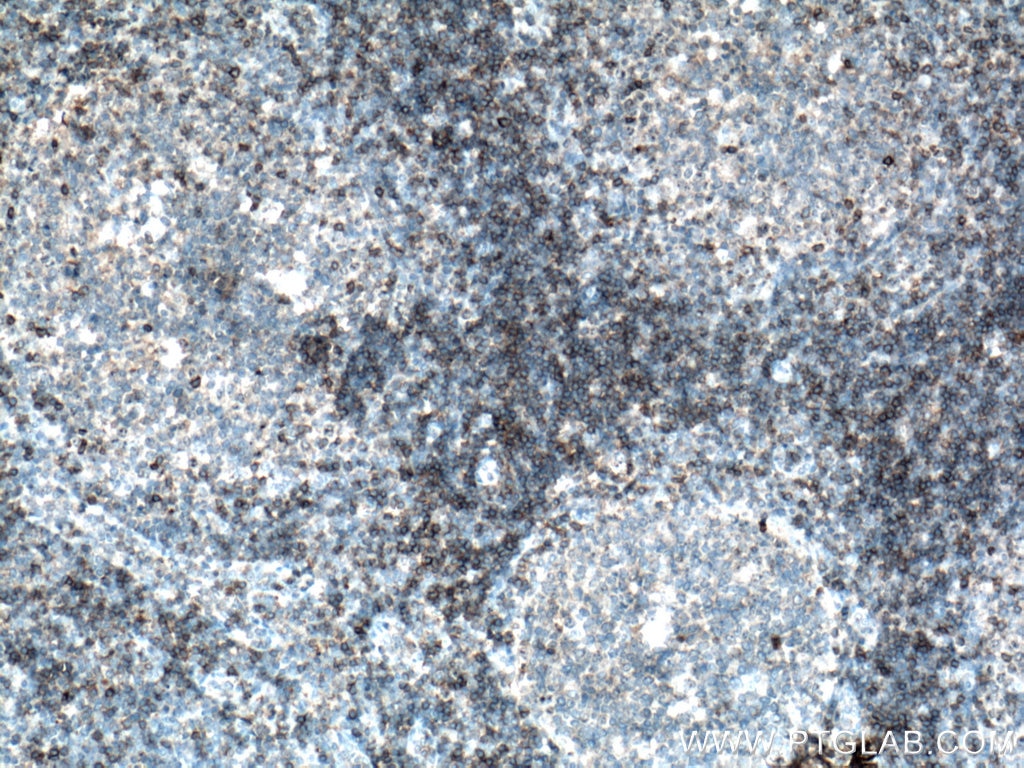
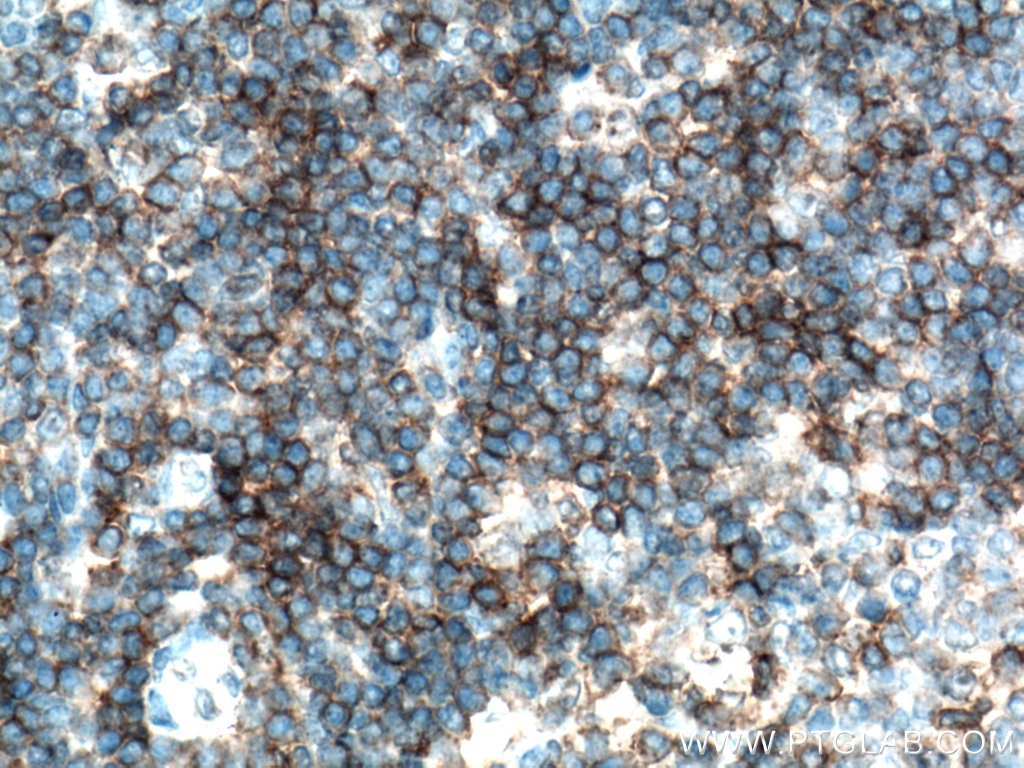
| Positive IHC detected in | human tonsillitis tissue Note: suggested antigen retrieval with TE buffer pH 9.0; (*) Alternatively, antigen retrieval may be performed with citrate buffer pH 6.0 |
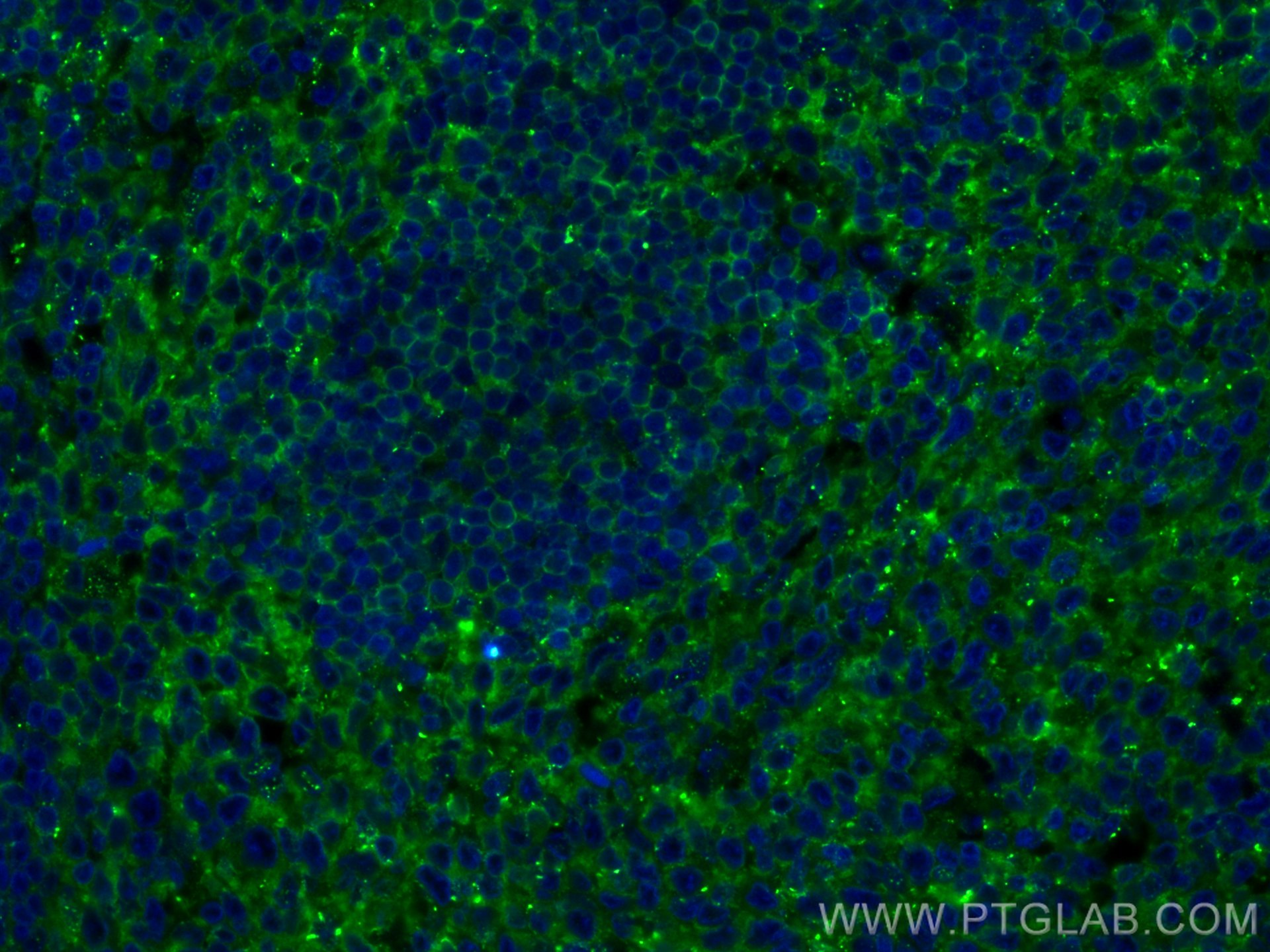
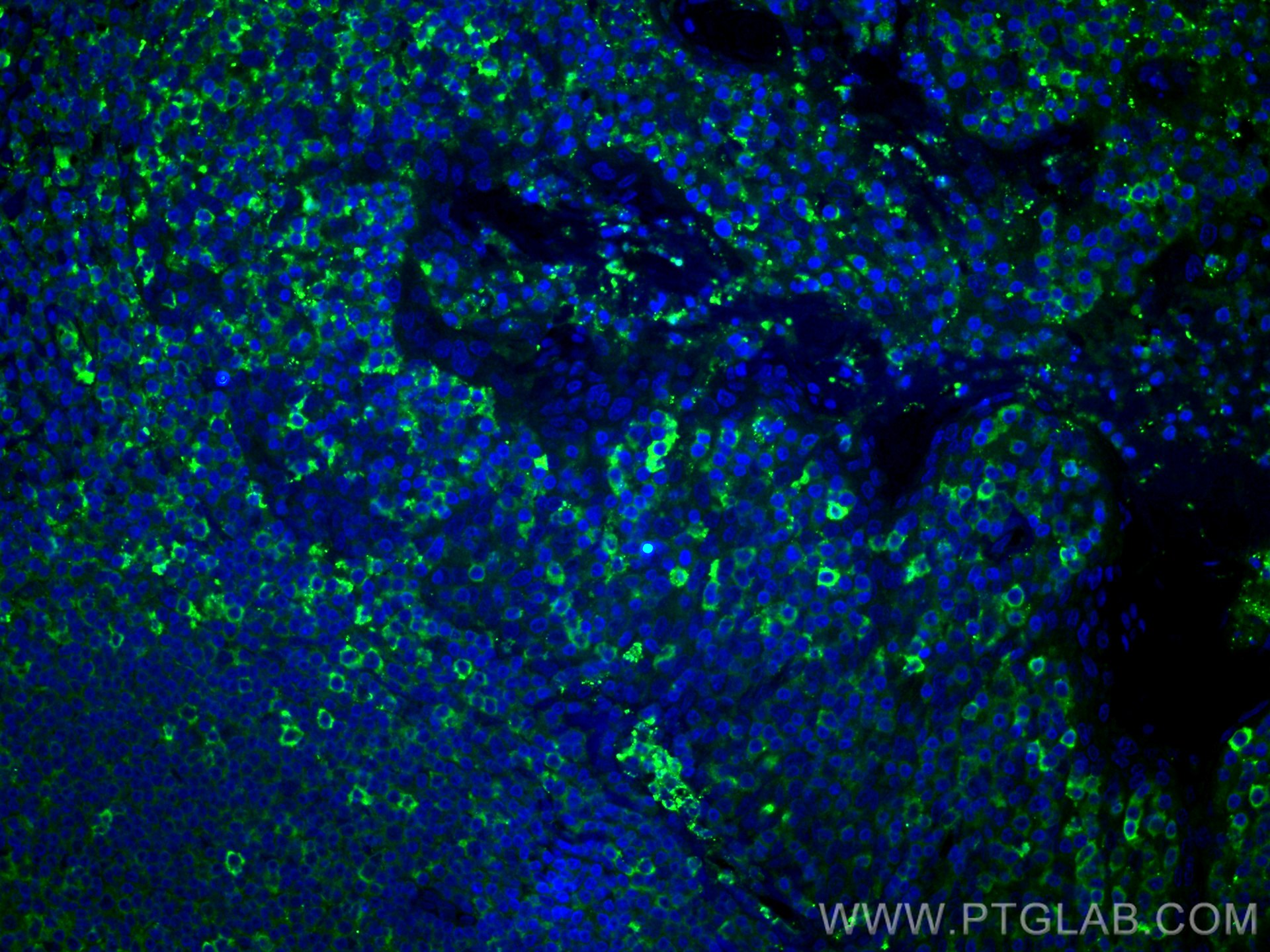
| Positive IF-P detected in | human tonsillitis tissue |
Recommended dilution
| Application | Dilution |
|---|---|
| Western Blot (WB) | WB : 1:500-1:1000 |
| Immunoprecipitation (IP) | IP : 0.5-4.0 ug for 1.0-3.0 mg of total protein lysate |
| Immunohistochemistry (IHC) | IHC : 1:400-1:1600 |
| Immunofluorescence (IF)-P | IF-P : 1:50-1:500 |
| It is recommended that this reagent should be titrated in each testing system to obtain optimal results. | |
| Sample-dependent, Check data in validation data gallery. | |
Product Information
17227-1-AP targets CD5 in WB, IHC, IF-P, IP, ELISA applications and shows reactivity with human, mouse samples.
| Tested Reactivity | human, mouse |
| Cited Reactivity | human, mouse |
| Host / Isotype | Rabbit / IgG |
| Class | Polyclonal |
| Type | Antibody |
| Immunogen |
CatNo: Ag11065 Product name: Recombinant human CD5 protein Source: e coli.-derived, PGEX-4T Tag: GST Domain: 30-378 aa of BC027901 Sequence: DPDFQARLTRSNSKCQGQLEVYLKDGWHMVCSQSWGRSSKQWEDPSQASKVCQRLNCGVPLSLGPFLVTYTPQSSIICYGQLGSFSNCSHSRNDMCHSLGLTCLEPQKTTPPTTRPPPTTTPEPTAPPRLQLVAQSGGQHCAGVVEFYSGSLGGTISYEAQDKTQDLENFLCNNLQCGSFLKHLPETEAGRAQDPGEPREHQPLPIQWKIQNSSCTSLEHCFRKIKPQKSGRVLALLCSGFQPKVQSRLVGGSSICEGTVEVRQGAQWAALCDSSSARSSLRWEEVCREQQCGSVNSYRVLDAGDPTSRGLFCPHQKLSQCHELWERNSYCKKVFVTCQDPNPAGLAAG Predict reactive species |
| Full Name | CD5 molecule |
| Calculated Molecular Weight | 495 aa, 55 kDa |
| Observed Molecular Weight | 55 kDa, 67 kDa |
| GenBank Accession Number | BC027901 |
| Gene Symbol | CD5 |
| Gene ID (NCBI) | 921 |
| ENSEMBL Gene ID | ENSG00000110448 |
| RRID | AB_2075581 |
| Conjugate | Unconjugated |
| Form | Liquid |
| Purification Method | Antigen affinity purification |
| UNIPROT ID | P06127 |
| Storage Buffer | PBS with 0.02% sodium azide and 50% glycerol, pH 7.3. |
| Storage Conditions | Store at -20°C. Stable for one year after shipment. Aliquoting is unnecessary for -20oC storage. 20ul sizes contain 0.1% BSA. |
Background Information
CD5 is a type I transmembrane glycoprotein of the scavenger receptor cysteine-rich family (PMID: 12403363). CD5 is expressed on a majority of thymocytes, mature T cells, B cell subsets, and peripheral blood dendritic cells (PMID: 9858516; 6156984; 10379049; 1384337). CD5 may act as a receptor in regulating T-cell proliferation. It functions as a negative regulator of TCR signaling during thymocyte development (PMID: 7542801).
Protocols
| Product Specific Protocols | |
|---|---|
| IF protocol for CD5 antibody 17227-1-AP | Download protocol |
| IHC protocol for CD5 antibody 17227-1-AP | Download protocol |
| IP protocol for CD5 antibody 17227-1-AP | Download protocol |
| WB protocol for CD5 antibody 17227-1-AP | Download protocol |
| Standard Protocols | |
|---|---|
| Click here to view our Standard Protocols |
Publications
What published studies show
The CD5 Polyclonal antibody (Cat# 17227-1-AP) has 4 total citations, published in Nature Immunology, FASEB Journal, Hematological Oncology, and Frontiers in Oncology. Research fields span tumor immunology (Kupffer cell–T cell interactions and tumor evasion), acute lung injury and neutrophil recruitment, integrin regulation in hematological malignancies, and primary mucosa-associated lymphoid tissue lymphoma of the kidney.
| Species | Application | Title |
|---|---|---|
Nat Immunol Kupffer cell calibration of T cell responses via VSIG4-CD5 interaction promotes tumor evasion. | ||
FASEB J A self-organized actomyosin drives multiple intercellular junction disruption and directly promotes neutrophil recruitment in lipopolysaccharide-induced acute lung injury. | ||
Hematol Oncol Nuclear αvβ3 integrin expression, post translational modifications and regulation in hematological malignancies. | ||
Front Oncol Whole-Exome Sequencing Reveals New Potential Mutations Genes for Primary Mucosa-Associated Lymphoid Tissue Lymphoma Arising From the Kidney. |

