

Tested Applications
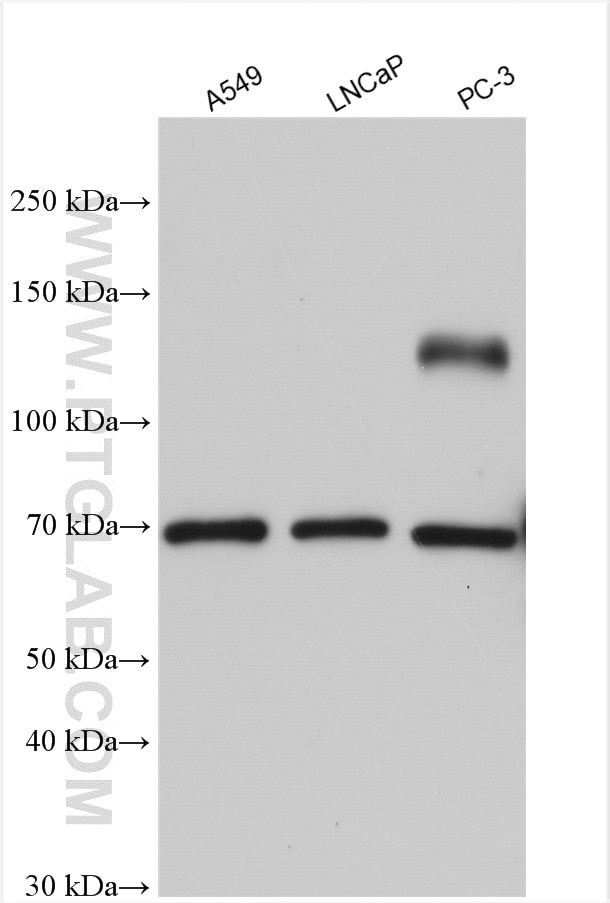
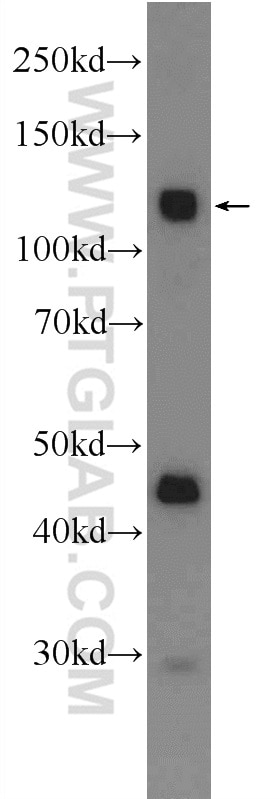
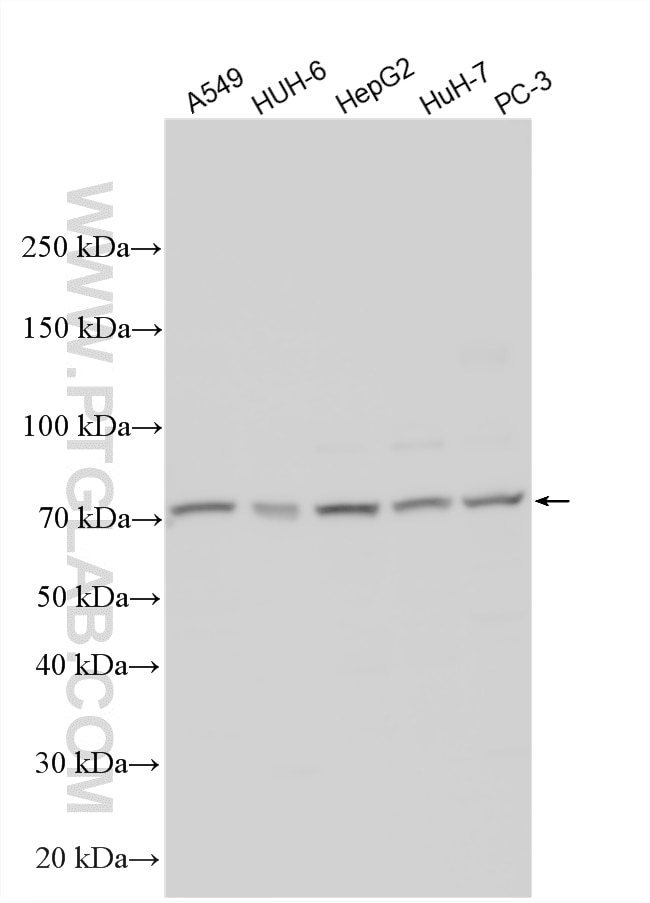
| Positive WB detected in | A549 cells, LNCaP cells, PC-3 cells, HUH-6 cells, HepG2 cells, HuH-7 cells |
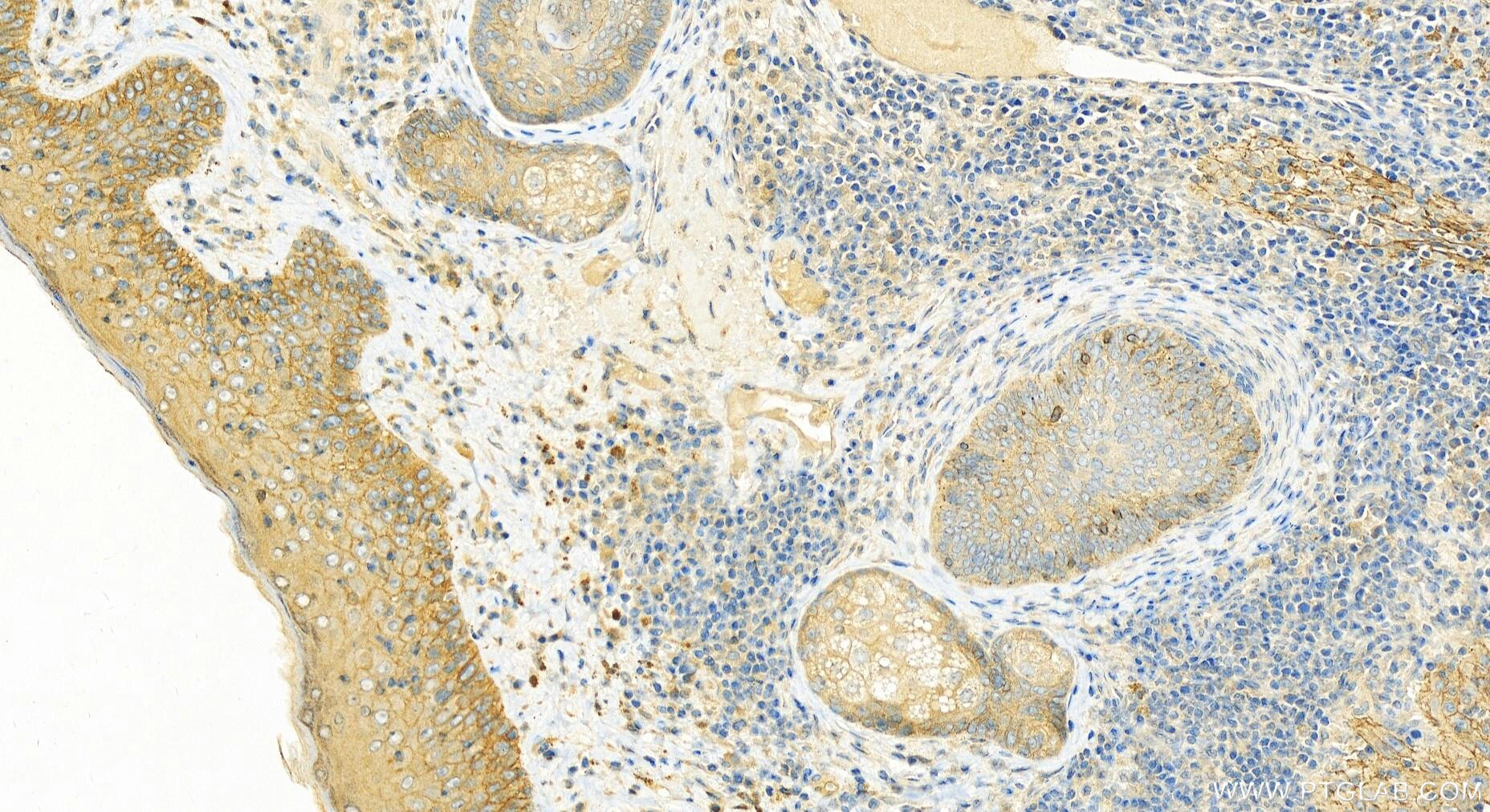
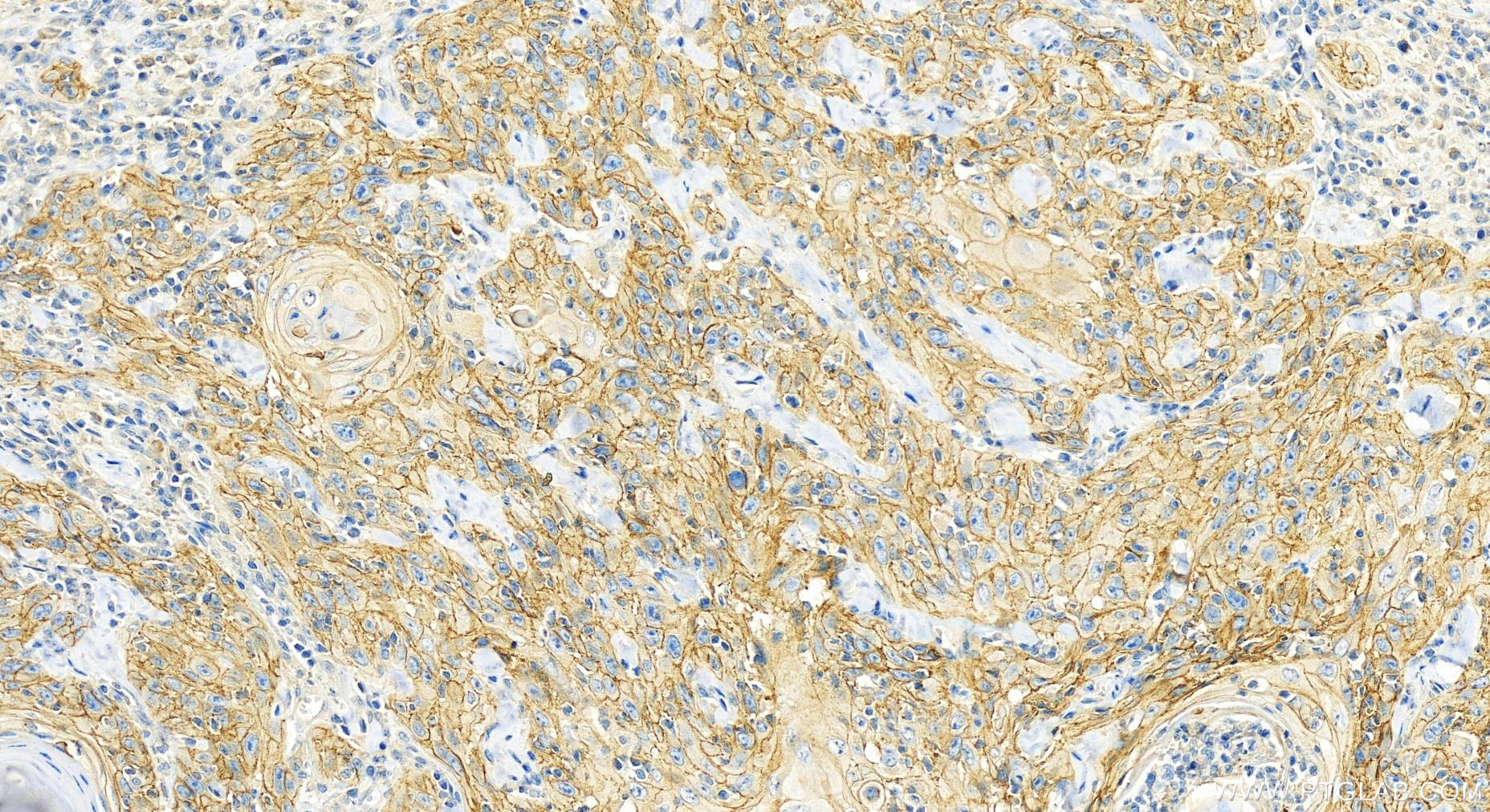
| Positive IHC detected in | human skin cancer tissue Note: suggested antigen retrieval with TE buffer pH 9.0; (*) Alternatively, antigen retrieval may be performed with citrate buffer pH 6.0 |
Recommended dilution
| Application | Dilution |
|---|---|
| Western Blot (WB) | WB : 1:500-1:2000 |
| Immunohistochemistry (IHC) | IHC : 1:50-1:500 |
| It is recommended that this reagent should be titrated in each testing system to obtain optimal results. | |
| Sample-dependent, Check data in validation data gallery. | |
Product Information
12754-1-AP targets CDCP1/CD318 in WB, IHC, IF, ELISA applications and shows reactivity with human, mouse, rat samples.
| Tested Reactivity | human, mouse, rat |
| Cited Reactivity | human, mouse |
| Host / Isotype | Rabbit / IgG |
| Class | Polyclonal |
| Type | Antibody |
| Immunogen |
CatNo: Ag3439 Product name: Recombinant human CDCP1 protein Source: e coli.-derived, PGEX-4T Tag: GST Domain: 1-343 aa of BC021099 Sequence: MAGLNCGVSIALLGVLLLGAARLPRGAEAFEIALPRESNITVLIKLGTPTLLAKPCYIVISKRHITMLSIKSGERIVFTFSCQSPENHFVIEIQKNIDCMSGPCPFGEVQLQPSTSLLPTLNRTFIWDVKAHKSIGLELQFSIPRLRQIGPGESCPDGVTHSISGRIDATVVRIGTFCSNGTVSRIKMQEGVKMALHLPWFHPRNVSGFSIANRSSIKRLCIIESVFEGEGSATLMSANYPEGFPEDELMTWQFVVPAHLRASVSFLNFNLSNCERKEERVEYYIPGSTTNPEVFKLEDKQPGNMAGNFNLSLQGCDQDAQSPGILRLQFQVLVQHPQNESSE Predict reactive species |
| Full Name | CUB domain containing protein 1 |
| Calculated Molecular Weight | 836 aa, 93 kDa |
| Observed Molecular Weight | 72 kDa, 130 kDa |
| GenBank Accession Number | BC021099 |
| Gene Symbol | CDCP1 |
| Gene ID (NCBI) | 64866 |
| RRID | AB_2078799 |
| Conjugate | Unconjugated |
| Form | Liquid |
| Purification Method | Antigen affinity purification |
| UNIPROT ID | Q9H5V8 |
| Storage Buffer | PBS with 0.02% sodium azide and 50% glycerol, pH 7.3. |
| Storage Conditions | Store at -20°C. Stable for one year after shipment. Aliquoting is unnecessary for -20oC storage. 20ul sizes contain 0.1% BSA. |
Background Information
CDCP1, also called CD318, TRASK, and SIMA 135, is a 135-140 kDa transmembrane protein containing three CUB domains within the extracellular region and a hexalysine stretch within the cytoplasmic region. A soluble form with MW 80 kDa (p80) is cleaved at an unidentified site on the N-terminal side. CDCP1 is a novel marker for hematopoietic stem cells. CDCP1 is overexpressed in a variety of malignant tumors including respiratory tumors, digestive system cancers, hematological malignancies, and urogenital cancers. It has been recognized as a promising diagnostic biomarker and a potential target for disrupting cancer progression. (PMID: 12799299; PMID: 19514048; PMID: 33509939; PMID: 35504333)
Protocols
| Product Specific Protocols | |
|---|---|
| IHC protocol for CDCP1/CD318 antibody 12754-1-AP | Download protocol |
| WB protocol for CDCP1/CD318 antibody 12754-1-AP | Download protocol |
| Standard Protocols | |
|---|---|
| Click here to view our Standard Protocols |
Publications
What published studies show
The CDCP1/CD318 Polyclonal antibody (Cat# 12754-1-AP) has 5 citations. These appear in Theranostics (2), Aging (Albany NY), PeerJ, and Transl Cancer Res. Research fields span tumor antigen release and antitumor immunity, pancreatic cancer perineural invasion, glioma progression via the MiR-1272-ADAM9-CDCP1 pathway, vascular smooth muscle cell proliferation through PDGFRβ/AKT signaling, and immune-related programmed cell death in lung adenocarcinoma. Applications include WB and IF in human and mouse models.
| Species | Application | Title |
|---|---|---|
Theranostics Lactylation-driven NSUN2-mediated RNA m5C modification promotes perineural invasion in pancreatic cancer. | ||
Theranostics Radiation-induced small extracellular vesicles as "carriages" promote tumor antigen release and trigger antitumor immunity. | ||
Aging (Albany NY) The emerging role of the MiR-1272-ADAM9-CDCP1 signaling pathway in the progression of glioma. | ||
PeerJ CDCP1 knockdown suppresses PDGFRβ/AKT pathway-mediated vascular smooth muscle cell proliferation by inhibiting PDGFRβ endocytosis
| ||
Transl Cancer Res Identification and validation of an immune-related programmed cell death signature for predicting prognosis and immunotherapy in large-scale multicenter cohorts for lung adenocarcinoma. |

