


Tested Applications
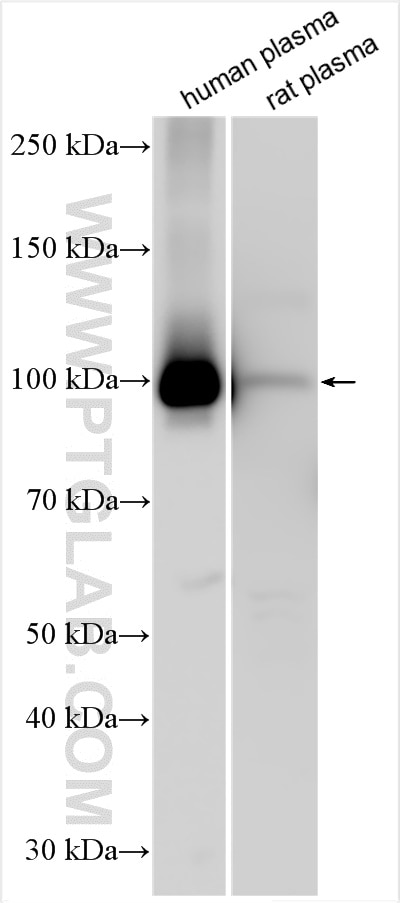
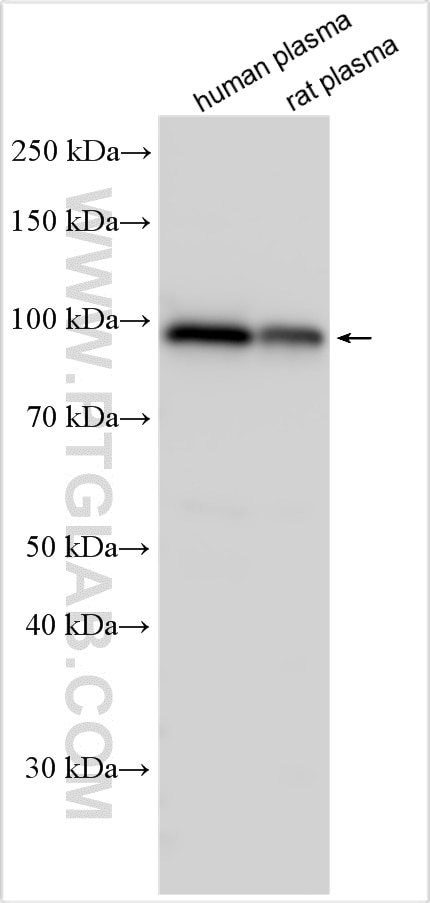
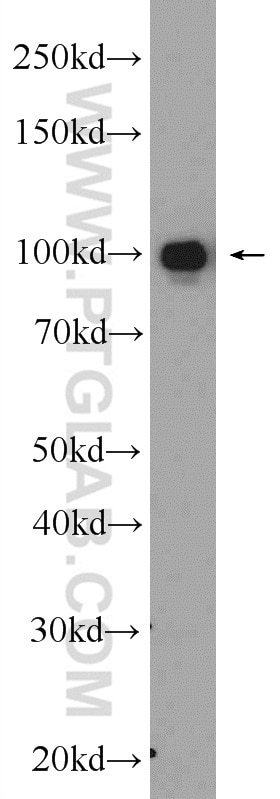
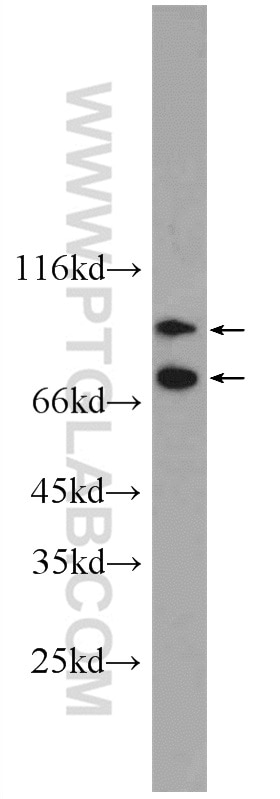
| Positive WB detected in | human plasma, human blood, rat plasma |
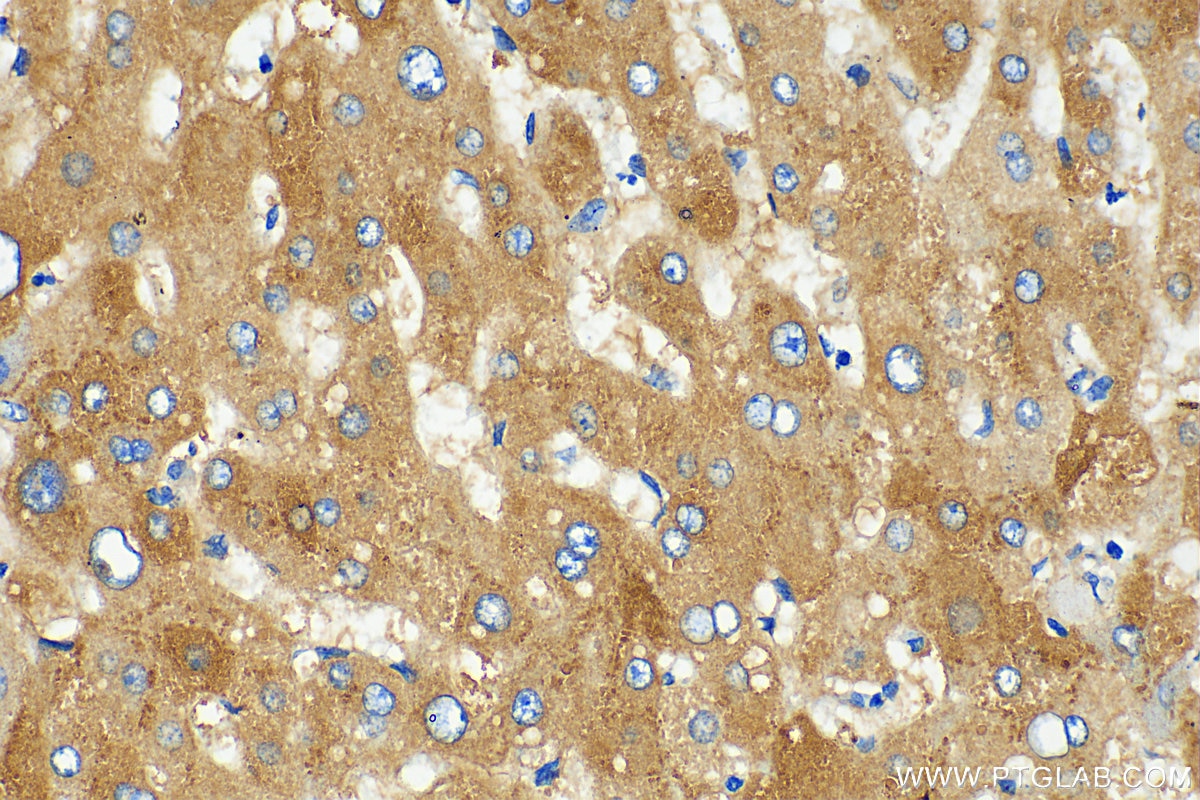
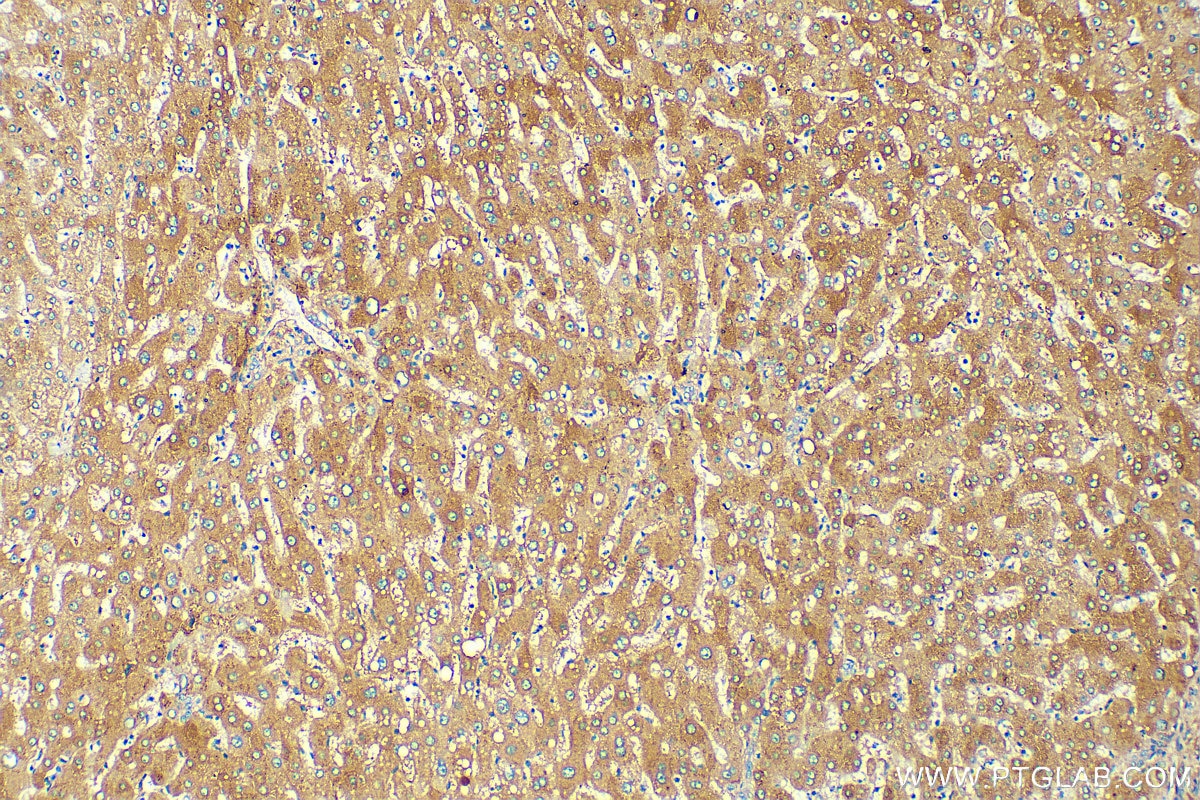
| Positive IHC detected in | human liver tissue Note: suggested antigen retrieval with TE buffer pH 9.0; (*) Alternatively, antigen retrieval may be performed with citrate buffer pH 6.0 |
Recommended dilution
| Application | Dilution |
|---|---|
| Western Blot (WB) | WB : 1:5000-1:50000 |
| Immunohistochemistry (IHC) | IHC : 1:200-1:800 |
| It is recommended that this reagent should be titrated in each testing system to obtain optimal results. | |
| Sample-dependent, Check data in validation data gallery. | |
Product Information
10170-1-AP targets Complement factor B in WB, IHC, IF, ELISA applications and shows reactivity with human, rat samples.
| Tested Reactivity | human, rat |
| Cited Reactivity | human, mouse, rat |
| Host / Isotype | Rabbit / IgG |
| Class | Polyclonal |
| Type | Antibody |
| Immunogen |
CatNo: Ag0226 Product name: Recombinant human CFB protein Source: e coli.-derived, PGEX-4T Tag: GST Domain: 573-761 aa of BC007990 Sequence: YDYDVALIKLKNKLKYGQTIRPICLPCTEGTTRALRLPPTTTCQQQKEELLPAQDIKALFVSEEEKKLTRKEVYIKNGDKKGSCERDAQYAPGYDKVKDISEVVTPRFLCTGGVSPYADPNTCRGDSGGPLIVHKRSRFIQVGVISWGVVDVCKNQKRQKQVPAHARDFHINLFQVLPWLKEKLQDEDL Predict reactive species |
| Full Name | complement factor B |
| Calculated Molecular Weight | 86 kDa |
| Observed Molecular Weight | 93-100 kDa, 60-69 kDa |
| GenBank Accession Number | BC007990 |
| Gene Symbol | Complement factor B |
| Gene ID (NCBI) | 629 |
| RRID | AB_2082384 |
| Conjugate | Unconjugated |
| Form | Liquid |
| Purification Method | Antigen affinity purification |
| UNIPROT ID | P00751 |
| Storage Buffer | PBS with 0.02% sodium azide and 50% glycerol, pH 7.3. |
| Storage Conditions | Store at -20°C. Stable for one year after shipment. Aliquoting is unnecessary for -20oC storage. 20ul sizes contain 0.1% BSA. |
Background Information
Complement factor B (CFB) is a component of the alternative pathway of complement activation. Complement factor B is a 93-100 kDa glycoprotein and is cleaved into Ba (33 kDa) and Bb (60 kDa) by factor D in the presence of C3b (PMID: 11025450). The active subunit Bb is a serine protease which associates with C3b to form the alternative pathway C3 convertase. Bb is involved in the proliferation of preactivated B lymphocytes, while Ba inhibits their proliferation. This antibody raised against 573-761aa of human complement factor B can recognize complement factor B and Bb fragment.
Protocols
| Product Specific Protocols | |
|---|---|
| IHC protocol for Complement factor B antibody 10170-1-AP | Download protocol |
| WB protocol for Complement factor B antibody 10170-1-AP | Download protocol |
| Standard Protocols | |
|---|---|
| Click here to view our Standard Protocols |
Publications
What published studies show
Complement factor B Polyclonal antibody (Cat# 10170-1-AP) has 16 citations spanning journals including Nature Communications, Nephrology Dialysis & Transplantation, British Journal of Cancer, Cell Oncology, FASEB Journal, BMC Cancer, and American Journal of Pathology. Research fields cover complement activation, kidney diseases (membranous nephropathy, polycystic kidney disease, IgA nephropathy, diabetic renal fibrosis), oncology (lung and pancreatic cancer), retinal pigment epithelium biology, and inflammatory signaling.
| Species | Application | Title |
|---|---|---|
Nat Commun The classical pathway triggers pathogenic complement activation in membranous nephropathy | ||
Nephrol Dial Transplant In situ assessment of glomerular C3/C5 convertases indicates ongoing complement activation in IgA nephropathy. | ||
Nephrol Dial Transplant Resveratrol delays polycystic kidney disease progression through attenuation of nuclear factor κB-induced inflammation. | ||
Br J Cancer Identification of GlcNAcylated alpha-1-antichymotrypsin as an early biomarker in human non-small-cell lung cancer by quantitative proteomic analysis with two lectins. | ||
Cell Oncol (Dordr) Complement factor B regulates cellular senescence and is associated with poor prognosis in pancreatic cancer. | ||
J Cell Mol Med Mutations in UMOD Contribute to the Pathogenesis of ADTKD-UMOD by Influencing the Function of Complement Factor H. |
Reviews
What customers say
Able is busy answering your previous question. Please try again later.
The reviews below have been submitted by verified Proteintech customers who received an incentive for providing their feedback.
mark (Verified Customer) (03-30-2020) | worked with colourmetric immunohistochemistry
|


