

Tested Applications
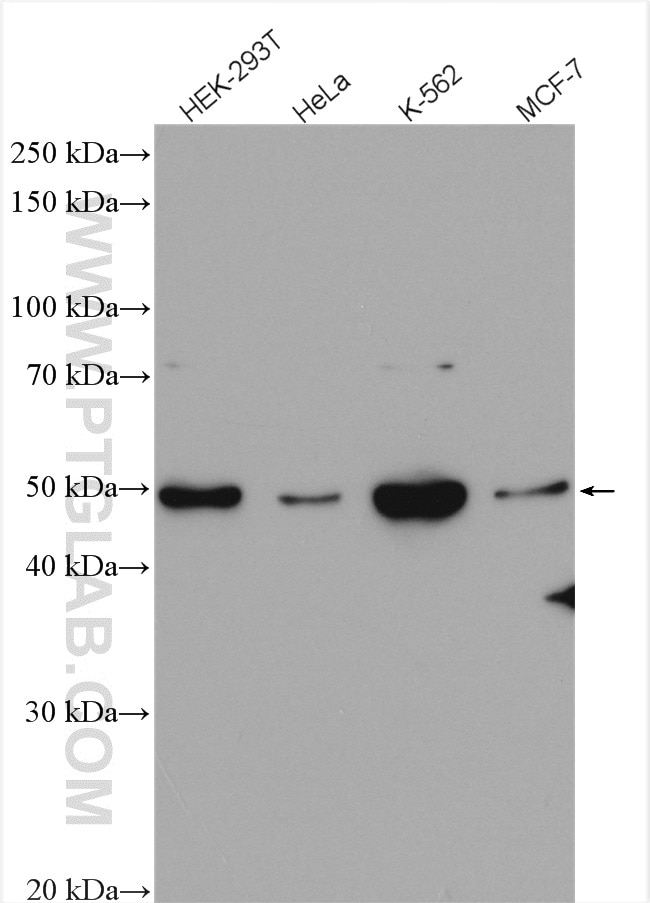
| Positive WB detected in | HEK-293T cells, HeLa cells, K-562 cells, MCF-7 cells |
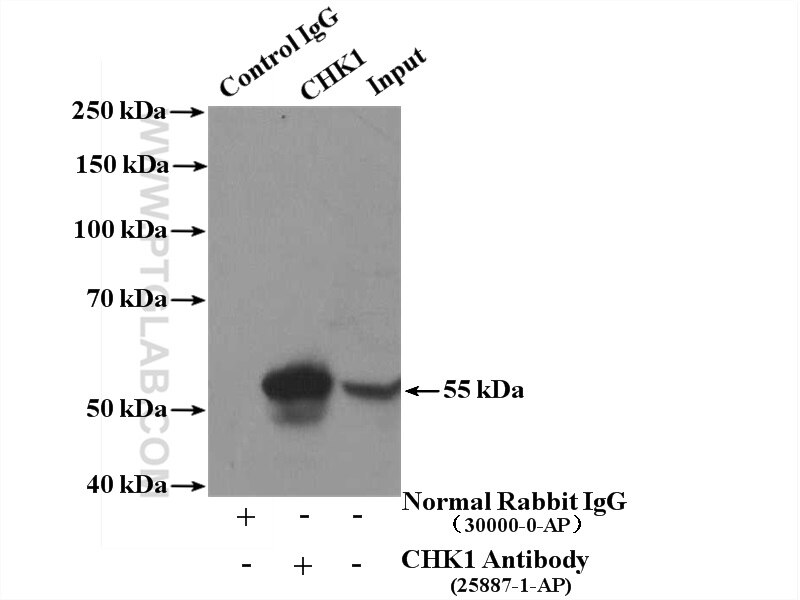
| Positive IP detected in | HEK-293T cells |
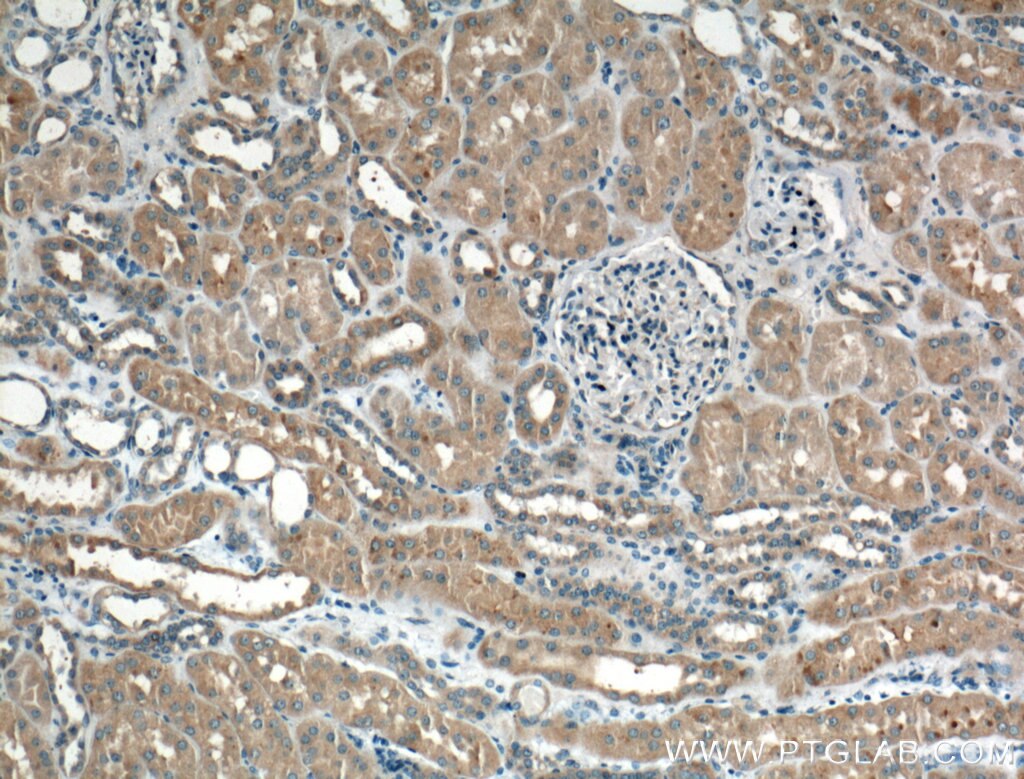
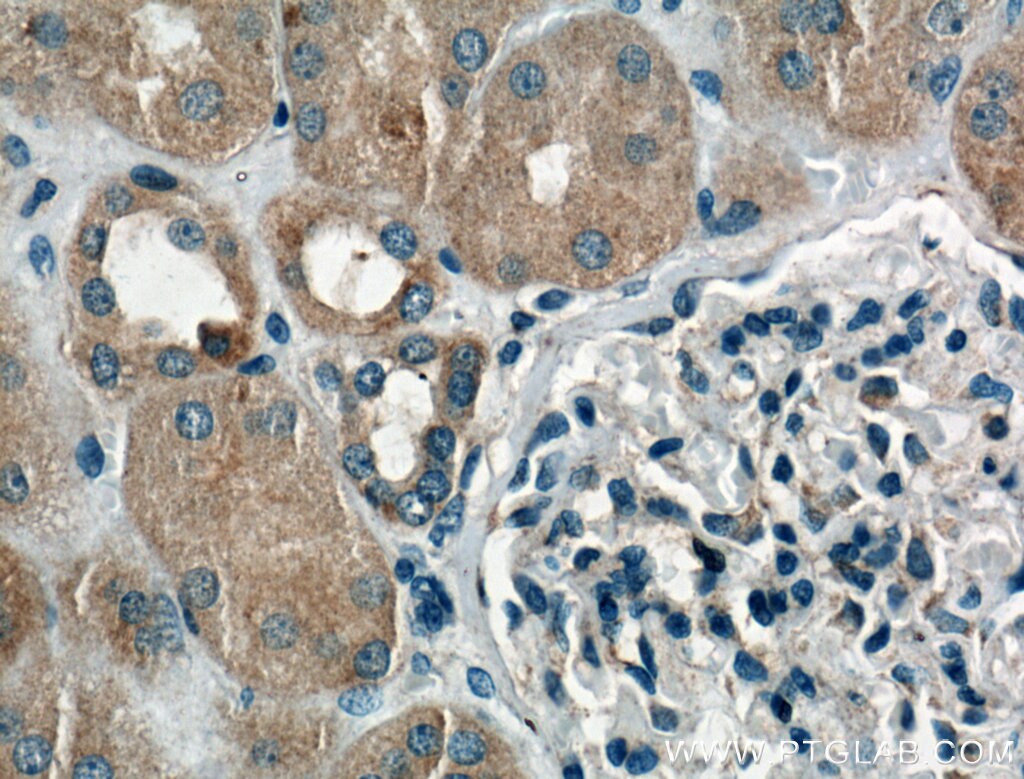
| Positive IHC detected in | human kidney tissue Note: suggested antigen retrieval with TE buffer pH 9.0; (*) Alternatively, antigen retrieval may be performed with citrate buffer pH 6.0 |
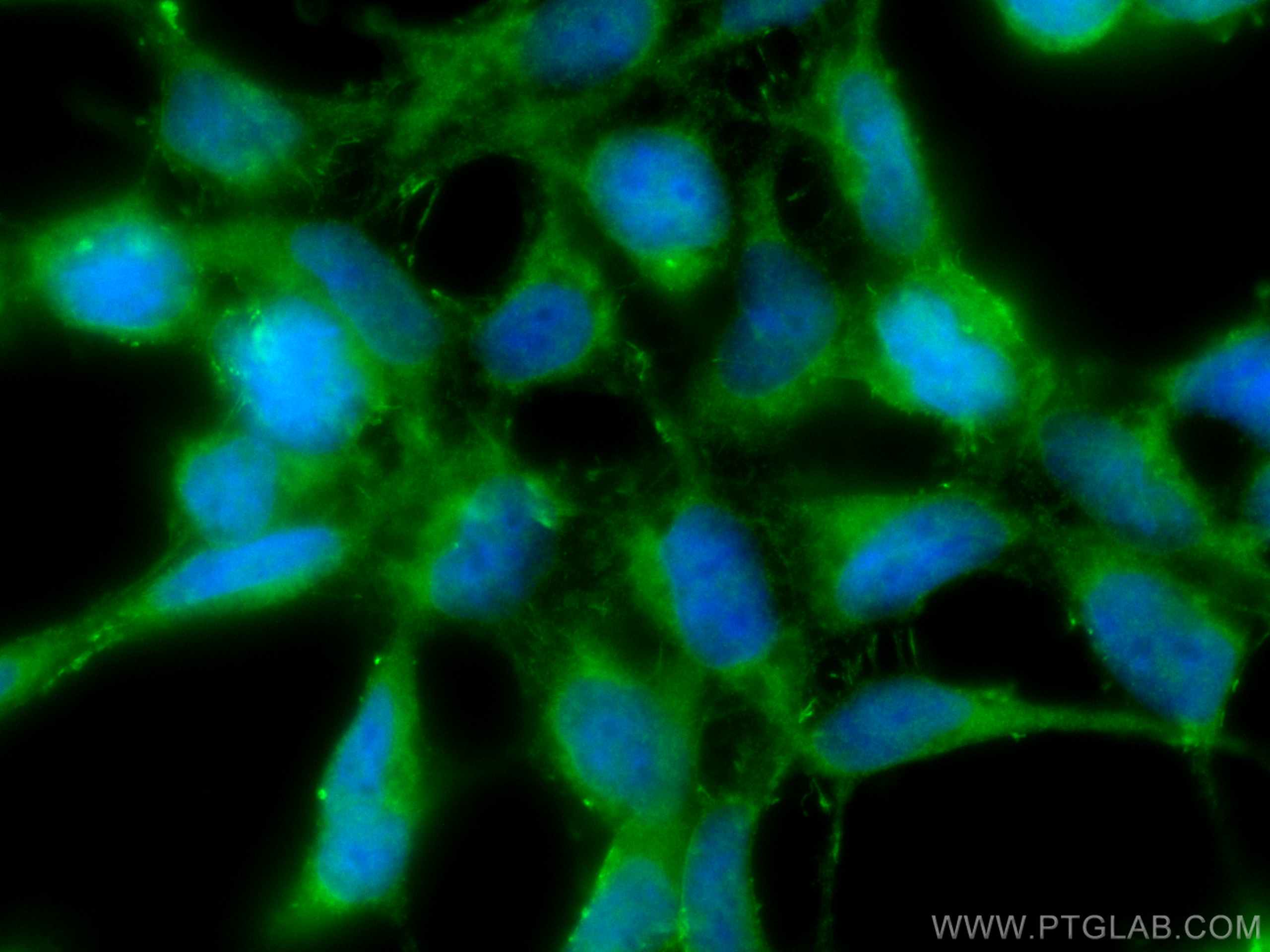
| Positive IF/ICC detected in | HEK-293T cells |
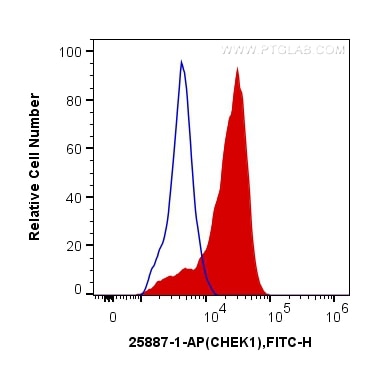
| Positive FC (Intra) detected in | HEK-293T cells |
Recommended dilution
| Application | Dilution |
|---|---|
| Western Blot (WB) | WB : 1:1000-1:6000 |
| Immunoprecipitation (IP) | IP : 0.5-4.0 ug for 1.0-3.0 mg of total protein lysate |
| Immunohistochemistry (IHC) | IHC : 1:100-1:400 |
| Immunofluorescence (IF)/ICC | IF/ICC : 1:50-1:500 |
| Flow Cytometry (FC) (INTRA) | FC (INTRA) : 0.20 ug per 10^6 cells in a 100 ul suspension |
| It is recommended that this reagent should be titrated in each testing system to obtain optimal results. | |
| Sample-dependent, Check data in validation data gallery. | |
Product Information
25887-1-AP targets Chk1 in WB, IHC, IF/ICC, FC (Intra), IP, CoIP, ELISA applications and shows reactivity with human samples.
| Tested Reactivity | human |
| Cited Reactivity | human, mouse |
| Host / Isotype | Rabbit / IgG |
| Class | Polyclonal |
| Type | Antibody |
| Immunogen |
CatNo: Ag22993 Product name: Recombinant human CHK1 protein Source: e coli.-derived, PET28a Tag: 6*His Domain: 262-476 aa of BC004202 Sequence: DRWYNKPLKKGAKRPRVTSGGVSESPSGFSKHIQSNLDFSPVNSASSEENVKYSSSQPEPRTGLSLWDTSPSYIDKLVQGISFSQPTCPDHMLLNSQLLGTPGSSQNPWQRLVKRMTRFFTKLDADKSYQCLKETCEKLGYQWKKSCMNQVTISTTDRRNNKLIFKVNLLEMDDKILVDFRLSKGDGLEFKRHFLKIKGKLIDIVSSQKVWLPAT Predict reactive species |
| Full Name | CHK1 checkpoint homolog (S. pombe) |
| Calculated Molecular Weight | 54 kDa |
| Observed Molecular Weight | 55 kDa |
| GenBank Accession Number | BC004202 |
| Gene Symbol | Chk1 |
| Gene ID (NCBI) | 1111 |
| RRID | AB_2880283 |
| Conjugate | Unconjugated |
| Form | Liquid |
| Purification Method | Antigen affinity purification |
| UNIPROT ID | O14757 |
| Storage Buffer | PBS with 0.02% sodium azide and 50% glycerol, pH 7.3. |
| Storage Conditions | Store at -20°C. Stable for one year after shipment. Aliquoting is unnecessary for -20oC storage. 20ul sizes contain 0.1% BSA. |
Background Information
CHEK1(Checkpoint kinase-1) is also named as CHK1 and belongs to the protein kinase superfamily. It is implicated in a circuit in which it activates checkpoints, DNA repair and proliferating cell nuclear antigen and FANCD2 monoubiquitinylation(PMID:21389083). CHEK1 protects vertebrate cells against spontaneous chromosome missegregation and is required to sustain anaphase delay when spindle function is disrupted by taxol(PMID:17276342). It has 3 isoforms produced by alternative splicing with the molecular mass of 54 kDa, 44 kDa and 50 kDa.
Protocols
| Product Specific Protocols | |
|---|---|
| FC protocol for Chk1 antibody 25887-1-AP | Download protocol |
| IF protocol for Chk1 antibody 25887-1-AP | Download protocol |
| IHC protocol for Chk1 antibody 25887-1-AP | Download protocol |
| IP protocol for Chk1 antibody 25887-1-AP | Download protocol |
| WB protocol for Chk1 antibody 25887-1-AP | Download protocol |
| Standard Protocols | |
|---|---|
| Click here to view our Standard Protocols |
Publications
What published studies show
The Chk1 polyclonal antibody (catalog 25887-1-AP) has 73 citations across journals including Signal Transduction & Targeted Therapy, Cell, Nature Communications, Cancer Research, Nucleic Acids Research, Journal of Experimental & Clinical Cancer Research, Cell Death & Differentiation, and Journal of Hematology & Oncology fields. Research applications primarily include Western blot, with some IF, IHC, and CoIP. The cited studies focus largely on oncology—DNA damage response (ATR/CHK1 axis), chemo- and radioresistance, cell cycle, ferroptosis—as well as leukemia, viral infection, and aging, spanning human and mouse models.
| Species | Application | Title |
|---|---|---|
Signal Transduct Target Ther Abrogation of aberrant glycolytic interactions eliminates senescent cells and alleviates aging-related dysfunctions.
| ||
Cell The SPATA5-SPATA5L1 ATPase complex directs replisome proteostasis to ensure genome integrity | ||
Cancer Res Combined inactivation of CTPS1 and ATR is synthetically lethal to MYC-overexpressing cancer cells. | ||
Cancer Res Adaptive Regulation of dNTP Homeostasis Confers Osimertinib Resistance in EGFR-Mutant Non-small Cell Lung Carcinoma. | ||
Drug Resist Updat RAD1 promotes oxaliplatin resistance in gastric cancer by reinforcing NRF2-driven antioxidant defense and DDR checkpoint signaling. |
Reviews
What customers say
Able is busy answering your previous question. Please try again later.
The reviews below have been submitted by verified Proteintech customers who received an incentive for providing their feedback.
Arnaud (Verified Customer) (08-04-2026) | Good antibody
|
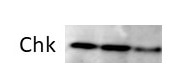
k. (Verified Customer) (10-26-2023) | The antibody worked for WB at a 1:100 dilution.
 |

