

Tested Applications
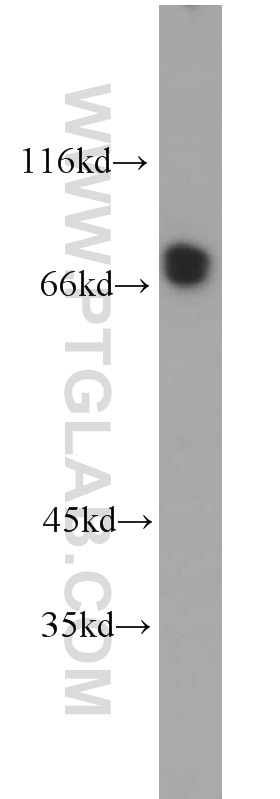
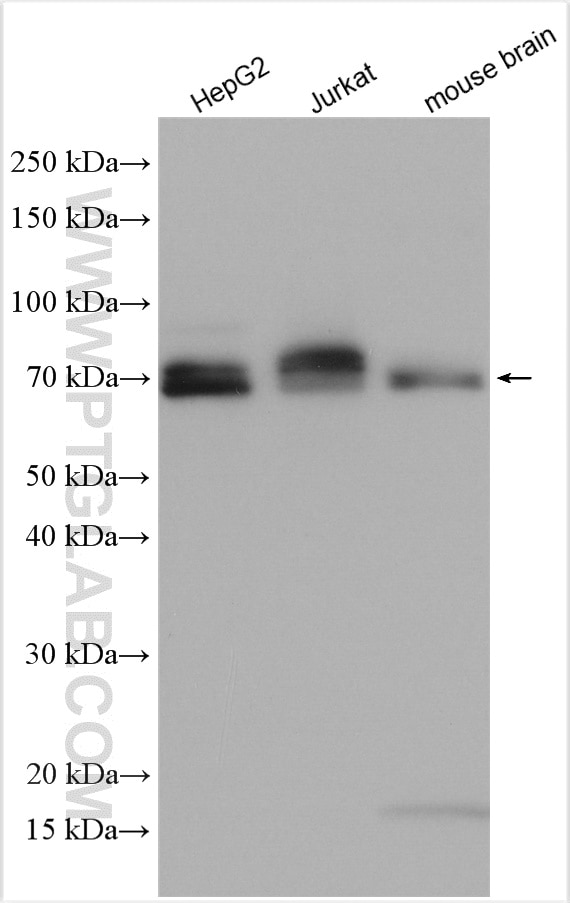
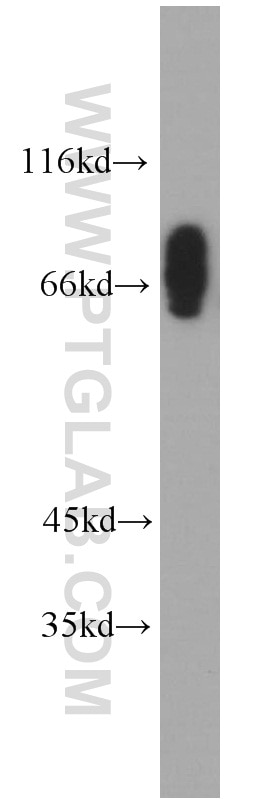
| Positive WB detected in | HepG2 cells, HEK-293 cells, HeLa cells, Jurkat cells, mouse brain tissue |
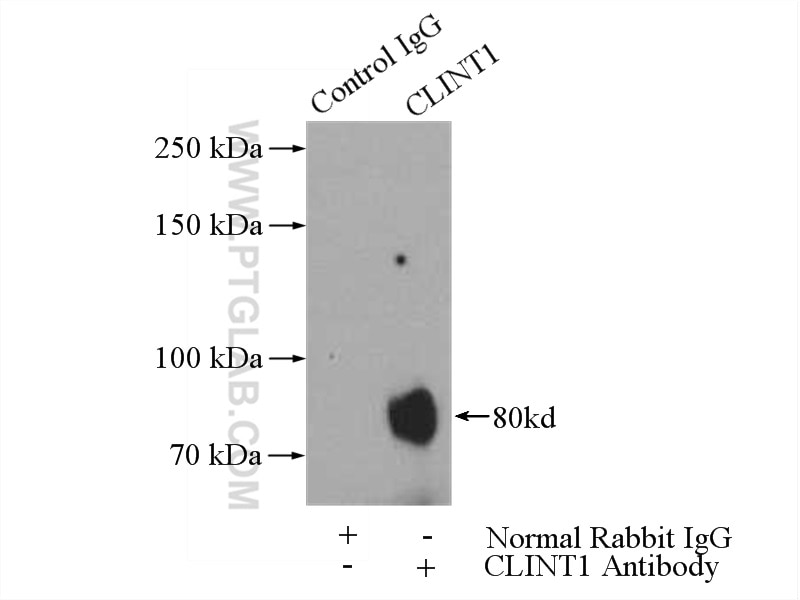
| Positive IP detected in | HeLa cells |
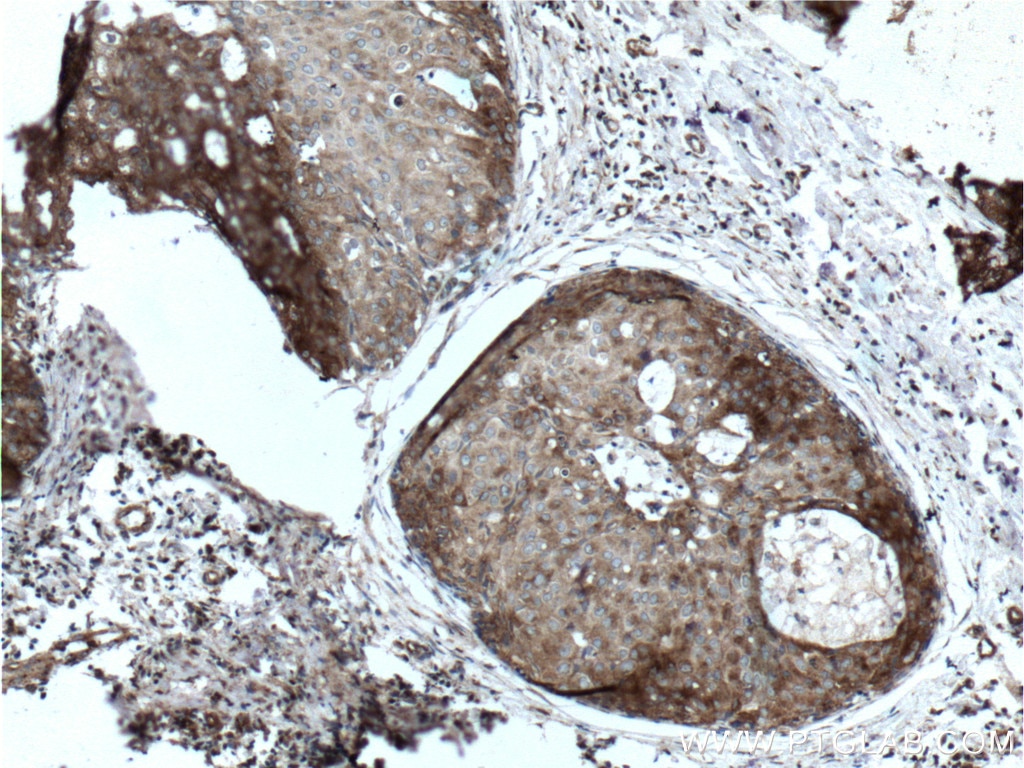
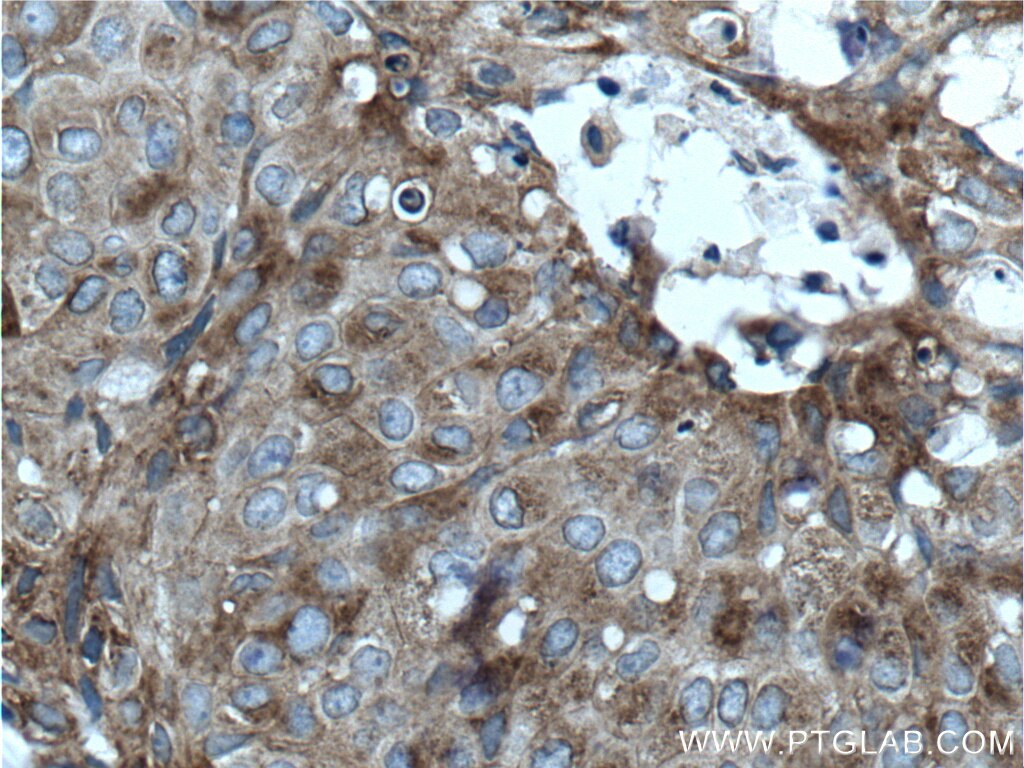
| Positive IHC detected in | human breast cancer tissue Note: suggested antigen retrieval with TE buffer pH 9.0; (*) Alternatively, antigen retrieval may be performed with citrate buffer pH 6.0 |
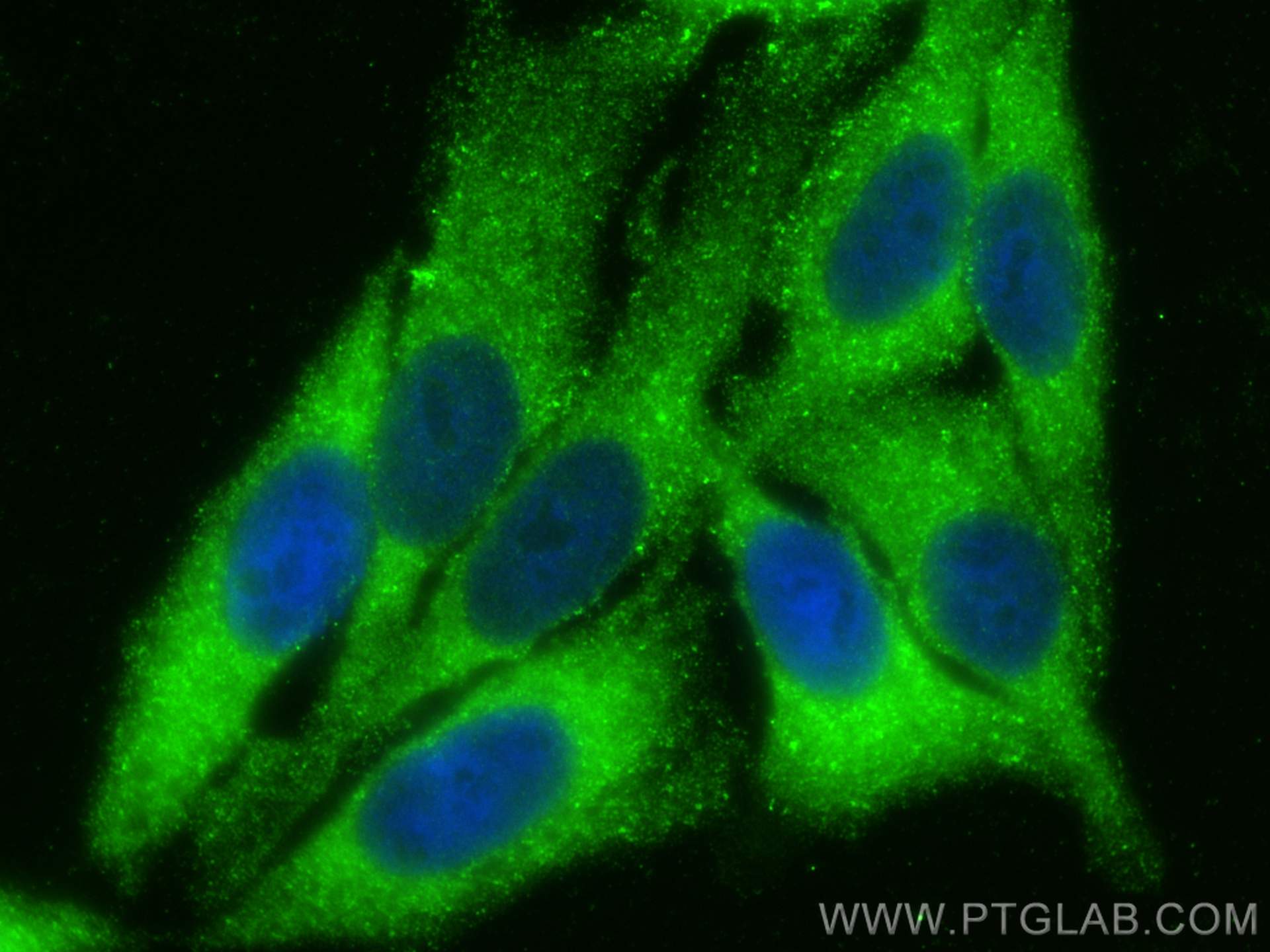
| Positive IF/ICC detected in | HepG2 cells |
Recommended dilution
| Application | Dilution |
|---|---|
| Western Blot (WB) | WB : 1:1000-1:4000 |
| Immunoprecipitation (IP) | IP : 0.5-4.0 ug for 1.0-3.0 mg of total protein lysate |
| Immunohistochemistry (IHC) | IHC : 1:50-1:500 |
| Immunofluorescence (IF)/ICC | IF/ICC : 1:200-1:800 |
| It is recommended that this reagent should be titrated in each testing system to obtain optimal results. | |
| Sample-dependent, Check data in validation data gallery. | |
Product Information
10470-1-AP targets CLINT1 in WB, IHC, IF/ICC, IP, ELISA applications and shows reactivity with human, mouse, rat samples.
| Tested Reactivity | human, mouse, rat |
| Cited Reactivity | human |
| Host / Isotype | Rabbit / IgG |
| Class | Polyclonal |
| Type | Antibody |
| Immunogen |
CatNo: Ag0754 Product name: Recombinant human CLINT1 protein Source: e coli.-derived, PGEX-4T Tag: GST Domain: 326-625 aa of BC004467 Sequence: LVDLFDGTSQSTGGSADLFGGFADFGSAAASGSFPSQVTATSGNGDFGDWSAFNQAPSGPVASSGEFFGSASQPAVELVSGSQSALGPPPAASNSSDLFDLMGSSQATMTSSQSMNFSMMSTNTVGLGLPMSRSQNTDMVQKSVSKTLPSTWSDPSVNISLDNLLPGMQPSKPQQPSLNTMIQQQNMQQPMNVMTQSFGAVNLSSPSNMLPVRPQTNALIGGPMPMSMPNVMTGTMGMAPLGNTPMMNQSMMGMNMNIGMSAAGMGLTGTMGMGMPNIAMTSGTVQPKQDAFANFANFSK Predict reactive species |
| Full Name | clathrin interactor 1 |
| Calculated Molecular Weight | 68 kDa |
| Observed Molecular Weight | 68 kDa, 80 kDa |
| GenBank Accession Number | BC004467 |
| Gene Symbol | CLINT1 |
| Gene ID (NCBI) | 9685 |
| RRID | AB_2276405 |
| Conjugate | Unconjugated |
| Form | Liquid |
| Purification Method | Antigen affinity purification |
| UNIPROT ID | Q14677 |
| Storage Buffer | PBS with 0.02% sodium azide and 50% glycerol, pH 7.3. |
| Storage Conditions | Store at -20°C. Stable for one year after shipment. Aliquoting is unnecessary for -20oC storage. 20ul sizes contain 0.1% BSA. |
Background Information
Clathrin interactor 1 (CLINT1), also known as enthoprotin or epsin-4, belongs to the epsin family of endocytic adapter proteins. CLINT1 interacts with clathrin, the adapter protein AP-1 and phosphoinositides. It may have a role in the formation of clathrin coated vesicles and trafficking between the trans-Golgi network and endosomes. Mutations in the gene of CLINT1 are associated with a susceptibility to schizophrenia and psychotic disorders. Calculated molecular weight of CLINT1 is 68 kDa. The migration of endogenous CLINT1 at 80 kDa has also been reported (PMID: 12213833; 15811338).
Protocols
| Product Specific Protocols | |
|---|---|
| IF protocol for CLINT1 antibody 10470-1-AP | Download protocol |
| IHC protocol for CLINT1 antibody 10470-1-AP | Download protocol |
| IP protocol for CLINT1 antibody 10470-1-AP | Download protocol |
| WB protocol for CLINT1 antibody 10470-1-AP | Download protocol |
| Standard Protocols | |
|---|---|
| Click here to view our Standard Protocols |
Publications
What published studies show
Able is busy answering your previous question. Please try again later.
| Species | Application | Title |
|---|---|---|
Cell Rep DNA-PKcs controls the cytotoxic T cell response to cancer and transplant allograft through regulating LAT-dependent signaling. | ||
bioRxiv PKA Activity-Driven Modulation of Bidirectional Long-Distance transport of Lysosomal vesicles During Synapse Maintenance | ||
bioRxiv Nuclear LC3 Interactome Profiling Identifies Clathrin Heavy Chain as a Mediator of Nuclear LC3 Translocation in Trabecular Meshwork Cells. |
Reviews
What customers say
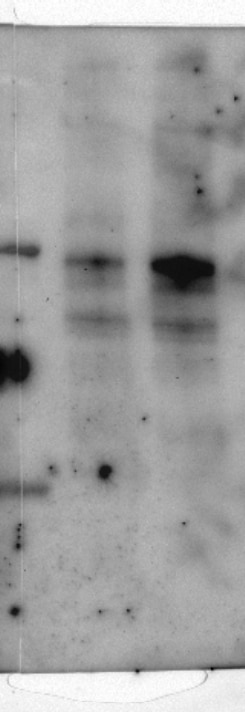
The single review for this product rates it 4 out of 5 stars. The user tested it by Western Blot at a 1:1000 dilution on MDCK GII cells. They reported that the antibody recognizes CLINT1 prominently, though with some background and lower-intensity non-specific bands. Overall, the reviewer found the antibody effective for detecting CLINT1, with the main caveat being minor background and non-specific bands that were less intense than the target signal.
The reviews below have been submitted by verified Proteintech customers who received an incentive for providing their feedback.
Joleen (Verified Customer) (06-16-2019) | Recognizes CLINT1 prominently with some background, non-specific bands that were of lower intensity than CLINT1.
 |

