

Tested Applications
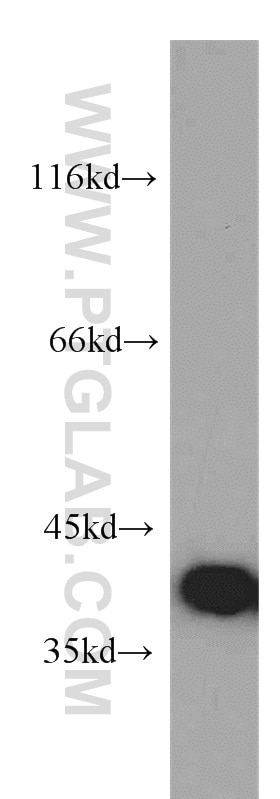
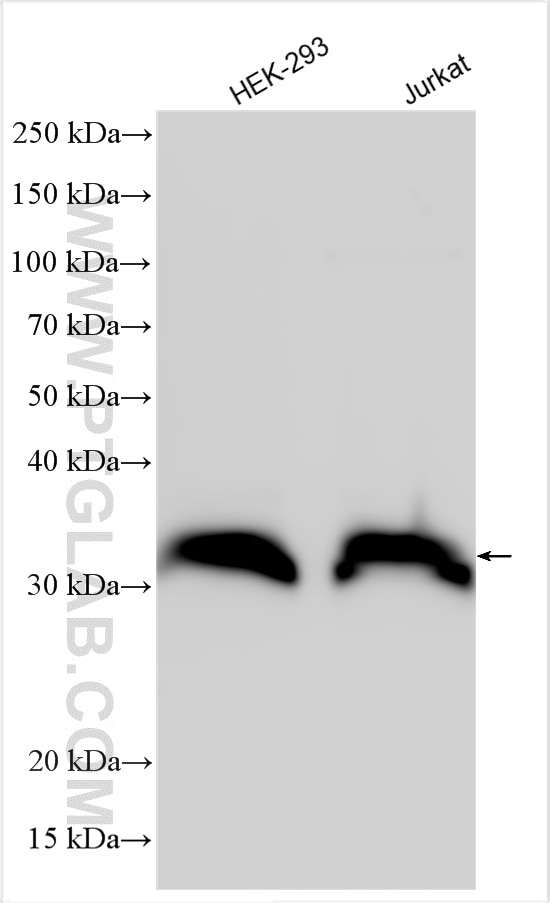
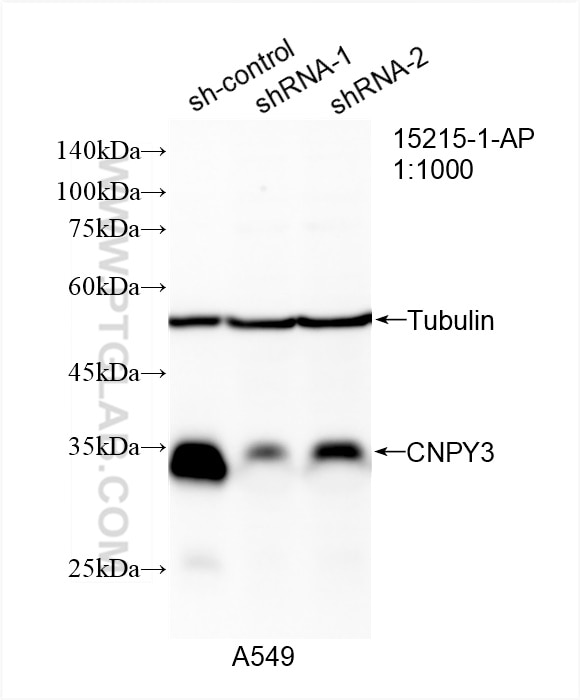
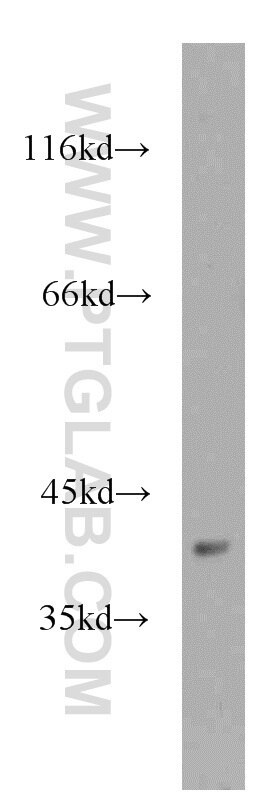
| Positive WB detected in | HEK-293 cells, Jurkat cells, human brain tissue, A549 cells |
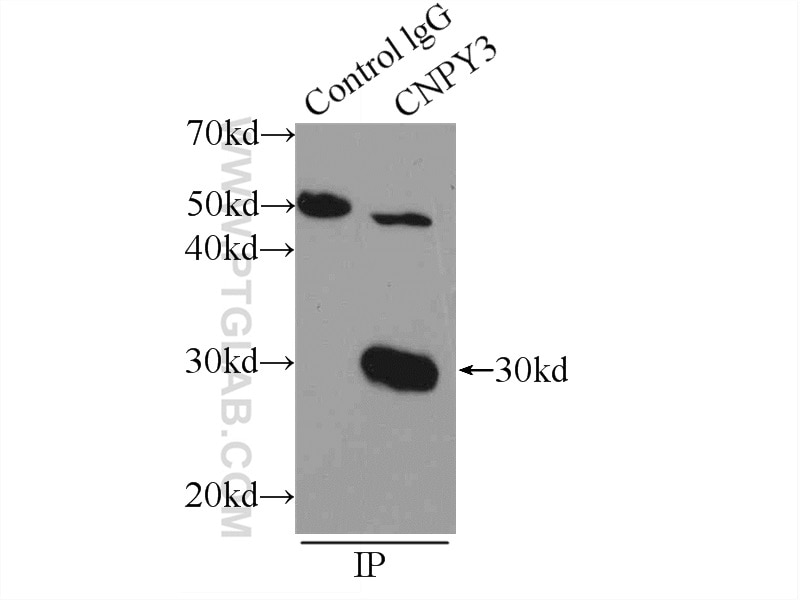
| Positive IP detected in | mouse kidney tissue |
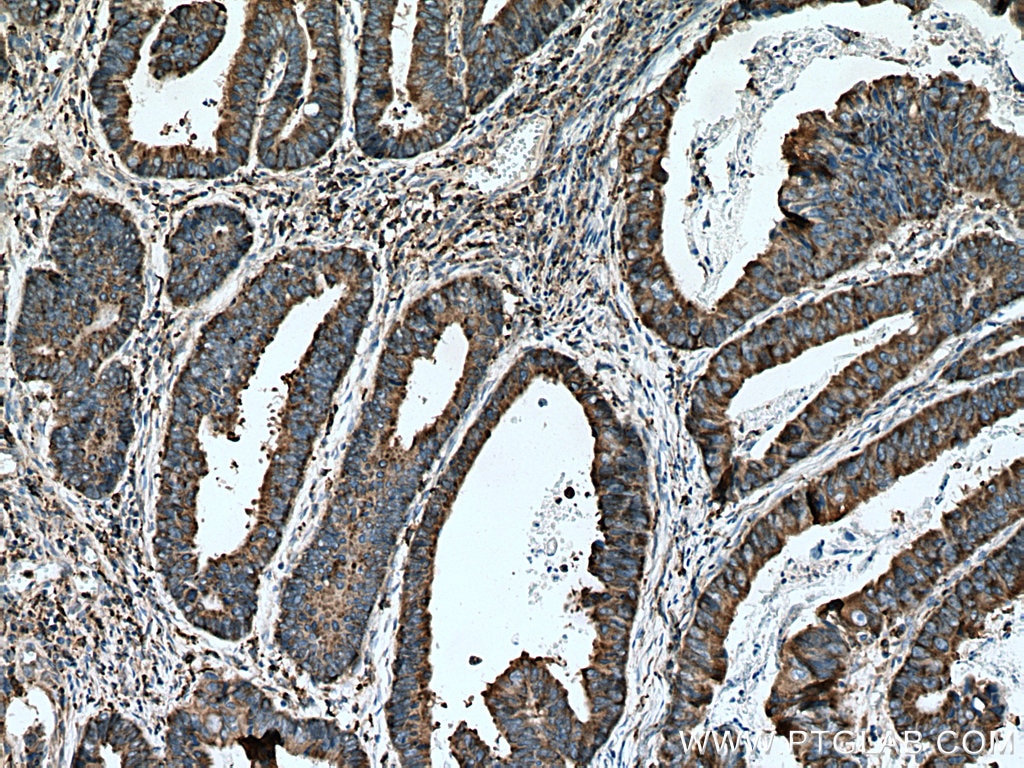
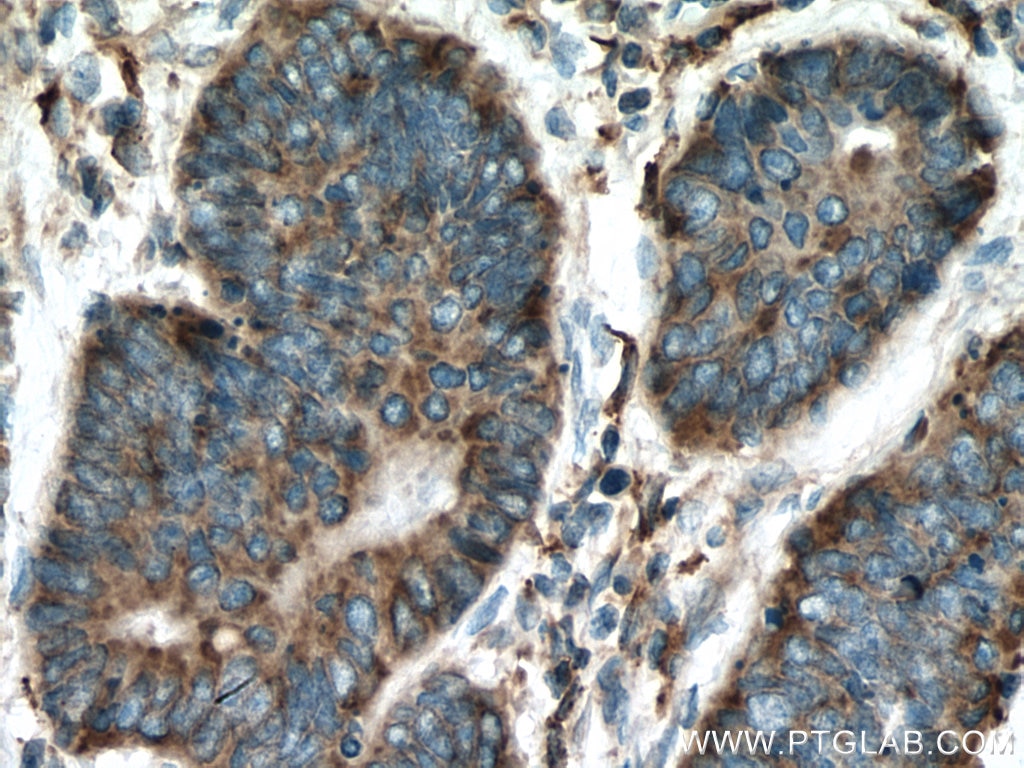
| Positive IHC detected in | human colon cancer tissue Note: suggested antigen retrieval with TE buffer pH 9.0; (*) Alternatively, antigen retrieval may be performed with citrate buffer pH 6.0 |
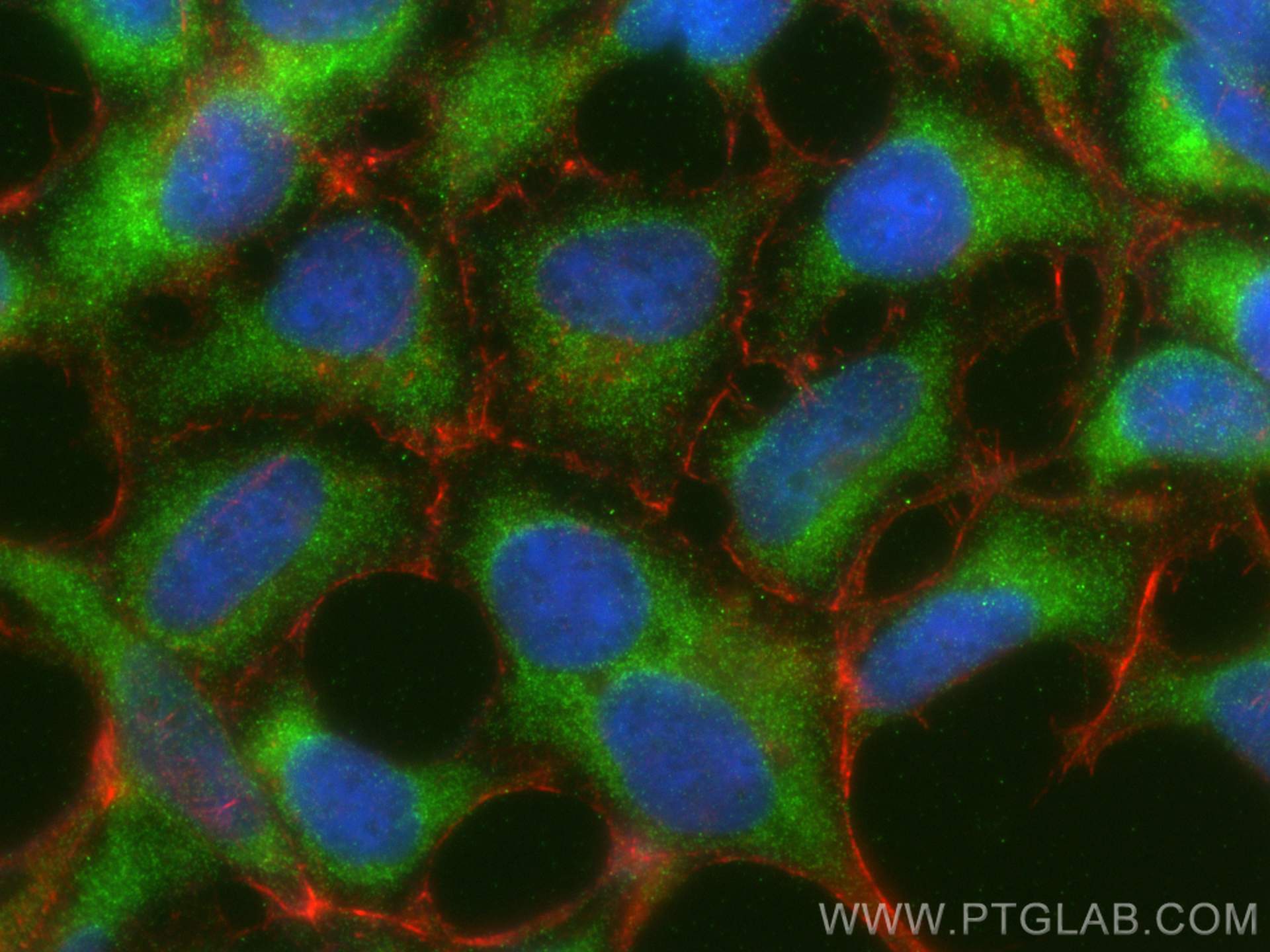
| Positive IF/ICC detected in | HEK-293 cells |
Recommended dilution
| Application | Dilution |
|---|---|
| Western Blot (WB) | WB : 1:1000-1:4000 |
| Immunoprecipitation (IP) | IP : 0.5-4.0 ug for 1.0-3.0 mg of total protein lysate |
| Immunohistochemistry (IHC) | IHC : 1:50-1:500 |
| Immunofluorescence (IF)/ICC | IF/ICC : 1:50-1:500 |
| It is recommended that this reagent should be titrated in each testing system to obtain optimal results. | |
| Sample-dependent, Check data in validation data gallery. | |
Product Information
15215-1-AP targets CNPY3 in WB, IHC, IF/ICC, IP, ELISA applications and shows reactivity with human, mouse, rat samples.
| Tested Reactivity | human, mouse, rat |
| Cited Reactivity | human |
| Host / Isotype | Rabbit / IgG |
| Class | Polyclonal |
| Type | Antibody |
| Immunogen |
CatNo: Ag7382 Product name: Recombinant human CNPY3 protein Source: e coli.-derived, PGEX-4T Tag: GST Domain: 29-278 aa of BC004423 Sequence: ELGPSQAGAEENDWVRLPSKCEVCKYVAVELKSAFEETGKTKEVIGTGYGILDQKASGVKYTKSDLRLIEVTETICKRLLDYSLHKERTGSNRFAKGMSETFETLHNLVHKGVKVVMDIPYELWNETSAEVADLKKQCDVLVEEFEEVIEDWYRNHQEEDLTEFLCANHVLKGKDTSCLAEQWSGKKGDTAALGGKKSKKKSSRAKAAGGRSSSSKQRKELGGLEGDPSPEEDEGIQKASPLTHSPPDEL Predict reactive species |
| Full Name | canopy 3 homolog (zebrafish) |
| Calculated Molecular Weight | 31 kDa |
| Observed Molecular Weight | 30-40 kDa |
| GenBank Accession Number | BC004423 |
| Gene Symbol | CNPY3 |
| Gene ID (NCBI) | 10695 |
| RRID | AB_11182172 |
| Conjugate | Unconjugated |
| Form | Liquid |
| Purification Method | Antigen affinity purification |
| UNIPROT ID | Q9BT09 |
| Storage Buffer | PBS with 0.02% sodium azide and 50% glycerol, pH 7.3. |
| Storage Conditions | Store at -20°C. Stable for one year after shipment. Aliquoting is unnecessary for -20oC storage. 20ul sizes contain 0.1% BSA. |
Protocols
| Product Specific Protocols | |
|---|---|
| IF protocol for CNPY3 antibody 15215-1-AP | Download protocol |
| IHC protocol for CNPY3 antibody 15215-1-AP | Download protocol |
| IP protocol for CNPY3 antibody 15215-1-AP | Download protocol |
| WB protocol for CNPY3 antibody 15215-1-AP | Download protocol |
| Standard Protocols | |
|---|---|
| Click here to view our Standard Protocols |
Publications
What published studies show
The CNPY3 Polyclonal antibody (Cat# 15215-1-AP) has 7 total citations. These appear in journals including Journal of Clinical Investigation, Molecular Medicine, Cell Oncology, Journal of Neuroimmunology, World Journal of Gastrointestinal Oncology, Stem Cell Research, and EBioMedicine. The associated research fields span neurodegenerative diseases (ALS, frontotemporal dementia), oncology (colon and gastric cancer, liver metastasis), immunology (NMOSD, TLR-mediated immune response, inflammasome), developmental and epileptic encephalopathy, and stem cell biology. Most studies applied the antibody for Western blot and immunohistochemistry in human samples.
| Species | Application | Title |
|---|---|---|
J Clin Invest TDP-43 dysregulation of polyadenylation site selection is a defining feature of RNA misprocessing in amyotrophic lateral sclerosis and frontotemporal dementia | ||
Mol Med CNPY3's regulation of tumor microenvironment and its impact on colon cancer aggressiveness | ||
Cell Oncol (Dordr) The SLITRK4-CNPY3 axis promotes liver metastasis of gastric cancer by enhancing the endocytosis and recycling of TrkB in tumour cells | ||
J Neuroimmunol A novel rare variant of CNPY3 from familial NMOSD impairs the TLR-mediated immune response | ||
World J Gastrointest Oncol Canopy FGF signaling regulator 3 affects prognosis, immune infiltration, and PI3K/AKT pathway in colon adenocarcinoma | ||
Stem Cell Res Generation of CNPY3 knock out cell line in the H1 (WA01) hESC background
|

