

Tested Applications
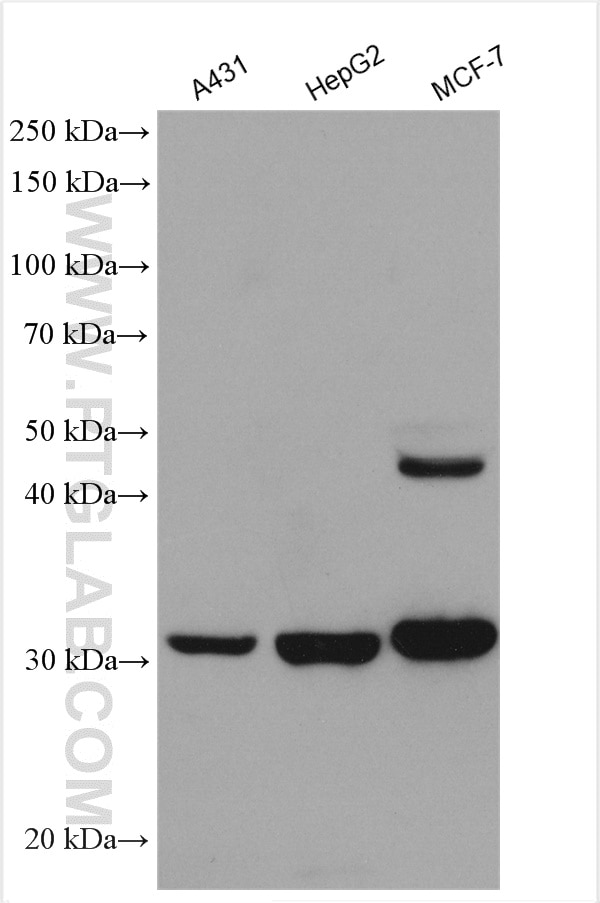
| Positive WB detected in | A431 cells, HepG2 cells, MCF-7 cells |
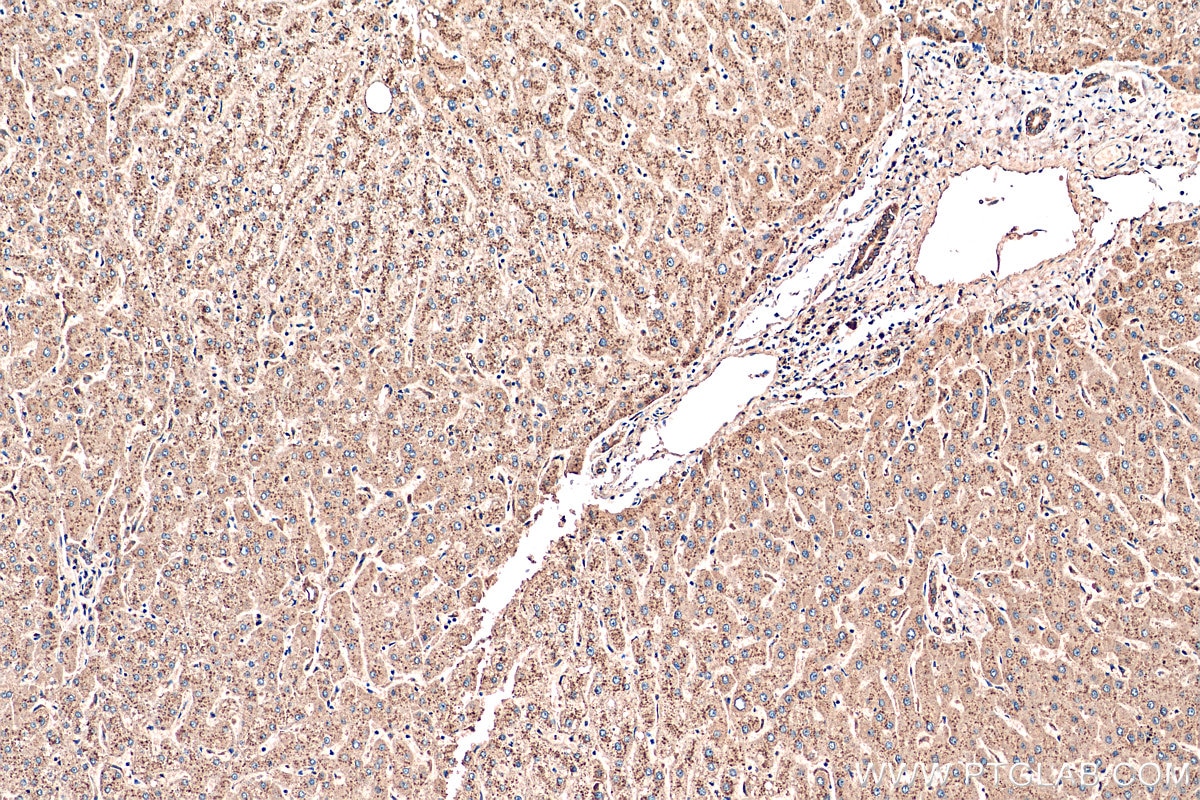
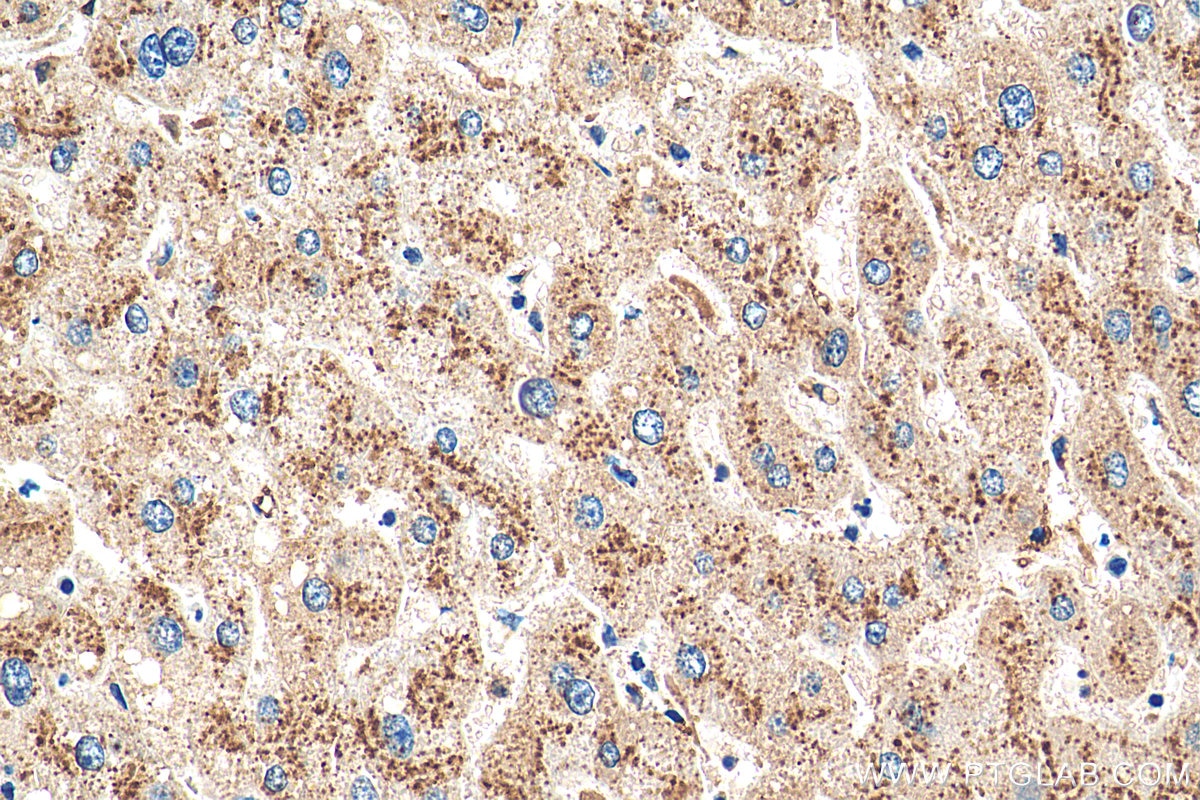
| Positive IHC detected in | human liver tissue Note: suggested antigen retrieval with TE buffer pH 9.0; (*) Alternatively, antigen retrieval may be performed with citrate buffer pH 6.0 |
Recommended dilution
| Application | Dilution |
|---|---|
| Western Blot (WB) | WB : 1:1000-1:6000 |
| Immunohistochemistry (IHC) | IHC : 1:50-1:500 |
| It is recommended that this reagent should be titrated in each testing system to obtain optimal results. | |
| Sample-dependent, Check data in validation data gallery. | |
Product Information
55021-1-AP targets Cathepsin D in WB, IHC, IF, ELISA applications and shows reactivity with human, mouse samples.
| Tested Reactivity | human, mouse |
| Cited Reactivity | human, mouse, pig |
| Host / Isotype | Rabbit / IgG |
| Class | Polyclonal |
| Type | Antibody |
| Immunogen |
Peptide Predict reactive species |
| Full Name | cathepsin D |
| Calculated Molecular Weight | 45 kDa |
| Observed Molecular Weight | 32 kDa |
| GenBank Accession Number | NM_001909 |
| Gene Symbol | Cathepsin D |
| Gene ID (NCBI) | 1509 |
| RRID | AB_10863128 |
| Conjugate | Unconjugated |
| Form | Liquid |
| Purification Method | Antigen affinity purification |
| UNIPROT ID | P07339 |
| Storage Buffer | PBS with 0.02% sodium azide and 50% glycerol, pH 7.3. |
| Storage Conditions | Store at -20°C. Stable for one year after shipment. Aliquoting is unnecessary for -20oC storage. 20ul sizes contain 0.1% BSA. |
Background Information
CTSD (Cathepsin D) is also named as CPSD, belongs to the peptidase A1 family. It is ubiquitously expressed and is involved in proteolytic degradation, cell invasion, and apoptosis. Human CTSD is synthesized as a 52-kDa precursor that is converted into an active 48-kDa single-chain intermediate in the endosomes, and then into a fully active mature form, composed of a 34-kDa heavy chain and a 14-kDa light chain, in the lysosomes. It is a lysosomal acid protease found in neutrophils and monocytes and involved in the pathogenesis of several diseases such as breast cancer and possibly Alzheimer disease. (PMID: 27114232, PMID: 30717773, PMID: 30051532)
Protocols
| Product Specific Protocols | |
|---|---|
| IHC protocol for Cathepsin D antibody 55021-1-AP | Download protocol |
| WB protocol for Cathepsin D antibody 55021-1-AP | Download protocol |
| Standard Protocols | |
|---|---|
| Click here to view our Standard Protocols |
Publications
What published studies show
The Cathepsin D Polyclonal antibody (55021-1-AP) has 17 total citations. It appears in journals including Immunity, Nature Communications, Phytomedicine, Chinese Herbal Medicines, Acta Pharmacologica Sinica, Cell Death Discovery, Free Radical Biology and Medicine, Cell Reports, Acta Neuropathologica Communications, European Journal of Pharmacology, and others. The associated research fields include late-onset Alzheimer's disease, autophagy/lysosomal pathways, cancer (breast, gastric, bladder, hepatoma), cardiac fibrosis, endoplasmic reticulum stress, viral infection, and drug-induced hepatotoxicity. Applications featured across citations were primarily WB and IF.
| Species | Application | Title |
|---|---|---|
Immunity Repression of RIPK1 kinase by INPP5D inhibits expression of diverse proinflammatory mediators and late-onset Alzheimer's disease risk factors | ||
Phytomedicine Cepharanthine sensitizes gastric cancer cells to chemotherapy by targeting TRIB3-FOXO3-FOXM1 axis to inhibit autophagy | ||
Chin Herb Med Precise subcellular organelle-targeted analyses of hepatotoxicity of Polygonum multiflorum. | ||
Cell Death Discov A novel chemical inhibitor suppresses breast cancer cell growth and metastasis through inhibiting HPIP oncoprotein. | ||
Acta Pharmacol Sin YTHDF3-mediated FLCN/cPLA2 axis improves cardiac fibrosis via suppressing lysosomal function |

