

Tested Applications
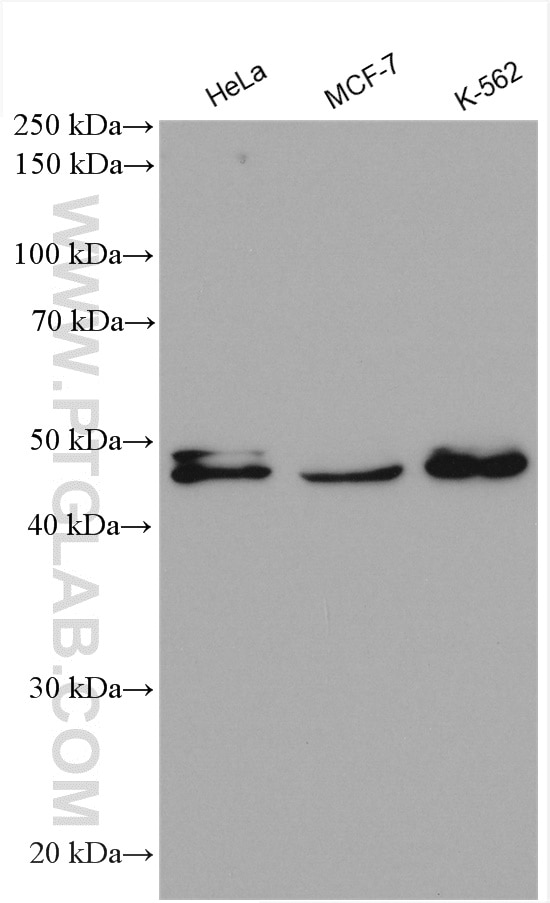
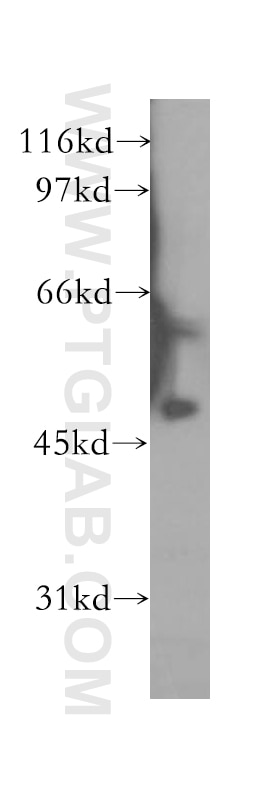
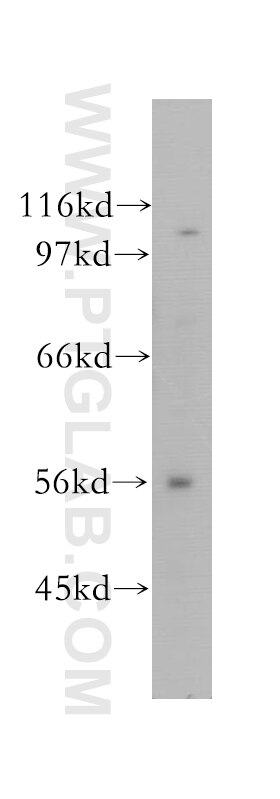
| Positive WB detected in | HeLa cells, mouse thymus tissue, K-562 cells, MCF-7 cells |
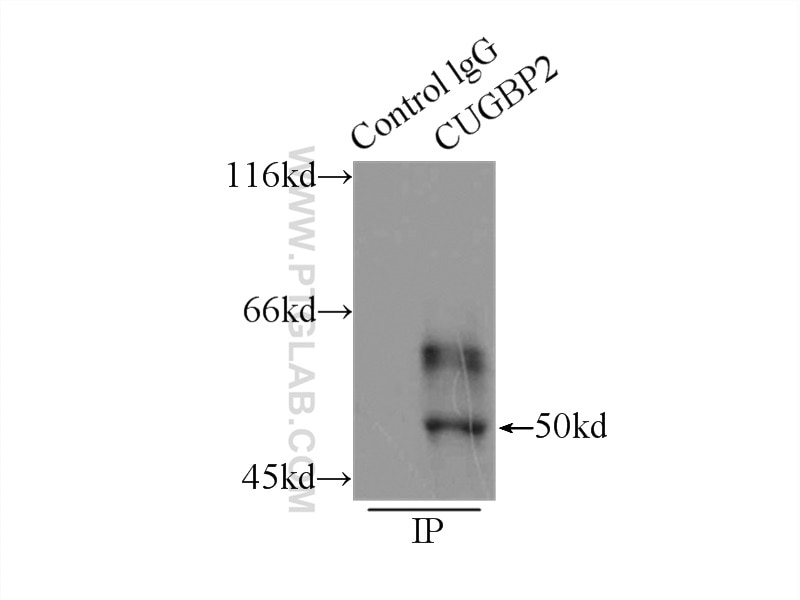
| Positive IP detected in | mouse skeletal muscle tissue |
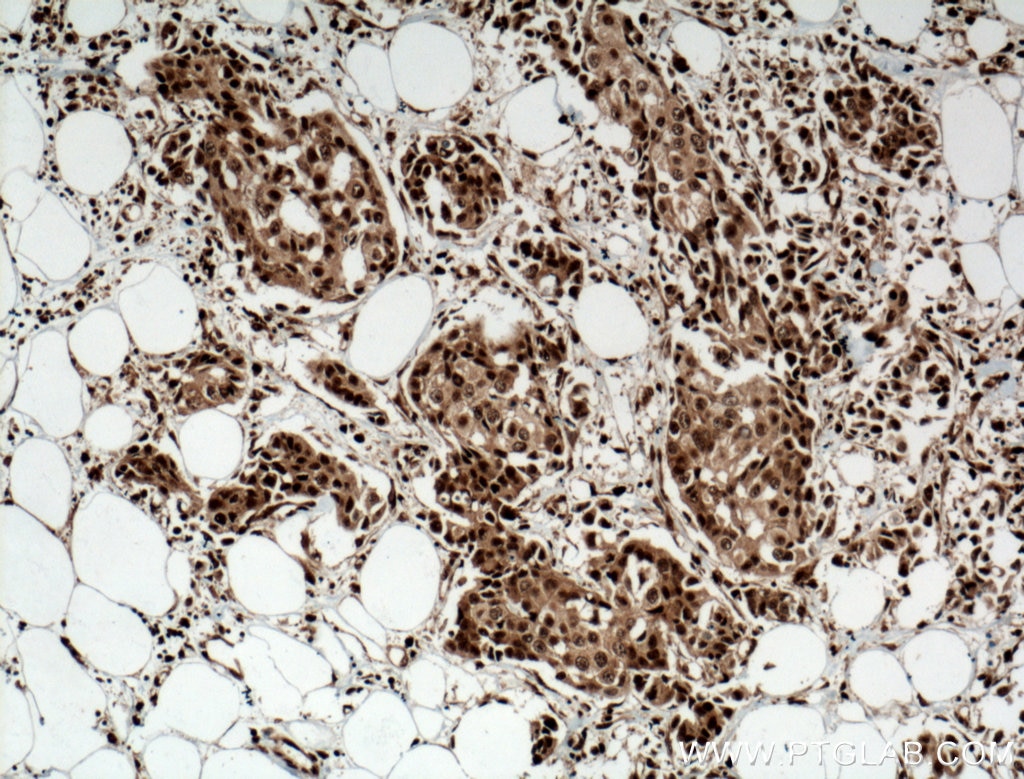
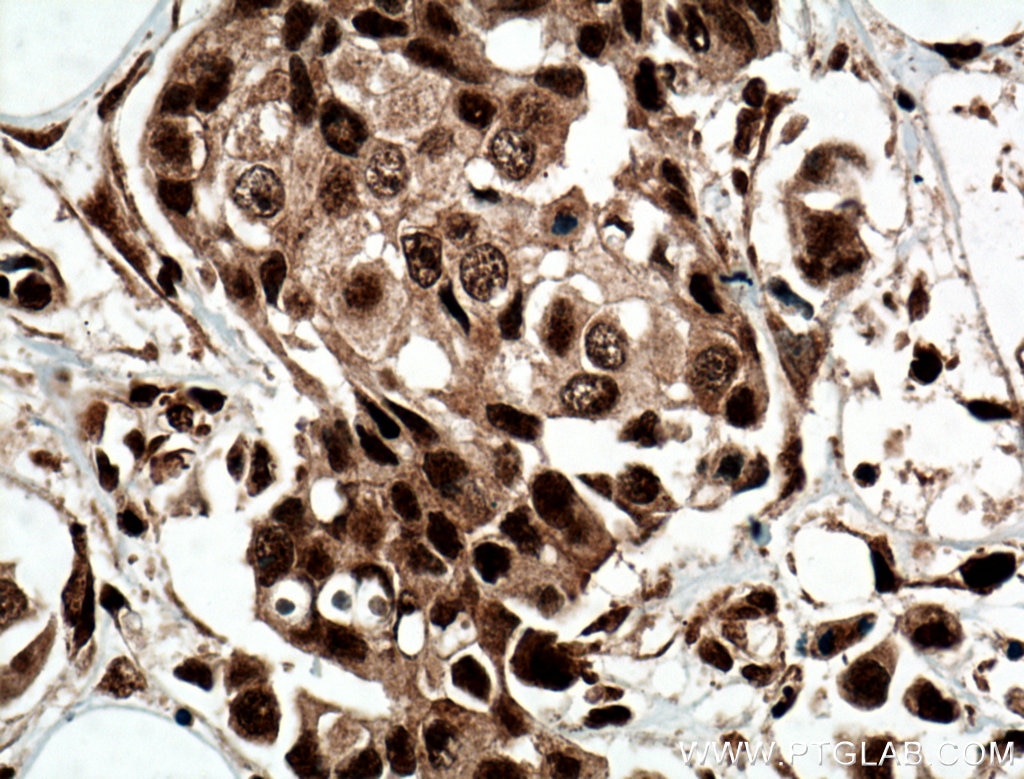
| Positive IHC detected in | human breast cancer tissue Note: suggested antigen retrieval with TE buffer pH 9.0; (*) Alternatively, antigen retrieval may be performed with citrate buffer pH 6.0 |
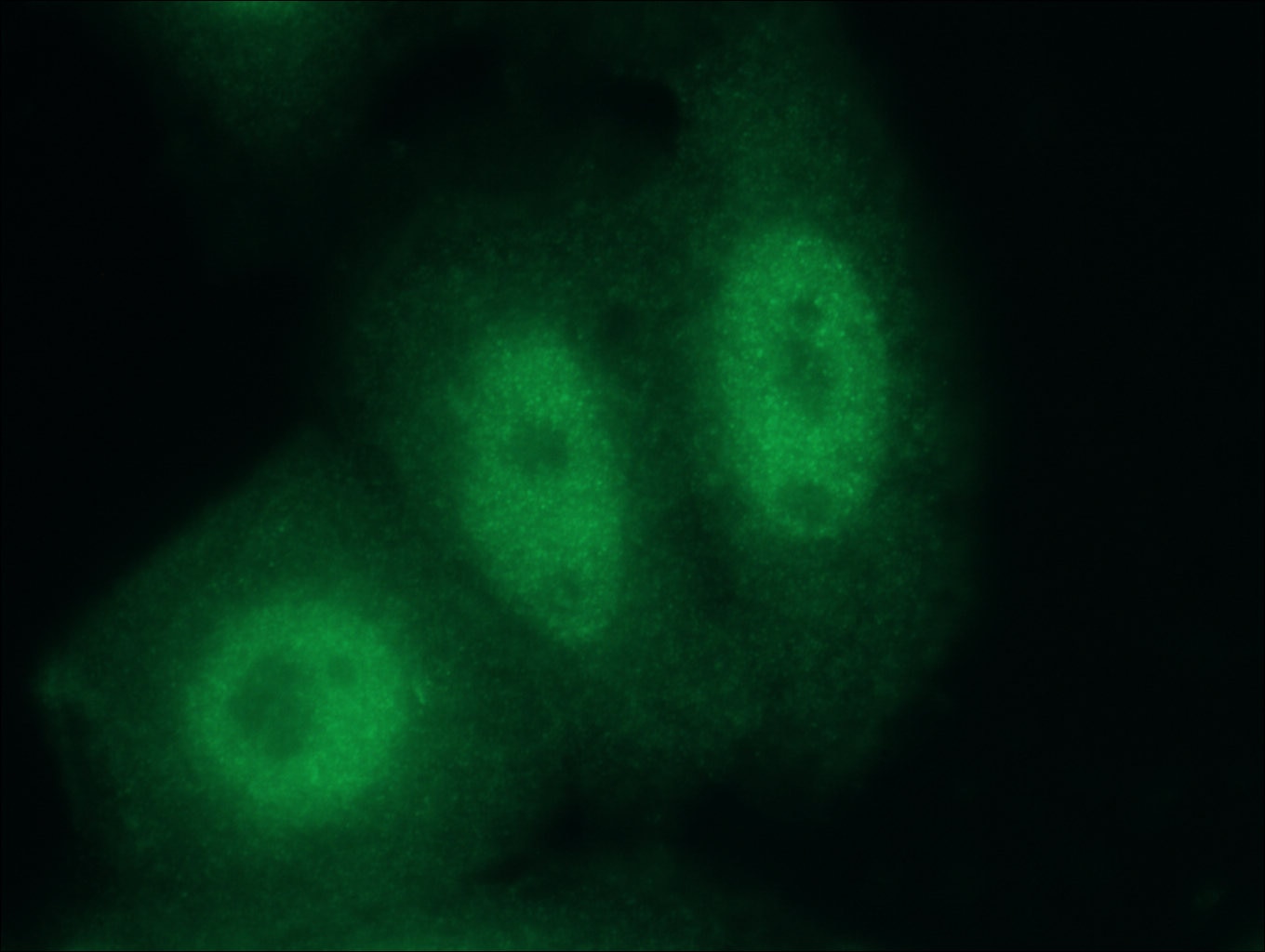
| Positive IF/ICC detected in | HepG2 cells |
Recommended dilution
| Application | Dilution |
|---|---|
| Western Blot (WB) | WB : 1:500-1:2000 |
| Immunoprecipitation (IP) | IP : 0.5-4.0 ug for 1.0-3.0 mg of total protein lysate |
| Immunohistochemistry (IHC) | IHC : 1:50-1:500 |
| Immunofluorescence (IF)/ICC | IF/ICC : 1:50-1:500 |
| It is recommended that this reagent should be titrated in each testing system to obtain optimal results. | |
| Sample-dependent, Check data in validation data gallery. | |
Product Information
12921-1-AP targets CUGBP2 in WB, IHC, IF/ICC, IP, ELISA applications and shows reactivity with human, mouse samples.
| Tested Reactivity | human, mouse |
| Cited Reactivity | human, mouse |
| Host / Isotype | Rabbit / IgG |
| Class | Polyclonal |
| Type | Antibody |
| Immunogen |
CatNo: Ag3594 Product name: Recombinant human CUGBP2 protein Source: e coli.-derived, PGEX-4T Tag: GST Domain: 175-521 aa of BC036391 Sequence: STRAMAQNAIKAMHQSQTMEGCSSPIVVKFADTQKDKEQRRLQQQLAQQMQQLNTATWGNLTGLGGLTPQYLALLQQATSSSNLGAFSGIQQMAGMNALQLQNLATLAAAAAAAQTSATSTNANPLSTTSSALGALTSPVAASTPNSTAGAAMNSLTSLGTLQGLAGATVGLNNINALAGTINTPRSKRLLLPKDNNGMAALNGGLGATGLTNGTAGTMDALTQAYSGIQQYAAAALPTLYSQSLLQQQSAAGSQKEGPEGANLFIYHLPQEFGDQDILQMFMPFGNVISAKVFIDKQTNLSKCFGFVSYDNPVSAQAAIQAMNGFQIGMKRLKVQLKRSKNDSKPY Predict reactive species |
| Full Name | CUG triplet repeat, RNA binding protein 2 |
| Calculated Molecular Weight | 56 kDa |
| Observed Molecular Weight | 50 kDa |
| GenBank Accession Number | BC036391 |
| Gene Symbol | CUGBP2 |
| Gene ID (NCBI) | 10659 |
| RRID | AB_2230041 |
| Conjugate | Unconjugated |
| Form | Liquid |
| Purification Method | Antigen affinity purification |
| UNIPROT ID | O95319 |
| Storage Buffer | PBS with 0.02% sodium azide and 50% glycerol, pH 7.3. |
| Storage Conditions | Store at -20°C. Stable for one year after shipment. Aliquoting is unnecessary for -20oC storage. 20ul sizes contain 0.1% BSA. |
Background Information
The CELF (CUGBP and ETR-3 Like Factor)/Bruno-like protein family plays important roles in the regulation of alternative splicing and translation. CUGBP2 is a member of this family of proteins that possesses several alternatively spliced exons. CUGBP2 induces smooth muscle-specific exon inclusion via binding to uridine purine repeat elements (URE) in ACTN1. Although CUGBP2 is known as a splicing activator for the N-methyl-D-aspartate receptor 1 (NMDA R1) exon 21, CUGBP2 represses NMDA R1 exon 5 inclusion. In addition, CUGBP2 was reported to repress the inclusion of the Ir exon 11.
Protocols
| Product Specific Protocols | |
|---|---|
| IF protocol for CUGBP2 antibody 12921-1-AP | Download protocol |
| IHC protocol for CUGBP2 antibody 12921-1-AP | Download protocol |
| IP protocol for CUGBP2 antibody 12921-1-AP | Download protocol |
| WB protocol for CUGBP2 antibody 12921-1-AP | Download protocol |
| Standard Protocols | |
|---|---|
| Click here to view our Standard Protocols |
Publications
What published studies show
The CUGBP2 Polyclonal antibody (Cat# 12921-1-AP) has 7 citations across journals including Advanced Science, Pharmacological Research, Oncogenesis, Oncotarget, Experimental Biology and Medicine, Brain Research, and bioRxiv. Research fields span neurodegeneration (ALS/FTD splicing), colorectal cancer (EMT, exosomal miRNA, chemoresistance), multiple myeloma (LINC01432–CELF2 axis, apoptosis), cervical cancer (chemosensitivity), and cerebral ischemia (transcriptional regulation). Applications include WB, IF, and IHC in human and mouse samples.
| Species | Application | Title |
|---|---|---|
Adv Sci (Weinh) Aberrant Splicing Signatures Underpin Oligodendrocyte Damage in ALS and Neuron Loss in FTD.
| ||
Pharmacol Res Exosomal miR-625-3p secreted by cancer-associated fibroblasts in colorectal cancer promotes EMT and chemotherapeutic resistance by blocking the CELF2/WWOX pathway | ||
Oncogenesis Investigation of lncRNA expression in newly diagnosed multiple myeloma reveals a LINC01432-CELF2 axis as an inhibitor of apoptosis. | ||
Oncotarget Inhibition of COX2 enhances the chemosensitivity of dichloroacetate in cervical cancer cells. | ||
Exp Biol Med (Maywood) Hypoxic colorectal cancer-secreted exosomes deliver miR-210-3p to normoxic tumor cells to elicit a protumoral effect. | ||
Brain Res Transcriptional induction and translational inhibition of Arc and Cugbp2 in mice hippocampus after transient global ischemia under normothermic condition. |

