

Tested Applications
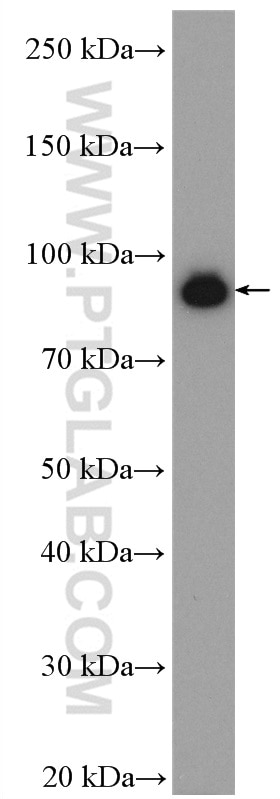
| Positive WB detected in | NIH/3T3 cells |
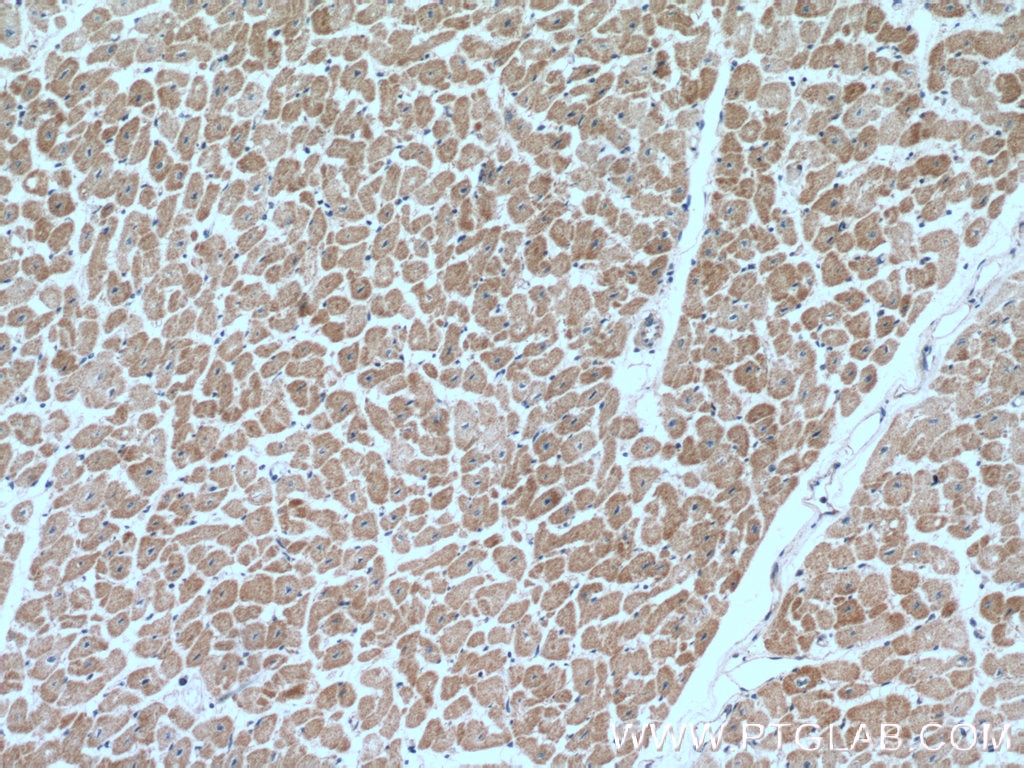
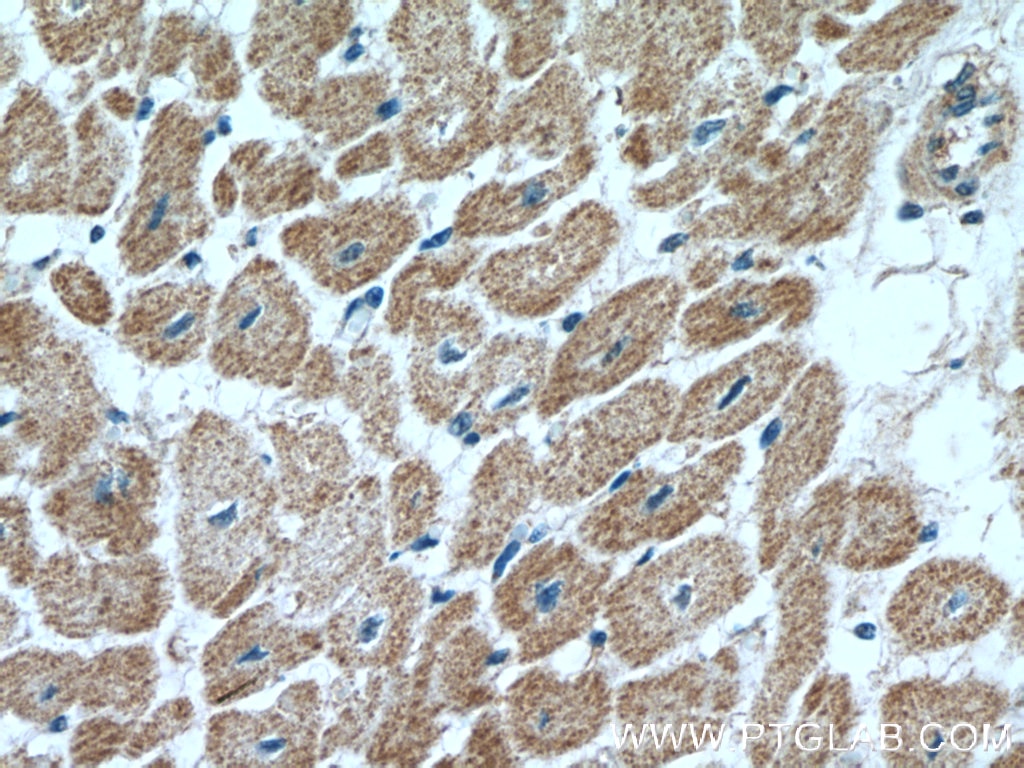
| Positive IHC detected in | human heart tissue Note: suggested antigen retrieval with TE buffer pH 9.0; (*) Alternatively, antigen retrieval may be performed with citrate buffer pH 6.0 |
Recommended dilution
| Application | Dilution |
|---|---|
| Western Blot (WB) | WB : 1:500-1:2000 |
| Immunohistochemistry (IHC) | IHC : 1:50-1:500 |
| It is recommended that this reagent should be titrated in each testing system to obtain optimal results. | |
| Sample-dependent, Check data in validation data gallery. | |
Product Information
10693-1-AP targets CUL4A in WB, IHC, IF, CoIP, ELISA applications and shows reactivity with human, mouse samples.
| Tested Reactivity | human, mouse |
| Cited Reactivity | human, mouse |
| Host / Isotype | Rabbit / IgG |
| Class | Polyclonal |
| Type | Antibody |
| Immunogen |
CatNo: Ag1030 Product name: Recombinant human CUL4A protein Source: e coli.-derived, PGEX-4T Tag: GST Domain: 460-759 aa of BC008308 Sequence: RLLVGKSASVDAEKSMLSKLKHECGAAFTSKLEGMFKDMELSKDIMVHFKQHMQNQSDSGPIDLTVNILTMGYWPTYTPMEVHLTPEMIKLQEVFKAFYLGKHSGRKLQWQTTLGHAVLKAEFKEGKKEFQVSLFQTLVLLMFNEGDGFSFEEIKMATGIEDSELRRTLQSLACGKARVLIKSPKGKEVEDGDKFIFNGEFKHKLFRIKINQIQMKETVEEQVSTTERVFQDRQYQIDAAIVRIMKMRKTLGHNLLVSELYNQLKFPVKPGDLKKRIESLIDRDYMERDKDNPNQYHYVA Predict reactive species |
| Full Name | cullin 4A |
| Calculated Molecular Weight | 77 kDa |
| Observed Molecular Weight | 88 kDa |
| GenBank Accession Number | BC008308 |
| Gene Symbol | CUL4A |
| Gene ID (NCBI) | 8451 |
| RRID | AB_10896455 |
| Conjugate | Unconjugated |
| Form | Liquid |
| Purification Method | Antigen affinity purification |
| UNIPROT ID | Q13619 |
| Storage Buffer | PBS with 0.02% sodium azide and 50% glycerol, pH 7.3. |
| Storage Conditions | Store at -20°C. Stable for one year after shipment. Aliquoting is unnecessary for -20oC storage. 20ul sizes contain 0.1% BSA. |
Background Information
Cullin proteins assemble a large number of RING E3 ubiquitin ligases, participating in the proteolysis through the ubiquitin-proteasome pathway. Two cullin 4 (CUL4) proteins, CUL4A (87 kDa) and CUL4B(104 kDa), have been identified. The two CUL4 sequences are 83% identical. They target certain proteins for degradation by binding protein DDB1 to form a CUL4-DDB1 ubiquitin ligase complex with DDB. They form two individual E3 ligases, DDB1-CUL4ADDB2 and DDB1-CUL4BDDB2 in this process. CUL4A appeared in both the nucleus and the cytosol, suggesting a more complex mechanism for entering the nucleus. CUL4B is localized in the nucleus and facilitates the transfer of DDB1 into the nucleus independently of DDB2.
Protocols
| Product Specific Protocols | |
|---|---|
| IHC protocol for CUL4A antibody 10693-1-AP | Download protocol |
| WB protocol for CUL4A antibody 10693-1-AP | Download protocol |
| Standard Protocols | |
|---|---|
| Click here to view our Standard Protocols |
Publications
What published studies show
The CUL4A Polyclonal antibody (Cat# 10693-1-AP) has 9 citations. They appear in journals including Science Advances, Cell Reports, Biochemical Pharmacology, Breast Cancer Research, iScience, Journal of Virology, Journal of Cell Science, and Molecular Carcinogen. Research fields span neuroplasticity and depression, retrotransposition, histone acetylation, rheumatoid arthritis, breast cancer, psoriasis, viral replication, ciliogenesis, and cancer radiosensitization.
| Species | Application | Title |
|---|---|---|
Sci Adv Stress-induced reduction of Na+/H+ exchanger isoform 1 promotes maladaptation of neuroplasticity and exacerbates depressive behaviors | ||
Cell Rep Pharmacological inhibition of neddylation impairs long interspersed element 1 retrotransposition
| ||
Cell Rep A cancer-specific antigen drives histone acetylation by stabilizing the acetyltransferases.
| ||
Biochem Pharmacol CUL4A promotes glycolytic metabolism of fibroblast-like synoviocytes by targeting FGF2 in rheumatoid arthritis.
| ||
Breast Cancer Res Comprehensive characterization of the DNA amplification at 13q34 in human breast cancer reveals TFDP1 and CUL4A as likely candidate target genes. | ||

