


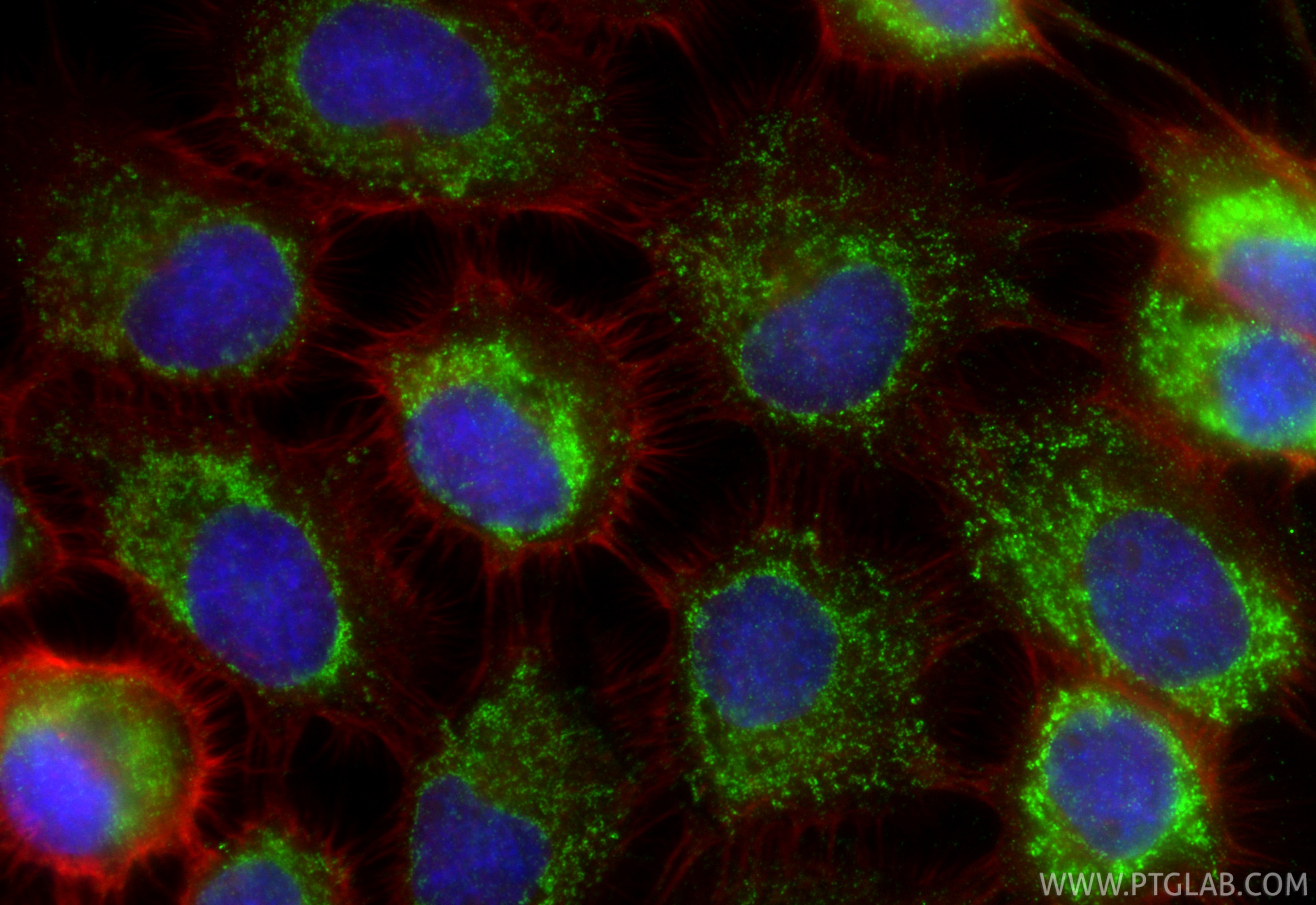

Tested Applications
| Positive WB detected in | human brain tissue |
| Positive IHC detected in | human liver cancer tissue, human breast cancer tissue Note: suggested antigen retrieval with TE buffer pH 9.0; (*) Alternatively, antigen retrieval may be performed with citrate buffer pH 6.0 |
Recommended dilution
| Application | Dilution |
|---|---|
| Western Blot (WB) | WB : 1:500-1:2000 |
| Immunohistochemistry (IHC) | IHC : 1:50-1:500 |
| It is recommended that this reagent should be titrated in each testing system to obtain optimal results. | |
| Sample-dependent, Check data in validation data gallery. | |
Product Information
10242-1-AP targets CYC1 in WB, IHC, IF/ICC, ELISA applications and shows reactivity with human, mouse samples.
| Tested Reactivity | human, mouse |
| Cited Reactivity | human, mouse, rat, pig, monkey |
| Host / Isotype | Rabbit / IgG |
| Class | Polyclonal |
| Type | Antibody |
| Immunogen |
CatNo: Ag0291 Product name: Recombinant human CYC1 protein Source: e coli.-derived, PGEX-4T Tag: GST Domain: 46-271 aa of BC001006 Sequence: ALSSKSGLSRGRKVMLSALGMLAAGGAGLAVALHSAVSASDLELHPPSYPWSHRGLLSSLDHTSIRRGFQVYKQVCASCHSMDFVAYRHLVGVCYTEDEAKELAAEVEVQDGPNEDGEMFMRPGKLFDYFPKPYPNSEAARAANNGALPPDLSYIVRARHGGEDYVFSLLTGYCEPPTGVSLREGLYFNPYFPGQAIAMAPPIYTDVLEFDDGTPATMSQIAKDVC Predict reactive species |
| Full Name | cytochrome c-1 |
| Calculated Molecular Weight | 35 kDa |
| Observed Molecular Weight | 35 kDa |
| GenBank Accession Number | BC001006 |
| Gene Symbol | CYC1 |
| Gene ID (NCBI) | 1537 |
| RRID | AB_2090144 |
| Conjugate | Unconjugated |
| Form | Liquid |
| Purification Method | Antigen affinity purification |
| UNIPROT ID | P08574 |
| Storage Buffer | PBS with 0.02% sodium azide and 50% glycerol, pH 7.3. |
| Storage Conditions | Store at -20°C. Stable for one year after shipment. Aliquoting is unnecessary for -20oC storage. 20ul sizes contain 0.1% BSA. |
Background Information
CYC1, also named as Cytochrome c-1, belongs to the cytochrome c family. Cytochrome c1 is one respiratory subunit of the 11 subunits of the cytochrome bc1 complex of the mitochondrial electron-transfer chain. It mediates the transfer of an electron from Rieske iron-sulfur protein to cytochrome c(PMID:3036122 ). CYC1 mediates apoptosis. In this pathway, a variety of apoptotic stimuli cause CYC1 release from mitochondria, which in turn induces a series of biochemical reactions that result incaspase activation and subsequent cell death.(PMID:15189137) While CYC1 release and DNA fragmentation are unaffected by the noncleavablep75 mutant, mitochondrial morphology of dying cells is maintained, and loss of plasma membrane integrity is delayed(PMID:15186778). The protein migrated as a 35 kd band in SDS page.
Protocols
| Product Specific Protocols | |
|---|---|
| IHC protocol for CYC1 antibody 10242-1-AP | Download protocol |
| WB protocol for CYC1 antibody 10242-1-AP | Download protocol |
| Standard Protocols | |
|---|---|
| Click here to view our Standard Protocols |
Publications
What published studies show
I'll search for the citations of this antibody.The CYC1 Polyclonal antibody (10242-1-AP) is cited in 42 publications across journals such as Cell, Circulation, Cell Research, Nature Cell Biology, Molecular Cell, EMBO Journal, Redox Biology, and many others. Citations span multiple research fields, including mitochondrial bioenergetics and electron transport, mitochondrial complex assembly/dysfunction, apoptosis (caspase cleavage, PARL/Smac signaling), oxidative stress and reactive oxygen species, cardiovascular disease (abdominal aortic aneurysm), and cancer research (breast cancer, osteosarcoma, lymphoma, leukemia). Applications predominantly used were western blotting, with some immunohistochemistry.
| Species | Application | Title |
|---|---|---|
Circulation Nuclear Receptor NR1D1 Regulates Abdominal Aortic Aneurysm Development by Targeting the Mitochondrial Tricarboxylic Acid Cycle Enzyme Aconitase-2 | ||
Cell Res Caspase cleavage of cytochrome c1 disrupts mitochondrial function and enhances cytochrome c release. | ||
Nat Cell Biol PARL mediates Smac proteolytic maturation in mitochondria to promote apoptosis. | ||
Redox Biol Examination of bioenergetic function in the inner mitochondrial membrane peptidase 2-like (Immp2l) mutant mice. | ||
Mol Cell Reactive oxygen species control protein degradation at the mitochondrial import gate |
Reviews
What customers say
Able is busy answering your previous question. Please try again later.
The reviews below have been submitted by verified Proteintech customers who received an incentive for providing their feedback.
S (Verified Customer) (09-23-2024) | Good
 |
Daniel (Verified Customer) (09-16-2019) | The nitrocellulose membrane was blocked with PBS, 5% BSA, w/ Tween-20, yet high levels of background was observed.
 |


