
Tested Applications
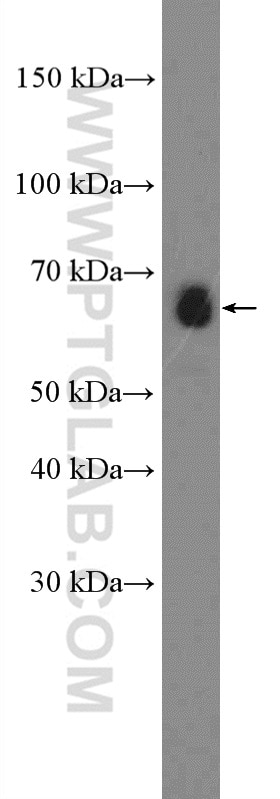
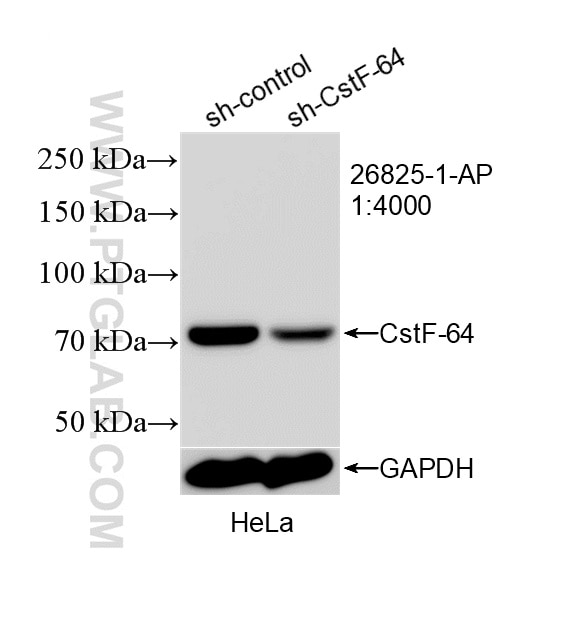
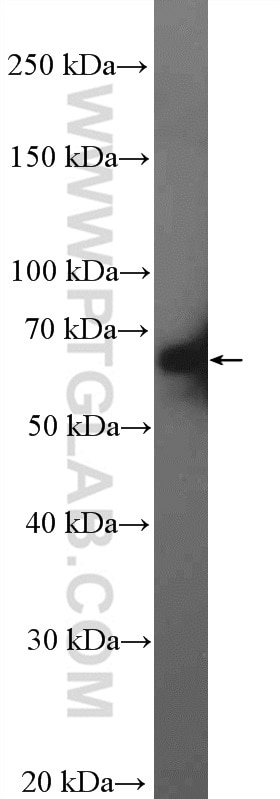
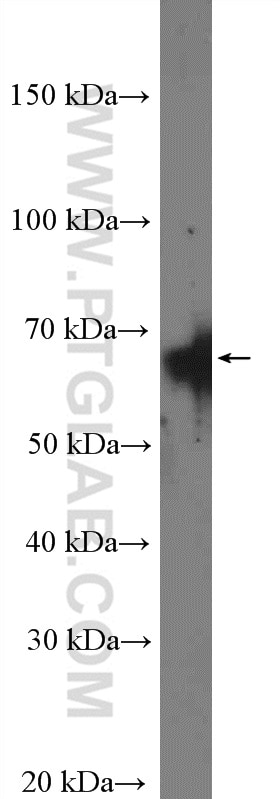
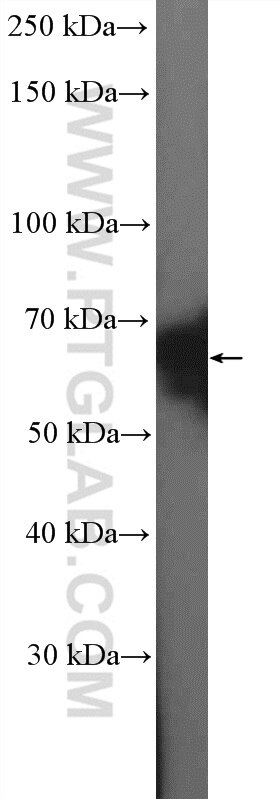
| Positive WB detected in | COLO 320 cells, HeLa cells, mouse brain tissue, mouse testis tissue |
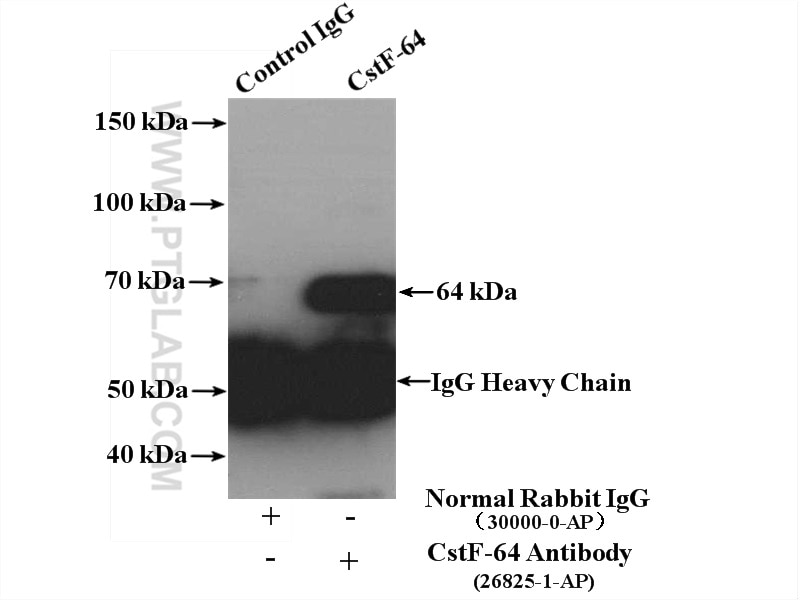
| Positive IP detected in | HeLa cells |
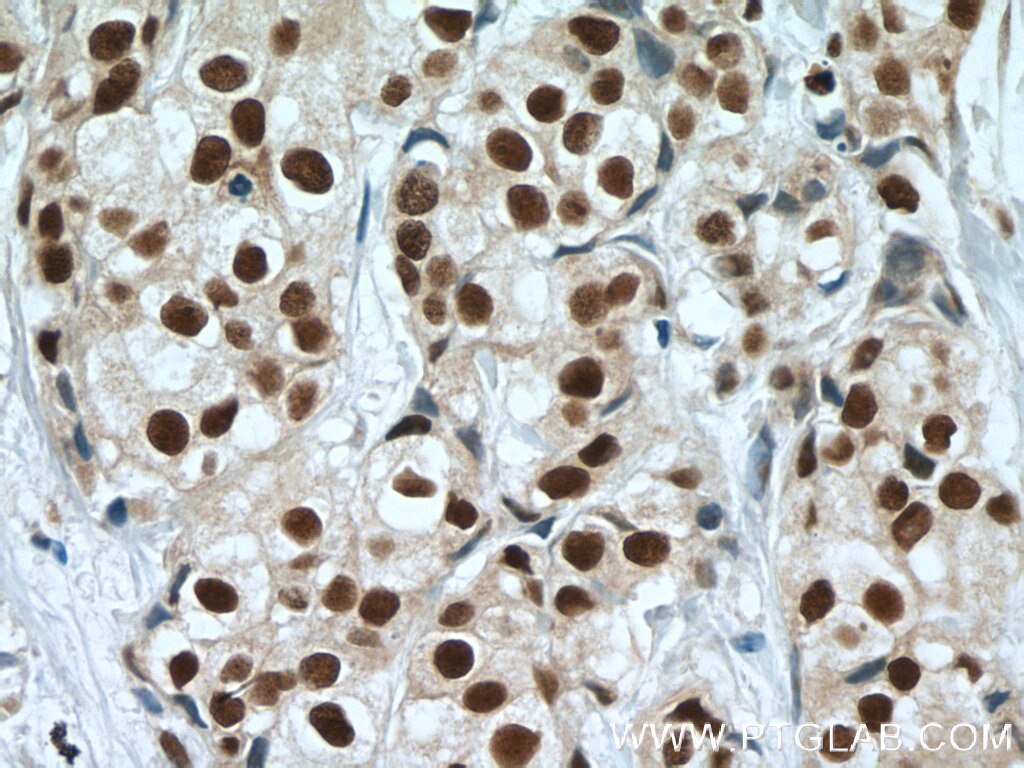
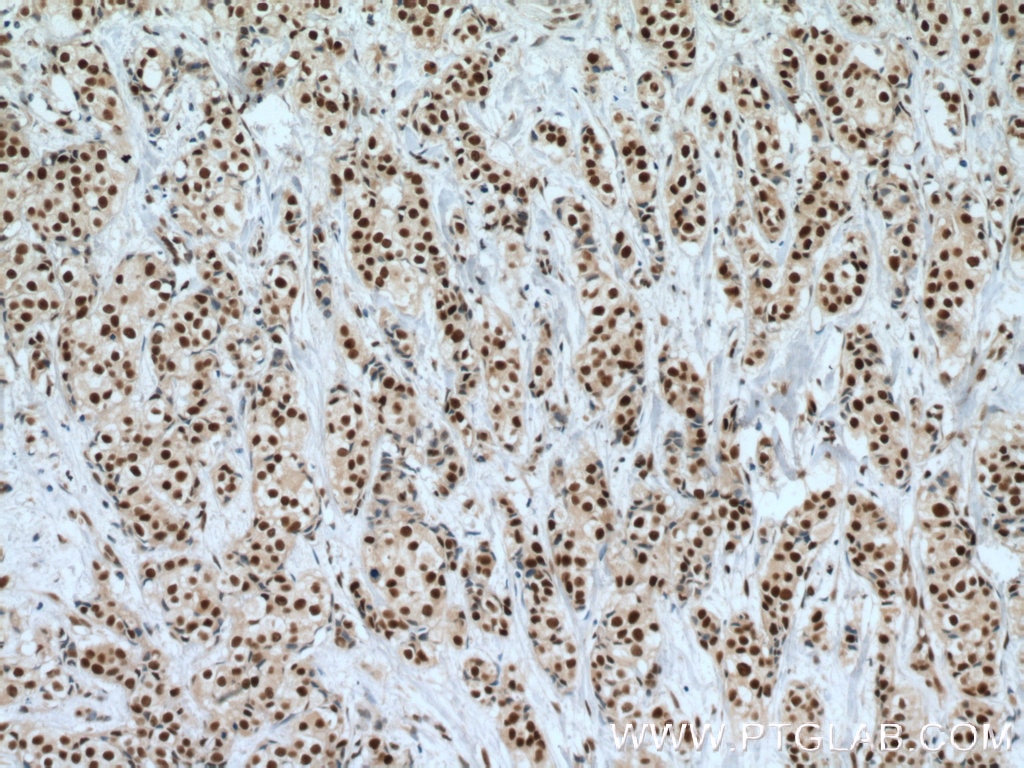
| Positive IHC detected in | human breast cancer tissue Note: suggested antigen retrieval with TE buffer pH 9.0; (*) Alternatively, antigen retrieval may be performed with citrate buffer pH 6.0 |
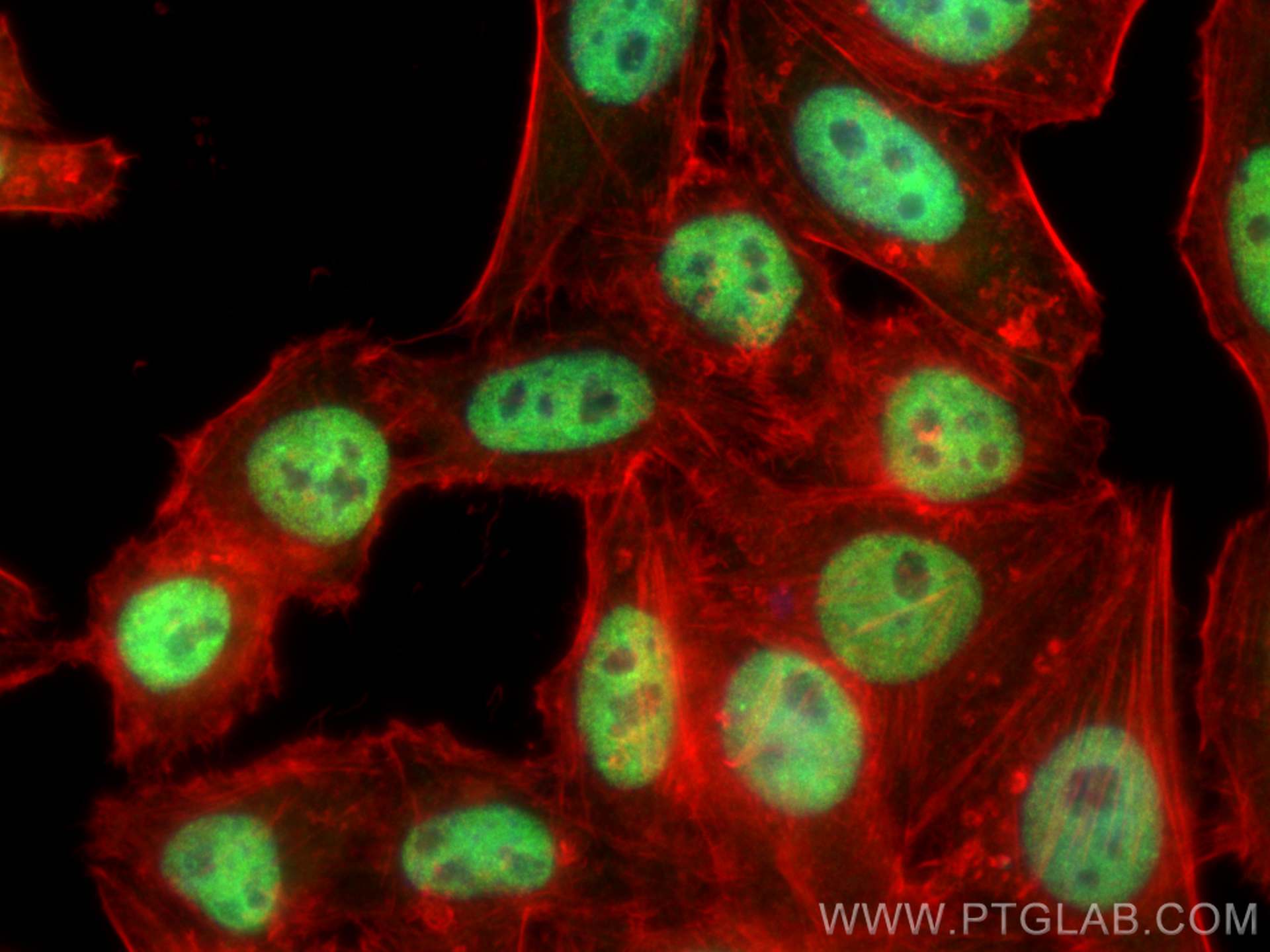
| Positive IF/ICC detected in | HepG2 cells |
Recommended dilution
| Application | Dilution |
|---|---|
| Western Blot (WB) | WB : 1:500-1:1000 |
| Immunoprecipitation (IP) | IP : 0.5-4.0 ug for 1.0-3.0 mg of total protein lysate |
| Immunohistochemistry (IHC) | IHC : 1:50-1:500 |
| Immunofluorescence (IF)/ICC | IF/ICC : 1:50-1:500 |
| It is recommended that this reagent should be titrated in each testing system to obtain optimal results. | |
| Sample-dependent, Check data in validation data gallery. | |
Product Information
26825-1-AP targets CstF-64 in WB, IHC, IF/ICC, IP, ELISA applications and shows reactivity with human, mouse, rat samples.
| Tested Reactivity | human, mouse, rat |
| Cited Reactivity | human, mouse, rat |
| Host / Isotype | Rabbit / IgG |
| Class | Polyclonal |
| Type | Antibody |
| Immunogen |
CatNo: Ag25254 Product name: Recombinant human CstF-64 protein Source: e coli.-derived, PGEX-4T Tag: GST Domain: 408-504 aa of BC017712 Sequence: RGIDARGMEARAMEARGLDARGLEARAMEARAMEARAMEARAMEARAMEVRGMEARGMDTRGPVPGPRGPIPSGMQGPSPINMGAVVPQGSRQVPVM Predict reactive species |
| Full Name | cleavage stimulation factor, 3' pre-RNA, subunit 2, 64kDa |
| Calculated Molecular Weight | 61 kDa |
| Observed Molecular Weight | 64 kDa |
| GenBank Accession Number | BC017712 |
| Gene Symbol | CstF-64 |
| Gene ID (NCBI) | 1478 |
| RRID | AB_2880649 |
| Conjugate | Unconjugated |
| Form | Liquid |
| Purification Method | Antigen affinity purification |
| UNIPROT ID | P33240 |
| Storage Buffer | PBS with 0.02% sodium azide and 50% glycerol, pH 7.3. |
| Storage Conditions | Store at -20°C. Stable for one year after shipment. Aliquoting is unnecessary for -20oC storage. 20ul sizes contain 0.1% BSA. |
Background Information
Cleavage stimulation factor 64 kDa subunit is a protein that in humans is encoded by the CSTF2 gene. This gene encodes a nuclear protein with an RRM (RNA recognition motif) domain. The protein is a member of the cleavage stimulation factor (CSTF) complex that is involved in the 3' end cleavage and polyadenylation of pre-mRNAs. Specifically, this protein binds GU-rich elements within the 3'-untranslated region of mRNAs.
Protocols
| Product Specific Protocols | |
|---|---|
| IF protocol for CstF-64 antibody 26825-1-AP | Download protocol |
| IHC protocol for CstF-64 antibody 26825-1-AP | Download protocol |
| IP protocol for CstF-64 antibody 26825-1-AP | Download protocol |
| WB protocol for CstF-64 antibody 26825-1-AP | Download protocol |
| Standard Protocols | |
|---|---|
| Click here to view our Standard Protocols |
Publications
What published studies show
| Species | Application | Title |
|---|---|---|
Neuron Suppression of premature transcription termination leads to reduced mRNA isoform diversity and neurodegeneration. | ||
Biochem Biophys Res Commun Cleavage stimulating factor 64 depletion mitigates cardiac fibrosis through alternative polyadenylation.
| ||
J Hepatocell Carcinoma A Novel Gene Pair CSTF2/DPE2A Impacts Prognosis and Cell Cycle of Hepatocellular Carcinoma | ||
iScience Chromodomain helicase DNA-binding domain 2 maintains spermatogonial self-renewal by promoting chromatin accessibility and mRNA stability | ||
Front Oncol CSTF2 Promotes Hepatocarcinogenesis and Hepatocellular Carcinoma Progression via Aerobic Glycolysis |

