

Tested Applications
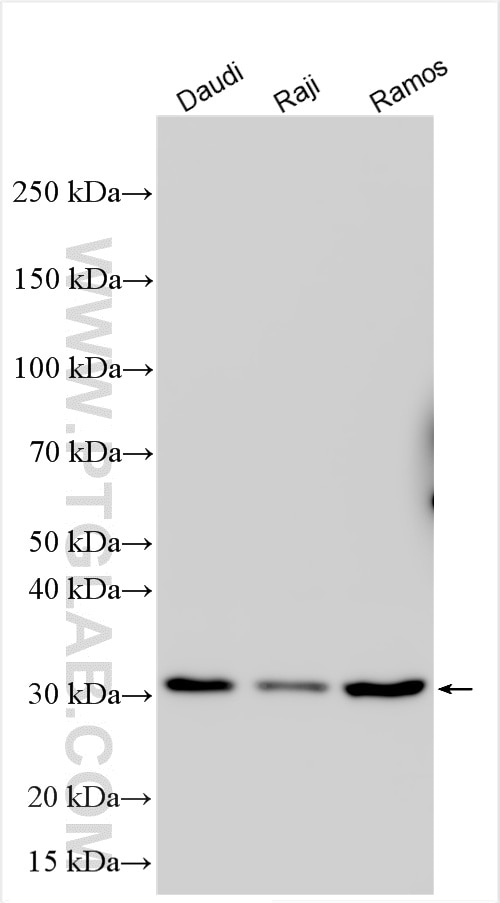
| Positive WB detected in | Daudi cells, Raji cells, Ramos cells |
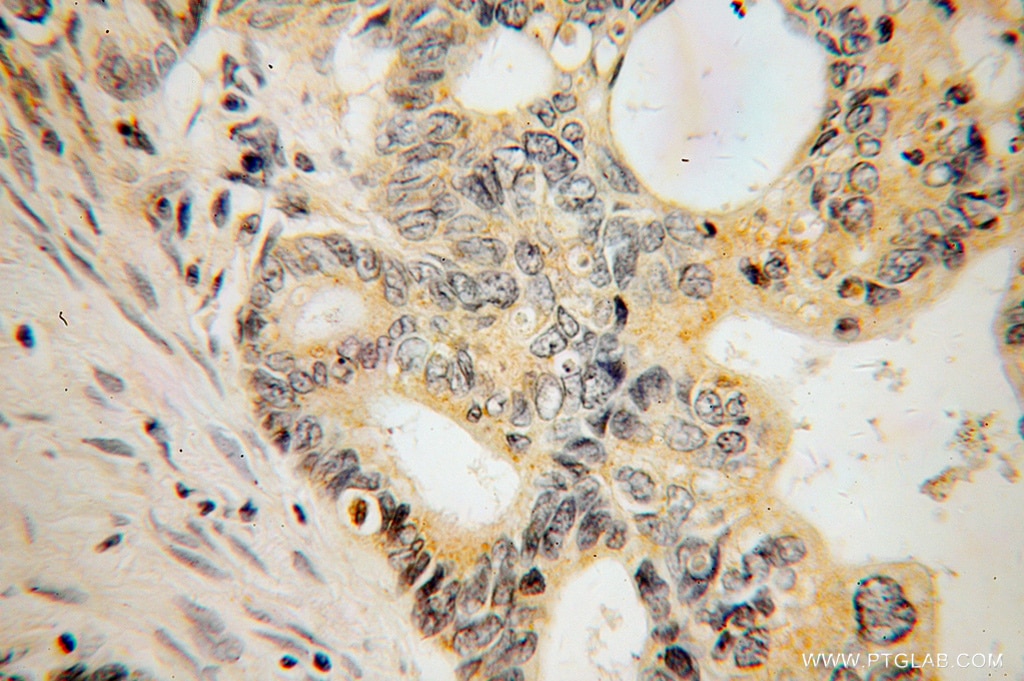
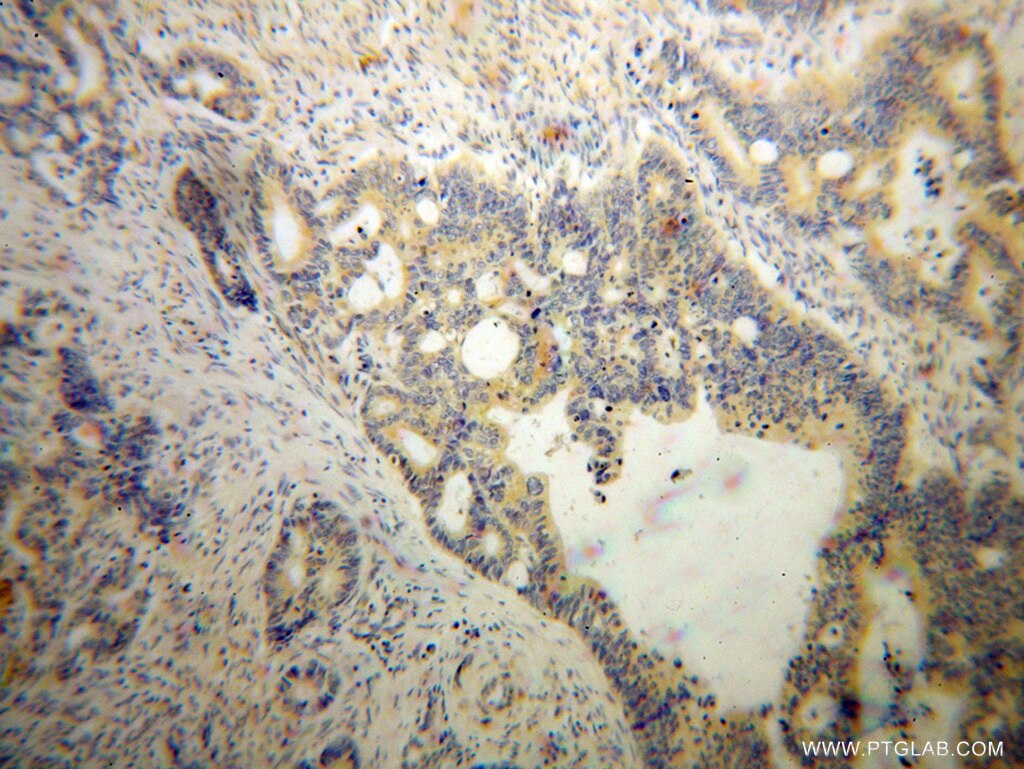
| Positive IHC detected in | human liver cancer tissue Note: suggested antigen retrieval with TE buffer pH 9.0; (*) Alternatively, antigen retrieval may be performed with citrate buffer pH 6.0 |
Recommended dilution
| Application | Dilution |
|---|---|
| Western Blot (WB) | WB : 1:1000-1:4000 |
| Immunohistochemistry (IHC) | IHC : 1:20-1:200 |
| It is recommended that this reagent should be titrated in each testing system to obtain optimal results. | |
| Sample-dependent, Check data in validation data gallery. | |
Product Information
14722-1-AP targets DAPP1 in WB, IHC, ELISA applications and shows reactivity with human, mouse, rat samples.
| Tested Reactivity | human, mouse, rat |
| Cited Reactivity | human |
| Host / Isotype | Rabbit / IgG |
| Class | Polyclonal |
| Type | Antibody |
| Immunogen |
CatNo: Ag6459 Product name: Recombinant human DAPP1 protein Source: e coli.-derived, PGEX-4T Tag: GST Domain: 1-280 aa of BC012924 Sequence: MGRAELLEGKMSTQDPSDLWSRSDGEAELLQDLGWYHGNLTRHAAEALLLSNGCDGSYLLRDSNETTGLYSLSVRAKDSVKHFHVEYTGYSFKFGFNEFSSLKDFVKHFANQPLIGSETGTLMVLKHPYPRKVEEPSIYESVRVHTAMQTGRTEDDLVPTAPSLGTKEGYLTKQGGLVKTWKTRWFTLHRNELKYFKDQMSPEPIRILDLTECSAVQFDYSQERVNCFCLVFPFRTFYLCAKTGVEADEWIKILRWKLSQIRKQLNQGEGTIRSRSFIFK Predict reactive species |
| Full Name | dual adaptor of phosphotyrosine and 3-phosphoinositides |
| Calculated Molecular Weight | 32 kDa |
| Observed Molecular Weight | 32 kDa |
| GenBank Accession Number | BC012924 |
| Gene Symbol | DAPP1 |
| Gene ID (NCBI) | 27071 |
| RRID | AB_2088457 |
| Conjugate | Unconjugated |
| Form | Liquid |
| Purification Method | Antigen affinity purification |
| UNIPROT ID | Q9UN19 |
| Storage Buffer | PBS with 0.02% sodium azide and 50% glycerol, pH 7.3. |
| Storage Conditions | Store at -20°C. Stable for one year after shipment. Aliquoting is unnecessary for -20oC storage. 20ul sizes contain 0.1% BSA. |
Background Information
DAPP1 was identified as dual adaptor for phosphotyrosine and 3-phosphoinositides, a novel 280 amino acid protein which contains a putative myristoylation site at its N-terminus followed by a SH2 and a PH domain at its C-terminus (PMID: 10432293). DAPP1 is also referred to B cell adaptor molecule of 32 kDa (Bam32), and is expressed by B lymphocytes, but not T lymphocytes or nonhematopoietic cells. DAPP1/Bam32 was shown to regulate BCR signaling downstream of phosphatidylinositol 3-kinase (PI3K) (PMID: 10770799). Furthermore, DAPP1/Bam32 may server to integrate PI3K and Src kinase signaling to promote Rac-dependent B cell adhesive interactions important for antigen presentation function (PMID: 20495066).
Protocols
| Product Specific Protocols | |
|---|---|
| IHC protocol for DAPP1 antibody 14722-1-AP | Download protocol |
| WB protocol for DAPP1 antibody 14722-1-AP | Download protocol |
| Standard Protocols | |
|---|---|
| Click here to view our Standard Protocols |
Publications
What published studies show
The DAPP1 Polyclonal antibody (Cat# 14722-1-AP) has 1 citation. It appears in Molecular & Cellular Proteomics (IF 6.3), where it was used in Western blot to study quantitative tyrosine phosphoproteomics of EGFR inhibitor–treated lung adenocarcinoma cells, identifying potential biomarkers of therapeutic response. The associated research fields include phosphoproteomics, oncology (lung adenocarcinoma), and targeted therapy biomarker discovery.
| Species | Application | Title |
|---|---|---|
Mol Cell Proteomics Quantitative tyrosine phosphoproteomics of EGFR tyrosine kinase inhibitor-treated lung adenocarcinoma cells reveals potential novel biomarkers of therapeutic response.
|

