

Tested Applications
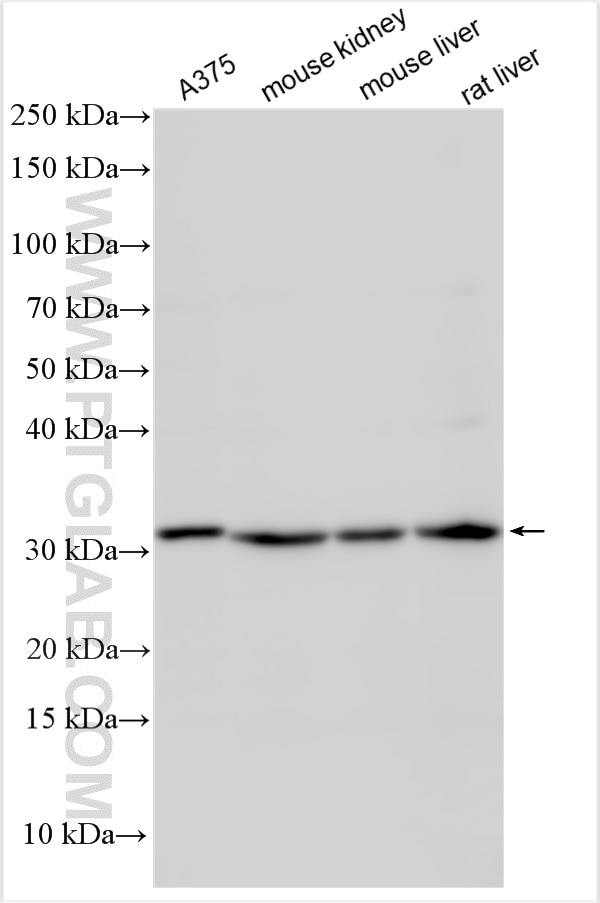
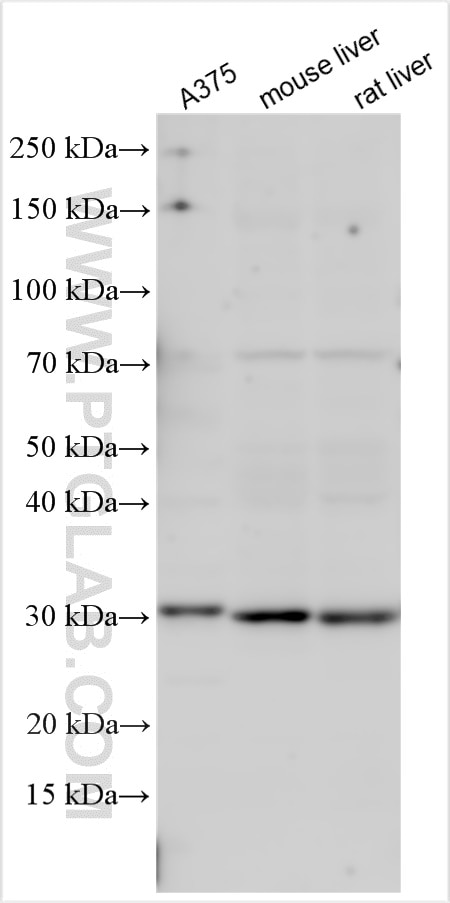
| Positive WB detected in | A375 cells, mouse liver tissue, rat liver tissue, mouse kidney tissue |
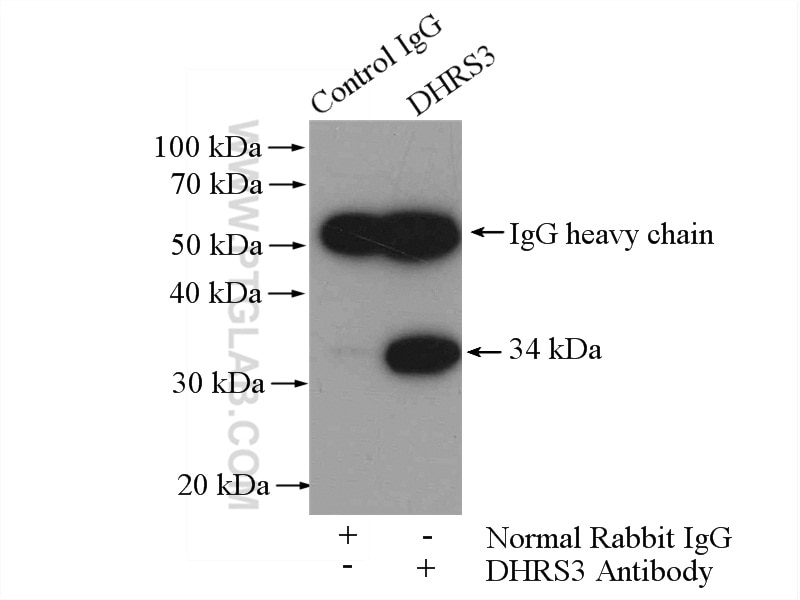
| Positive IP detected in | A375 cells |
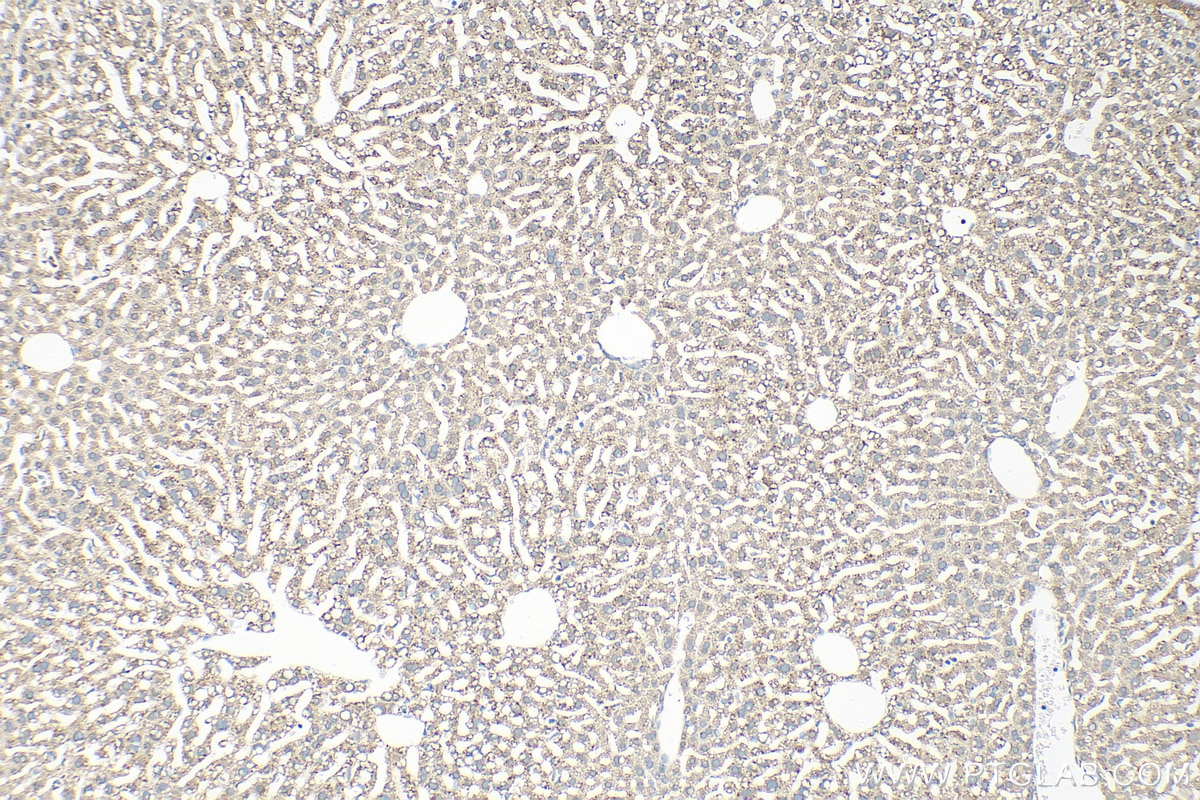
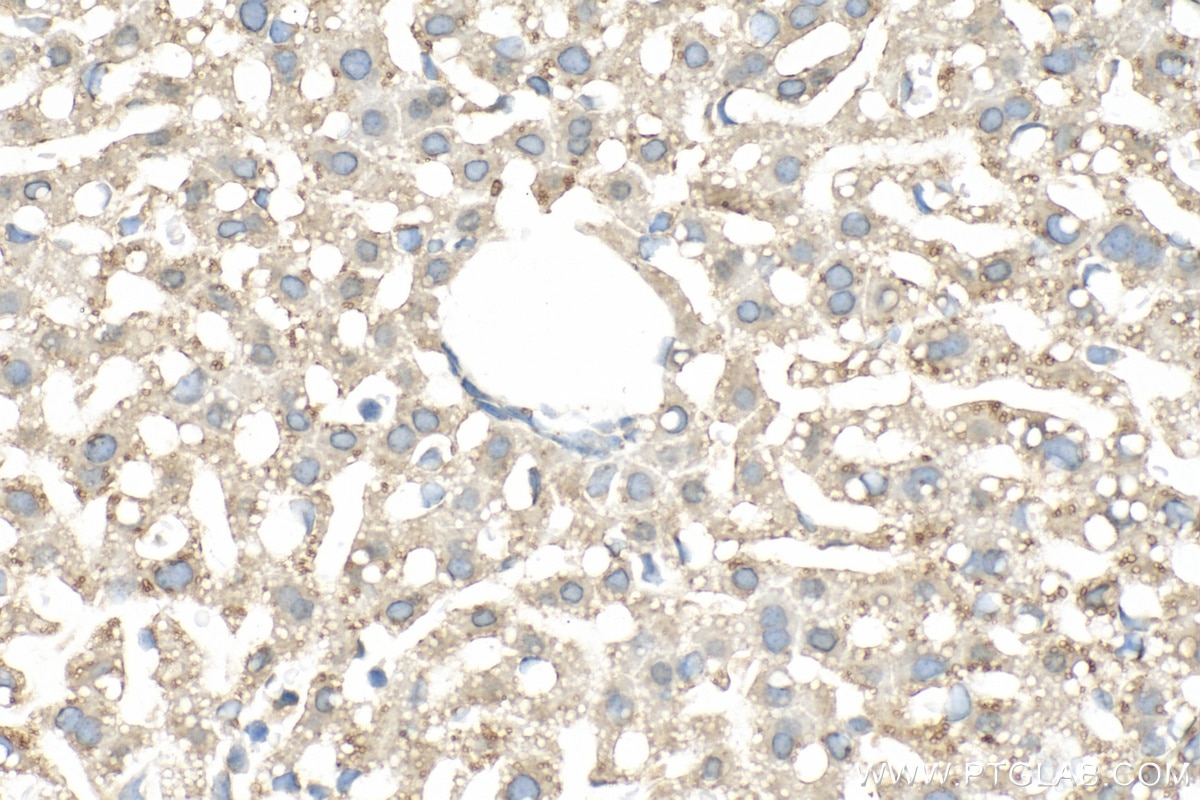
| Positive IHC detected in | mouse liver tissue Note: suggested antigen retrieval with TE buffer pH 9.0; (*) Alternatively, antigen retrieval may be performed with citrate buffer pH 6.0 |
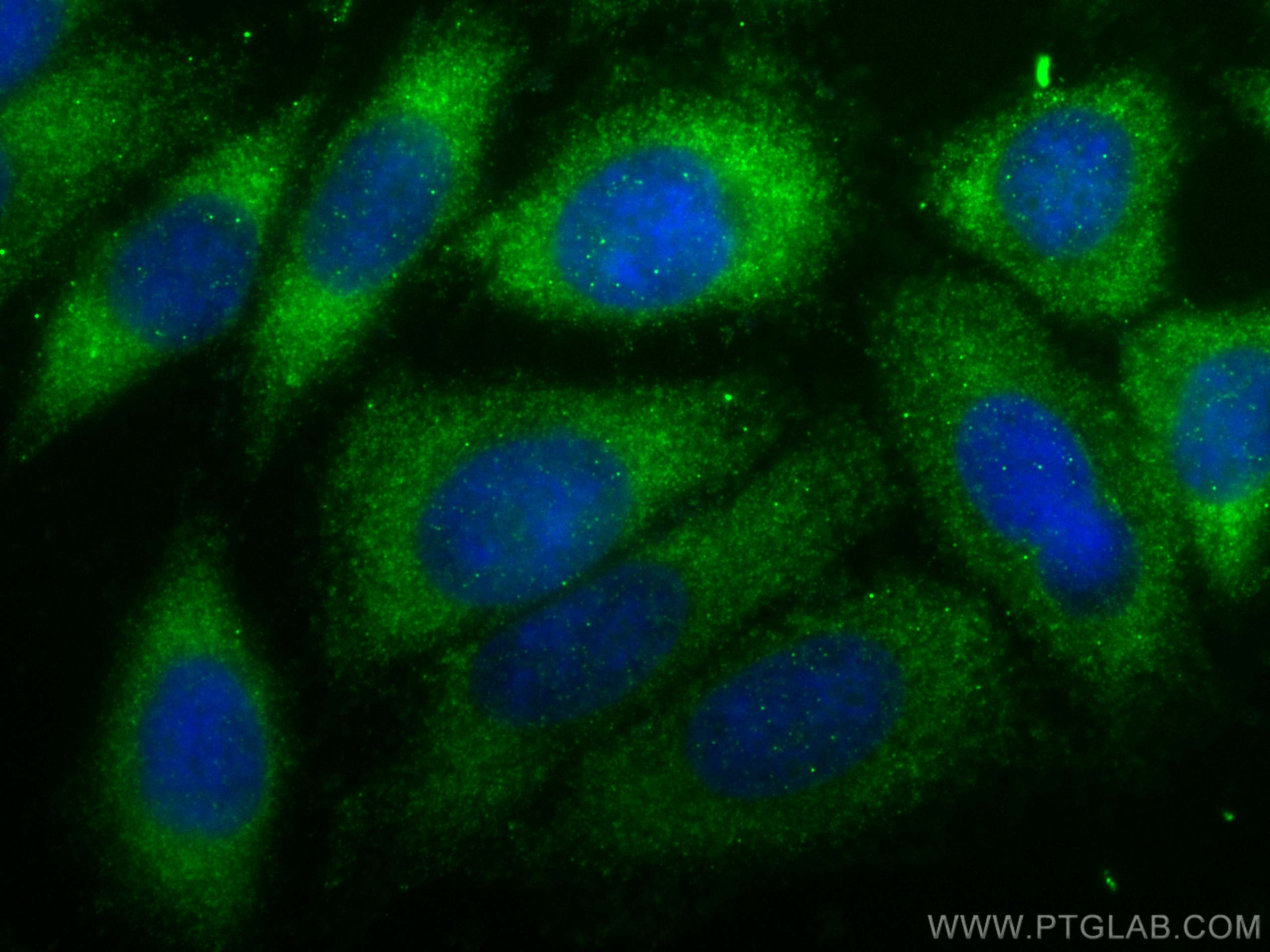
| Positive IF/ICC detected in | HepG2 cells |
Recommended dilution
| Application | Dilution |
|---|---|
| Western Blot (WB) | WB : 1:500-1:1000 |
| Immunoprecipitation (IP) | IP : 0.5-4.0 ug for 1.0-3.0 mg of total protein lysate |
| Immunohistochemistry (IHC) | IHC : 1:50-1:500 |
| Immunofluorescence (IF)/ICC | IF/ICC : 1:200-1:800 |
| It is recommended that this reagent should be titrated in each testing system to obtain optimal results. | |
| Sample-dependent, Check data in validation data gallery. | |
Product Information
15393-1-AP targets DHRS3 in WB, IHC, IF/ICC, IP, ELISA applications and shows reactivity with human, mouse, rat samples.
| Tested Reactivity | human, mouse, rat |
| Cited Reactivity | human, mouse, insect |
| Host / Isotype | Rabbit / IgG |
| Class | Polyclonal |
| Type | Antibody |
| Immunogen |
CatNo: Ag7589 Product name: Recombinant human DHRS3 protein Source: e coli.-derived, PGEX-4T Tag: GST Domain: 1-302 aa of BC002730 Sequence: MVWKRLGALVMFPLQMIYLVVKAAVGLVLPAKLRDLSRENVLITGGGRGIGRQLAREFAERGARKIVLWGRTEKCLKETTEEIRQMGTECHYFICDVGNREEVYQTAKAVREKVGDITILVNNAAVVHGKSLMDSDDDALLKSQHINTLGQFWTTKAFLPRMLELQNGHIVCLNSVLALSAIPGAIDYCTSKASAFAFMESLTLGLLDCPGVSATTVLPFHTSTEMFQGMRVRFPNLFPPLKPETVARRTVEAVQLNQALLLLPWTMHALVILKSILPQAALEEIHKFSGTYTCMNTFKGRT Predict reactive species |
| Full Name | dehydrogenase/reductase (SDR family) member 3 |
| Calculated Molecular Weight | 34 kDa |
| Observed Molecular Weight | 30-34 kDa |
| GenBank Accession Number | BC002730 |
| Gene Symbol | DHRS3 |
| Gene ID (NCBI) | 9249 |
| RRID | AB_2091855 |
| Conjugate | Unconjugated |
| Form | Liquid |
| Purification Method | Antigen affinity purification |
| UNIPROT ID | O75911 |
| Storage Buffer | PBS with 0.02% sodium azide and 50% glycerol, pH 7.3. |
| Storage Conditions | Store at -20°C. Stable for one year after shipment. Aliquoting is unnecessary for -20oC storage. 20ul sizes contain 0.1% BSA. |
Background Information
DHRS3(Short-chain dehydrogenase/reductase 3) is also named as retSDR1,DD83.1 and belongs to the short-chain dehydrogenases/reductases (SDR) family. It catalyzes the reduction of all-trans-retinal to all-trans-retinol in the presence of NADPH. It is detected high levels of expression in fetal kidney, liver, and lung and in adult heart, placenta, lung, liver, kidney, pancreas, thyroid, testis, stomach, trachea, spinal cord and lower levels in skeletal muscle, intestine, and lymph node. retSDR1 is barely detectable in adrenals, brain, thymus, and hematopoietic tissues(PMID:11861404). retSDR1 may play a more general role in retinol metabolism since its expression was observed in many fetal and adult tissues(PMID:20543567).
Protocols
| Product Specific Protocols | |
|---|---|
| IF protocol for DHRS3 antibody 15393-1-AP | Download protocol |
| IHC protocol for DHRS3 antibody 15393-1-AP | Download protocol |
| IP protocol for DHRS3 antibody 15393-1-AP | Download protocol |
| WB protocol for DHRS3 antibody 15393-1-AP | Download protocol |
| Standard Protocols | |
|---|---|
| Click here to view our Standard Protocols |
Publications
What published studies show
The anti-DHRS3 antibody (Cat# 15393-1-AP) has 21 citations published in journals including Nature Communications, Journal of Biological Chemistry, FASEB Journal, Cell Communication & Signaling, iScience, FEBS Letters, PLoS ONE, Molecular Endocrinology, and bioRxiv. Research fields covered include retinoic acid homeostasis, endometrial decidualization, lipid droplet biology, melanoma cell state regulation, liver regeneration, embryonic development, macrophage polarization in atherosclerosis, and kidney branching morphogenesis.
| Species | Application | Title |
|---|---|---|
Nat Commun Notch and retinoic acid signals regulate macrophage formation from endocardium downstream of Nkx2-5 | ||
Cell Commun Signal Metabolic reprogramming and heterogeneity during the decidualization process of endometrial stromal cells | ||
J Clin Endocrinol Metab Elevated periimplantation uterine natural killer cell density in human endometrium is associated with impaired corticosteroid signaling in decidualizing stromal cells. | ||
Chem Biol Interact Characterization of human short chain dehydrogenase/reductase SDR16C family members related to retinol dehydrogenase 10.
| ||
Biochim Biophys Acta Mol Basis Dis Integrated application of transcriptome and metabolomics reveals potential therapeutic targets for the polarization of atherosclerotic macrophages | ||
Mol Endocrinol Induction of 11β-HSD 1 and activation of distinct mineralocorticoid receptor- and glucocorticoid receptor-dependent gene networks in decidualizing human endometrial stromal cells. |

