

Tested Applications
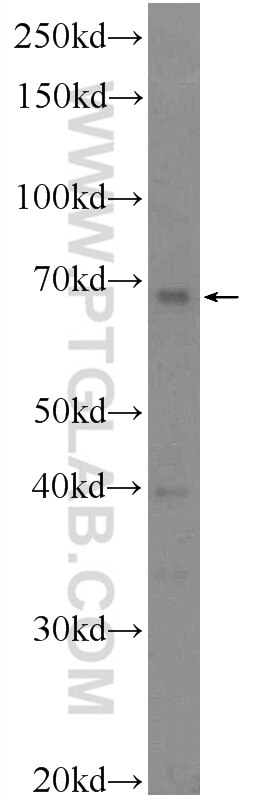
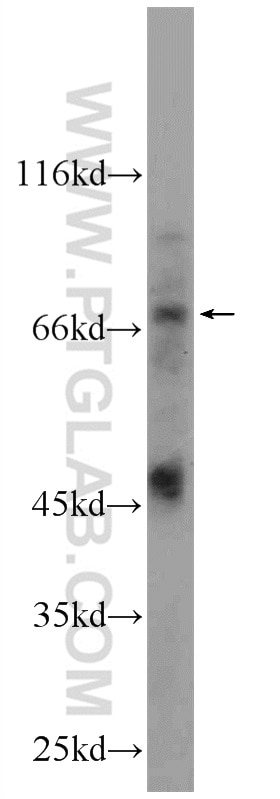
| Positive WB detected in | mouse kidney tissue |
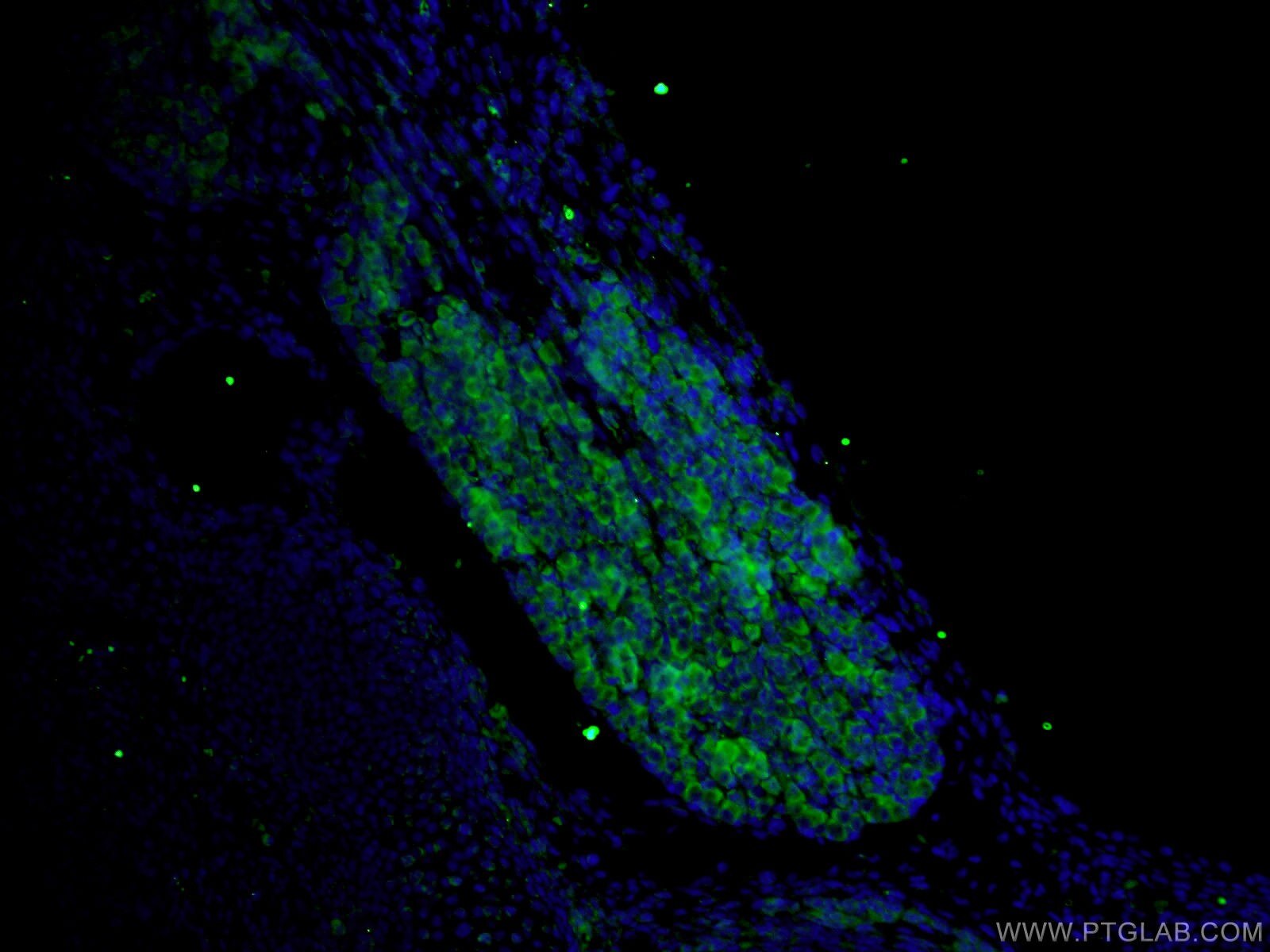
| Positive IF-P detected in | mouse embryo tissue |
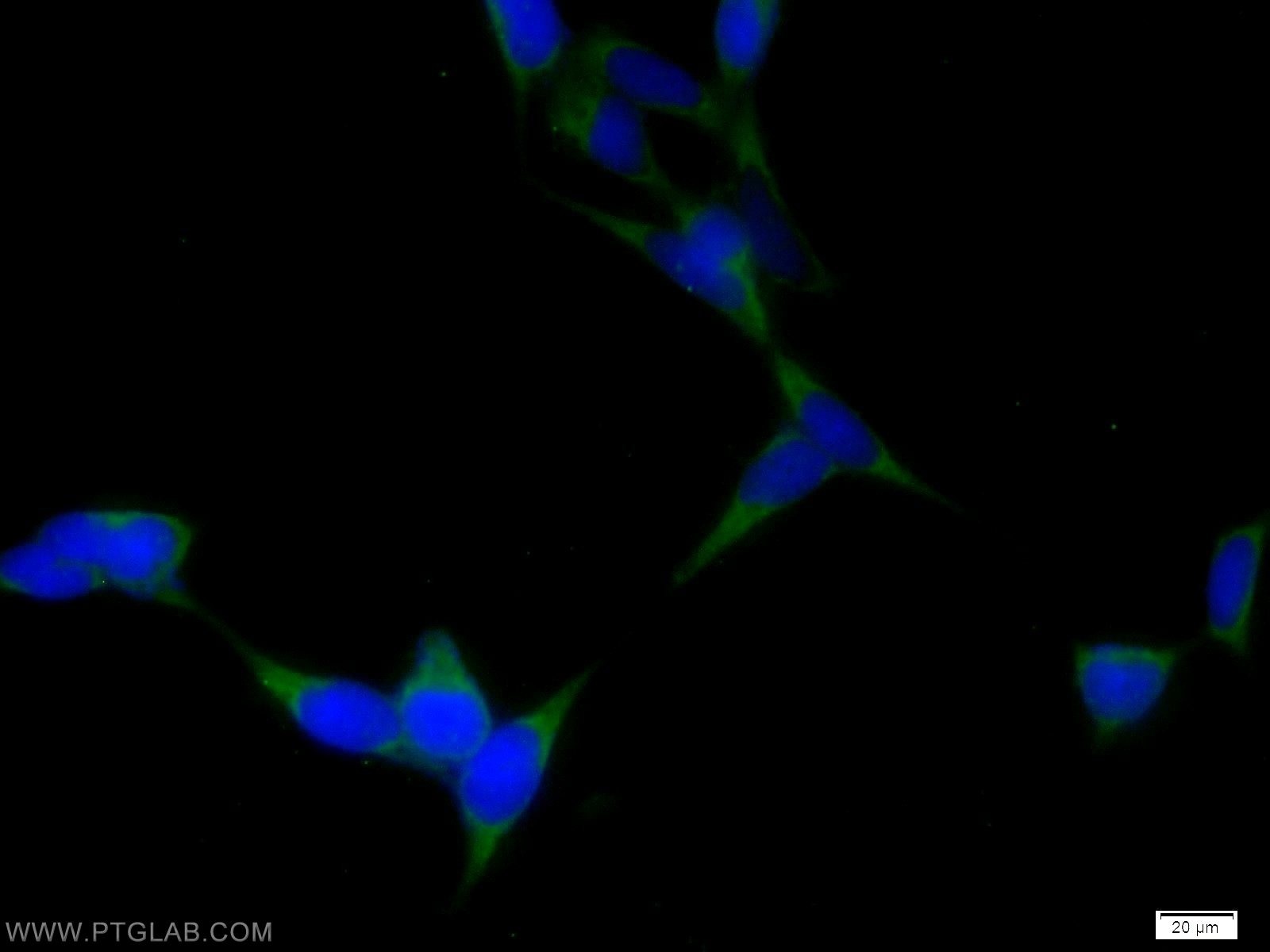
| Positive IF/ICC detected in | HEK-293 cells |
Recommended dilution
| Application | Dilution |
|---|---|
| Western Blot (WB) | WB : 1:200-1:1000 |
| Immunofluorescence (IF)-P | IF-P : 1:50-1:500 |
| Immunofluorescence (IF)/ICC | IF/ICC : 1:10-1:100 |
| It is recommended that this reagent should be titrated in each testing system to obtain optimal results. | |
| Sample-dependent, Check data in validation data gallery. | |
Product Information
25222-1-AP targets DTX4 in WB, IF/ICC, IF-P, ELISA applications and shows reactivity with human, mouse samples.
| Tested Reactivity | human, mouse |
| Cited Reactivity | human, mouse, rat |
| Host / Isotype | Rabbit / IgG |
| Class | Polyclonal |
| Type | Antibody |
| Immunogen |
CatNo: Ag18415 Product name: Recombinant human DTX4 protein Source: e coli.-derived, PET28a Tag: 6*His Domain: 51-213 aa of BC119011 Sequence: LDLIYPMVTGTLPKAQSWPVSPGPATSPPMSPCSCPQCVLVMSVKAAVVNGSTGPLQLPVTRKNMPPPGVVKLPPLPGSGAKPLDSTGTIRGPLKTAPSQVIRRQASSMPTGTTMGSPASPPGPNSKTGRVALATLNRTNLQRLAIAQSRVLIASGVPTVPVK Predict reactive species |
| Full Name | deltex homolog 4 (Drosophila) |
| Calculated Molecular Weight | 619 aa, 67 kDa |
| Observed Molecular Weight | 67-70 kDa |
| GenBank Accession Number | BC119011 |
| Gene Symbol | DTX4 |
| Gene ID (NCBI) | 23220 |
| RRID | AB_2879970 |
| Conjugate | Unconjugated |
| Form | Liquid |
| Purification Method | Antigen affinity purification |
| UNIPROT ID | Q9Y2E6 |
| Storage Buffer | PBS with 0.02% sodium azide and 50% glycerol, pH 7.3. |
| Storage Conditions | Store at -20°C. Stable for one year after shipment. Aliquoting is unnecessary for -20oC storage. 20ul sizes contain 0.1% BSA. |
Background Information
DTX4, also named as KIAA0937, RNF155, is a 619 amino acid protein, which belongs to the Deltex family. DTX4 as a regulator of Notch signaling, a signaling pathway involved in cell-cell communications that regulates a broad spectrum of cell-fate determinations. DTX4 functions as a ubiquitin ligase protein in vivo, mediating 'Lys48'-linked polyubiquitination and promoting degradation of TBK1, targeting to TBK1 requires interaction with NLRP4.
Protocols
| Product Specific Protocols | |
|---|---|
| IF protocol for DTX4 antibody 25222-1-AP | Download protocol |
| WB protocol for DTX4 antibody 25222-1-AP | Download protocol |
| Standard Protocols | |
|---|---|
| Click here to view our Standard Protocols |
Publications
What published studies show
The DTX4 Polyclonal antibody (Cat# 25222-1-AP) has 5 citations across five journals: Cell Death & Disease, Cancer Science, World Journal of Surgical Oncology, Biochemical and Biophysical Research Communications, and Stem Cells & Development. Research fields include airway inflammation and asthma, esophageal carcinoma, pancreatic ductal adenocarcinoma, adipogenic differentiation, and hepatic stellate cell activation. Applications span Western blot and immunofluorescence in mouse, human, and rat models.
| Species | Application | Title |
|---|---|---|
Cell Death Dis Gasdermin D silencing alleviates airway inflammation and remodeling in an ovalbumin-induced asthmatic mouse model | ||
Cancer Sci Ubiquitination of NOTCH2 by DTX3 suppresses the proliferation and migration of human esophageal carcinoma. | ||
World J Surg Oncol Circular RNA hsa_circ_0001829 promotes pancreatic ductal adenocarcinoma through miR-7113-3p/DTX4 axis. | ||
Biochem Biophys Res Commun E3 ubiquitin ligase DTX4 is required for adipogenic differentiation in 3T3-L1 preadipocytes cell line.
| ||
Stem Cells Dev Combined Methylome and Transcriptome Analysis During Rat Hepatic Stellate Cell Activation. |

