

Tested Applications
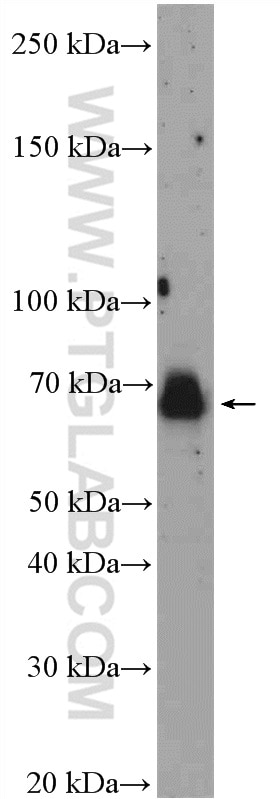
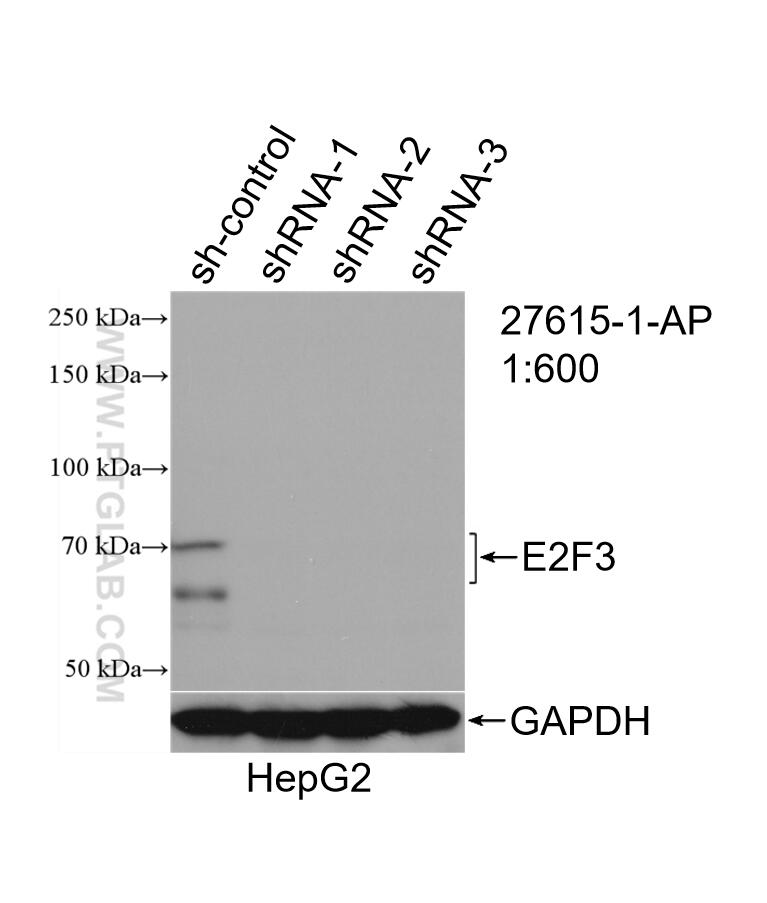
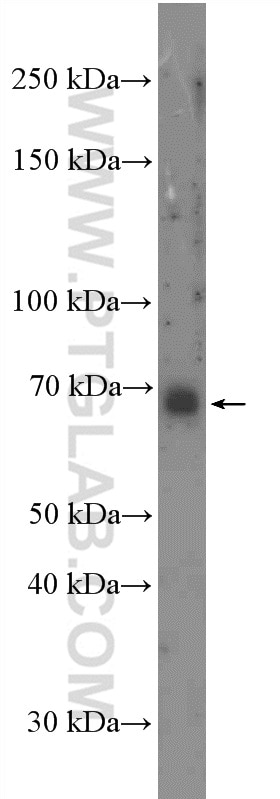
| Positive WB detected in | SGC-7901 cells, HepG2 cells, SKOV-3 cells |
Recommended dilution
| Application | Dilution |
|---|---|
| Western Blot (WB) | WB : 1:500-1:2000 |
| It is recommended that this reagent should be titrated in each testing system to obtain optimal results. | |
| Sample-dependent, Check data in validation data gallery. | |
Product Information
27615-1-AP targets E2F3 in WB, IHC, ChIP, ELISA applications and shows reactivity with human samples.
| Tested Reactivity | human |
| Cited Reactivity | human, mouse, rat |
| Host / Isotype | Rabbit / IgG |
| Class | Polyclonal |
| Type | Antibody |
| Immunogen |
CatNo: Ag26367 Product name: Recombinant human E2F3 protein Source: e coli.-derived, PGEX-4T Tag: GST Domain: 54-155 aa of NM_001243076 Sequence: MPGAYIQILTTNTSTTSCSSSLQSGAVAAGPLLPSAPGAEQTAGSLLYTTPHGPSSRAGLLQQPPALGRGGSGGGGGPPAKRRLELGESGHQYLSDGLKTPKG Predict reactive species |
| Full Name | E2F transcription factor 3 |
| Calculated Molecular Weight | 49 kDa |
| Observed Molecular Weight | 60-65 kDa |
| GenBank Accession Number | NM_001243076 |
| Gene Symbol | E2F3 |
| Gene ID (NCBI) | 1871 |
| RRID | AB_2880926 |
| Conjugate | Unconjugated |
| Form | Liquid |
| Purification Method | Antigen affinity purification |
| UNIPROT ID | O00716 |
| Storage Buffer | PBS with 0.02% sodium azide and 50% glycerol, pH 7.3. |
| Storage Conditions | Store at -20°C. Stable for one year after shipment. Aliquoting is unnecessary for -20oC storage. 20ul sizes contain 0.1% BSA. |
Background Information
E2F transcription factors regulate gene expression in concert with the retinoblastoma tumor suppressor family. These transcriptional complexes are master regulators of cell cycle progression, control the expression of genes involved in DNA repair, G2/M checkpoint and differentiation [PMID:22580460]. E2f3 is a transcription activator that binds DNA cooperatively with DP proteins through the E2 recognition site, 5'-TTTC[CG]CGC-3' found in the promoter region of a number of genes whose products are involved in cell cycle regulation or in DNA replication. The DRTF1/E2F complex functions in the control of cell-cycle progression from G1 to S phase. E2F3 binds specifically to RB1 in a cell-cycle dependent manner [PMID:22960857].
Protocols
| Product Specific Protocols | |
|---|---|
| WB protocol for E2F3 antibody 27615-1-AP | Download protocol |
| Standard Protocols | |
|---|---|
| Click here to view our Standard Protocols |
Publications
What published studies show
The anti-E2F3 antibody (Cat# 27615-1-AP) has 19 citations published across 17 journals including Cell Reports Medicine, Cell Death & Disease, Phytomedicine, EMBO Reports, Communications Biology, and Oncotarget. Research fields span cancer biology (colorectal, bladder, endometrial, breast, osteosarcoma, prostate, and pancreatic cancers), miRNA-mediated gene regulation, cell cycle control, stem cell biology, and metabolic reprogramming. Applications are predominantly Western blot, with some IHC and ChIP.
| Species | Application | Title |
|---|---|---|
Cell Rep Med Signaling-induced systematic repression of miRNAs uncovers cancer vulnerabilities and targeted therapy sensitivity | ||
Cell Death Dis TACC3 enhances glycolysis in bladder cancer cells through inducing acetylation of c-Myc
| ||
Phytomedicine Apigenin inhibits the growth of colorectal cancer through down-regulation of E2F1/3 by miRNA-215-5p. | ||
Cell Death Discov IGF2BP3 enhances the mRNA stability of E2F3 by interacting with LINC00958 to promote endometrial carcinoma progression. | ||
Sci China Life Sci rtcisE2F promotes the self-renewal and metastasis of liver tumor-initiating cells via N6-methyladenosine-dependent E2F3/E2F6 mRNA stability.
| ||
Int J Mol Med MicroRNA‑145‑5p inhibits osteosarcoma cell proliferation by targeting E2F transcription factor 3. |

