

Tested Applications
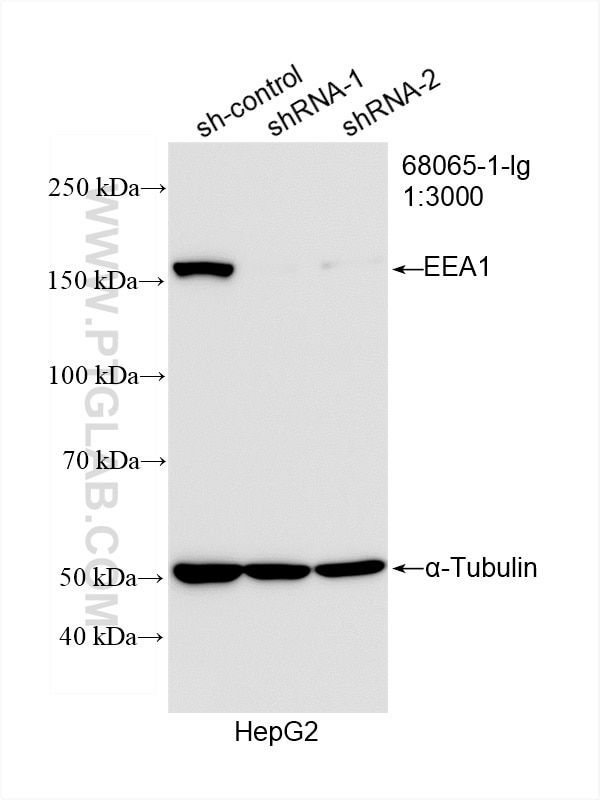
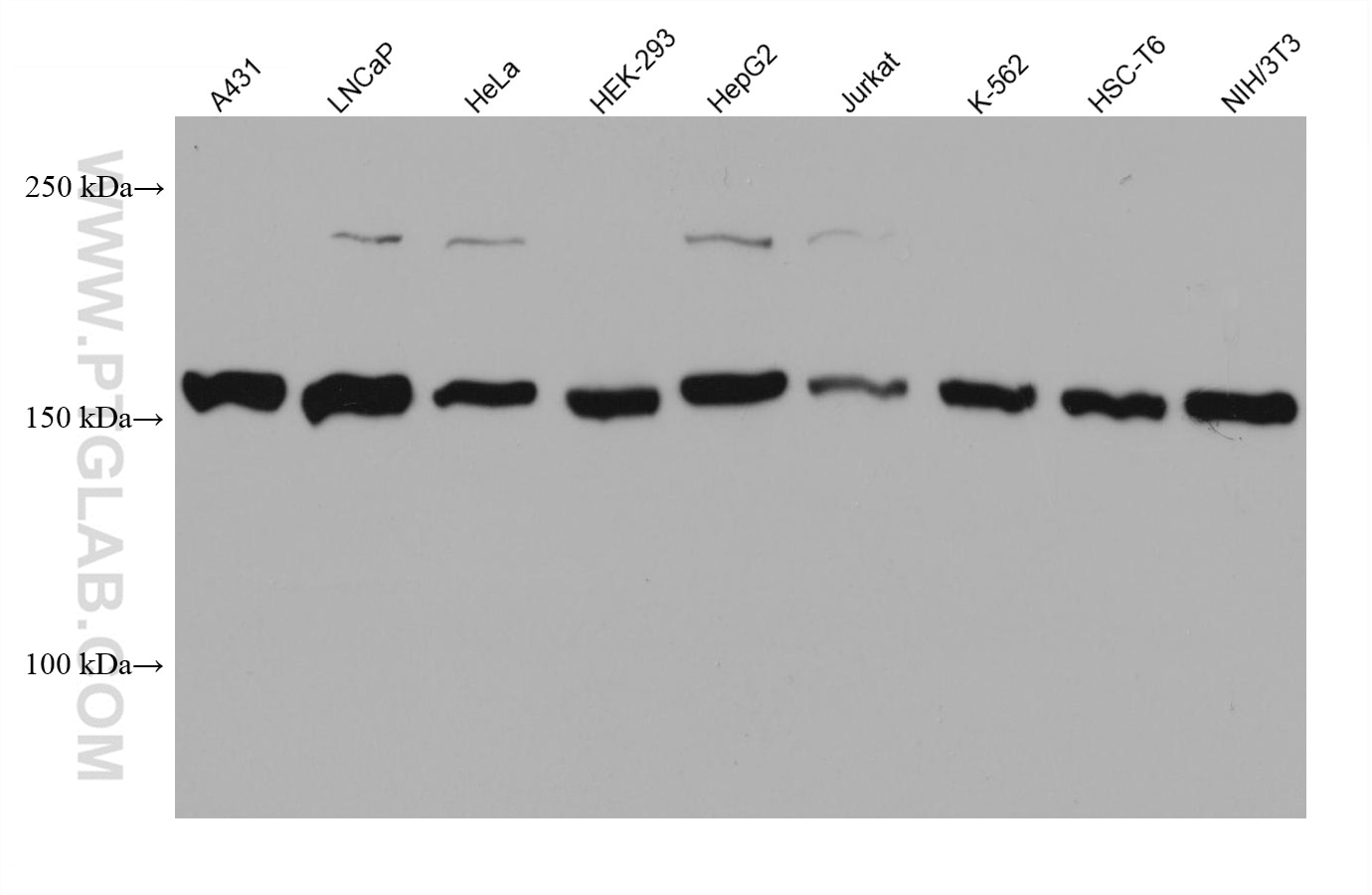
| Positive WB detected in | A431 cells, HepG2 cells, LNCaP cells, HeLa cells, HEK-293 cells, Jurkat cells, K-562 cells, HSC-T6 cells, NIH/3T3 cells |
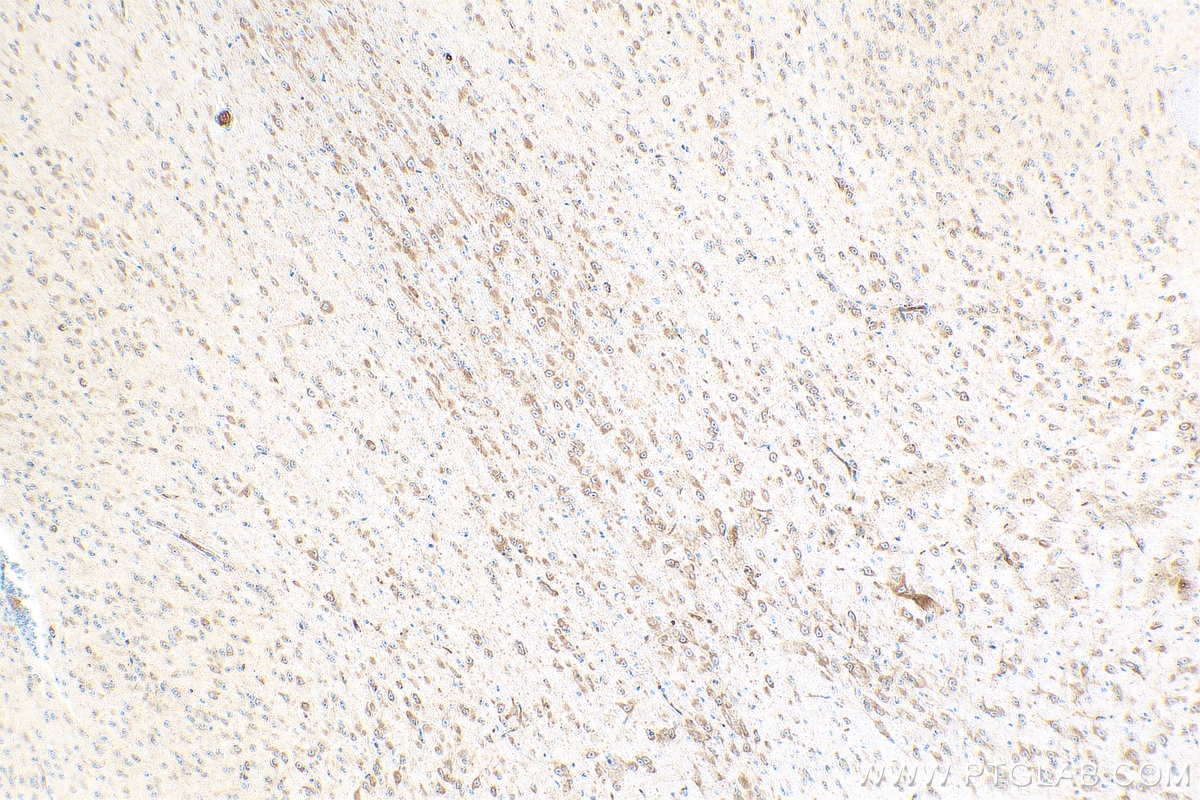
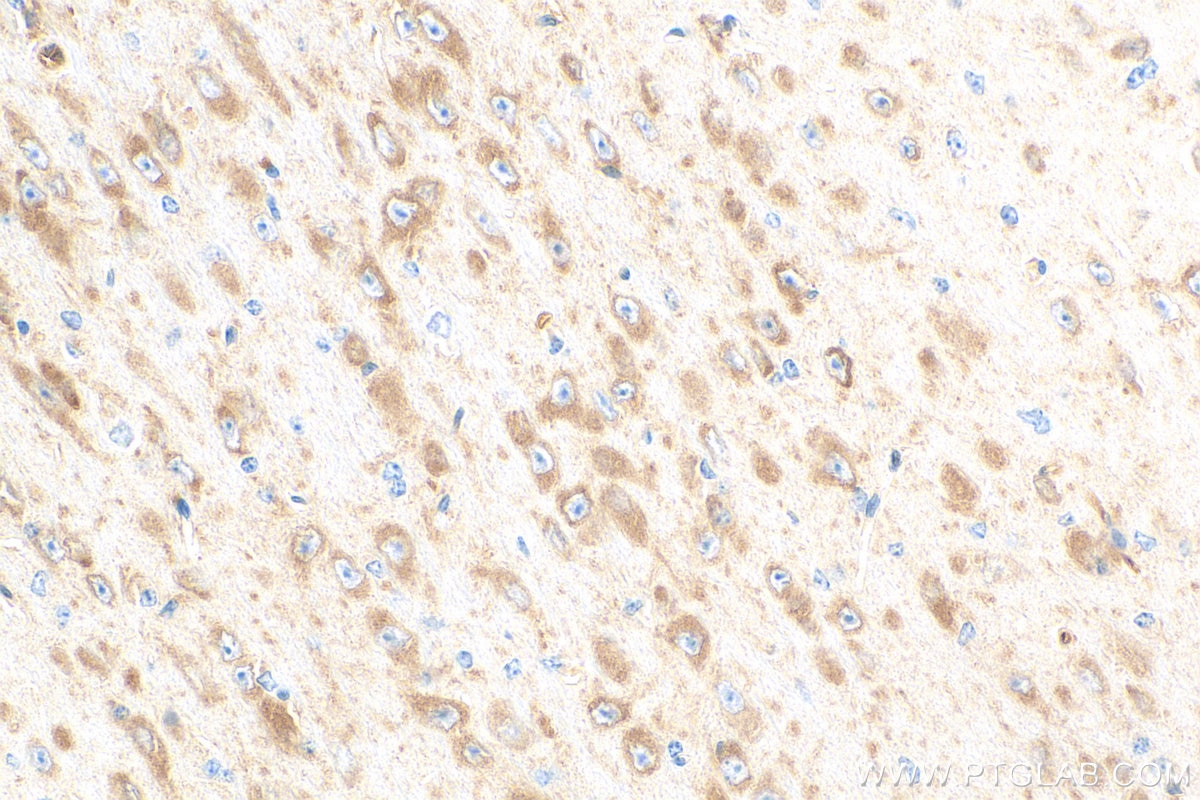
| Positive IHC detected in | mouse brain tissue Note: suggested antigen retrieval with TE buffer pH 9.0; (*) Alternatively, antigen retrieval may be performed with citrate buffer pH 6.0 |
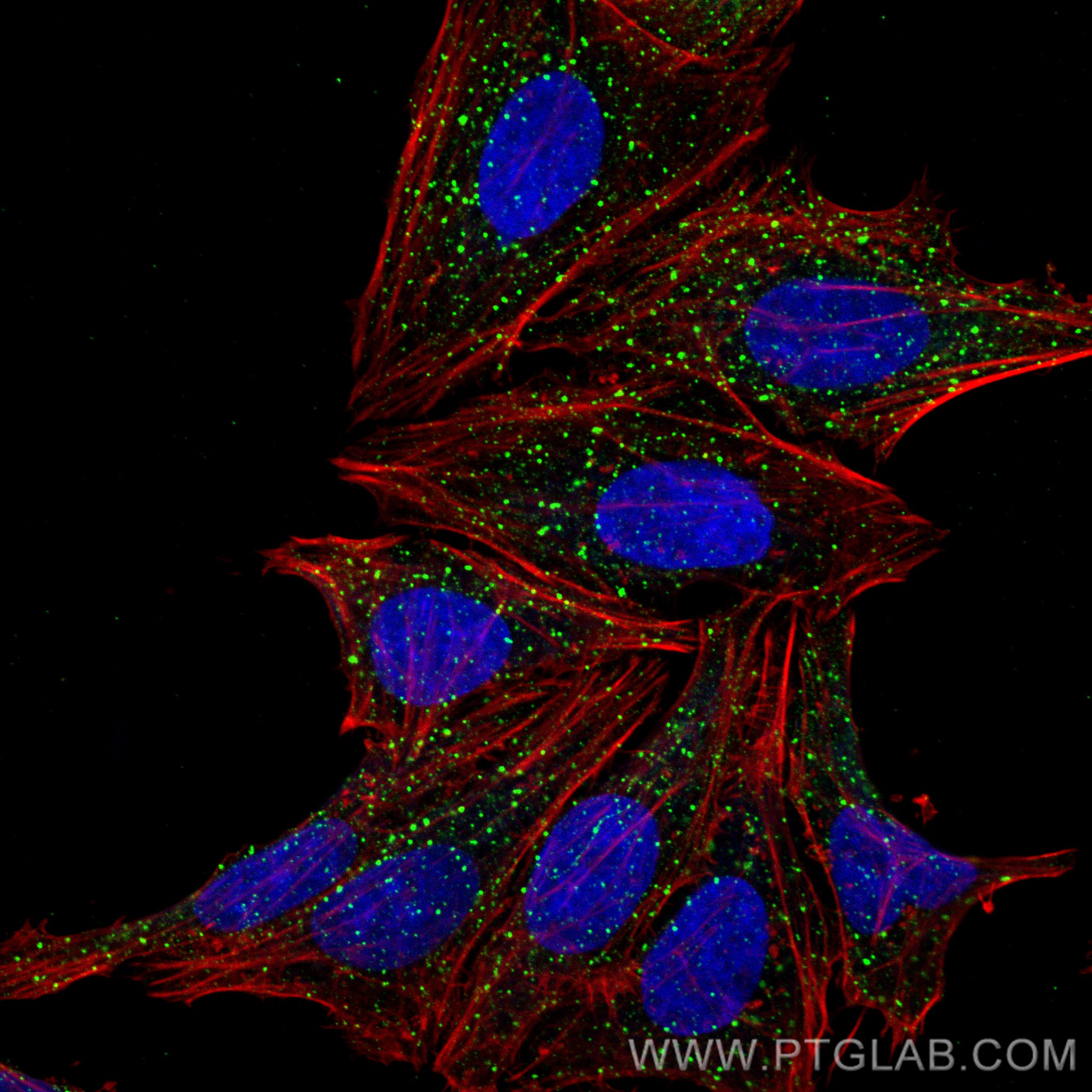
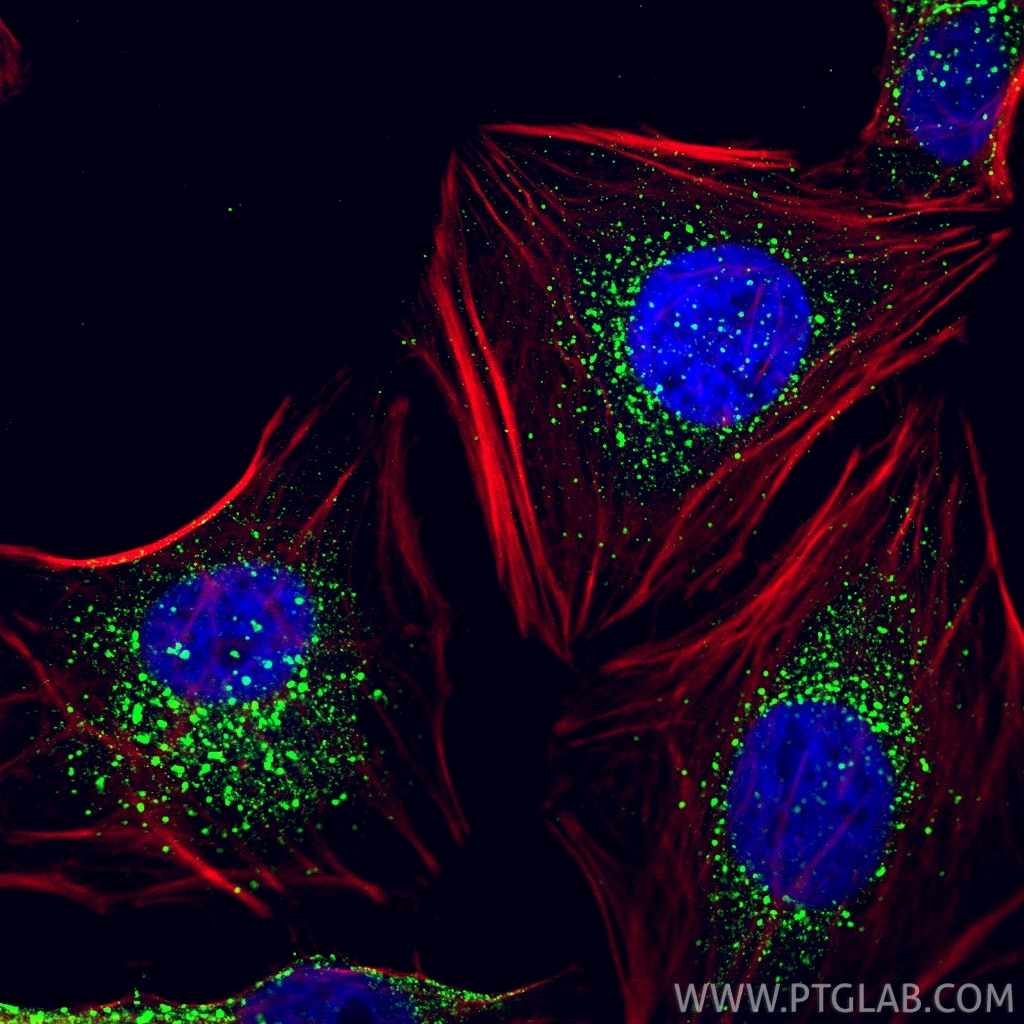
| Positive IF/ICC detected in | HeLa cells, HepG2 cells |
Recommended dilution
| Application | Dilution |
|---|---|
| Western Blot (WB) | WB : 1:5000-1:50000 |
| Immunohistochemistry (IHC) | IHC : 1:500-1:2000 |
| Immunofluorescence (IF)/ICC | IF/ICC : 1:500-1:2000 |
| It is recommended that this reagent should be titrated in each testing system to obtain optimal results. | |
| Sample-dependent, Check data in validation data gallery. | |
Product Information
68065-1-Ig targets EEA1 in WB, IHC, IF/ICC, ELISA applications and shows reactivity with human, mouse, rat samples.
| Tested Reactivity | human, mouse, rat |
| Cited Reactivity | human, mouse, rat, pig, monkey, zebrafish |
| Host / Isotype | Mouse / IgG1 |
| Class | Monoclonal |
| Type | Antibody |
| Immunogen |
CatNo: Ag28814 Product name: Recombinant human EEA1 protein Source: e coli.-derived, PGEX-4T Tag: GST Domain: 1151-1350 aa of NM_003566 Sequence: KLESIKEITNLKDAKQLLIQQKLELQGKADSLKAAVEQEKRNQQILKDQVKKEEEELKKEFIEKEAKLHSEIKEKEVGMKKHEENEAKLTMQITALNENLGTVKKEWQSSQRRVSELEKQTDDLRGEIAVLEATVQNNQDERRALLERCLKGEGEIEKLQTKVLELQRKLDNTTAAVQELGRENQSLQIKHTQALNRKWA Predict reactive species |
| Full Name | early endosome antigen 1 |
| Calculated Molecular Weight | 162 kDa |
| Observed Molecular Weight | 162 kDa |
| GenBank Accession Number | NM_003566 |
| Gene Symbol | EEA1 |
| Gene ID (NCBI) | 8411 |
| RRID | AB_2918806 |
| Conjugate | Unconjugated |
| Form | Liquid |
| Purification Method | Protein G purification |
| UNIPROT ID | Q15075 |
| Storage Buffer | PBS with 0.02% sodium azide and 50% glycerol, pH 7.3. |
| Storage Conditions | Store at -20°C. Stable for one year after shipment. Aliquoting is unnecessary for -20oC storage. 20ul sizes contain 0.1% BSA. |
Background Information
Early endosome antigen 1 (EEA1) is a marker of early endosomes and has an important role in endosomal trafficking. EEA1 contains coiled-coil regions and an FYVE-type zinc finger which interacts with phosphatidylinositol-3-phosphate. EEA1 functions as a Rab5 effector, mediates endosome docking and, together with SNAREs, leads to membrane fusion.
Protocols
| Product Specific Protocols | |
|---|---|
| IF protocol for EEA1 antibody 68065-1-Ig | Download protocol |
| IHC protocol for EEA1 antibody 68065-1-Ig | Download protocol |
| WB protocol for EEA1 antibody 68065-1-Ig | Download protocol |
| Standard Protocols | |
|---|---|
| Click here to view our Standard Protocols |
Publications
What published studies show
I'll search for the citation information for catalog number 68065-1-Ig.The EEA1 Monoclonal Antibody (Catalog No. 68065-1-Ig) has 43 citations to date. They appear in prominent journals including Cell Metabolism, Immunity, Nature Communications, Nature Chemical Biology, Science Advances, Cell Reports, Autophagy, EMBO Reports, Journal of Cell Biology, and Journal of Virology. The cited research spans diverse fields: autophagy and lysosomal trafficking, endocytosis and vesicle transport, viral entry (SARS-CoV-2, PRRSV, PEDV), inflammasome/NLRP3 signaling, neurodegeneration, cancer biology, and cellular metabolism. Applications include immunofluorescence, western blotting, and immunohistochemistry across human, mouse, rat, and other species.
| Species | Application | Title |
|---|---|---|
Cell Metab Arachidonic acid triggers spermidine synthase secretion from primary tumor to induce skeletal muscle weakness upon irradiation | ||
Immunity Modulation of the mevalonate pathway by TCR engagement regulates T follicular helper cell generation in homeostasis and autoimmunity. | ||
Cell Mol Immunol Macrophage CCRL2 promotes NLRP3 inflammasome activation to exacerbate atherosclerosis | ||
Autophagy S-palmitoylation coordinates the trafficking of ATG9A to mediate autophagy initiation | ||
Nat Commun A tissue-intrinsic mechanism sensitizes HIV-1 particles for TLR-triggered innate immune responses. | ||
Nat Chem Biol Oncometabolite 5-IP(7) inhibits inositol 5-phosphatase to license E-cadherin endocytosis. |
Reviews
What customers say
Able is busy answering your previous question. Please try again later.
The reviews below have been submitted by verified Proteintech customers who received an incentive for providing their feedback.
Ahmad (Verified Customer) (09-05-2026) | good for wb
|
Aditya (Verified Customer) (11-01-2024) | great with ecl
|

