

Tested Applications
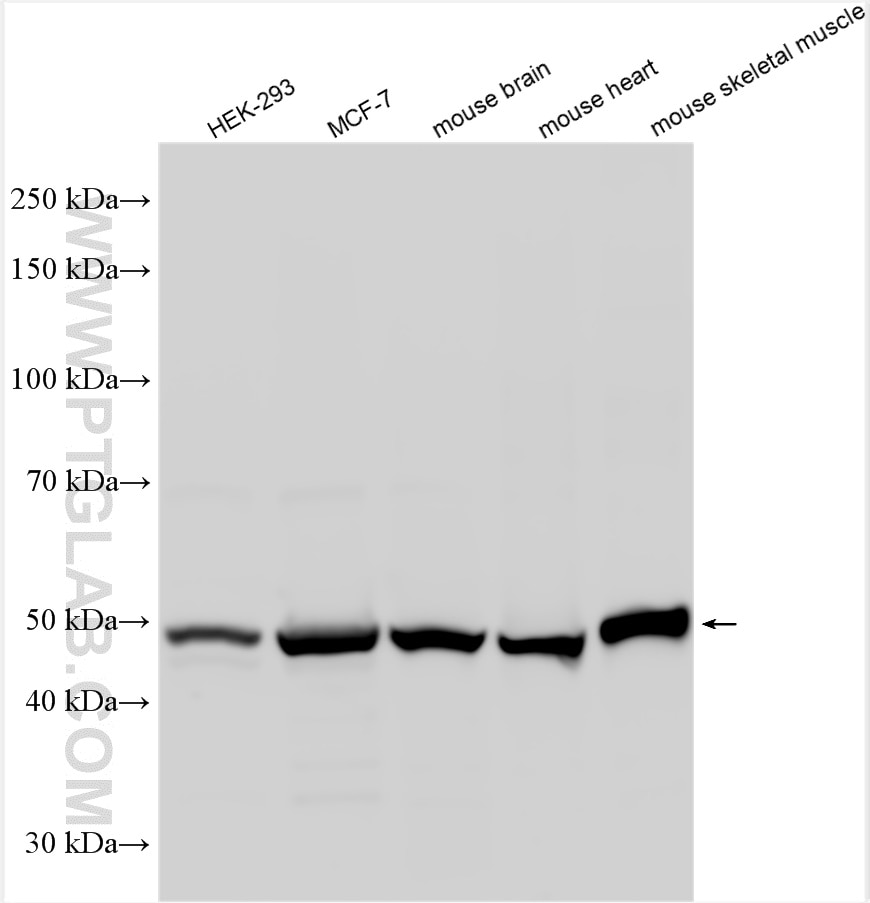
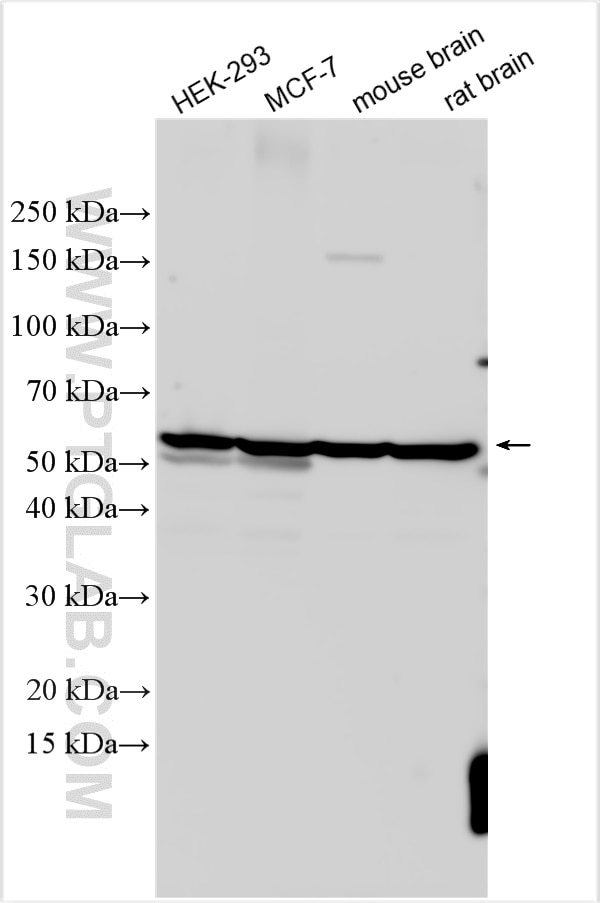
| Positive WB detected in | HEK-293 cells, MCF-7 cells, mouse brain tissue, mouse heart tissue, mouse skeletal muscle tissue, rat brain tissue |
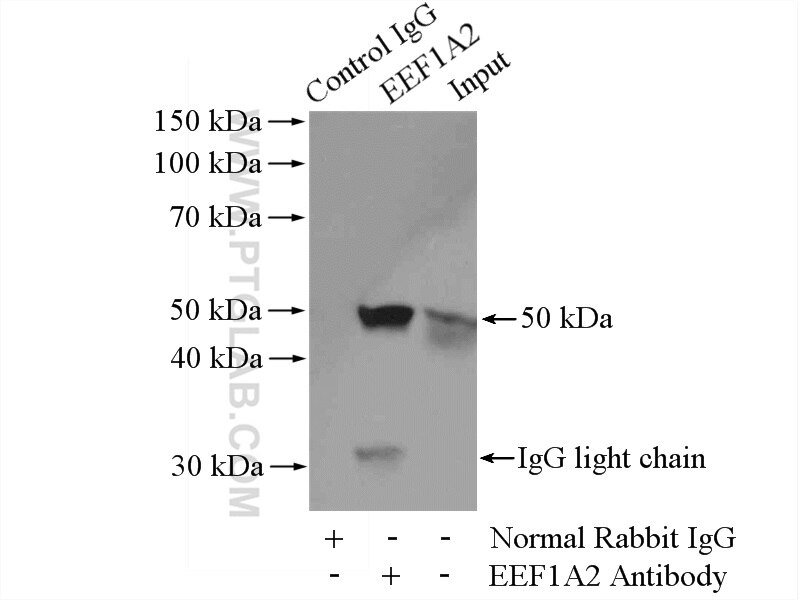
| Positive IP detected in | mouse brain tissue |
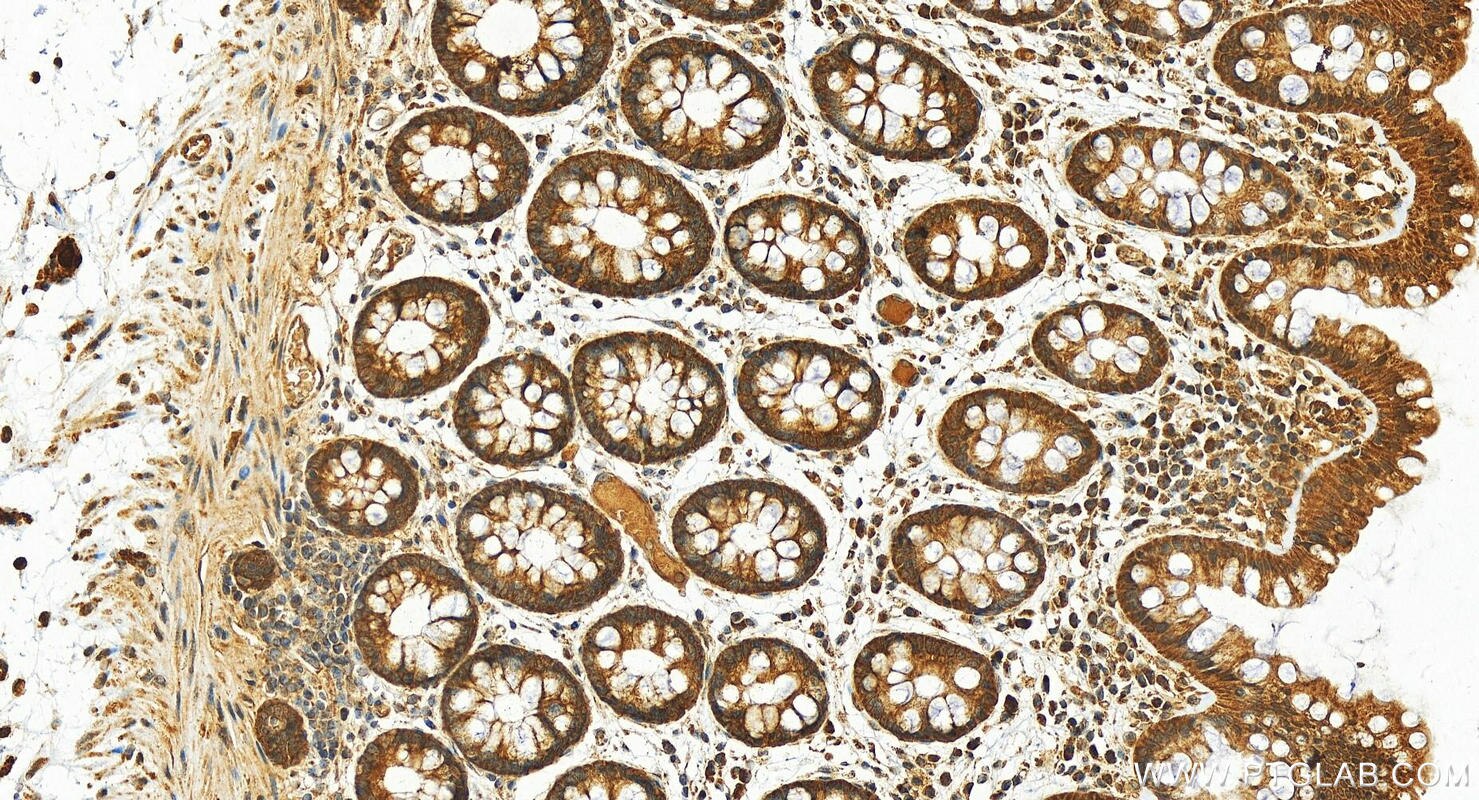
| Positive IHC detected in | human colon Note: suggested antigen retrieval with TE buffer pH 9.0; (*) Alternatively, antigen retrieval may be performed with citrate buffer pH 6.0 |
Recommended dilution
| Application | Dilution |
|---|---|
| Western Blot (WB) | WB : 1:2000-1:10000 |
| Immunoprecipitation (IP) | IP : 0.5-4.0 ug for 1.0-3.0 mg of total protein lysate |
| Immunohistochemistry (IHC) | IHC : 1:500-1:2000 |
| It is recommended that this reagent should be titrated in each testing system to obtain optimal results. | |
| Sample-dependent, Check data in validation data gallery. | |
Product Information
16091-1-AP targets EEF1A1/EEF1A2 in WB, IHC, IF, IP, RIP, ELISA applications and shows reactivity with human, mouse, rat samples.
| Tested Reactivity | human, mouse, rat |
| Cited Reactivity | human, mouse, rat, zebrafish, oyster |
| Host / Isotype | Rabbit / IgG |
| Class | Polyclonal |
| Type | Antibody |
| Immunogen |
CatNo: Ag6875 Product name: Recombinant human EEF1A2 protein Source: e coli.-derived, PET28a Tag: 6*His Domain: 109-463 aa of BC000432 Sequence: ADCAVLIVAAGVGEFEAGISKNGQTREHALLAYTLGVKQLIVGVNKMDSTEPAYSEKRYDEIVKEVSAYIKKIGYNPATVPFVPISGWHGDNMLEPSPNMPWFKGWKVERKEGNASGVSLLEALDTILPPTRPTDKPLRLPLQDVYKIGGIGTVPVGRVETGILRPGMVVTFAPVNITTEVKSVEMHHEALSEALPGDNVGFNVKNVSVKDIRRGNVCGDSKSDPPQEAAQFTSQVIILNHPGQISAGYSPVIDCHTAHIACKFAELKEKIDRRSGKKLEDNPKSLKSGDAAIVEMVPGKPMCVESFSQYPPLGRFAVRDMRQTVAVGVIKNVEKKSGGAGKVTKSAQKAQKAGK Predict reactive species |
| Full Name | eukaryotic translation elongation factor 1 alpha 2 |
| Calculated Molecular Weight | 50 kDa |
| Observed Molecular Weight | 50-53 kDa |
| GenBank Accession Number | BC000432 |
| Gene Symbol | EEF1A2 |
| Gene ID (NCBI) | 1917 |
| RRID | AB_2096979 |
| Conjugate | Unconjugated |
| Form | Liquid |
| Purification Method | Antigen affinity purification |
| UNIPROT ID | Q05639 |
| Storage Buffer | PBS with 0.02% sodium azide and 50% glycerol, pH 7.3. |
| Storage Conditions | Store at -20°C. Stable for one year after shipment. Aliquoting is unnecessary for -20oC storage. 20ul sizes contain 0.1% BSA. |
Background Information
EEF1A2, also named as EEF1AL, STN and Statin-S1, belongs to the GTP-binding elongation factor family and EF-Tu/EF-1A subfamily. It promotes the GTP-dependent binding of aminoacyl-tRNA to the A-site of ribosomes during protein biosynthesis. EEF1A2 may be critical in the development of ovarian cancer. The MW of EEF1A2 is 50-53kd. This antibody can recognize both EEF1A1 and EEF1A2.
Protocols
| Product Specific Protocols | |
|---|---|
| IHC protocol for EEF1A1/EEF1A2 antibody 16091-1-AP | Download protocol |
| IP protocol for EEF1A1/EEF1A2 antibody 16091-1-AP | Download protocol |
| WB protocol for EEF1A1/EEF1A2 antibody 16091-1-AP | Download protocol |
| Standard Protocols | |
|---|---|
| Click here to view our Standard Protocols |
Publications
What published studies show
EEF1A1/EEF1A2 Polyclonal antibody (16091-1-AP) has 25 total citations. They appear in journals including Nature Communications, Pharmacological Research, PNAS, British Journal of Cancer, Virulence, Communications Biology, Scientific Reports, Bioscience Reports, Molecular Oncology, Antiviral Research, Proteomics, Heliyon, and Diseases Models & Mechanisms, among others. Research fields span cancer biology (prostate, colon, colorectal, ovarian, breast, osteosarcoma, liver), neurodevelopmental disorders (autism, epilepsy, seizures), viral replication (coxsackievirus), cardiovascular biology (K<sub>LF4</sub>-PFKFB3 glycolysis, myocardial ischemia-reperfusion), remyelination, and model organism studies in mice, zebrafish, and oysters.
| Species | Application | Title |
|---|---|---|
Pharmacol Res Nannocystin ax, an eEF1A inhibitor, induces G1 cell cycle arrest and caspase-independent apoptosis through cyclin D1 downregulation in colon cancer in vivo. | ||
Proc Natl Acad Sci U S A Autism- and epilepsy-associated EEF1A2 mutations lead to translational dysfunction and altered actin bundling | ||
Br J Cancer Dissecting the expression of EEF1A1/2 genes in human prostate cancer cells: the potential of EEF1A2 as a hallmark for prostate transformation and progression. | ||
Virulence Eukaryotic translation elongation factor 1 alpha 1 facilitates coxsackievirus B replication through interacting with PABP, viral protein 3 CD and viral RNA.
| ||
Commun Biol KLF4-PFKFB3-driven glycolysis is essential for phenotypic switching of vascular smooth muscle cells |
Reviews
What customers say
Able is busy answering your previous question. Please try again later.
The reviews below have been submitted by verified Proteintech customers who received an incentive for providing their feedback.
WEI (Verified Customer) (01-17-2020) | KO validated by KO mice, very good for western blot and immunofluorescence
|

