
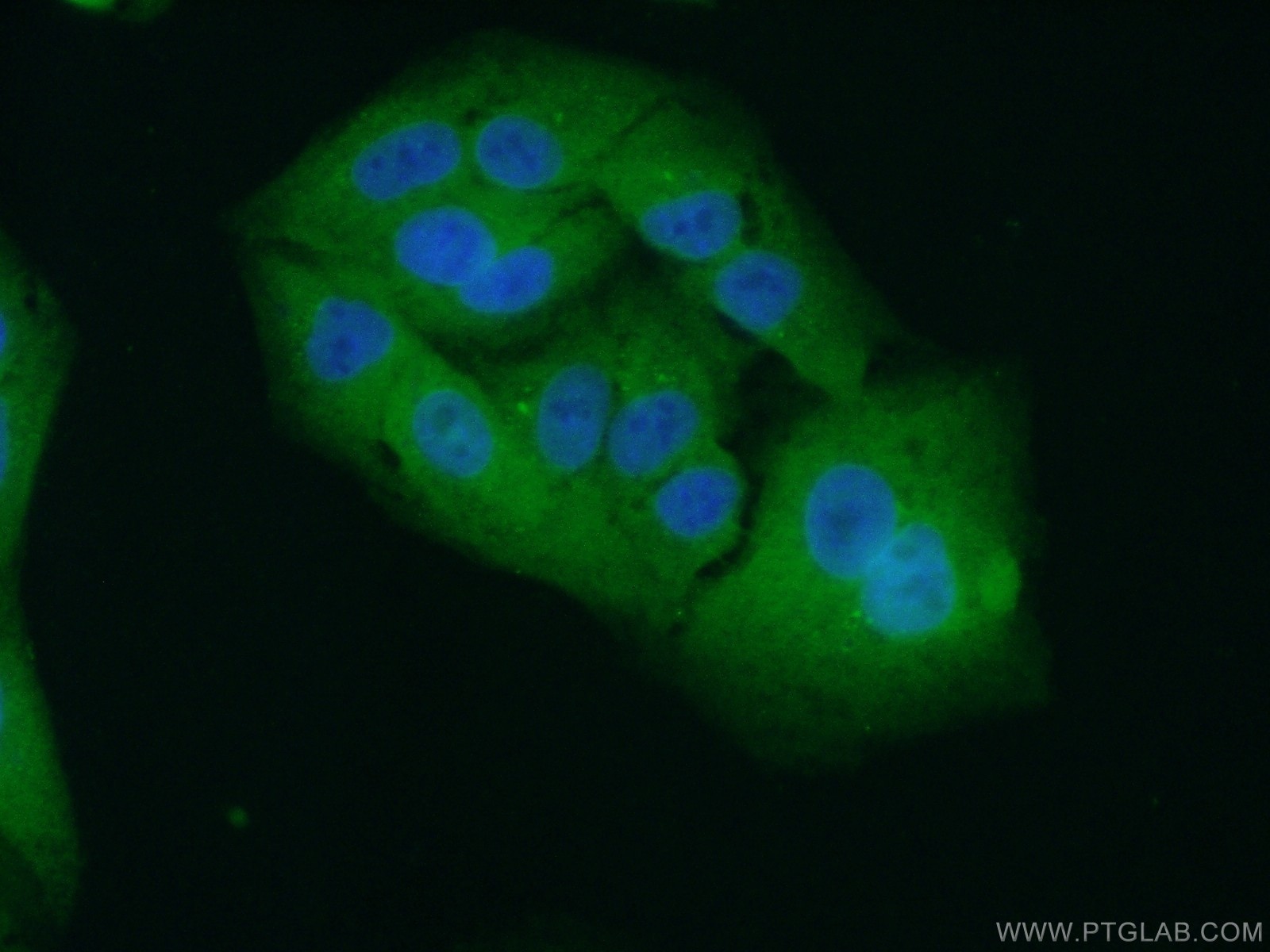

Tested Applications
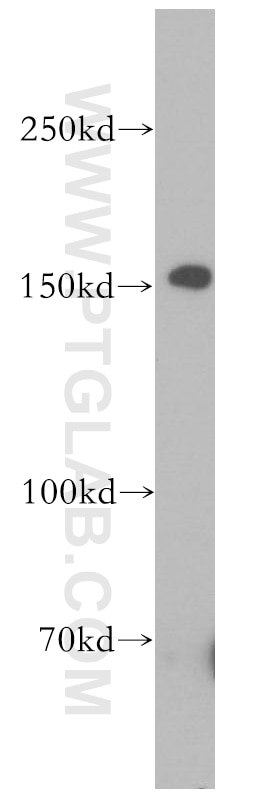
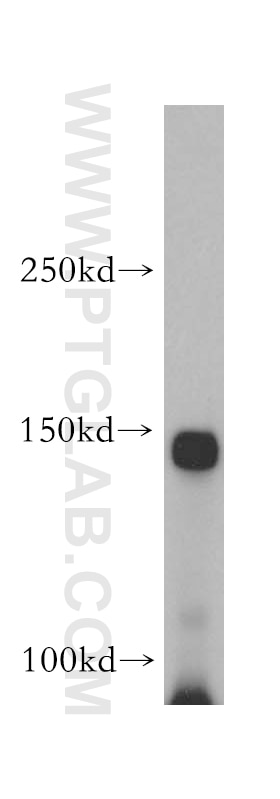
| Positive WB detected in | A549 cells, HeLa cells |
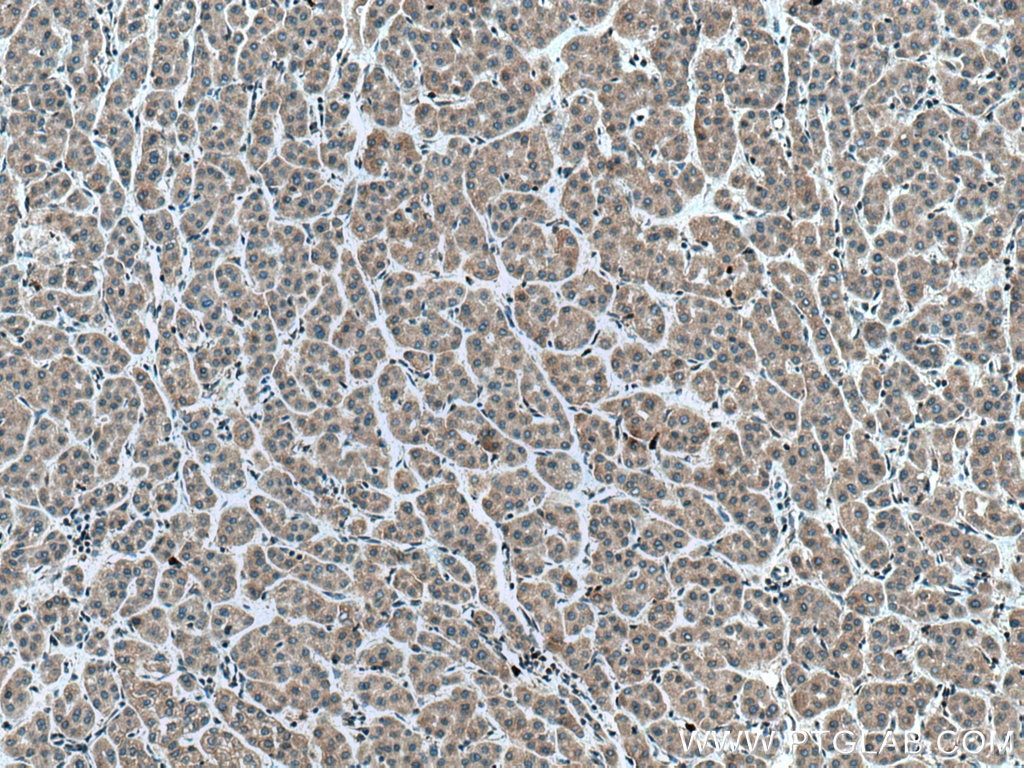
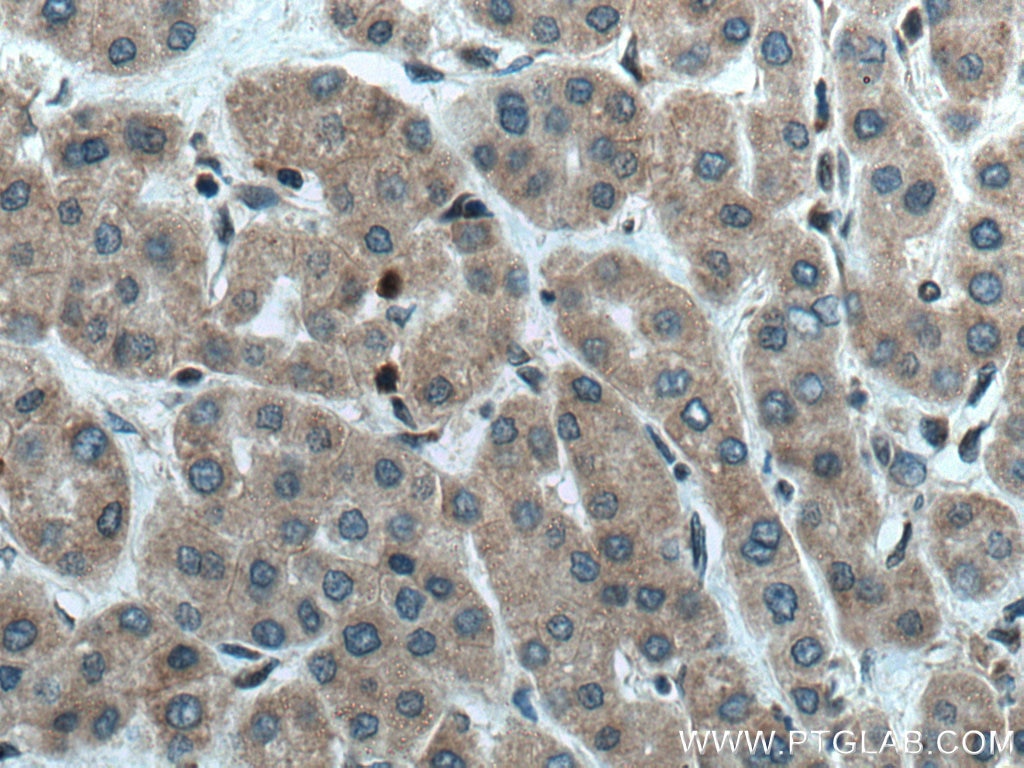
| Positive IHC detected in | human liver cancer tissue Note: suggested antigen retrieval with TE buffer pH 9.0; (*) Alternatively, antigen retrieval may be performed with citrate buffer pH 6.0 |
| Positive IF/ICC detected in | A549 cells |
Recommended dilution
| Application | Dilution |
|---|---|
| Western Blot (WB) | WB : 1:500-1:2000 |
| Immunohistochemistry (IHC) | IHC : 1:50-1:500 |
| Immunofluorescence (IF)/ICC | IF/ICC : 1:50-1:500 |
| It is recommended that this reagent should be titrated in each testing system to obtain optimal results. | |
| Sample-dependent, Check data in validation data gallery. | |
Product Information
18698-1-AP targets EPHA1-specific in WB, IHC, IF/ICC, IP, ELISA applications and shows reactivity with human, mouse samples.
| Tested Reactivity | human, mouse |
| Cited Reactivity | human, mouse |
| Host / Isotype | Rabbit / IgG |
| Class | Polyclonal |
| Type | Antibody |
| Immunogen |
Peptide Predict reactive species |
| Full Name | EPH receptor A1 |
| Calculated Molecular Weight | 108 kDa |
| Observed Molecular Weight | 150 kDa |
| GenBank Accession Number | BC130291 |
| Gene Symbol | EPHA1 |
| Gene ID (NCBI) | 2041 |
| RRID | AB_10597245 |
| Conjugate | Unconjugated |
| Form | Liquid |
| Purification Method | Antigen affinity purification |
| UNIPROT ID | P21709 |
| Storage Buffer | PBS with 0.02% sodium azide and 50% glycerol, pH 7.3. |
| Storage Conditions | Store at -20°C. Stable for one year after shipment. Aliquoting is unnecessary for -20oC storage. 20ul sizes contain 0.1% BSA. |
Background Information
EPHA1, also named as EPH, EPHT and EPHT1, belongs to ephrin receptor subfamily of the protein-tyrosine kinase family. EPH and EPH-related receptors have been implicated in mediating developmental events, particularly in the nervous system. Receptors in the EPH subfamily typically have a single kinase domain and an extracellular region containing a Cys-rich domain and 2 fibronectin type III repeats. Ligands in the ephrin-A subclass, including the prototype family member ephrin-A1 (B61), are membrane associated through glycosylphosphatidyl-inositol linkages, whereas ephrin-B subclass consists of ligands with transmembrane domains. The general role of the Eph family is in mediating repulsive cell-cell interaction.
Protocols
| Product Specific Protocols | |
|---|---|
| IF protocol for EPHA1-specific antibody 18698-1-AP | Download protocol |
| IHC protocol for EPHA1-specific antibody 18698-1-AP | Download protocol |
| WB protocol for EPHA1-specific antibody 18698-1-AP | Download protocol |
| Standard Protocols | |
|---|---|
| Click here to view our Standard Protocols |
Publications
What published studies show
The EPHA1-specific Polyclonal antibody (Cat# 18698-1-AP) has 1 citation. It was cited in EMBO Journal (2025), a study investigating Ephrin A1's role as an EGFR ligand promoting epithelial-mesenchymal transition (EMT) and metastasis in gastric cancer. The antibody was applied in Western blot, immunoprecipitation, and immunohistochemistry in human and mouse samples. The research falls within cancer biology, specifically gastric cancer progression and signaling pathway studies.
| Species | Application | Title |
|---|---|---|
EMBO J Ephrin A1 functions as a ligand of EGFR to promote EMT and metastasis in gastric cancer
|

