
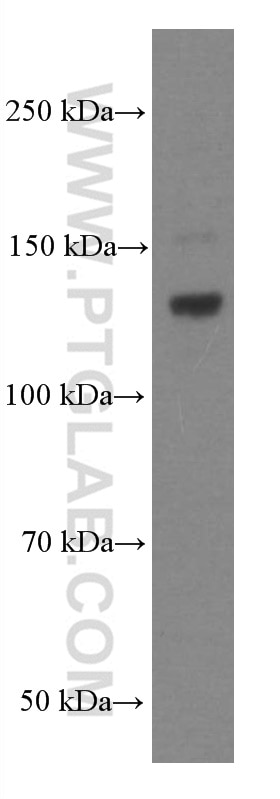
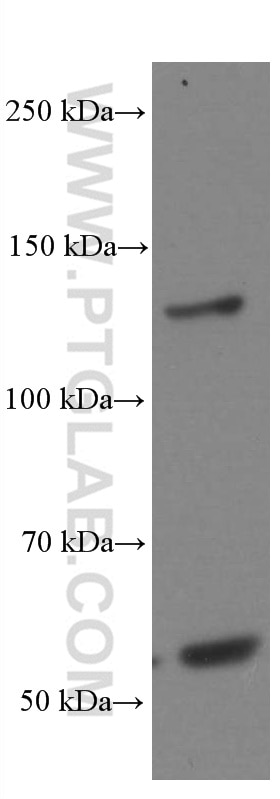

Tested Applications
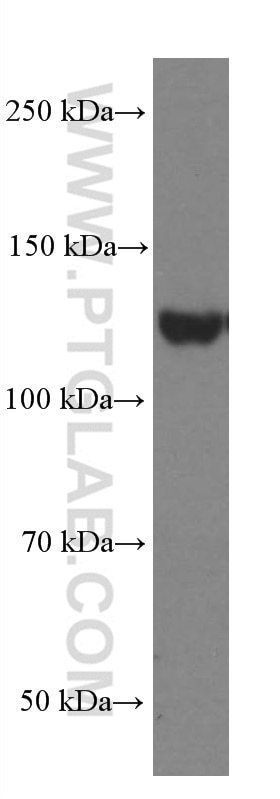
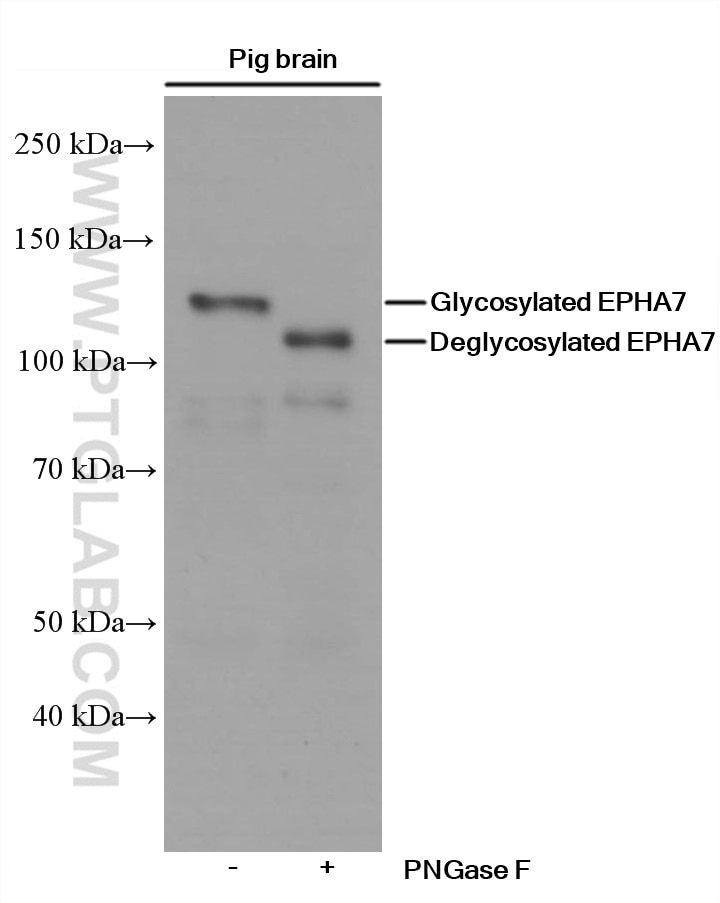
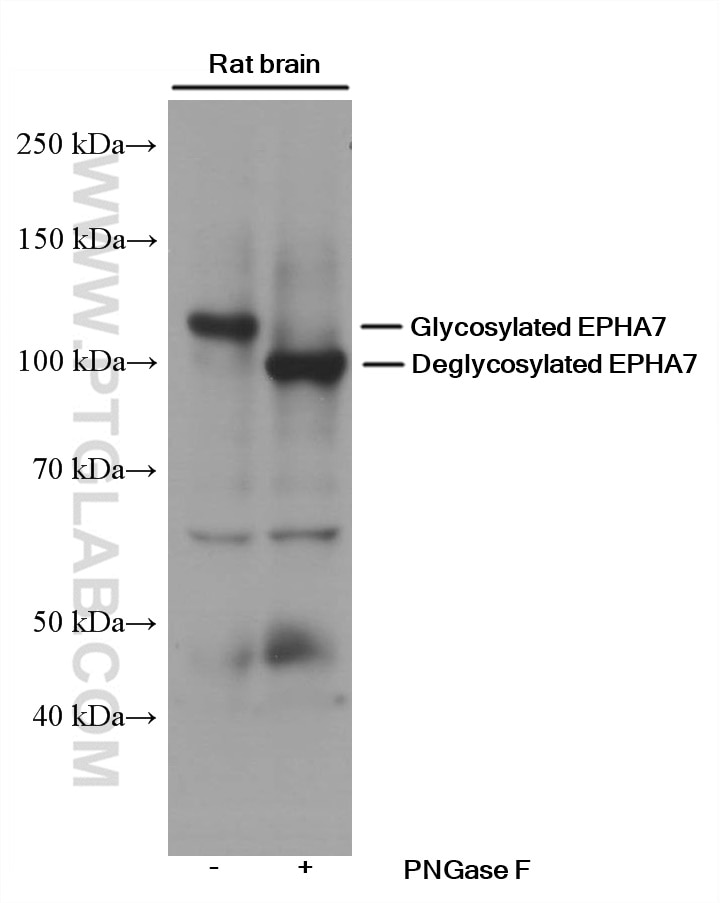
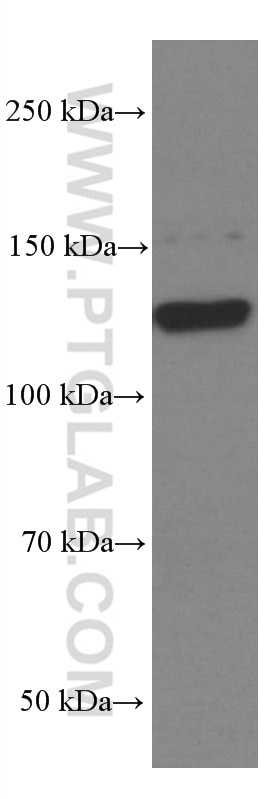
| Positive WB detected in | human brain tissue, pig brain tissue, rat brain tissue, mouse cerebellum tissue |
Recommended dilution
| Application | Dilution |
|---|---|
| Western Blot (WB) | WB : 1:1000-1:4000 |
| It is recommended that this reagent should be titrated in each testing system to obtain optimal results. | |
| Sample-dependent, Check data in validation data gallery. | |
Product Information
66667-1-Ig targets EPHA7 in WB, ELISA applications and shows reactivity with human, mouse, rat, pig samples.
| Tested Reactivity | human, mouse, rat, pig |
| Cited Reactivity | human, mouse |
| Host / Isotype | Mouse / IgG1 |
| Class | Monoclonal |
| Type | Antibody |
| Immunogen |
CatNo: Ag3813 Product name: Recombinant human EPHA7 protein Source: e coli.-derived, PGEX-4T Tag: GST Domain: 29-279 aa of BC027940 Sequence: AAKEVLLLDSKAQQTELEWISSPPNGWEEISGLDENYTPIRTYQVCQVMEPNQNNWLRTNWISKGNAQRIFVELKFTLRDCNSLPGVLGTCKETFNLYYYETDYDTGRNVRENLYVKIDTIAADESFTQGDLGERKMKLNTEVREIGPLSKKGFYLAFQDVGACIALVSVKVYYKKCWSIIENLAIFPDTVTGSEFSSLVEVRGTCVSSAEEEAENAPRMHCSAEGEWLVPIGKCICKAGYQQKGDTCECK Predict reactive species |
| Full Name | EPH receptor A7 |
| Calculated Molecular Weight | 998 aa, 112 kDa |
| Observed Molecular Weight | 120 kDa |
| GenBank Accession Number | BC027940 |
| Gene Symbol | EPHA7 |
| Gene ID (NCBI) | 2045 |
| RRID | AB_2882021 |
| Conjugate | Unconjugated |
| Form | Liquid |
| Purification Method | Protein G purification |
| UNIPROT ID | Q15375 |
| Storage Buffer | PBS with 0.02% sodium azide and 50% glycerol, pH 7.3. |
| Storage Conditions | Store at -20°C. Stable for one year after shipment. Aliquoting is unnecessary for -20oC storage. 20ul sizes contain 0.1% BSA. |
Background Information
Ephrin receptor A7 (EphA7) is a member of the Eph receptor family. EPHA7 plays a role in corticogenesis processes, determines brain size and shape, and is involved in development of the central nervous system (PMID:34176129). In addition, EphA7 also has a dual role of tumor promoter and tumor suppressor. It can participate in cell proliferation, migration and apoptosis through various mechanisms, and afect tumor diferentiation, staging and prognosis. EphA7 may be a potential diagnostic marker and tumor treatment target (PMID:35112312).
Protocols
| Product Specific Protocols | |
|---|---|
| WB protocol for EPHA7 antibody 66667-1-Ig | Download protocol |
| Standard Protocols | |
|---|---|
| Click here to view our Standard Protocols |
Publications
What published studies show
The EPHA7 Monoclonal antibody (1A7E5), catalog number 66667-1-Ig, has 4 total citations. These appear in Advanced Science, Cell Reports, International Journal of Molecular Sciences, and Experimental Neurology. The cited research spans gastric cancer liquid biopsy, myeloid leukemia, pancreatic tumorigenesis, and neuroinflammation associated with postoperative cognitive dysfunction. All citations used the antibody for Western blot (WB) applications in human and mouse samples.
| Species | Application | Title |
|---|---|---|
Adv Sci (Weinh) Transcriptomics-Based Liquid Biopsy for Early Detection of Recurrence in Locally Advanced Gastric Cancer
| ||
Cell Rep Activation of GPR44 decreases severity of myeloid leukemia via specific targeting of leukemia initiating stem cells | ||
Int J Mol Sci Fucoxanthin Prevents Pancreatic Tumorigenesis in C57BL/6J Mice That Received Allogenic and Orthotopic Transplants of Cancer Cells. | ||
Exp Neurol Attenuation of postoperative cognitive dysfunction by Mongolian medical warm acupuncture associates with suppressed neuroinflammation and preserved synaptic structural plasticity. |

