

Tested Applications
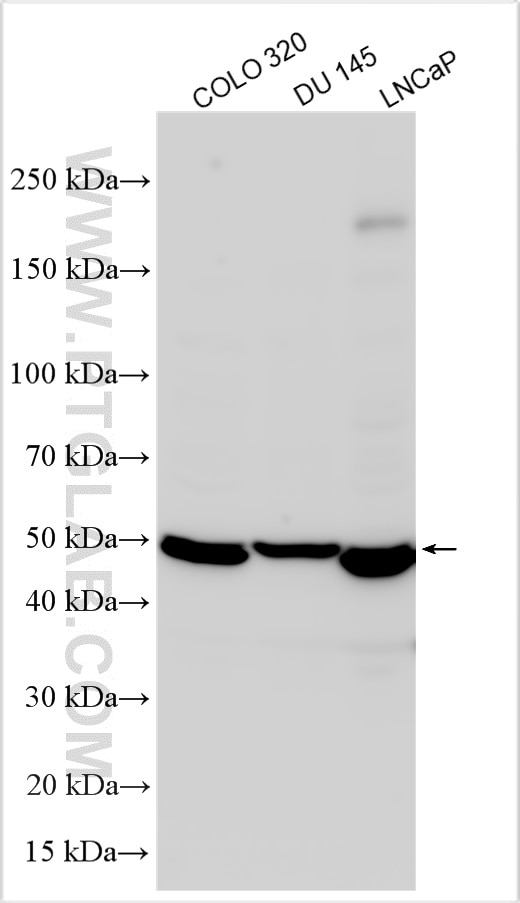
| Positive WB detected in | COLO 320 cells, DU 145 cells, LNCaP cells |
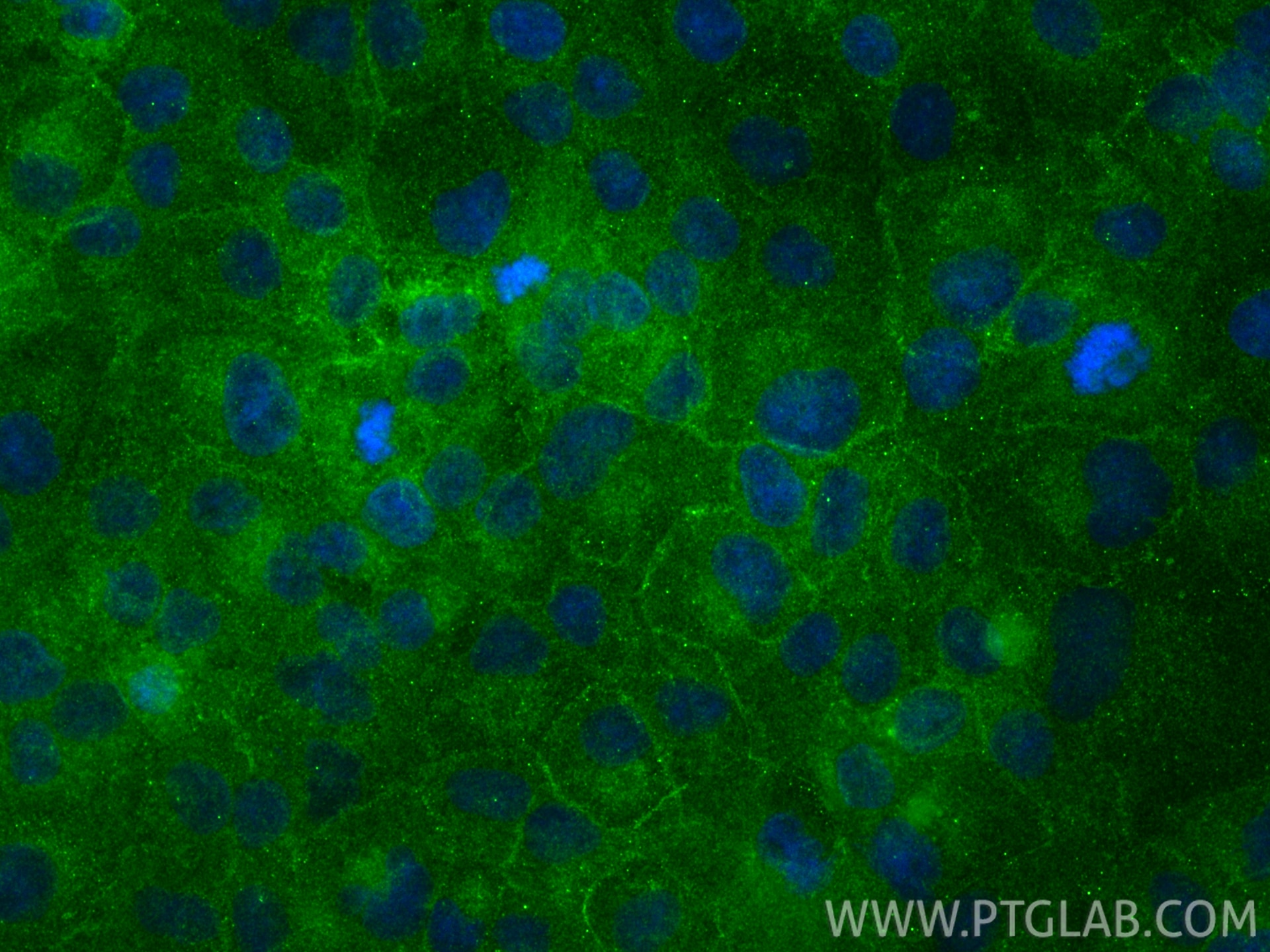
| Positive IF/ICC detected in | DU 145 cells |
Recommended dilution
| Application | Dilution |
|---|---|
| Western Blot (WB) | WB : 1:1000-1:4000 |
| Immunofluorescence (IF)/ICC | IF/ICC : 1:50-1:500 |
| It is recommended that this reagent should be titrated in each testing system to obtain optimal results. | |
| Sample-dependent, Check data in validation data gallery. | |
Product Information
12160-1-AP targets PAR2 in WB, IHC, IF/ICC, ELISA applications and shows reactivity with human samples.
| Tested Reactivity | human |
| Cited Reactivity | human, mouse, rat |
| Host / Isotype | Rabbit / IgG |
| Class | Polyclonal |
| Type | Antibody |
| Immunogen |
CatNo: Ag2801 Product name: Recombinant human F2RL1 protein Source: e coli.-derived, PGEX-4T Tag: GST Domain: 15-87 aa of BC018130 Sequence: LLAASLSCSGTIQGTNRSSKGRSLIGKVDGTSHVTGKGVTVETVFSVDEFSASVLTGKLTTVFLPIVYTIVFV Predict reactive species |
| Full Name | coagulation factor II (thrombin) receptor-like 1 |
| Calculated Molecular Weight | 397 aa, 44 kDa |
| Observed Molecular Weight | 50-55 kDa |
| GenBank Accession Number | BC018130 |
| Gene Symbol | PAR2 |
| Gene ID (NCBI) | 2150 |
| RRID | AB_10598009 |
| Conjugate | Unconjugated |
| Form | Liquid |
| Purification Method | Antigen affinity purification |
| UNIPROT ID | P55085 |
| Storage Buffer | PBS with 0.02% sodium azide and 50% glycerol, pH 7.3. |
| Storage Conditions | Store at -20°C. Stable for one year after shipment. Aliquoting is unnecessary for -20oC storage. 20ul sizes contain 0.1% BSA. |
Background Information
Proteinase-activated receptors (PARs) are G protein-coupled receptors activated through cleavage of their N-termini by mainly serine proteases. The family of PARs includes four members: PAR1, PAR2, PAR3, and PAR4. PAR2, also known as F2RL1, is expressed in epithelial cells (e.g., lung, gastrointestinal tract), endothelial cells, smooth muscle cells, fibroblasts, nerves, and some immune and inflammatory cells. PAR2 knockout mice and PAR2 agonists and antagonists have implicated PAR2 as a promising target in inflammatory conditions; respiratory, gastrointestinal, metabolic, cardiovascular, and neurological dysfunction; and cancers. (PMID:23895492)
Protocols
| Product Specific Protocols | |
|---|---|
| IF protocol for PAR2 antibody 12160-1-AP | Download protocol |
| WB protocol for PAR2 antibody 12160-1-AP | Download protocol |
| Standard Protocols | |
|---|---|
| Click here to view our Standard Protocols |
Publications
What published studies show
Anti-PAR2 (catalog #12160-1-AP) has 10 citations published in journals including Cell, Theranostics, J Med Chem, Cells, Mediators Inflammation, Medical Oncology, Heliyon, Biochemical Journal, Oral Diseases, and Am J Transl Res. Research fields span oncology (prostate and lung cancer), renal injury, intestinal autophagy, neurology (heat stroke, hydrocephalus), oral cancer, and PAR2 pharmacology.
| Species | Application | Title |
|---|---|---|
Theranostics Heat acclimation defense against exertional heat stroke by improving the function of preoptic TRPV1 neurons | ||
Cells Modulation of Intestinal Epithelial Permeability via Protease-Activated Receptor-2-Induced Autophagy. | ||
Mediators Inflamm Protease-Activated Receptor-2 and Phospholipid Metabolism Analysis in Hyperuricemia-Induced Renal Injury
| ||
Med Oncol Long non-coding RNA AC245100.4 contributes to prostate cancer migration via regulating PAR2 and activating p38-MAPK pathway.
|

