
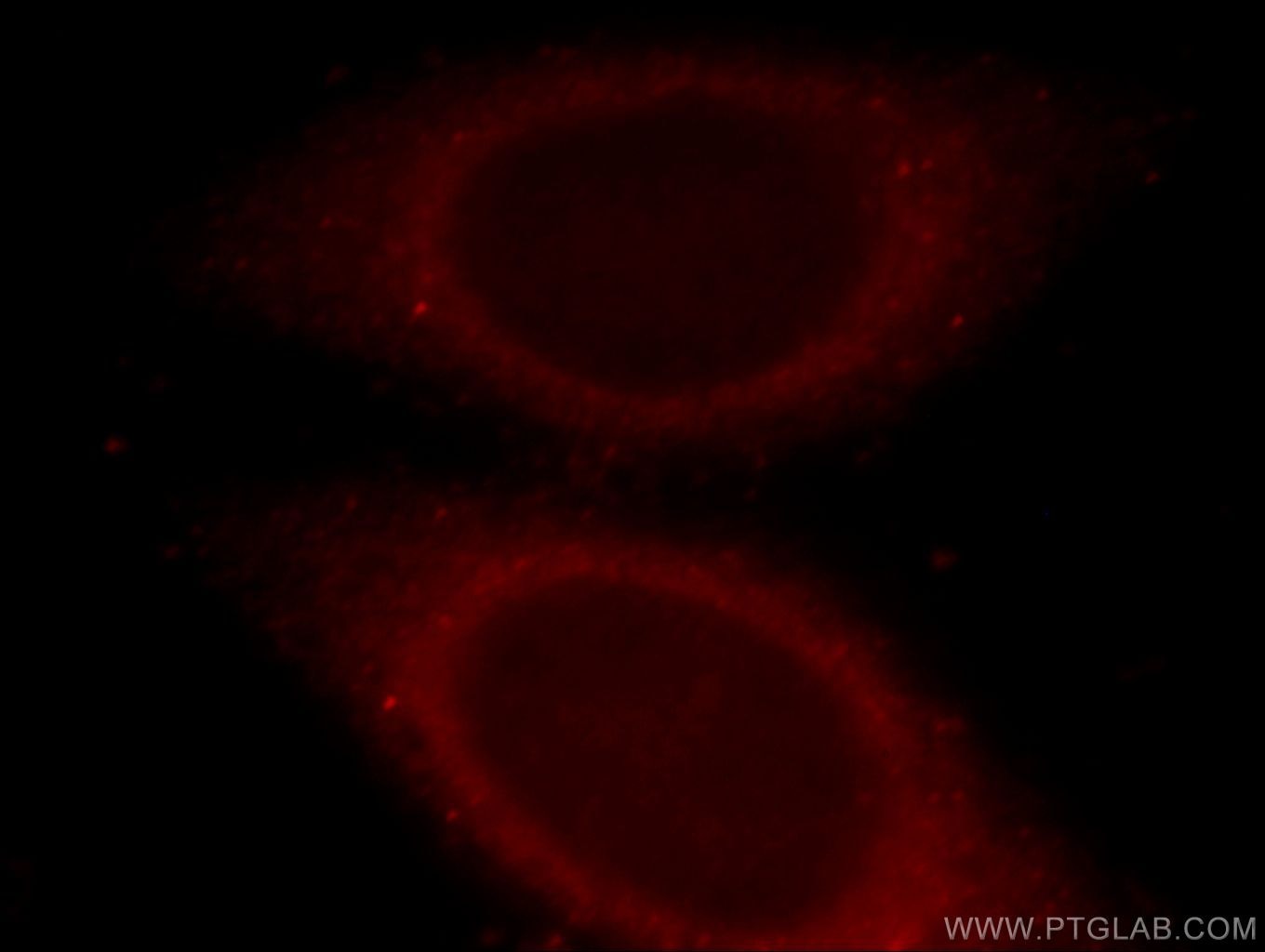

Tested Applications
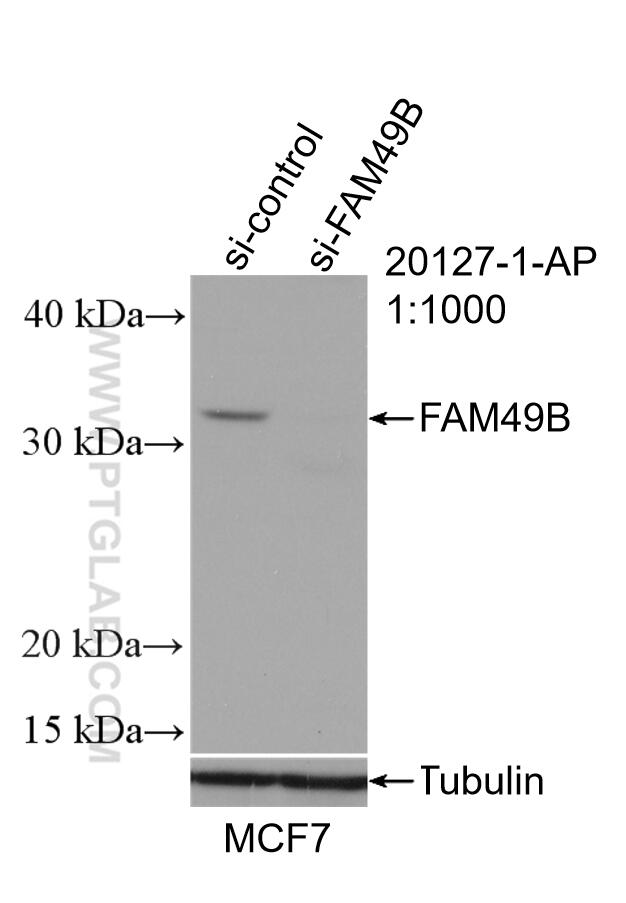
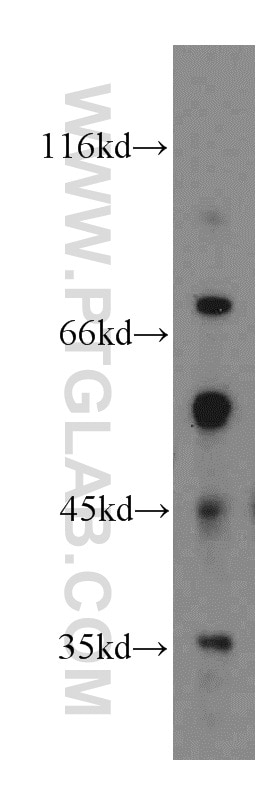
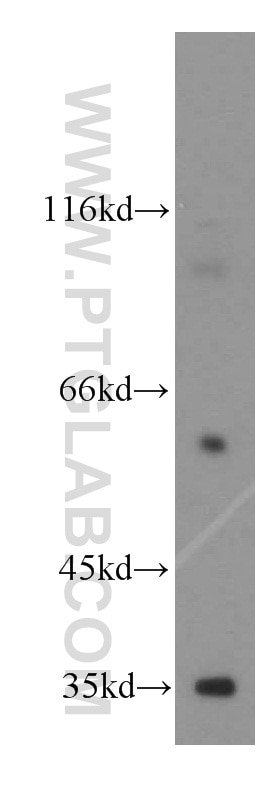
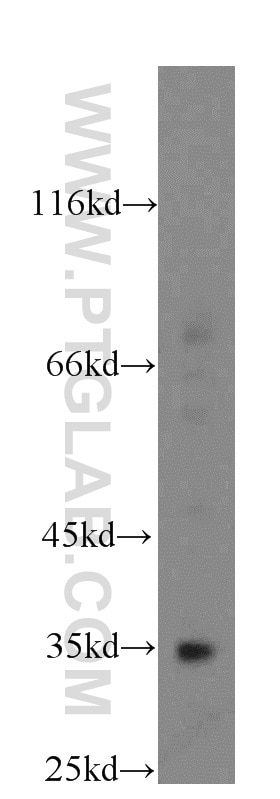
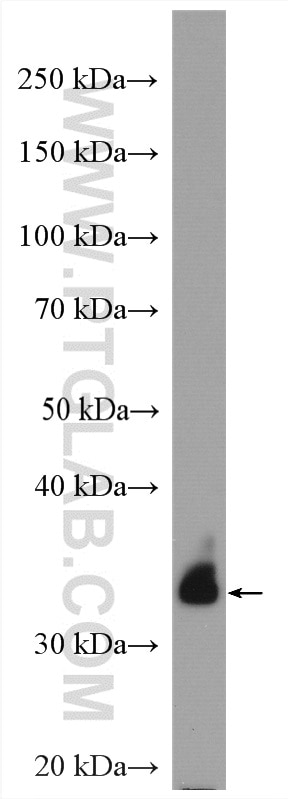
| Positive WB detected in | MCF-7 cells, mouse brain tissue, human placenta tissue, human testis tissue, mouse testis tissue |
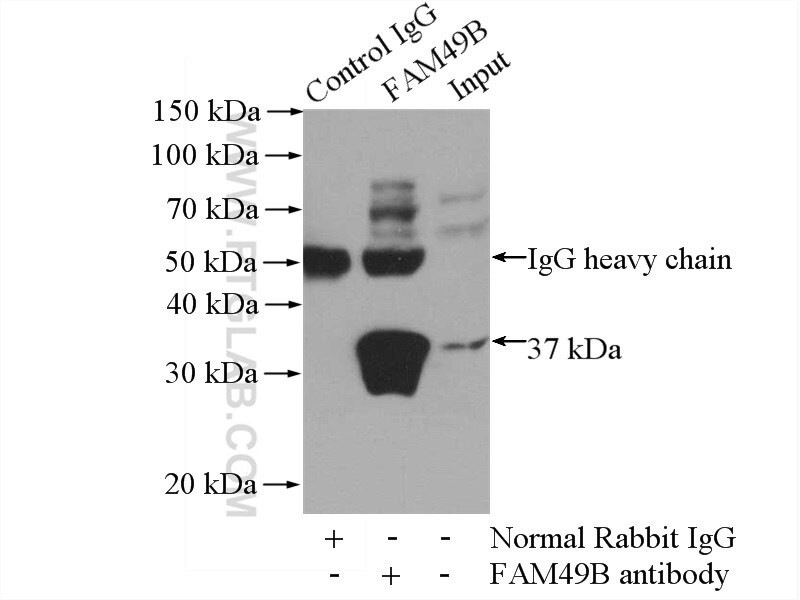
| Positive IP detected in | mouse brain tissue |
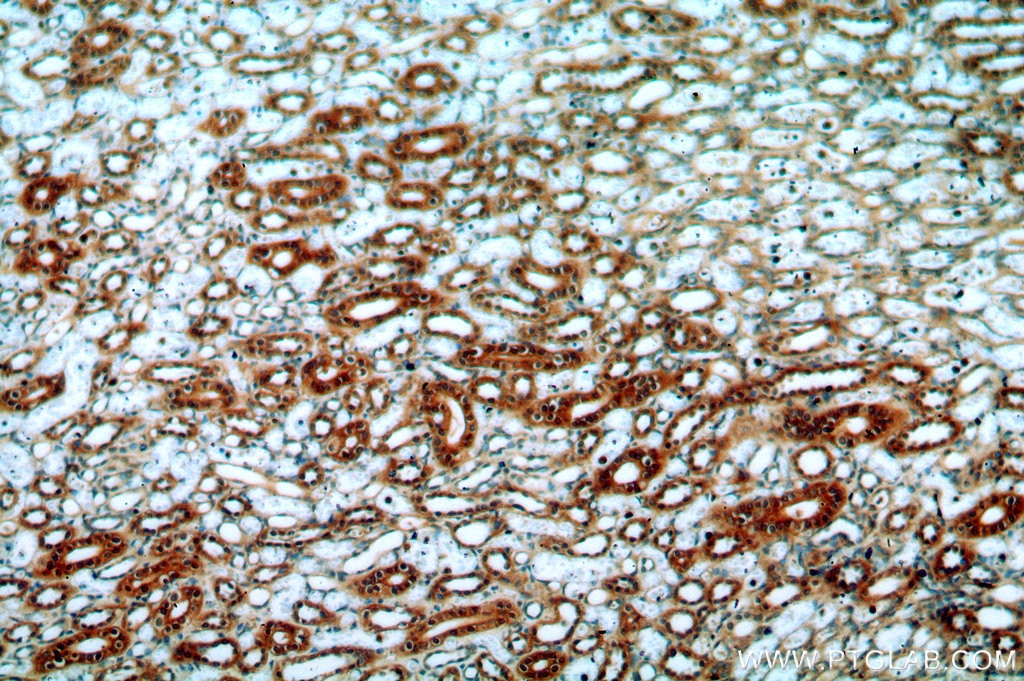
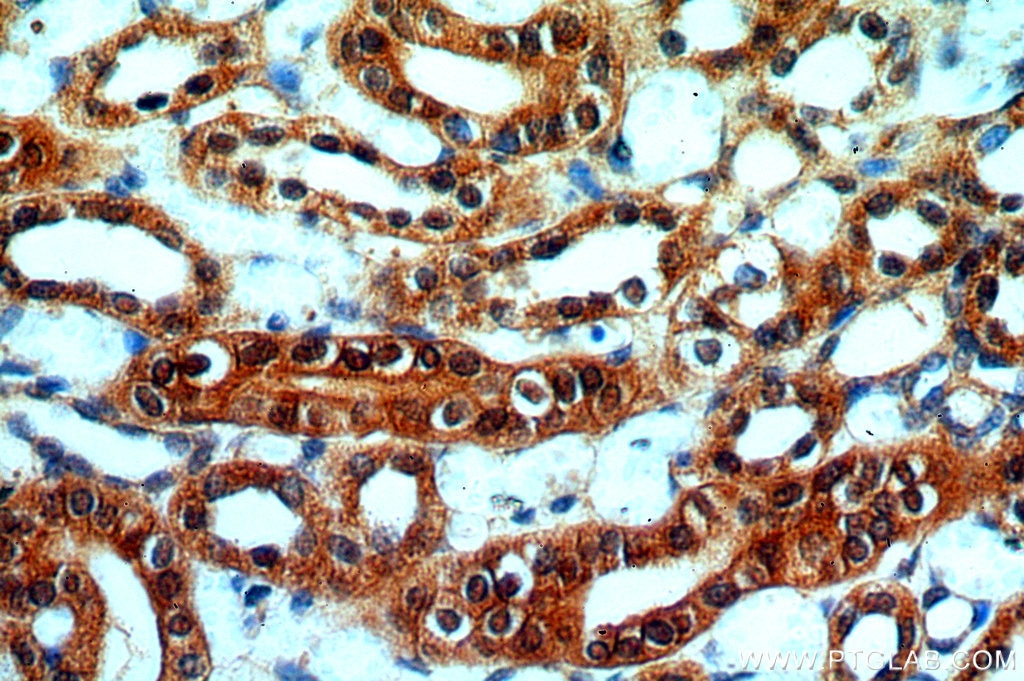
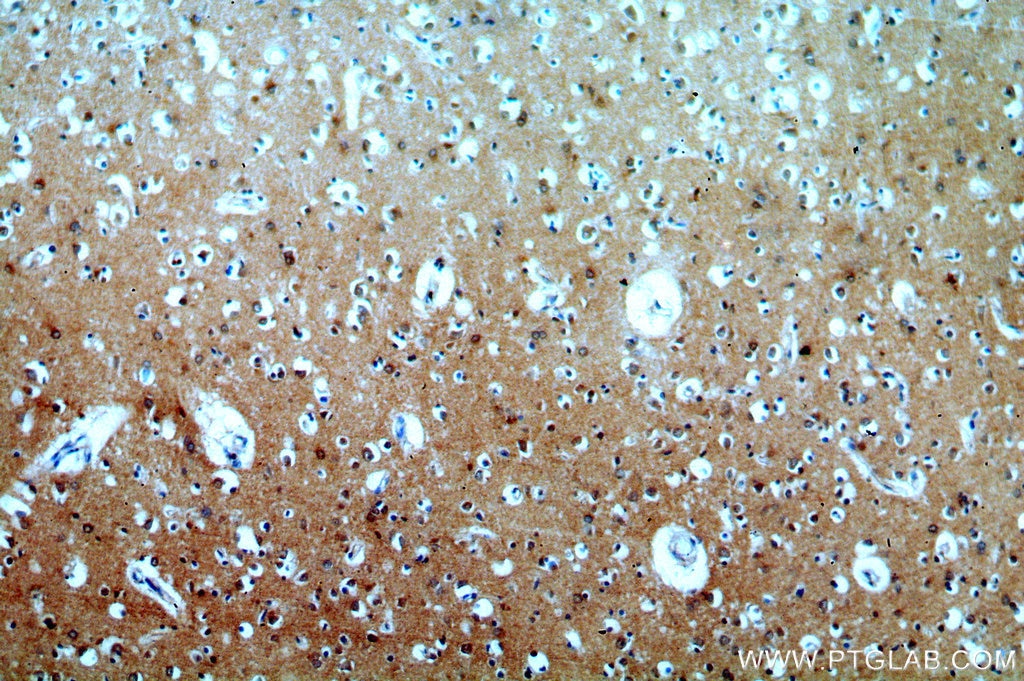
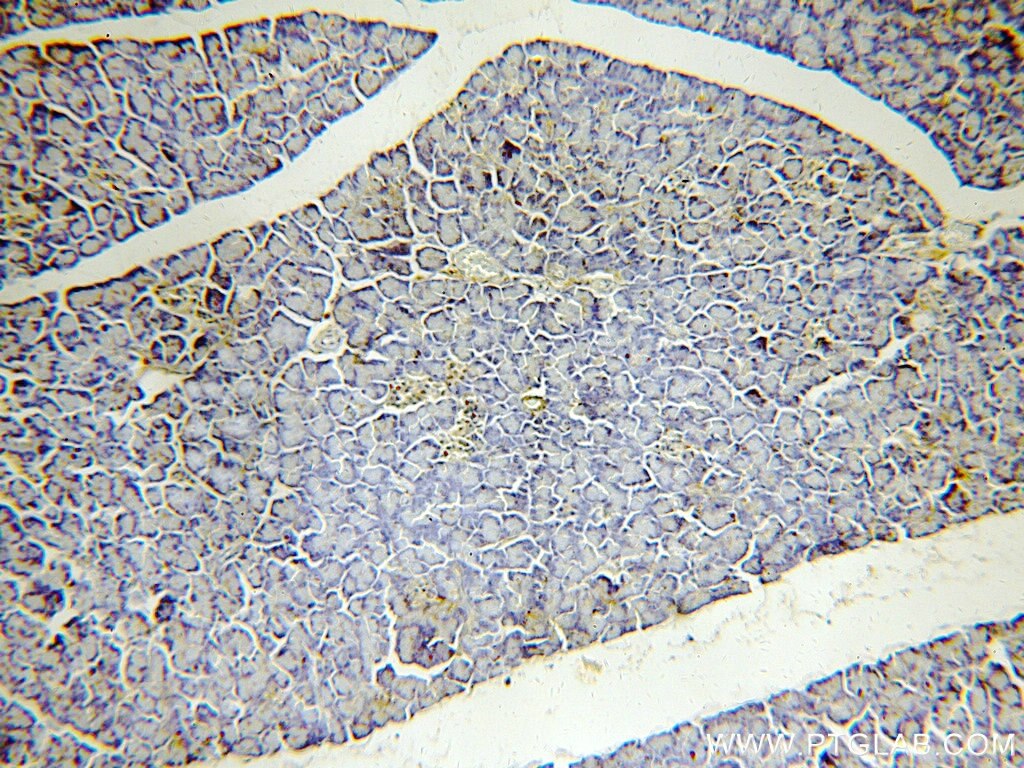
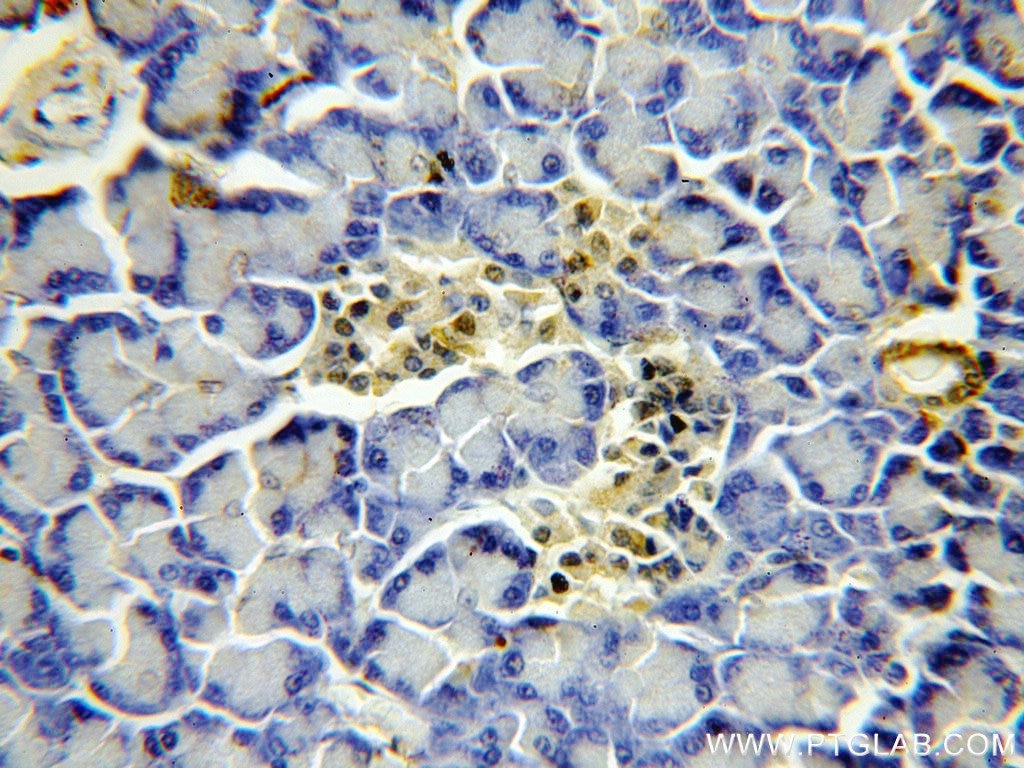
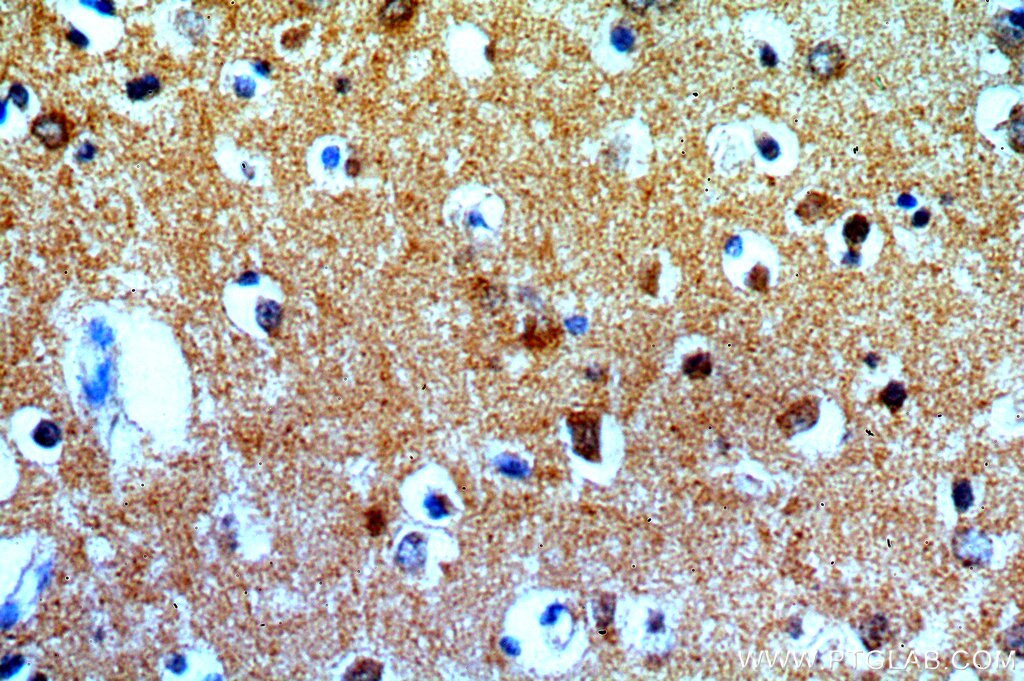
| Positive IHC detected in | human kidney tissue, human brain tissue, human pancreas tissue Note: suggested antigen retrieval with TE buffer pH 9.0; (*) Alternatively, antigen retrieval may be performed with citrate buffer pH 6.0 |
| Positive IF/ICC detected in | HepG2 cells |
Recommended dilution
| Application | Dilution |
|---|---|
| Western Blot (WB) | WB : 1:500-1:2000 |
| Immunoprecipitation (IP) | IP : 0.5-4.0 ug for 1.0-3.0 mg of total protein lysate |
| Immunohistochemistry (IHC) | IHC : 1:20-1:200 |
| Immunofluorescence (IF)/ICC | IF/ICC : 1:10-1:100 |
| It is recommended that this reagent should be titrated in each testing system to obtain optimal results. | |
| Sample-dependent, Check data in validation data gallery. | |
Product Information
20127-1-AP targets FAM49B in WB, IHC, IF/ICC, IP, ELISA applications and shows reactivity with human, mouse, rat samples.
| Tested Reactivity | human, mouse, rat |
| Cited Reactivity | human, mouse, monkey |
| Host / Isotype | Rabbit / IgG |
| Class | Polyclonal |
| Type | Antibody |
| Immunogen |
CatNo: Ag13939 Product name: Recombinant human FAM49B protein Source: e coli.-derived, PGEX-4T Tag: GST Domain: 1-324 aa of BC003599 Sequence: MGNLLKVLTCTDLEQGPNFFLDFENAQPTESEKEIYNQVNVVLKDAEGILEDLQSYRGAGHEIREAIQHPADEKLQEKAWGAVVPLVGKLKKFYEFSQRLEAALRGLLGALTSTPYSPTQHLEREQALAKQFAEILHFTLRFDELKMTNPAIQNDFSYYRRTLSRMRINNVPAEGENEVNNELANRMSLFYAEATPMLKTLSDATTKFVSENKNLPIENTTDCLSTMASVCRVMLETPEYRSRFTNEETVSFCLRVMVGVIILYDHVHPVGAFAKTSKIDMKGCIKVLKDQPPNSVEGLLNALRYTTKHLNDETTSKQIKSMLQ Predict reactive species |
| Full Name | family with sequence similarity 49, member B |
| Calculated Molecular Weight | 324 aa, 37 kDa |
| Observed Molecular Weight | 32-35 kDa |
| GenBank Accession Number | BC003599 |
| Gene Symbol | FAM49B |
| Gene ID (NCBI) | 51571 |
| RRID | AB_10638431 |
| Conjugate | Unconjugated |
| Form | Liquid |
| Purification Method | Antigen affinity purification |
| UNIPROT ID | Q9NUQ9 |
| Storage Buffer | PBS with 0.02% sodium azide and 50% glycerol, pH 7.3. |
| Storage Conditions | Store at -20°C. Stable for one year after shipment. Aliquoting is unnecessary for -20oC storage. 20ul sizes contain 0.1% BSA. |
Protocols
| Product Specific Protocols | |
|---|---|
| IF protocol for FAM49B antibody 20127-1-AP | Download protocol |
| IHC protocol for FAM49B antibody 20127-1-AP | Download protocol |
| IP protocol for FAM49B antibody 20127-1-AP | Download protocol |
| WB protocol for FAM49B antibody 20127-1-AP | Download protocol |
| Standard Protocols | |
|---|---|
| Click here to view our Standard Protocols |
Publications
What published studies show
I'll search for citations for catalog number 20127-1-AP.The FAM49B Polyclonal antibody (catalog number 20127-1-AP) has 7 citations. The journals include Nature Cell Biology, Journal of Cell Science, Journal of Proteome Research, Molecular Immunology, Genes, Journal of Molecular Histology, and eLife. Research fields cover cell biology of cell protrusions and macropinocytosis, focal adhesion dynamics, tumor progression (clear cell renal cell carcinoma, gastric cancer), hepatic ischemia/reperfusion injury signaling, and FAM49B protein function studies.
| Species | Application | Title |
|---|---|---|
Nat Cell Biol Fam49/CYRI interacts with Rac1 and locally suppresses protrusions.
| ||
J Cell Sci CYRI-B loss promotes enlarged mature focal adhesions and restricts microtubule and ERC1 access to the cell leading edge.
| ||
J Proteome Res The Deubiquitinating Enzyme USP9X Regulates the Protein Stability of the FAM49B in Clear Cell Renal Cell Carcinoma. | ||
Mol Immunol FAM49B, restrained by miR-22, relieved hepatic ischemia/reperfusion injury by inhibiting TRAF6/IKK signaling pathway in a Rac1-dependent manner.
| ||
Genes (Basel) Characterization and Functional Study of FAM49B Reveals Its Effect on Cell Proliferation in HEK293T Cells.
| ||
J Mol Histol FAM49B mediates tumor progression and poor prognosis of gastric cancer through activating PI3K/AKT pathway. |

