

Tested Applications
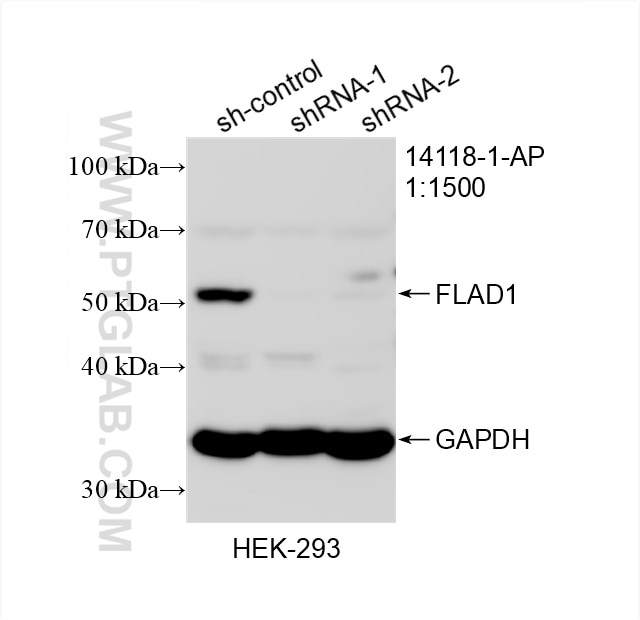
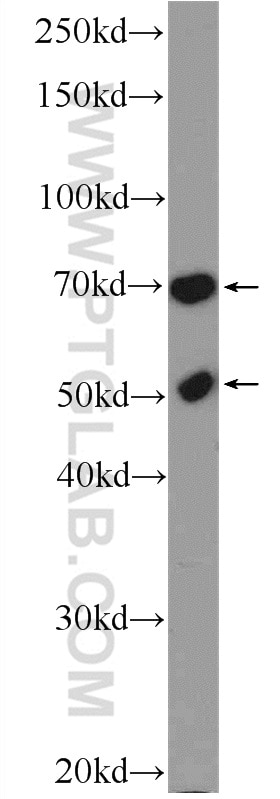
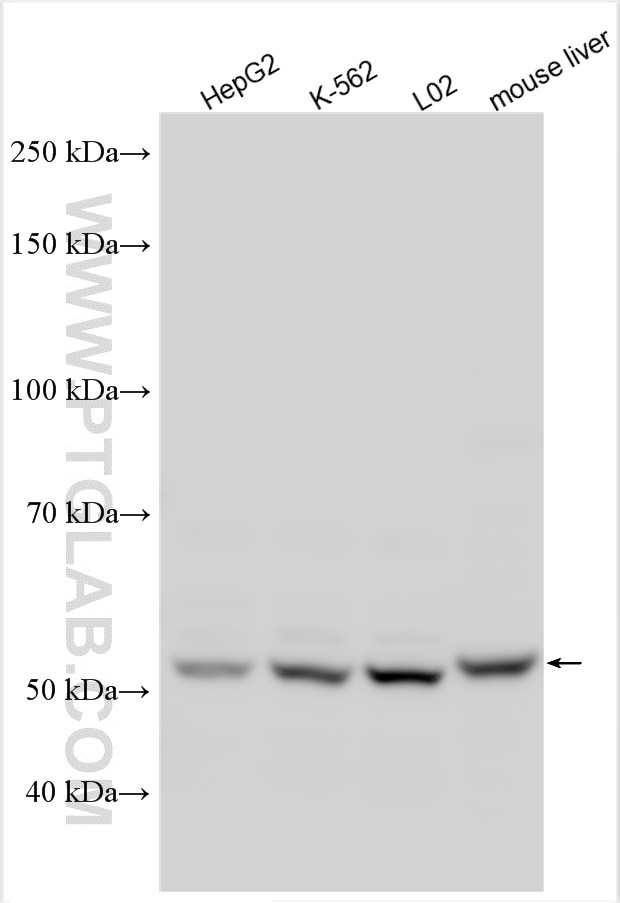
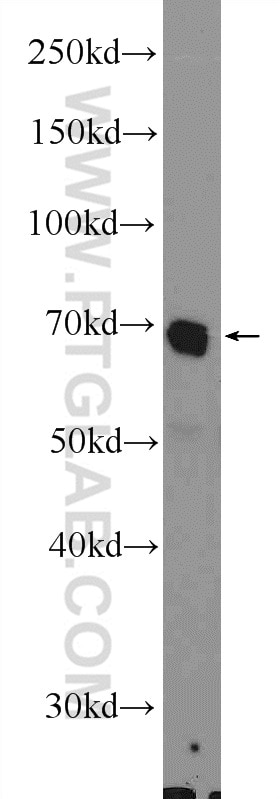
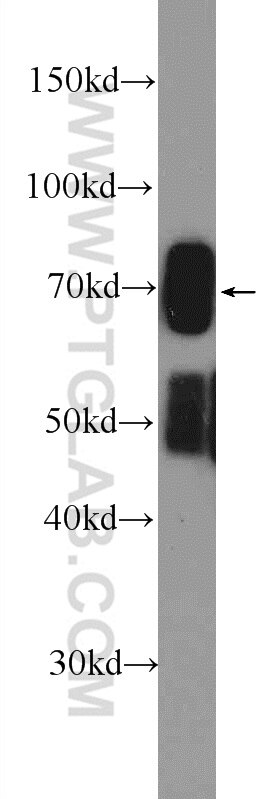
| Positive WB detected in | K-562 cells, HEK-293 cells, HepG2 cells, rat liver tissue, L02 cells, mouse liver tissue |
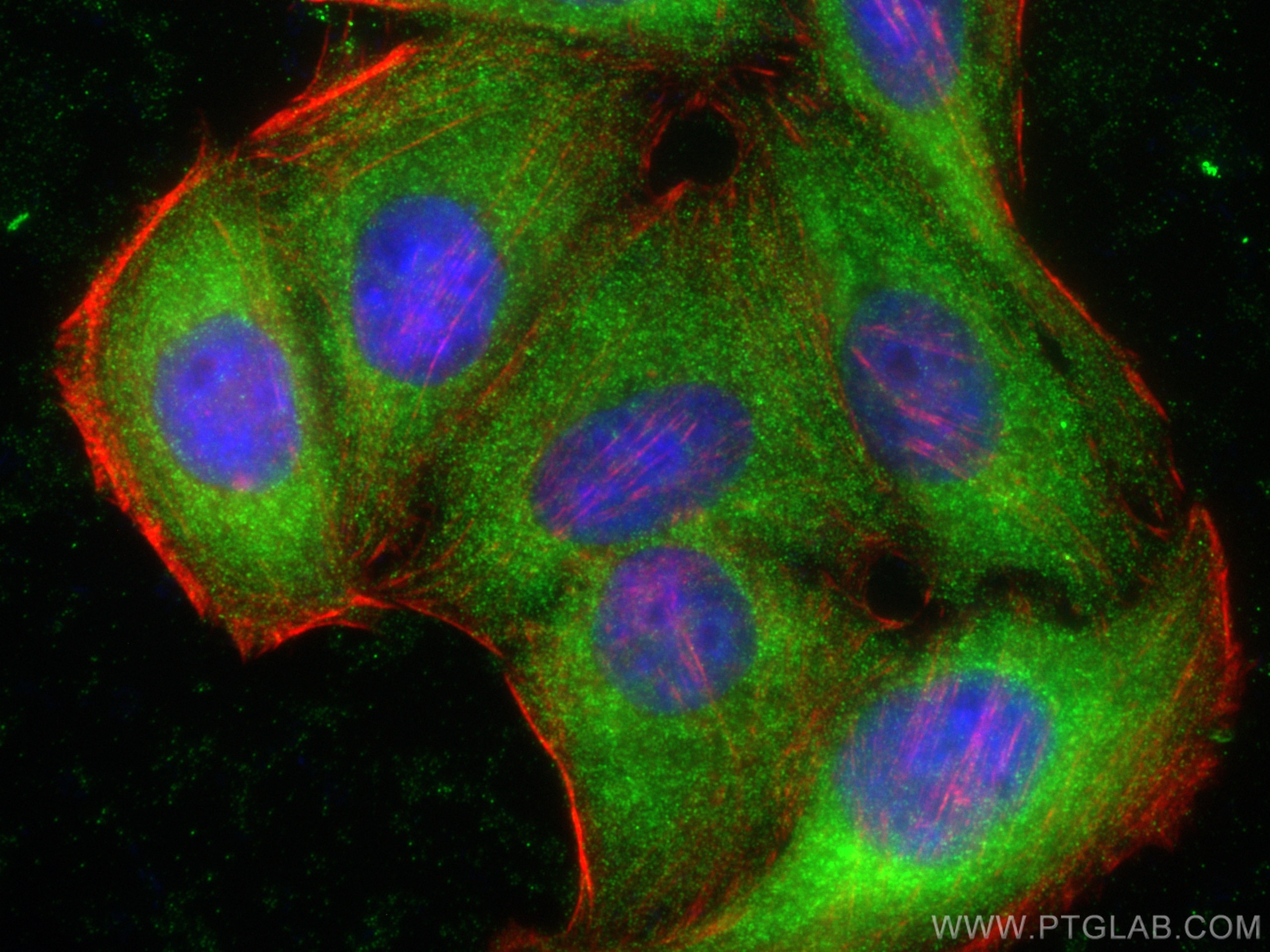
| Positive IF/ICC detected in | HepG2 cells |
Recommended dilution
| Application | Dilution |
|---|---|
| Western Blot (WB) | WB : 1:500-1:1000 |
| Immunofluorescence (IF)/ICC | IF/ICC : 1:200-1:800 |
| It is recommended that this reagent should be titrated in each testing system to obtain optimal results. | |
| Sample-dependent, Check data in validation data gallery. | |
Product Information
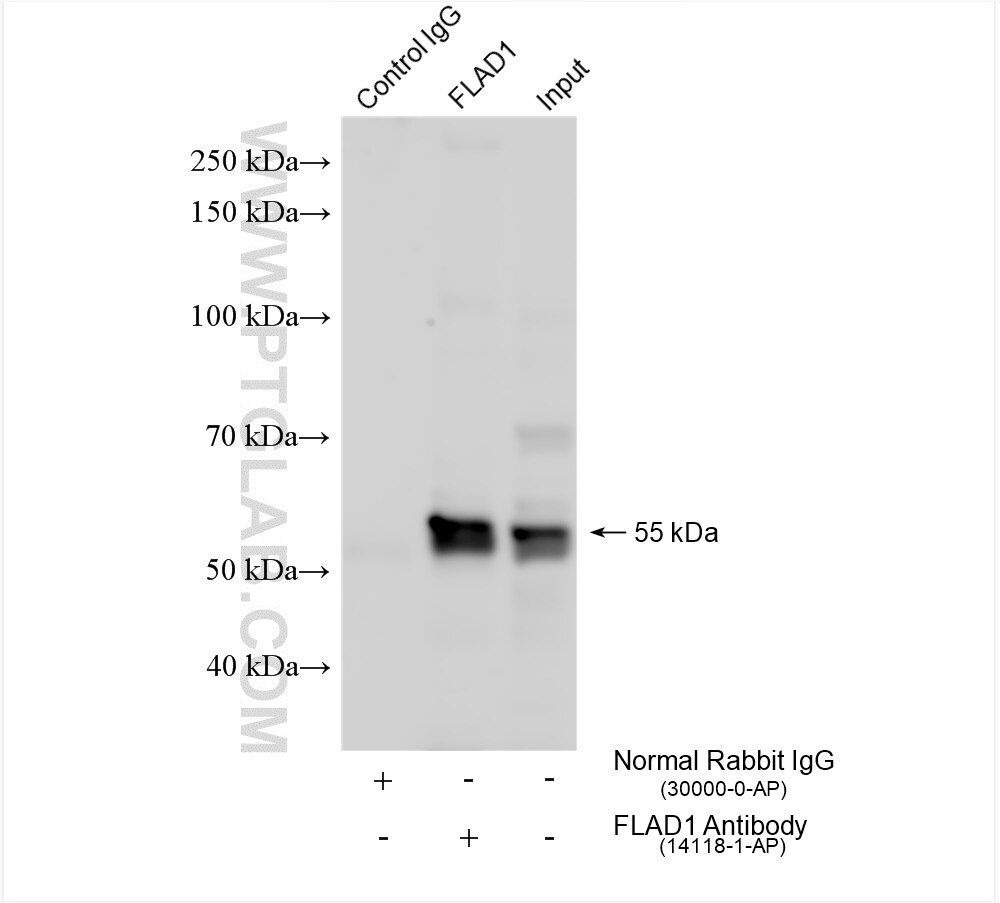
14118-1-AP targets FLAD1 in WB, IF/ICC, CoIP, ELISA applications and shows reactivity with human, mouse, rat samples.
| Tested Reactivity | human, mouse, rat |
| Cited Reactivity | human, mouse |
| Host / Isotype | Rabbit / IgG |
| Class | Polyclonal |
| Type | Antibody |
| Immunogen |
CatNo: Ag5267 Product name: Recombinant human FLAD1 protein Source: e coli.-derived, PGEX-4T Tag: GST Domain: 148-447 aa of BC011378 Sequence: LVSVRNVYLFPGIPELLRRVLEGMKGLFQNPAVQFHSKELYVAADEASIAPILAEAQAHFGRRLGLGSYPDWGSNYYQVKLTLDSEEEGPLEECLAYLTARLPQGSLVPYMPNAVEQASEAVYKLAESGSSLGKKVAGALQTIETSLAQYSLTQLCVGFNGGKDCTALLHLFHAAVQRKLPDVPNPLQILYIRSISPFPELEQFLQDTIKRYNLQMLEAEGSMKQALGELQARHPQLEAVLMGTRRTDPYSCSLCPFSPTDPGWPAFMRINPLLDWTYRDIWDFLRQLFVPYCILYDRG Predict reactive species |
| Full Name | FAD1 flavin adenine dinucleotide synthetase homolog (S. cerevisiae) |
| Calculated Molecular Weight | 446 aa, 49 kDa |
| Observed Molecular Weight | 50 kDa, 65-70 kDa |
| GenBank Accession Number | BC011378 |
| Gene Symbol | FLAD1 |
| Gene ID (NCBI) | 80308 |
| RRID | AB_2878017 |
| Conjugate | Unconjugated |
| Form | Liquid |
| Purification Method | Antigen affinity purification |
| UNIPROT ID | Q8NFF5 |
| Storage Buffer | PBS with 0.02% sodium azide and 50% glycerol, pH 7.3. |
| Storage Conditions | Store at -20°C. Stable for one year after shipment. Aliquoting is unnecessary for -20oC storage. 20ul sizes contain 0.1% BSA. |
Background Information
FLAD1 is a protein-coding gene for flavin adenine dinucleotide synthetase (FADS), a key enzyme in the FAD biosynthesis process which contains an N-terminal molybdopterin -binding (MPTb) domain and a C-terminal domain (FADS domain) (PMID: 32714079). Alternative splicing of the human FLAD1 gene generates different isoforms of the enzyme FAD synthase. ~60 and ~50 kDa bands correspond to the expected mitochondrial FADS1 and cytosolic FADS2 proteins, respectively (PMID: 29316637).
Protocols
| Product Specific Protocols | |
|---|---|
| IF protocol for FLAD1 antibody 14118-1-AP | Download protocol |
| IP protocol for FLAD1 antibody 14118-1-AP | Download protocol |
| WB protocol for FLAD1 antibody 14118-1-AP | Download protocol |
| Standard Protocols | |
|---|---|
| Click here to view our Standard Protocols |
Publications
What published studies show
The FLAD1 Polyclonal antibody (Cat# 14118-1-AP) has 4 citations. They appear in Analytical Chemistry, Frontiers in Immunology, Ecotoxicology and Environmental Safety, and Journal of Molecular Histology. Research fields span membrane protein complex analysis, renal clear cell carcinoma immunotherapy, reproductive toxicology (sperm motility), and m6A-dependent immune evasion in hepatocellular carcinoma. Applications cited include Western blot and co-immunoprecipitation in human and mouse samples.
| Species | Application | Title |
|---|---|---|
Anal Chem Ionic Liquid-Based Extraction System for In-Depth Analysis of Membrane Protein Complexes. | ||
Front Immunol NECSO-based classification predicts immunotherapy efficacy and identifies FLAD1 as therapeutic target in kidney renal clear cell carcinoma.
| ||
Ecotoxicol Environ Saf Di (2-ethylhexyl) phthalate reduces sperm motility by decreasing sperm tail energy supply | ||
J Mol Histol The FTO-YTHDF2 axis drives immune evasion and tumor progression in hepatocellular carcinoma via m6A-dependent FLAD1 regulation |

