





Tested Applications
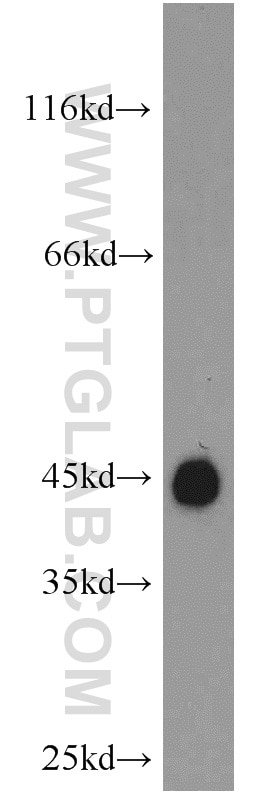
| Positive WB detected in | mouse brain tissue, rat lung tissue, SH-SY5Y cells, rat brain tissue, Neuro-2a cells |
| Positive IP detected in | mouse brain tissue |
| Positive IHC detected in | mouse brain tissue Note: suggested antigen retrieval with TE buffer pH 9.0; (*) Alternatively, antigen retrieval may be performed with citrate buffer pH 6.0 |
| Positive IF-P detected in | mouse brain tissue |
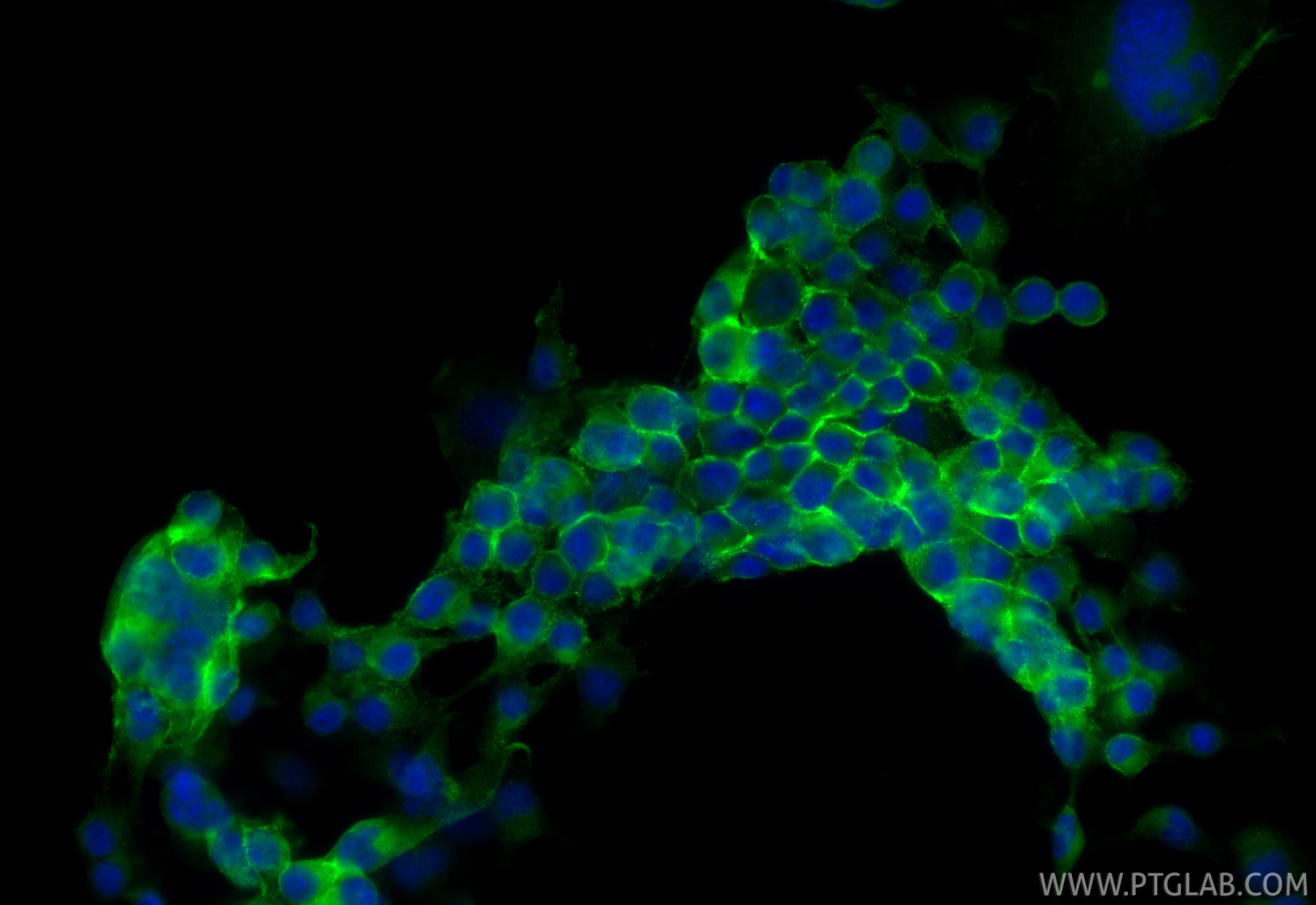
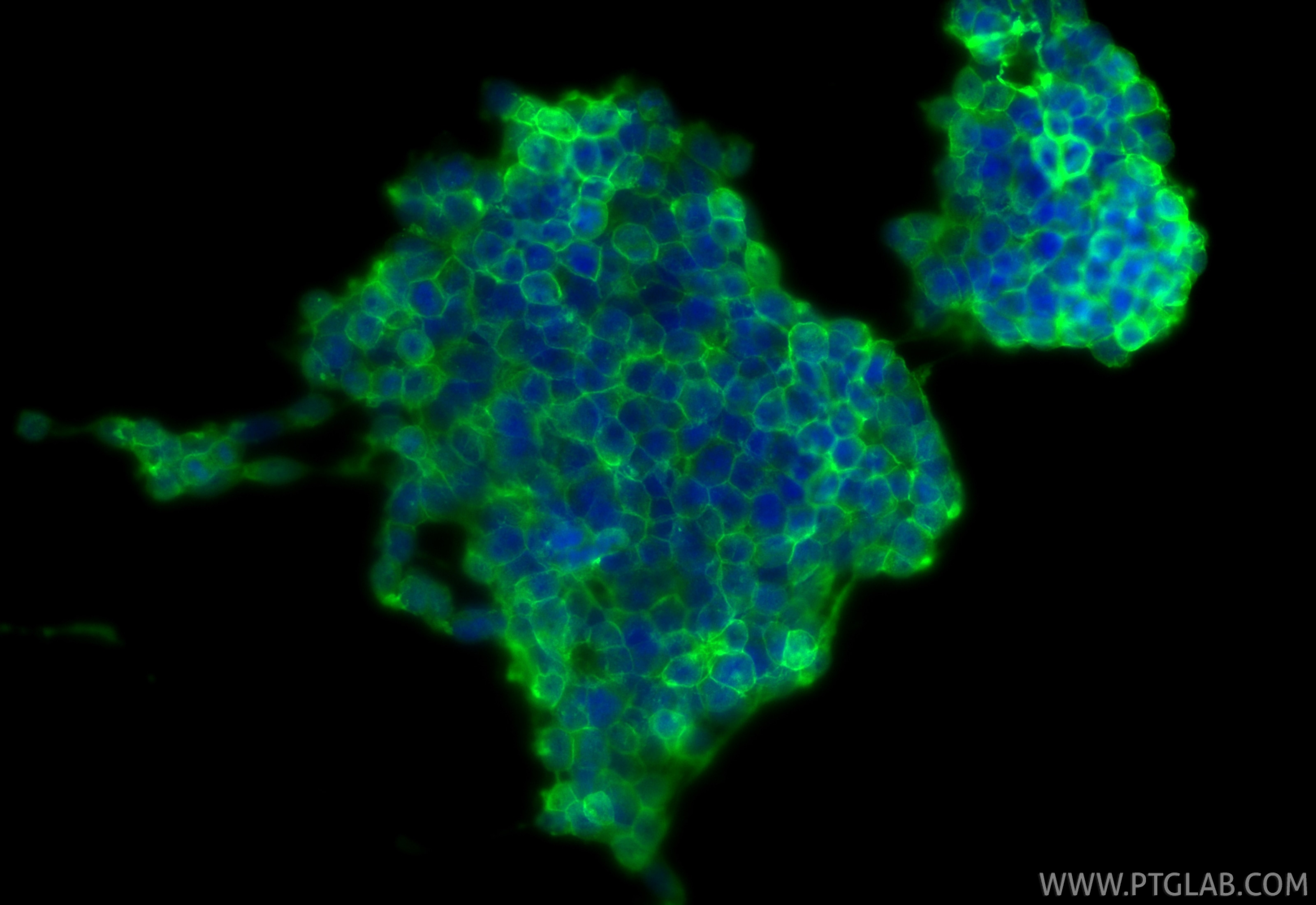
| Positive IF/ICC detected in | SH-SY5Y cells |
Recommended dilution
| Application | Dilution |
|---|---|
| Western Blot (WB) | WB : 1:2000-1:10000 |
| Immunoprecipitation (IP) | IP : 0.5-4.0 ug for 1.0-3.0 mg of total protein lysate |
| Immunohistochemistry (IHC) | IHC : 1:50-1:500 |
| Immunofluorescence (IF)-P | IF-P : 1:50-1:500 |
| Immunofluorescence (IF)/ICC | IF/ICC : 1:200-1:800 |
| It is recommended that this reagent should be titrated in each testing system to obtain optimal results. | |
| Sample-dependent, Check data in validation data gallery. | |
Product Information
16971-1-AP targets GAP43 in WB, IHC, IF/ICC, IF-P, IP, CoIP, ELISA applications and shows reactivity with human, mouse, rat samples.
| Tested Reactivity | human, mouse, rat |
| Cited Reactivity | human, mouse, rat, pig, canine, zebrafish, hamster, gekko japonicus |
| Host / Isotype | Rabbit / IgG |
| Class | Polyclonal |
| Type | Antibody |
| Immunogen |
CatNo: Ag9294 Product name: Recombinant human GAP43 protein Source: e coli.-derived, PET28a Tag: 6*His Domain: 1-238 aa of BC007936 Sequence: MLCCMRRTKQVEKNDDDQKIEQDGIKPEDKAHKAATKIQASFRGHITRKKLKGEKKDDVQAAEAEANKKDEAPVADGVEKKGEGTTTAEAAPATGSKPDEPGKAGETPSEEKKGEGDAATEQAAPQAPASSEEKAGSAETESATKASTDNSPSSKAEDAPAKEEPKQADVPAAVTAAAATTPAAEDAAAKATAQPPTETGESSQAEENIEAVDETKPKESARQDEGKEEEPEADQEHA Predict reactive species |
| Full Name | growth associated protein 43 |
| Calculated Molecular Weight | 238 aa, 25 kDa |
| Observed Molecular Weight | 43 kDa |
| GenBank Accession Number | BC007936 |
| Gene Symbol | GAP43 |
| Gene ID (NCBI) | 2596 |
| RRID | AB_2278881 |
| Conjugate | Unconjugated |
| Form | Liquid |
| Purification Method | Antigen affinity purification |
| UNIPROT ID | P17677 |
| Storage Buffer | PBS with 0.02% sodium azide and 50% glycerol, pH 7.3. |
| Storage Conditions | Store at -20°C. Stable for one year after shipment. Aliquoting is unnecessary for -20oC storage. 20ul sizes contain 0.1% BSA. |
Background Information
The neuronal growth-associated protein GAP43 is known as neuromodulin, B-50, P-57, F1, and pp46. Deficiency of GAP43 in mice results in death early in the postnatal period. GAP43 is one of the main substrates for protein kinase C in the brain. GAP43 is an intracellular growth-associated protein that appears to assist neuronal pathfinding and branching during development and regeneration and may contribute to presynaptic membrane changes in the adult, leading to neurotransmitter release, endocytosis, and synaptic vesicle recycling, long-term potentiation, spatial memory formation, and learning. The predicted molecular weight of about 25 kDa is much lower than the apparent observed molecular weight of 43 kDa on SDS-PAGE gels, and this occurs because the highly charged nature of GAP43 causes it to bind less than the average amount of SDS per amino acid, and because the protein has an elongated structure.
Protocols
| Product Specific Protocols | |
|---|---|
| IF protocol for GAP43 antibody 16971-1-AP | Download protocol |
| IHC protocol for GAP43 antibody 16971-1-AP | Download protocol |
| IP protocol for GAP43 antibody 16971-1-AP | Download protocol |
| WB protocol for GAP43 antibody 16971-1-AP | Download protocol |
| Standard Protocols | |
|---|---|
| Click here to view our Standard Protocols |
Publications
What published studies show
GAP43 Polyclonal Antibody (16971-1-AP)
This antibody has 107 citations. It appears in leading journals including Bioactive Materials, Bone Research, Nature Communications, Journal of Nanobiotechnology, Advanced Science, Science Advances, Biomaterials, Small, Journal of Neuroinflammation, Phytomedicine, and Experimental Neurology, among others.
The associated research spans neuroscience and nerve regeneration, spinal cord and peripheral nerve injury repair, brain injury and ischemia, synaptic plasticity and cognitive function, neurodevelopment and neurotoxicity, and neuroinflammation, applied mainly via WB, IHC, and IF across multiple species.
| Species | Application | Title |
|---|---|---|
Bioact Mater Exosomes-loaded electroconductive nerve dressing for nerve regeneration and pain relief against diabetic peripheral nerve injury | ||
Bioact Mater Bioprinting of live platelet-loaded nerve conduit using energy-dissipative hydrogel. | ||
Bone Res Inhibition of sympathetic tone via hypothalamic descending pathway propagates glucocorticoid-induced endothelial impairment and osteonecrosis of the femoral head | ||
J Nanobiotechnology A pH-inspired hydrogel enables real-time monitoring and precise treatment of diabetic wounds. | ||
J Nanobiotechnology Biodegradable nano black phosphorus based SDF1-α delivery system ameliorates Erectile Dysfunction in a cavernous nerve injury rat model by recruiting endogenous stem/progenitor cells |
Reviews
What customers say
Able is busy answering your previous question. Please try again later.
The reviews below have been submitted by verified Proteintech customers who received an incentive for providing their feedback.
Azita (Verified Customer) (05-31-2021) | Human primary cortical neurons was labelled with 1/500 GAP43. Very strong labelling.
 |


