
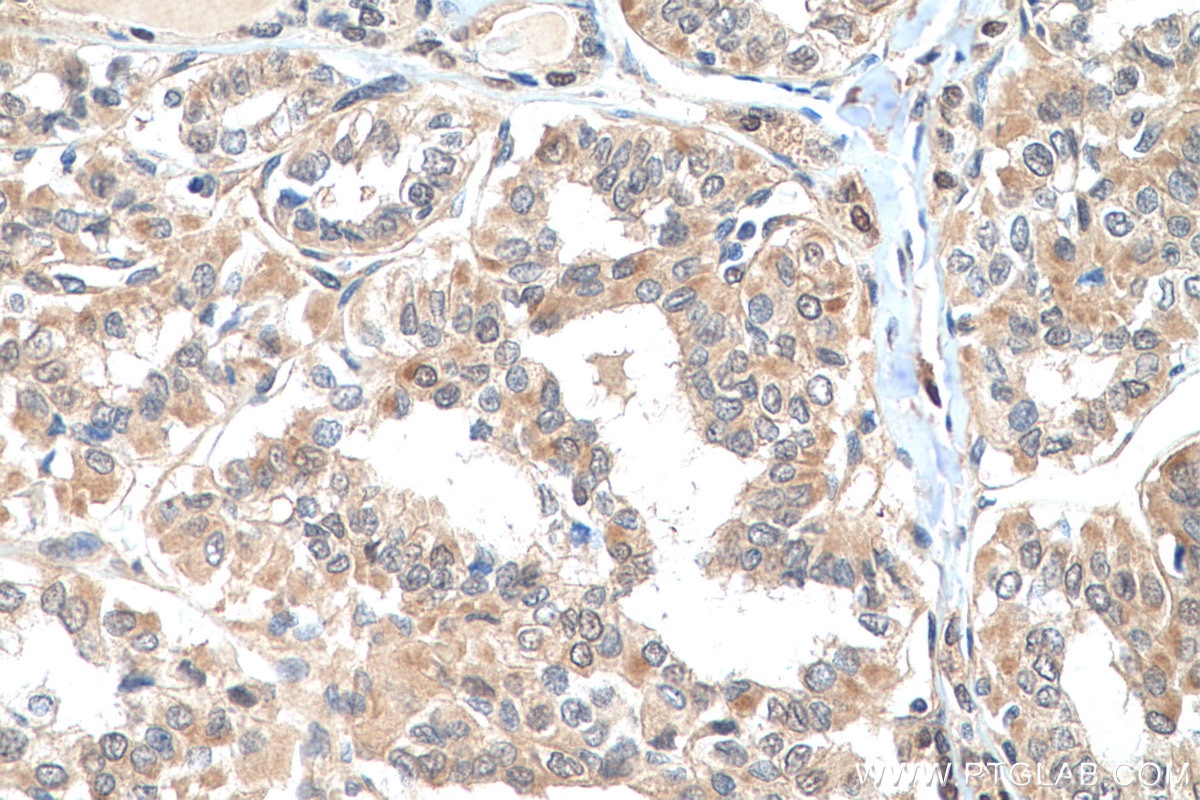

Tested Applications
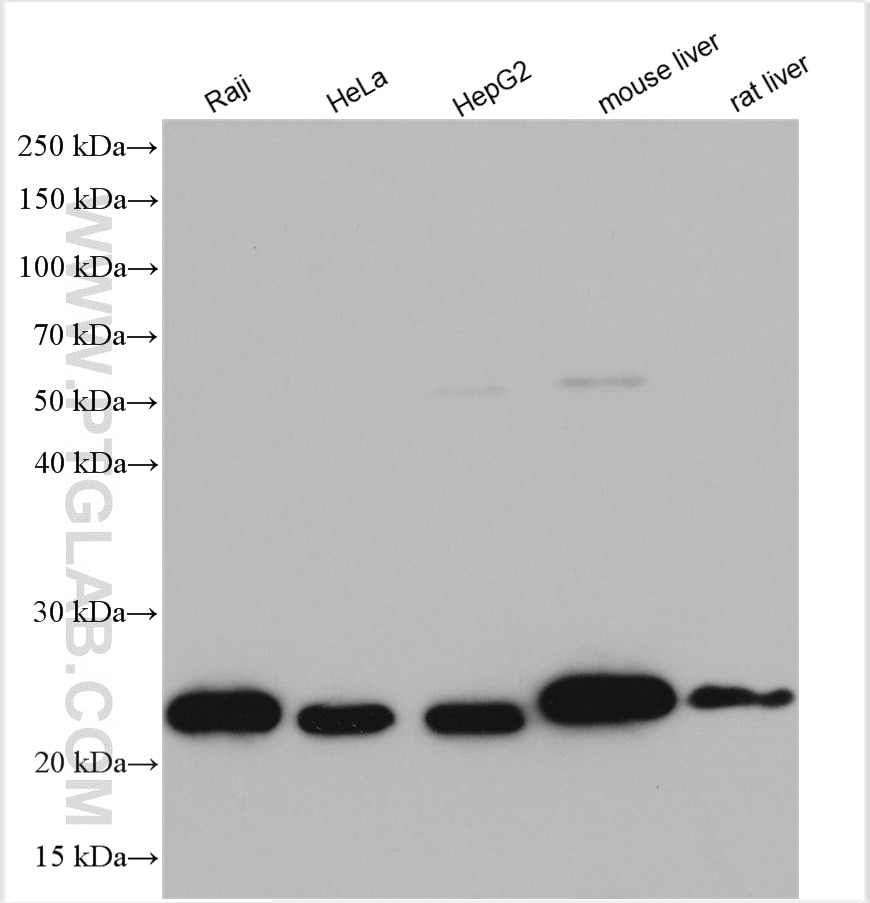
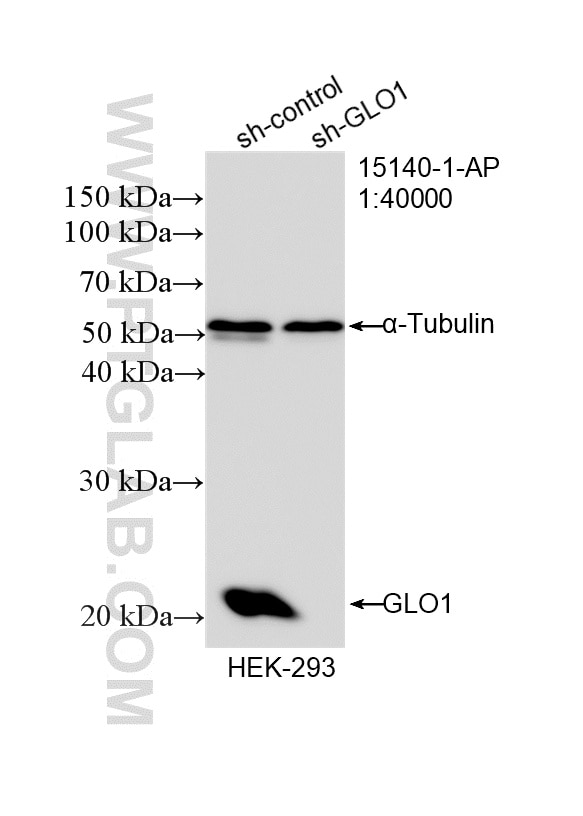
| Positive WB detected in | Raji cells, HEK-293 cells, HeLa cells, rat liver tissue, HepG2 cells, mouse liver tissue |
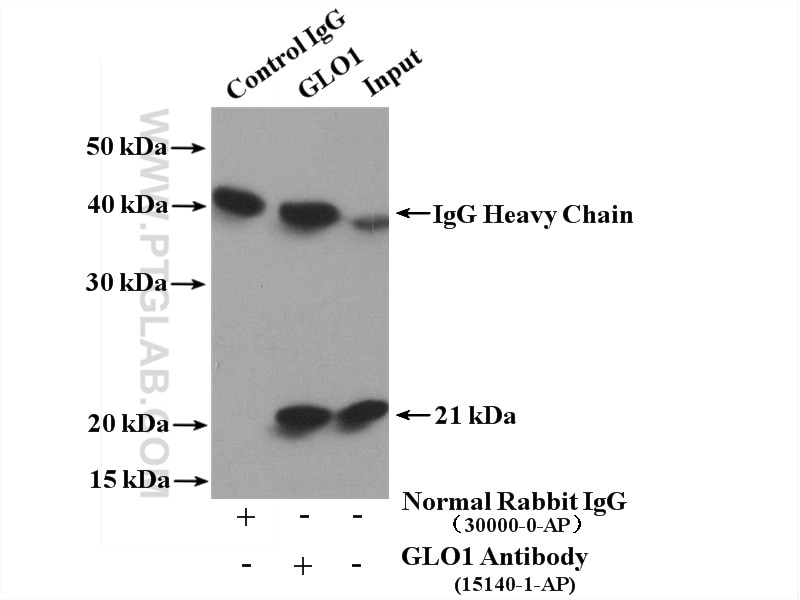
| Positive IP detected in | HepG2 cells |
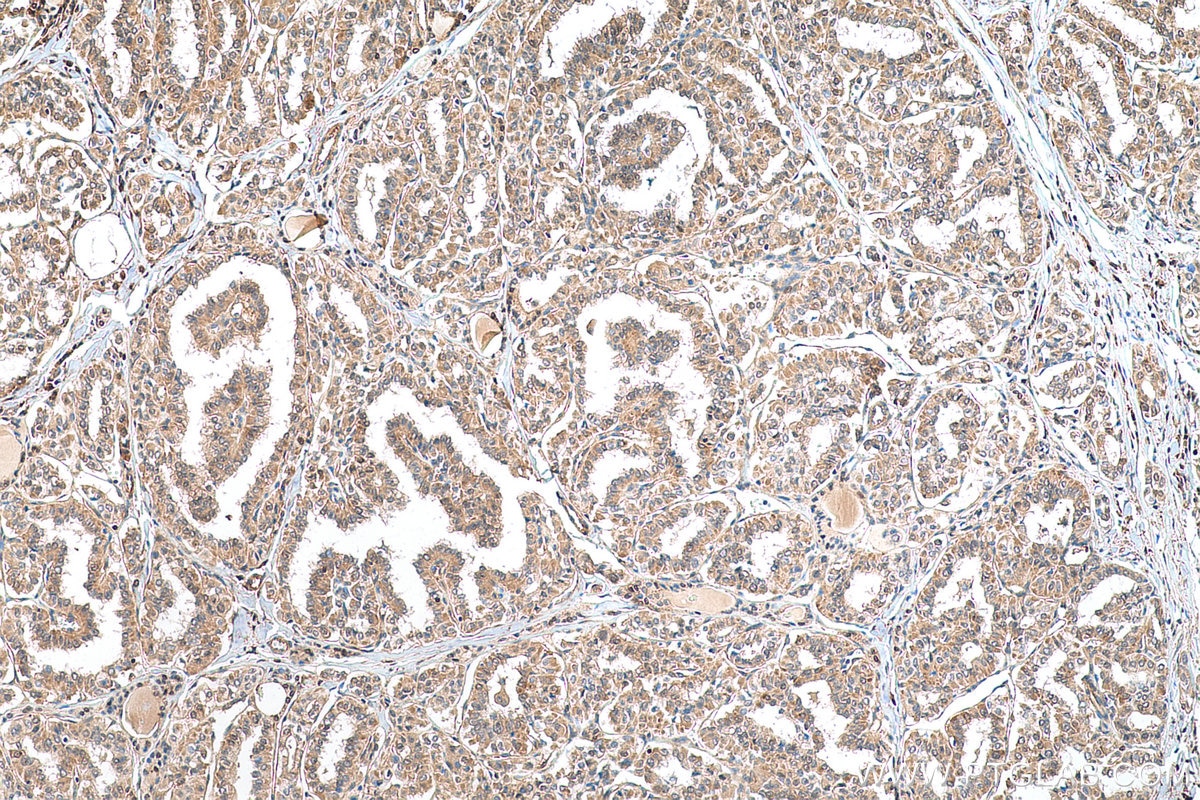
| Positive IHC detected in | human thyroid cancer tissue Note: suggested antigen retrieval with TE buffer pH 9.0; (*) Alternatively, antigen retrieval may be performed with citrate buffer pH 6.0 |
Recommended dilution
| Application | Dilution |
|---|---|
| Western Blot (WB) | WB : 1:2000-1:10000 |
| Immunoprecipitation (IP) | IP : 0.5-4.0 ug for 1.0-3.0 mg of total protein lysate |
| Immunohistochemistry (IHC) | IHC : 1:200-1:1000 |
| It is recommended that this reagent should be titrated in each testing system to obtain optimal results. | |
| Sample-dependent, Check data in validation data gallery. | |
Product Information
15140-1-AP targets GLO1 in WB, IHC, IF, IP, ELISA applications and shows reactivity with human, mouse, rat samples.
| Tested Reactivity | human, mouse, rat |
| Cited Reactivity | human, mouse, rat |
| Host / Isotype | Rabbit / IgG |
| Class | Polyclonal |
| Type | Antibody |
| Immunogen |
CatNo: Ag7314 Product name: Recombinant human GLO1 protein Source: e coli.-derived, PET28a Tag: 6*His Domain: 1-184 aa of BC001741 Sequence: MAEPQPPSGGLTDEAALSCCSDADPSTKDFLLQQTMLRVKDPKKSLDFYTRVLGMTLIQKCDFPIMKFSLYFLAYEDKNDIPKEKDEKIAWALSRKATLELTHNWGTEDDETQSYHNGNSDPRGFGHIGIAVPDVYSACKRFEELGVKFVKKPDDGKMKGLAFIQDPDGYWIEILNPNKMATLM Predict reactive species |
| Full Name | glyoxalase I |
| Calculated Molecular Weight | 21 kDa |
| Observed Molecular Weight | 21-25 kDa |
| GenBank Accession Number | BC001741 |
| Gene Symbol | GLO1 |
| Gene ID (NCBI) | 2739 |
| RRID | AB_2109890 |
| Conjugate | Unconjugated |
| Form | Liquid |
| Purification Method | Antigen affinity purification |
| UNIPROT ID | Q04760 |
| Storage Buffer | PBS with 0.02% sodium azide and 50% glycerol, pH 7.3. |
| Storage Conditions | Store at -20°C. Stable for one year after shipment. Aliquoting is unnecessary for -20oC storage. 20ul sizes contain 0.1% BSA. |
Background Information
Glo1 is known to play a role in many diseases including diabetes mellitus, Alzheimer's disease, and cancer. The molecular mass of the dimer was 46 kDa determined by gel permeation chromatography.
Protocols
| Product Specific Protocols | |
|---|---|
| IHC protocol for GLO1 antibody 15140-1-AP | Download protocol |
| IP protocol for GLO1 antibody 15140-1-AP | Download protocol |
| WB protocol for GLO1 antibody 15140-1-AP | Download protocol |
| Standard Protocols | |
|---|---|
| Click here to view our Standard Protocols |
Publications
What published studies show
The GLO1 Polyclonal antibody (Cat# 15140-1-AP) has 19 citations published in journals including Advanced Science, Brain, Pharmacological Research, Phytomedicine, Free Radical Biology and Medicine, Journal of Ethnopharmacology, Frontiers in Pharmacology, Oncology Reports, and others. Research fields span diabetic nephropathy, breast cancer metastasis, amyotrophic lateral sclerosis, brain aging, diabetic liver injury, ferroptosis, prostate cancer, stem cell biology, and chronic lymphocytic leukemia, with most studies utilizing Western blot in human, mouse, and rat models.
| Species | Application | Title |
|---|---|---|
Adv Sci (Weinh) Canagliflozin Alleviates Diabetic Glomerular Endothelial Injury via Melibiose in a Microbiota-Dependent Manner.
| ||
Adv Sci (Weinh) Paracrine Orchestration of Tumor Microenvironment Remodeling Induced by GLO1 Potentiates Lymph Node Metastasis in Breast Cancer | ||
Brain C9orf72 expansion within astrocytes reduces metabolic flexibility in amyotrophic lateral sclerosis. | ||
Pharmacol Res Inulin-type fructans change the gut microbiota and prevent the development of diabetic nephropathy. | ||
Phytomedicine Lithocarpus litseifolius and trilobatin ameliorate diabetic nephropathy through alleviating carbonyl stress by inhibiting AGEs/RAGE/NF-κB pathway. | ||
Phytomedicine Dang-Gui-Bu-Xue decoction against diabetic nephropathy via modulating the carbonyl compounds metabolic profile and AGEs/RAGE pathway |
Reviews
What customers say
Able is busy answering your previous question. Please try again later.
The reviews below have been submitted by verified Proteintech customers who received an incentive for providing their feedback.
Billie (Verified Customer) (07-10-2021) | Strong band at around 25 kDa.
|

