

Tested Applications
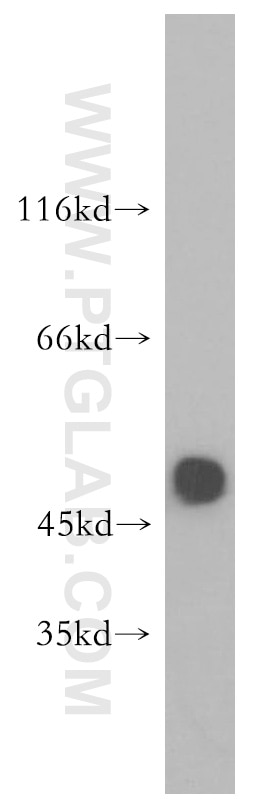
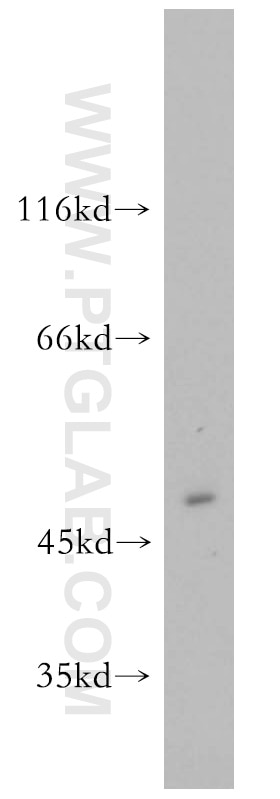
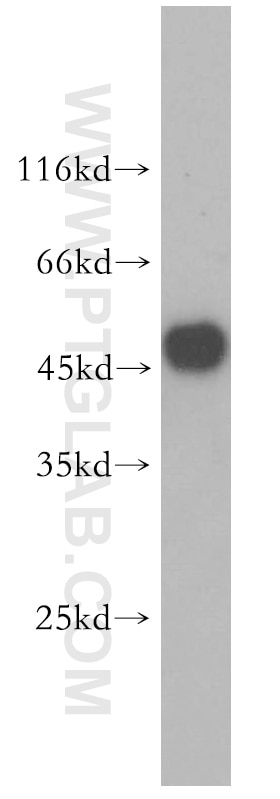
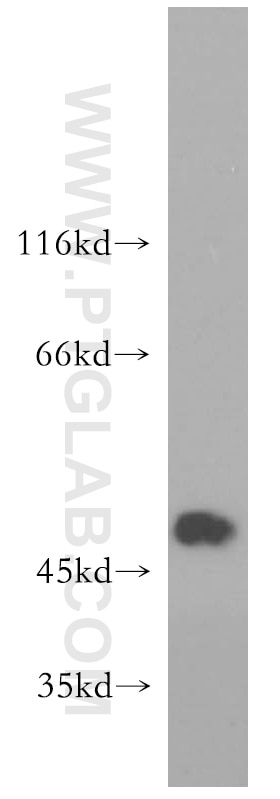
| Positive WB detected in | mouse brain tissue, mouse cerebellum tissue, SH-SY5Y cells |
Recommended dilution
| Application | Dilution |
|---|---|
| Western Blot (WB) | WB : 1:500-1:3000 |
| It is recommended that this reagent should be titrated in each testing system to obtain optimal results. | |
| Sample-dependent, Check data in validation data gallery. | |
Product Information
17951-1-AP targets GLRA1 in WB, IF, CoIP, ELISA applications and shows reactivity with human, mouse, rat samples.
| Tested Reactivity | human, mouse, rat |
| Cited Reactivity | human, mouse |
| Host / Isotype | Rabbit / IgG |
| Class | Polyclonal |
| Type | Antibody |
| Immunogen |
CatNo: Ag12431 Product name: Recombinant human GLRA1 protein Source: e coli.-derived, PGEX-4T Tag: GST Domain: 27-250 aa of BC074980 Sequence: EAARSAPKPMSPSDFLDKLMGRTSGYDARIRPNFKGPPVNVSCNIFINSFGSIAETTMDYRVNIFLRQQWNDPRLAYNEYPDDSLDLDPSMLDSIWKPDLFFANEKGAHFHEITTDNKLLRISRNGNVLYSIRITLTLACPMDLKNFPMDVQTCIMQLESFGYTMNDLIFEWQEQGAVQVADGLTLPQFILKEEKDLRYCTKHYNTGKFTCIEARFHLERQMGY Predict reactive species |
| Full Name | glycine receptor, alpha 1 |
| Calculated Molecular Weight | 449 aa, 52 kDa |
| Observed Molecular Weight | 48 kDa |
| GenBank Accession Number | BC074980 |
| Gene Symbol | GLRA1 |
| Gene ID (NCBI) | 2741 |
| RRID | AB_2110060 |
| Conjugate | Unconjugated |
| Form | Liquid |
| Purification Method | Antigen affinity purification |
| UNIPROT ID | P23415 |
| Storage Buffer | PBS with 0.02% sodium azide and 50% glycerol, pH 7.3. |
| Storage Conditions | Store at -20°C. Stable for one year after shipment. Aliquoting is unnecessary for -20oC storage. 20ul sizes contain 0.1% BSA. |
Background Information
Glycine is an inhibitory neurotransmitter in the central nervous system. The glycine receptor (GlyR) is a member of the nicotinic acetylcholine receptor of ligand-gated ion channels. This receptor has important roles in a variety of physiological processes, especially in mediating inhibitory neurotransmission in the spinal cord and brain stem. GlyR is a pentameric receptor comprised of alpha and beta subunits. Four alpha-subunits (GLRA1, GLRA2, GLRA3, GLRA4) and one beta-subunit (GLRB) of GlyR have been identified. (PMID: 11409700; 15383648)
Protocols
| Product Specific Protocols | |
|---|---|
| WB protocol for GLRA1 antibody 17951-1-AP | Download protocol |
| Standard Protocols | |
|---|---|
| Click here to view our Standard Protocols |
Publications
What published studies show
The GLRA1 Polyclonal antibody (Cat# 17951-1-AP) has 6 citations published in Transl Psychiatry, PLoS Biol, Eur J Pharmacol, Neuropharmacology, J Biol Chem, and Psychopharmacology (Berl). Research fields span glycine receptor biology, neuropharmacology, autism spectrum disorders, hyperekplexia, spinal cord signaling, and depression mechanisms, with applications in WB, CoIP, and IF across mouse and human samples.
| Species | Application | Title |
|---|---|---|
Transl Psychiatry Restoration of NEXMIF expression rescues abnormalities in gene transcription, neuron maturation and autistic-like behaviors in Nexmif knockout mice. | ||
PLoS Biol mGluR5/ERK signaling regulated the phosphorylation and function of glycine receptor α1ins subunit in spinal dorsal horn of mice. | ||
Neuropharmacology Ubiquitination and inhibition of glycine receptor by HUWE1 in spinal cord dorsal horn. | ||
J Biol Chem Clinical, genetic, and functional characterization of the glycine receptor β-subunit A455P variant in a family affected by hyperekplexia syndrome. | ||
Psychopharmacology (Berl) Contribution of skeletal muscular glycine to rapid antidepressant effects of ketamine in an inflammation-induced mouse model of depression. |

