

Tested Applications
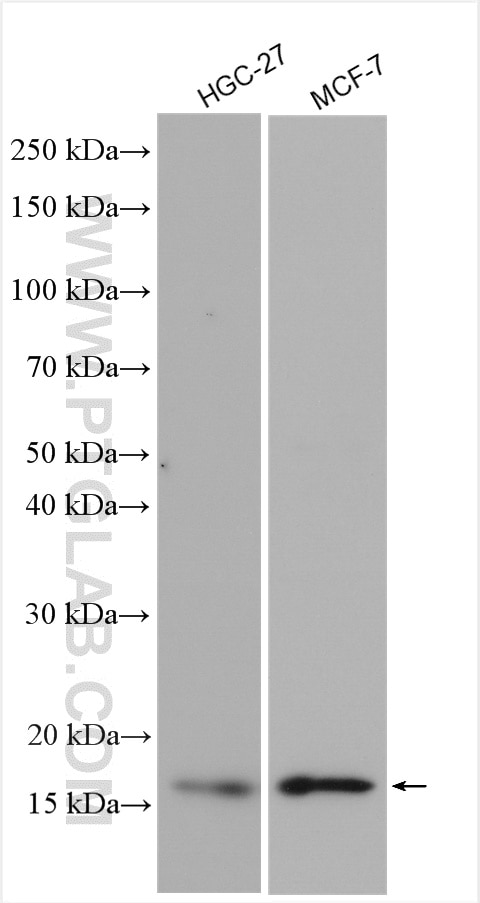
| Positive WB detected in | HGC-27 cells, MCF-7 cells |
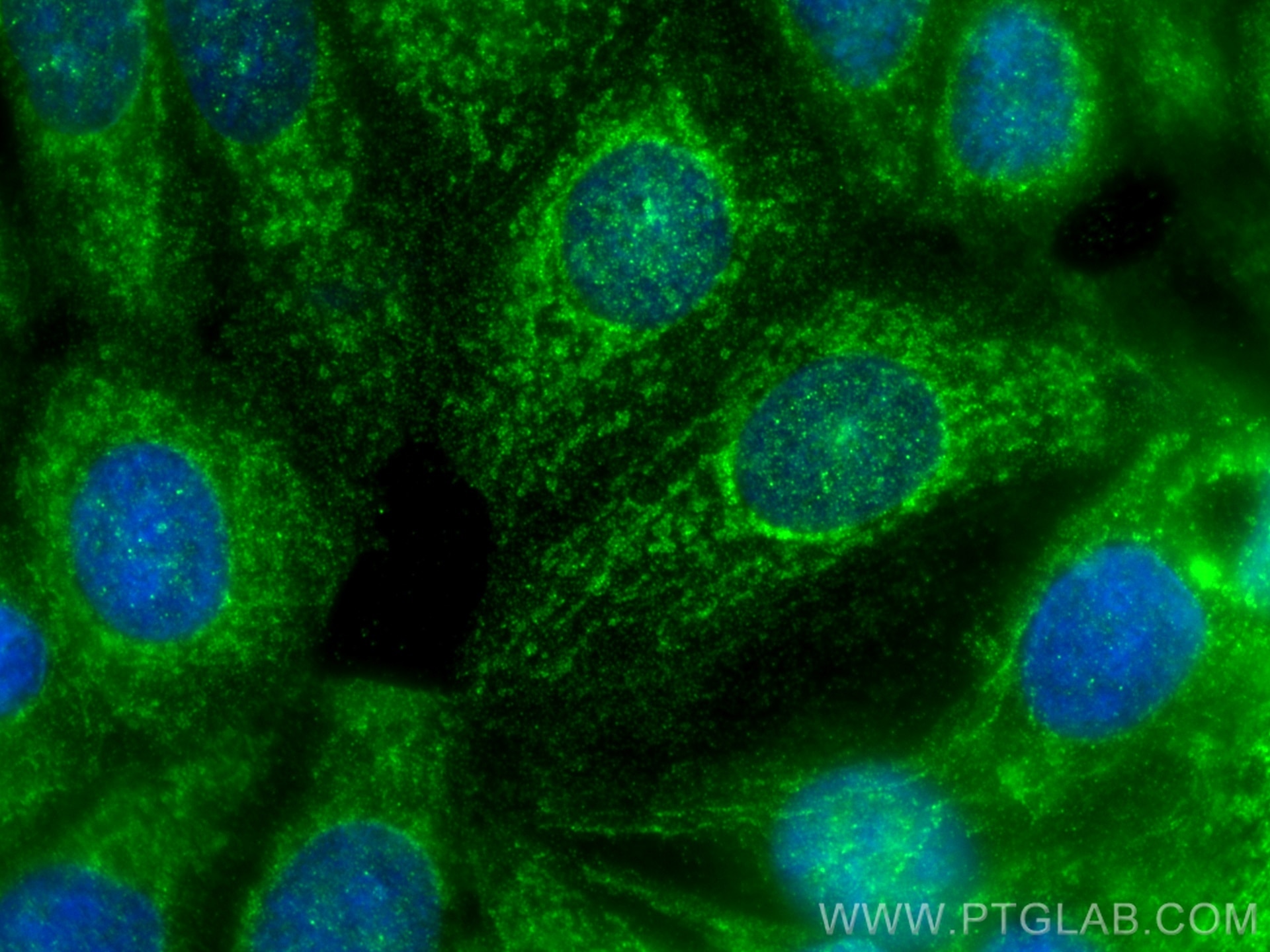
| Positive IF/ICC detected in | MCF-7 cells |
Recommended dilution
| Application | Dilution |
|---|---|
| Western Blot (WB) | WB : 1:500-1:2000 |
| Immunofluorescence (IF)/ICC | IF/ICC : 1:200-1:800 |
| It is recommended that this reagent should be titrated in each testing system to obtain optimal results. | |
| Sample-dependent, Check data in validation data gallery. | |
Product Information
13381-1-AP targets GLRX2 in WB, IF/ICC, ELISA applications and shows reactivity with human, mouse, rat samples.
| Tested Reactivity | human, mouse, rat |
| Cited Reactivity | human, mouse, rat |
| Host / Isotype | Rabbit / IgG |
| Class | Polyclonal |
| Type | Antibody |
| Immunogen |
CatNo: Ag4218 Product name: Recombinant human GLRX2 protein Source: e coli.-derived, PGEX-4T Tag: GST Domain: 1-148 aa of BC028113 Sequence: RSGSAGWLDRAAGAAGAAAAAASGMESNTSSSLENLATAPVNQIQETISDNCVVIFSKTSCSYCTMAKKLFHDMNVNYKVVELDLLEYGNQFQDALYKMTGERTVPRIFVNGTFIGGATDTHRLHKEGKLLPLVHQCYLKKSKRKEFQ Predict reactive species |
| Full Name | glutaredoxin 2 |
| Calculated Molecular Weight | 164 aa, 18 kDa |
| Observed Molecular Weight | 16 kDa |
| GenBank Accession Number | BC028113 |
| Gene Symbol | GLRX2 |
| Gene ID (NCBI) | 51022 |
| RRID | AB_10643373 |
| Conjugate | Unconjugated |
| Form | Liquid |
| Purification Method | Antigen affinity purification |
| UNIPROT ID | Q9NS18 |
| Storage Buffer | PBS with 0.02% sodium azide and 50% glycerol, pH 7.3. |
| Storage Conditions | Store at -20°C. Stable for one year after shipment. Aliquoting is unnecessary for -20oC storage. 20ul sizes contain 0.1% BSA. |
Background Information
GLRX2(Glutaredoxin-2) is also named as GRX2 and belongs to the glutaredoxin family. It facilitates the maintenance of cellular redox homeostasis upon treatment with apoptotic agents, thereby preventing cardiolipin oxidation and cytochrome C release. The GLRX2, which exists in a dynamic equilibrium of enzymatically active monomers and quiescent dimers,is a 16-kDa protein directed either to the nucleus or to the mitochondria through differential splicing of the first exon(PMID: 17121859). It has 2 isoforms produced by alternative splicing.
Protocols
| Product Specific Protocols | |
|---|---|
| IF protocol for GLRX2 antibody 13381-1-AP | Download protocol |
| WB protocol for GLRX2 antibody 13381-1-AP | Download protocol |
| Standard Protocols | |
|---|---|
| Click here to view our Standard Protocols |
Publications
What published studies show
The GLRX2 Polyclonal antibody (catalog number 13381-1-AP) has 12 citations. These appear in journals including Redox Biology, Free Radical Biology and Medicine, Biochemical Pharmacology, International Immunopharmacology, Investigative Ophthalmology & Visual Science, Journal of Biological Chemistry, Journal of Physiological Sciences, Brain Research, Experimental Eye Research, eLife, and Biology of Reproduction. The research fields span redox biology, oxidative stress, ferroptosis, diabetes and glucose metabolism, mitochondrial function, cardioprotection, cataractogenesis, neuroprotection, and reproductive biology.
| Species | Application | Title |
|---|---|---|
Redox Biol RSL3 sensitizes glioma cells to ionizing radiation by suppressing TGM2-dependent DNA damage repair and epithelial-mesenchymal transition | ||
Free Radic Biol Med Glutaredoxins concomitant with optimal ROS activate AMPK through S-glutathionylation to improve glucose metabolism in type 2 diabetes.
| ||
Free Radic Biol Med Compartmentally scavenging hepatic oxidants through AMPK/SIRT3-PGC1α axis improves mitochondrial biogenesis and glucose catabolism. | ||
Biochem Pharmacol Mrps15/Mrps21 induced by Zhx1 protects mice from hypertensive heart disease by restoring mitochondrial translation. | ||
Int Immunopharmacol Glutaredoxin 2 protects cardiomyocytes from hypoxia/reoxygenation-induced injury by suppressing apoptosis, oxidative stress, and inflammation via enhancing Nrf2 signaling. | ||
Invest Ophthalmol Vis Sci Glutaredoxin 2 Protects Lens Epithelial Cells From Ferroptosis by Preventing HNRNPA2B1 S-Glutathionylation in Diabetes-Mediated Cataractogenesis.
|

