

Tested Applications
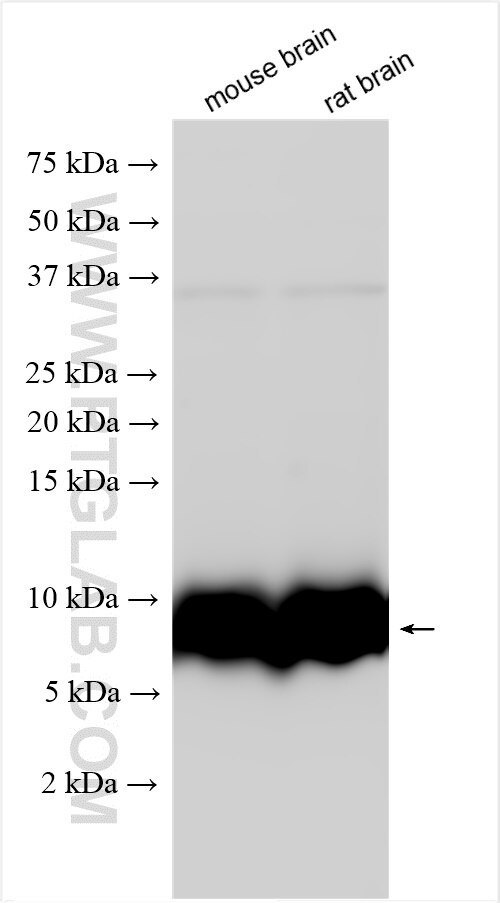
| Positive WB detected in | mouse brain tissue, rat brain tissue |
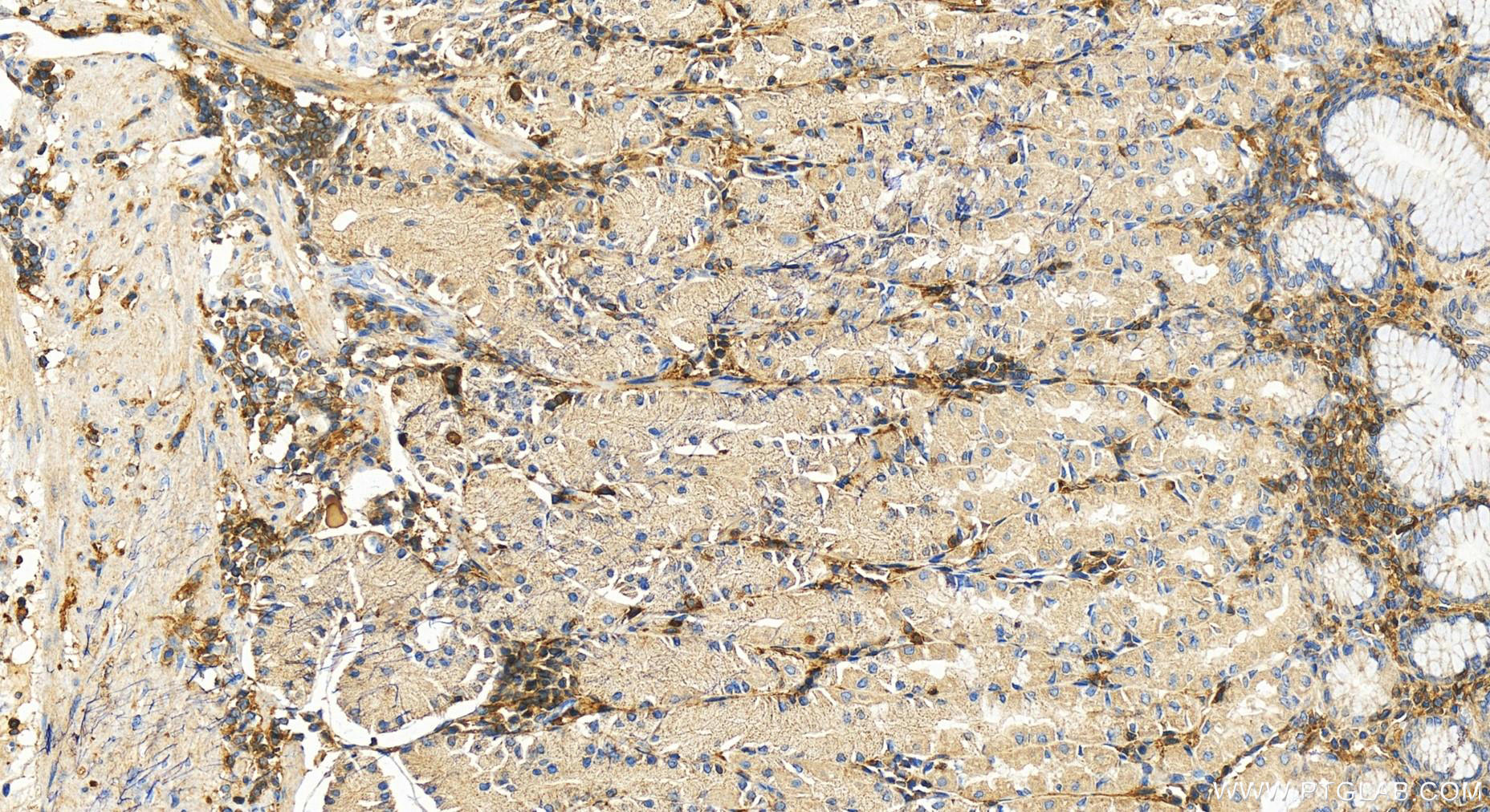
| Positive IHC detected in | human stomach tissue Note: suggested antigen retrieval with TE buffer pH 9.0; (*) Alternatively, antigen retrieval may be performed with citrate buffer pH 6.0 |
Recommended dilution
| Application | Dilution |
|---|---|
| Western Blot (WB) | WB : 1:1000-1:6000 |
| Immunohistochemistry (IHC) | IHC : 1:200-1:800 |
| It is recommended that this reagent should be titrated in each testing system to obtain optimal results. | |
| Sample-dependent, Check data in validation data gallery. | |
Product Information
11693-1-AP targets GNG2 in WB, IHC, CoIP, ELISA applications and shows reactivity with human, mouse, rat samples.
| Tested Reactivity | human, mouse, rat |
| Cited Reactivity | human, mouse |
| Host / Isotype | Rabbit / IgG |
| Class | Polyclonal |
| Type | Antibody |
| Immunogen |
CatNo: Ag2307 Product name: Recombinant human GNG2 protein Source: e coli.-derived, PGEX-4T Tag: GST Domain: 1-71 aa of BC020774 Sequence: MASNNTASIAQARKLVEQLKMEANIDRIKVSKAAADLMAYCEAHAKEDPLLTPVPASENPFREKKFFCAIL Predict reactive species |
| Full Name | guanine nucleotide binding protein (G protein), gamma 2 |
| Calculated Molecular Weight | 71 aa, 8 kDa |
| Observed Molecular Weight | 8 kDa |
| GenBank Accession Number | BC020774 |
| Gene Symbol | GNG2 |
| Gene ID (NCBI) | 54331 |
| RRID | AB_2263277 |
| Conjugate | Unconjugated |
| Form | Liquid |
| Purification Method | Antigen affinity purification |
| UNIPROT ID | P59768 |
| Storage Buffer | PBS with 0.02% sodium azide and 50% glycerol, pH 7.3. |
| Storage Conditions | Store at -20°C. Stable for one year after shipment. Aliquoting is unnecessary for -20oC storage. 20ul sizes contain 0.1% BSA. |
Background Information
Gγ2 subunit (Gng2/GNG2) is one of subunits of the Gβγ-dimer composing heterotrimeric G protein with a Gα-subunit. Heterotrimeric G protein has been reported to be involved in various biological activities including cell proliferation, differentiation, invasion and angiogenesis. It is expressed in a range of foetal tissues as well as adult testis, adrenal gland, brain, white blood cells and lung.
Protocols
| Product Specific Protocols | |
|---|---|
| IHC protocol for GNG2 antibody 11693-1-AP | Download protocol |
| WB protocol for GNG2 antibody 11693-1-AP | Download protocol |
| Standard Protocols | |
|---|---|
| Click here to view our Standard Protocols |
Publications
What published studies show
The GNG2 Polyclonal antibody (Cat# 11693-1-AP) has 5 total citations. These appear in Journal of Dermatological Science, iScience, ACS Pharmacology & Translational Science, and American Journal of Cancer Research (×2). The research fields span malignant melanoma biology, G protein-coupled receptor signaling (Gβ subunit function), and antimalarial drug target identification. Applications cited include Western blot, co-immunoprecipitation, and immunohistochemistry, primarily in human and mouse samples.
| Species | Application | Title |
|---|---|---|
iScience Identification of antimalarial drugs and bradykinin as ligands of the Plasmodium membrane protein PfSR10. | ||
ACS Pharmacol Transl Sci Critical Residues in the Gβ Subunit Mediate Selective Recruitment of the Gαq Heterotrimer to Activated G Protein-Coupled Receptors. | ||
Am J Cancer Res GNG2 inhibits invasion of human malignant melanoma cells with decreased FAK activity.
| ||
Am J Cancer Res Reduced GNG2 expression levels in mouse malignant melanomas and human melanoma cell lines. |

