

Tested Applications
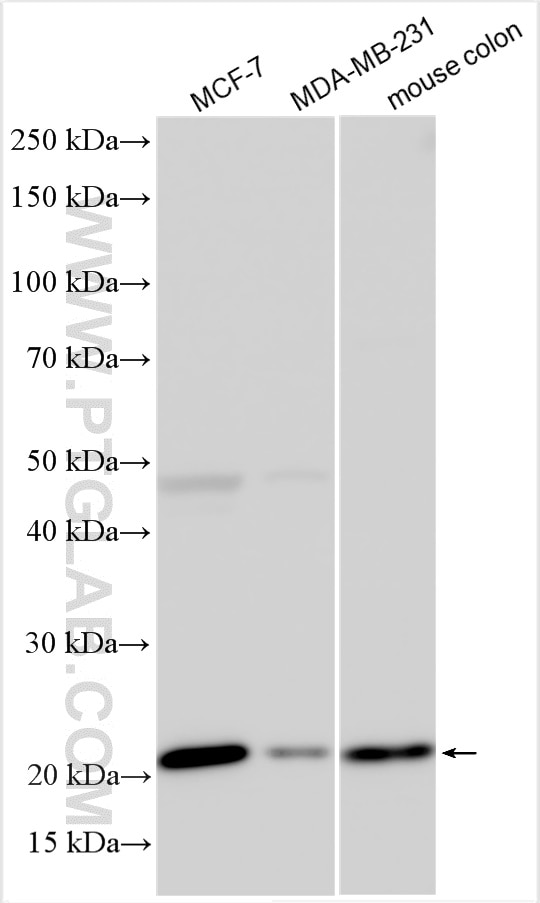
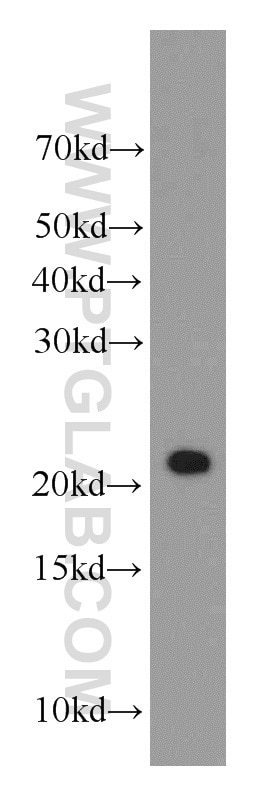
| Positive WB detected in | MCF-7 cells, mouse large intestine tissue, MDA-MB-231 cells, mouse colon tissue |
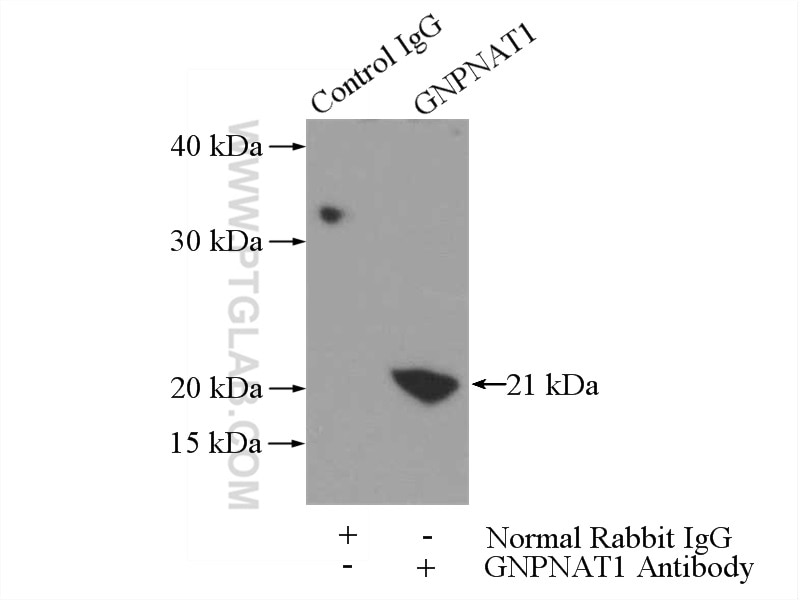
| Positive IP detected in | mouse large intestine tissue |
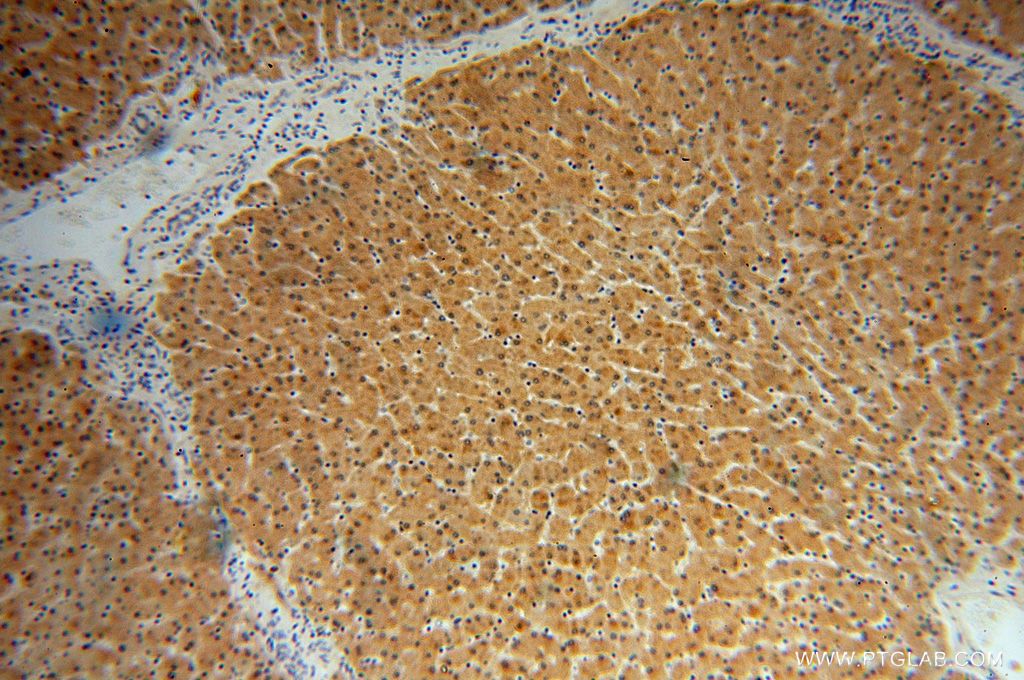
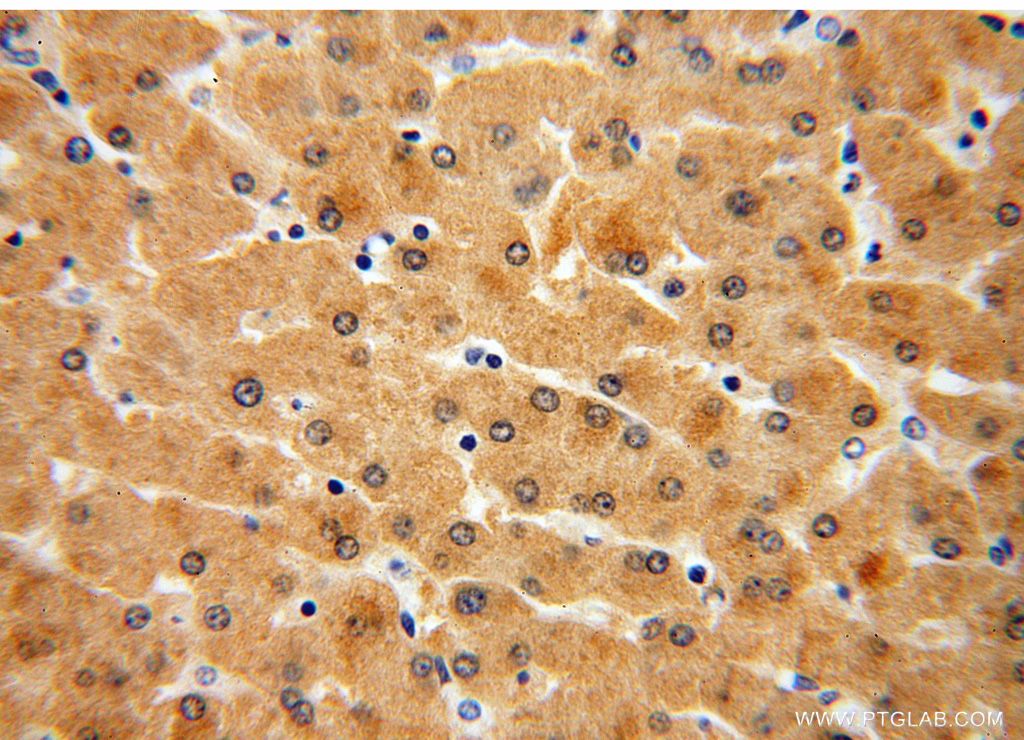
| Positive IHC detected in | human liver tissue Note: suggested antigen retrieval with TE buffer pH 9.0; (*) Alternatively, antigen retrieval may be performed with citrate buffer pH 6.0 |
Recommended dilution
| Application | Dilution |
|---|---|
| Western Blot (WB) | WB : 1:500-1:1000 |
| Immunoprecipitation (IP) | IP : 0.5-4.0 ug for 1.0-3.0 mg of total protein lysate |
| Immunohistochemistry (IHC) | IHC : 1:20-1:200 |
| It is recommended that this reagent should be titrated in each testing system to obtain optimal results. | |
| Sample-dependent, Check data in validation data gallery. | |
Product Information
16282-1-AP targets GNPNAT1 in WB, IHC, IF, IP, ELISA applications and shows reactivity with human, mouse, rat samples.
| Tested Reactivity | human, mouse, rat |
| Cited Reactivity | human, mouse |
| Host / Isotype | Rabbit / IgG |
| Class | Polyclonal |
| Type | Antibody |
| Immunogen |
CatNo: Ag9375 Product name: Recombinant human GNPNAT1 protein Source: e coli.-derived, PET28a Tag: 6*His Domain: 1-184 aa of BC012179 Sequence: MKPDETPMFDPSLLKEVDWSQNTATFSPAISPTHPGEGLVLRPLCTADLNRGFFKVLGQLTETGVVSPEQFMKSFEHMKKSGDYYVTVVEDVTLGQIVATATLIIEHKFIHSCAKRGRVEDVVVSDECRGKQLGKLLLSTLTLLSKKLNCYKITLECLPQNVGFYKKFGYTVSEENYMCRRFLK Predict reactive species |
| Full Name | glucosamine-phosphate N-acetyltransferase 1 |
| Calculated Molecular Weight | 184 aa, 21 kDa |
| Observed Molecular Weight | 21-23 kDa |
| GenBank Accession Number | BC012179 |
| Gene Symbol | GNPNAT1 |
| Gene ID (NCBI) | 64841 |
| RRID | AB_2110243 |
| Conjugate | Unconjugated |
| Form | Liquid |
| Purification Method | Antigen affinity purification |
| UNIPROT ID | Q96EK6 |
| Storage Buffer | PBS with 0.02% sodium azide and 50% glycerol, pH 7.3. |
| Storage Conditions | Store at -20°C. Stable for one year after shipment. Aliquoting is unnecessary for -20oC storage. 20ul sizes contain 0.1% BSA. |
Background Information
Glucosamine-6 phosphate-N-acetyl Transferase (GNPNAT1) is a key enzyme in the hexosamine biosynthetic pathway. It converts D-glucosamine 6-phosphate to N-acetyl-D-glucosamine 6-phosphate, the acetylation step allowing carbon and nitrogen enter into the hexosamine biosynthetic pathway. Recently inhibition of GNPNAT1 has been reported to promote proliferation and aggressiveness of castration-resistant prostate cancer. (27194471) GNPNAT1 is a small dimeric protein localized in the Golgi and endosome membranes.
Protocols
| Product Specific Protocols | |
|---|---|
| IHC protocol for GNPNAT1 antibody 16282-1-AP | Download protocol |
| IP protocol for GNPNAT1 antibody 16282-1-AP | Download protocol |
| WB protocol for GNPNAT1 antibody 16282-1-AP | Download protocol |
| Standard Protocols | |
|---|---|
| Click here to view our Standard Protocols |
Publications
What published studies show
The GNPNAT1 Polyclonal antibody (Cat# 16282-1-AP) has 13 citations published in journals including Cell Research, Nature Communications, Science Advances, Cell Communication and Signaling, Frontiers in Immunology, International Journal of Molecular Sciences, and Frontiers in Molecular Biosciences. Research fields span the hexosamine biosynthetic pathway, pyroptosis, prostate cancer, breast cancer, lung adenocarcinoma, brain tumors, diabetes nephropathy, frontotemporal dementia, and pan-cancer biomarker analysis.
| Species | Application | Title |
|---|---|---|
Cell Res Mannose antagonizes GSDME-mediated pyroptosis through AMPK activated by metabolite GlcNAc-6P | ||
Nat Commun Inhibition of the hexosamine biosynthetic pathway promotes castration-resistant prostate cancer.
| ||
Sci Adv Targeting PGM3 abolishes SREBP-1 activation-hexosamine synthesis feedback regulation to effectively suppress brain tumor growth | ||
Cell Commun Signal The hexosamine biosynthetic pathway alters the cytoskeleton to modulate cell proliferation and migration in aggressive prostate cancer.
| ||
Front Immunol Risk stratification based on DNA damage-repair-related signature reflects the microenvironmental feature, metabolic status and therapeutic response of breast cancer | ||
Front Immunol GNPNAT1 is a potential biomarker correlated with immune infiltration and immunotherapy outcome in breast cancer |

