

Tested Applications
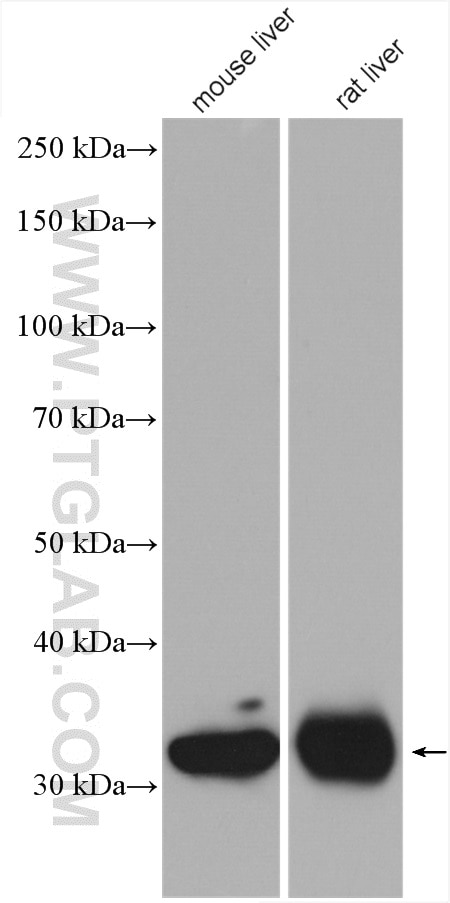
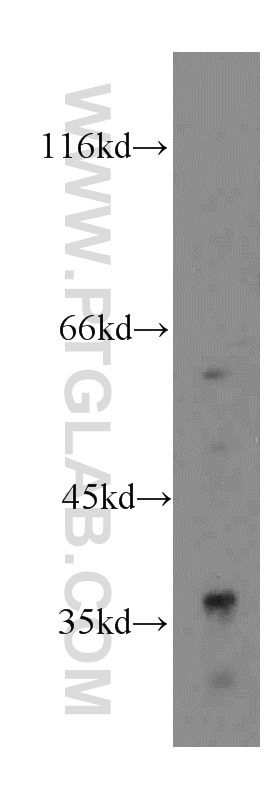
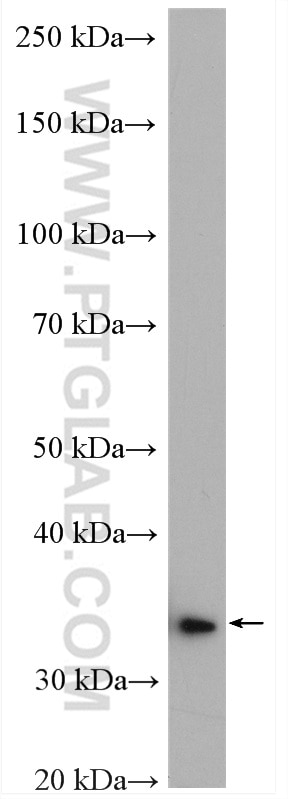
| Positive WB detected in | mouse liver tissue, HepG2 cells, mouse heart tissue, rat liver tissue |
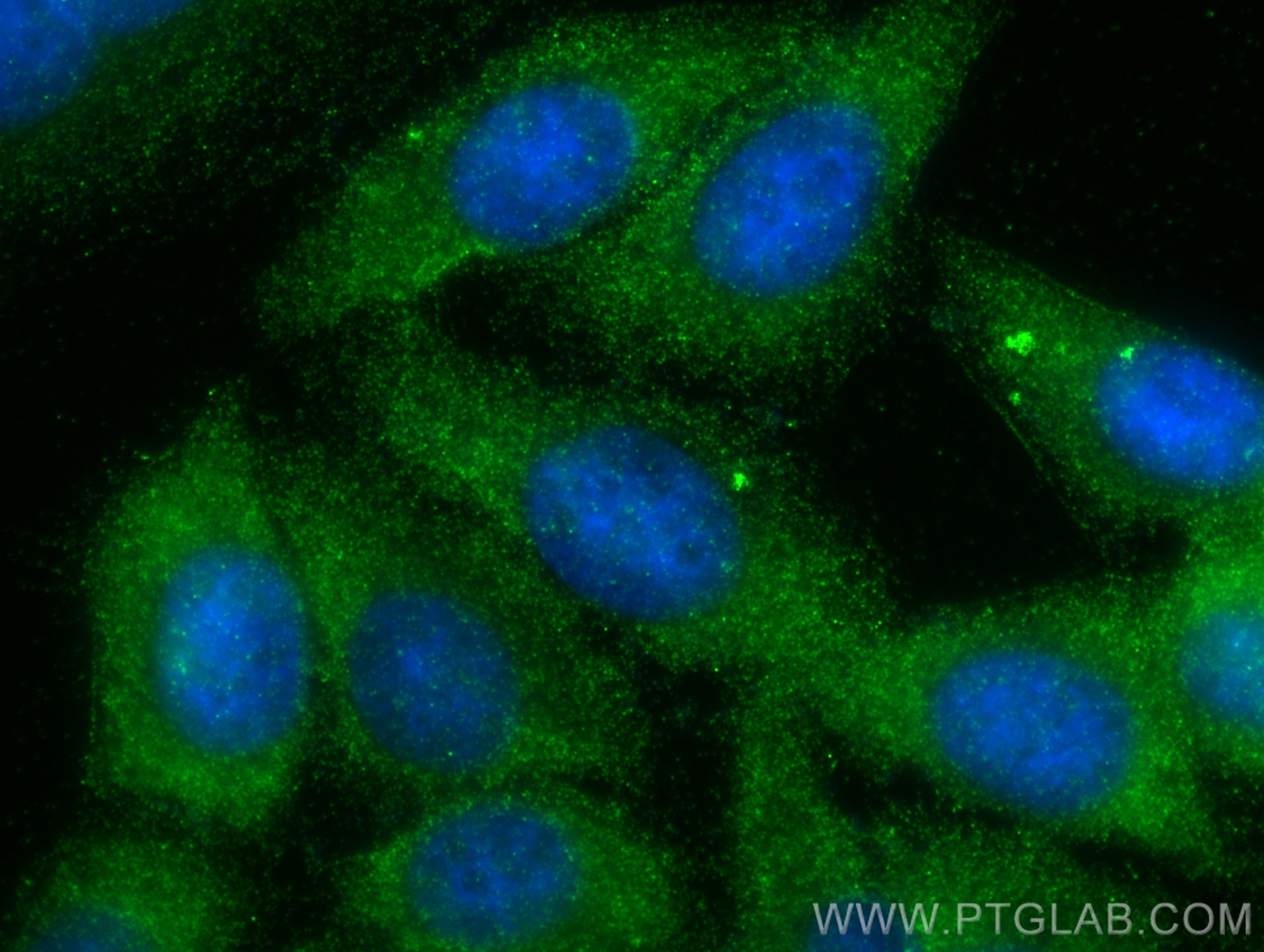
| Positive IF/ICC detected in | HepG2 cells |
Recommended dilution
| Application | Dilution |
|---|---|
| Western Blot (WB) | WB : 1:500-1:3000 |
| Immunofluorescence (IF)/ICC | IF/ICC : 1:50-1:500 |
| It is recommended that this reagent should be titrated in each testing system to obtain optimal results. | |
| Sample-dependent, Check data in validation data gallery. | |
Product Information
13451-1-AP targets GPD1 in WB, IHC, IF/ICC, ELISA applications and shows reactivity with human, mouse, rat samples.
| Tested Reactivity | human, mouse, rat |
| Cited Reactivity | human, mouse, rat |
| Host / Isotype | Rabbit / IgG |
| Class | Polyclonal |
| Type | Antibody |
| Immunogen |
CatNo: Ag4278 Product name: Recombinant human GPD1 protein Source: e coli.-derived, PGEX-4T Tag: GST Domain: 1-349 aa of BC032234 Sequence: MASKKVCIVGSGNWGSAIAKIVGGNAAQLAQFDPRVTMWVFEEDIGGKKLTEIINTQHENVKYLPGHKLPPNVVAVPDVVQAAEDADILIFVVPHQFIGKICDQLKGHLKANATGISLIKGVDEGPNGLKLISEVIGERLGIPMSVLMGANIASEVADEKFCETTIGCKDPAQGQLLKELMQTPNFRITVVQEVDTVEICGALKNVVAVGAGFCDGLGFGDNTKAAVIRLGLMEMIAFAKLFCSGPVSSATFLESCGVADLITTCYGGRNRKVAEAFARTGKSIEQLEKELLNGQKLQGPETARELYSILQHKGLVDKFPLFMAVYKVCYEGQPVGEFIHCLQNHPEHM Predict reactive species |
| Full Name | glycerol-3-phosphate dehydrogenase 1 (soluble) |
| Calculated Molecular Weight | 349 aa, 38 kDa |
| Observed Molecular Weight | 32-42 kDa |
| GenBank Accession Number | BC032234 |
| Gene Symbol | GPD1 |
| Gene ID (NCBI) | 2819 |
| RRID | AB_10646471 |
| Conjugate | Unconjugated |
| Form | Liquid |
| Purification Method | Antigen affinity purification |
| UNIPROT ID | P21695 |
| Storage Buffer | PBS with 0.02% sodium azide and 50% glycerol, pH 7.3. |
| Storage Conditions | Store at -20°C. Stable for one year after shipment. Aliquoting is unnecessary for -20oC storage. 20ul sizes contain 0.1% BSA. |
Background Information
GPD1 (Glycerol-3-phosphate dehydrogenase 1) is an important enzyme belonging to the NAD-dependent glycerol-3-phosphate dehydrogenase family. Its C-terminal structural domain contains multiple helical structures for binding the substrate DHAP, and its N-terminal structural domain contains a β-folded core for binding NADH. GPD1 catalyzes the conversion of dihydroxyacetone phosphate (DHAP) and reduced nicotinamide adenine dinucleotide (NADH) to glycerol-3-phosphate (G3P) and NAD+, and plays a key role in carbohydrate and lipid metabolism. GPD1 also works with mitochondrial glycerol-3-phosphate dehydrogenase to form a glycerophosphate shuttle system that facilitates the transfer of reducing equivalents from the cytoplasm to the mitochondria. Abnormal activity of GPD1 has been associated with a variety of metabolic disorders, such as obesity, hypertriglyceridemia, and GPD1 has been implicated in cancer, potentially acting as a tumor suppressor.
Protocols
| Product Specific Protocols | |
|---|---|
| IF protocol for GPD1 antibody 13451-1-AP | Download protocol |
| WB protocol for GPD1 antibody 13451-1-AP | Download protocol |
| Standard Protocols | |
|---|---|
| Click here to view our Standard Protocols |
Publications
What published studies show
GPD1 Polyclonal Antibody (Catalog #13451-1-AP)
This antibody has 17 total citations across journals including Signal Transduction & Targeted Therapy, J Hematology & Oncology, Cell Metabolism, PNAS, Phytomedicine, J Translational Medicine, Science Signaling, Scientific Reports, Cell Signal, Int J Biological Macromolecules, J Ethnopharmacology, Chemico-Biological Interactions, J Inflammation Research, and Molecular Biology Reports.
Applied mainly in WB, with some IHC and IF. Research fields span cancer biology (hepatocellular carcinoma, bladder cancer), liver regeneration and metabolism, lipid/energy metabolism, ferroptosis and mitochondrial biology, heart disease, aging-related health effects, and neurotoxicity studies.
| Species | Application | Title |
|---|---|---|
Signal Transduct Target Ther VCP downstream metabolite glycerol-3-phosphate (G3P) inhibits CD8+T cells function in the HCC microenvironment | ||
J Hematol Oncol Allosteric activation of the metabolic enzyme GPD1 inhibits bladder cancer growth via the lysoPC-PAFR-TRPV2 axis. | ||
Cell Metab Ergothioneine improves healthspan of aged animals by enhancing cGPDH activity through CSE-dependent persulfidation | ||
Phytomedicine Astragaloside IV alleviates radiation-induced heart disease by regulating energy metabolism | ||
Phytomedicine Astragaloside IV and cycloastragenol promote liver regeneration through regulation of hepatic oxidative homeostasis and glucose/lipid metabolism | ||
Phytomedicine Radix Astragali decoction improves liver regeneration by upregulating hepatic expression of aquaporin-9 |

