



Tested Applications
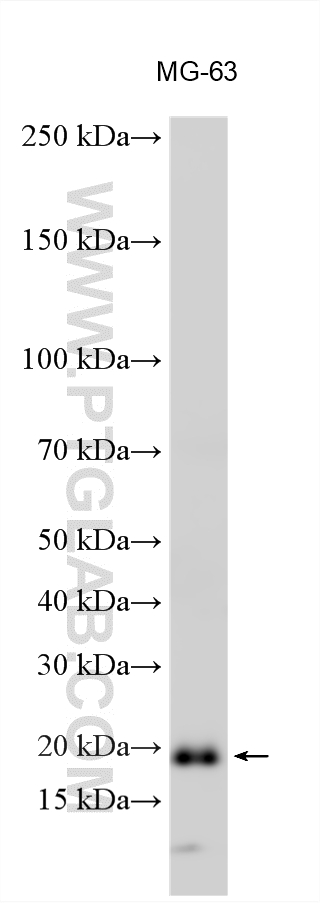
| Positive WB detected in | MG-63 cells, human liver tissue, human brain tissue, Transfected HEK-293 cells, human placenta tissue |
| Positive IHC detected in | human liver cancer tissue, human brain tissue Note: suggested antigen retrieval with TE buffer pH 9.0; (*) Alternatively, antigen retrieval may be performed with citrate buffer pH 6.0 |
Recommended dilution
| Application | Dilution |
|---|---|
| Western Blot (WB) | WB : 1:500-1:3000 |
| Immunohistochemistry (IHC) | IHC : 1:50-1:500 |
| It is recommended that this reagent should be titrated in each testing system to obtain optimal results. | |
| Sample-dependent, Check data in validation data gallery. | |
Product Information
13501-1-AP targets GPX7 in WB, IHC, IF, ELISA applications and shows reactivity with human samples.
| Tested Reactivity | human |
| Cited Reactivity | human, mouse, rat, chicken |
| Host / Isotype | Rabbit / IgG |
| Class | Polyclonal |
| Type | Antibody |
| Immunogen |
CatNo: Ag4328 Product name: Recombinant human GPX7 protein Source: e coli.-derived, PGEX-4T Tag: GST Domain: 58-187 aa of BC032788 Sequence: GFTDQHYRALQQLQRDLGPHHFNVLAFPCNQFGQQEPDSNKEIESFARRTYSVSFPMFSKIAVTGTGAHPAFKYLAQTSGKEPTWNFWKYLVAPDGKVVGAWDPTVSVEEVRPQITALVRKLILLKREDL Predict reactive species |
| Full Name | glutathione peroxidase 7 |
| Calculated Molecular Weight | 187 aa, 21 kDa |
| Observed Molecular Weight | 18-21 kDa |
| GenBank Accession Number | BC032788 |
| Gene Symbol | GPX7 |
| Gene ID (NCBI) | 2882 |
| RRID | AB_2112560 |
| Conjugate | Unconjugated |
| Form | Liquid |
| Purification Method | Antigen affinity purification |
| UNIPROT ID | Q96SL4 |
| Storage Buffer | PBS with 0.02% sodium azide and 50% glycerol, pH 7.3. |
| Storage Conditions | Store at -20°C. Stable for one year after shipment. Aliquoting is unnecessary for -20oC storage. 20ul sizes contain 0.1% BSA. |
Background Information
GPX7(Glutathione peroxidase 7) is also named as CL683,GSHPx-7 and belongs to the glutathione peroxidase family.It shares approximately 45% amino acid sequence with other GPX family members.Because GPX7 expression protected cells from acidic bile acidinduced DNA damage, it may protect oesophageal epithelial cells from acidic bile acid-induced apoptosis(PMID:22157330). This antibody can ve detected as 18-21kDa due to signal peptide splicing.
Protocols
| Product Specific Protocols | |
|---|---|
| IHC protocol for GPX7 antibody 13501-1-AP | Download protocol |
| WB protocol for GPX7 antibody 13501-1-AP | Download protocol |
| Standard Protocols | |
|---|---|
| Click here to view our Standard Protocols |
Publications
What published studies show
The GPX7 Polyclonal antibody (Cat# 13501-1-AP) has 19 citations. They appear in journals including Gut, Oncogene, Free Radical Biology and Medicine, EMBO Molecular Medicine, Antioxidants, Journal of Nutritional Biochemistry, Molecular Medicine Reports, Journal of Cellular and Molecular Medicine, Poultry Science, BMB Reports, Carcinogenesis, Frontiers in Medicine, Journal of Bone Oncology, Journal of Cancer, Frontiers in Oncology, International Journal of Immunopathology and Pharmacology, Journal of Molecular Histology, and Oncotarget. Research fields span oxidative stress, ferroptosis, cancer (oesophageal, gastric, pancreatic, osteosarcoma, glioma), vascular aging, NASH, and bone development.
| Species | Application | Title |
|---|---|---|
Gut Glutathione peroxidase 7 has potential tumour suppressor functions that are silenced by location-specific methylation in oesophageal adenocarcinoma. | ||
Oncogene Abrogation of glutathione peroxidase-1 drives EMT and chemoresistance in pancreatic cancer by activating ROS-mediated Akt/GSK3β/Snail signaling. | ||
Antioxidants (Basel) Comparative Study of an Antioxidant Compound and Ethoxyquin on Feed Oxidative Stability and on Performance, Antioxidant Capacity, and Intestinal Health in Starter Broiler Chickens | ||
Free Radic Biol Med GPx8 peroxidase prevents leakage of H2O2 from the endoplasmic reticulum. | ||
EMBO Mol Med Deficiency of NPGPx, an oxidative stress sensor, leads to obesity in mice and human. |


