
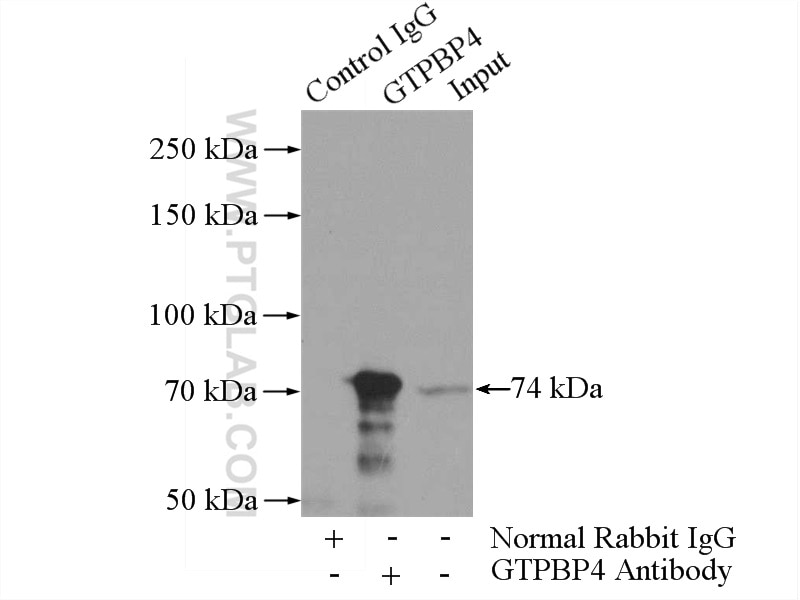
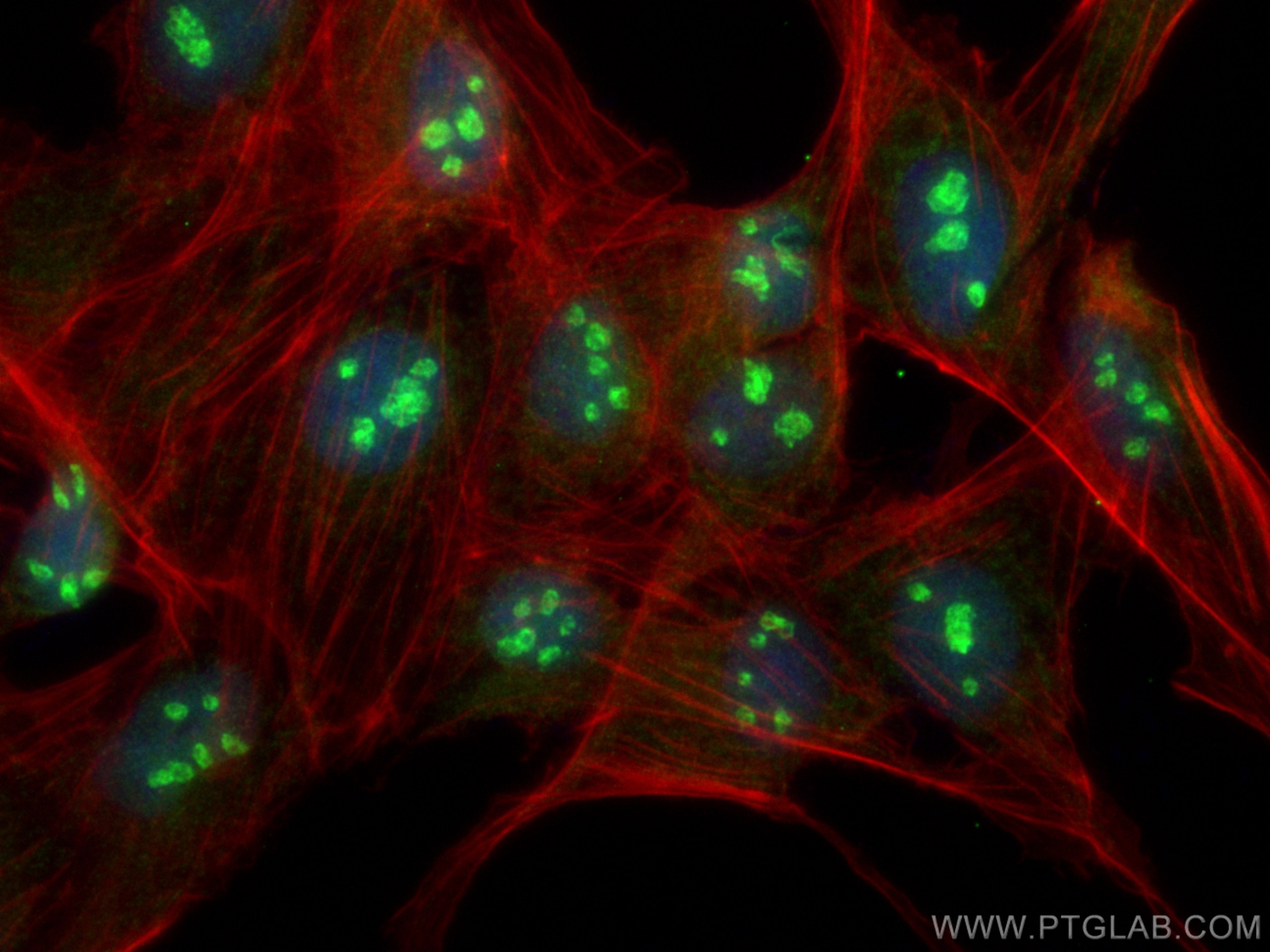

Tested Applications
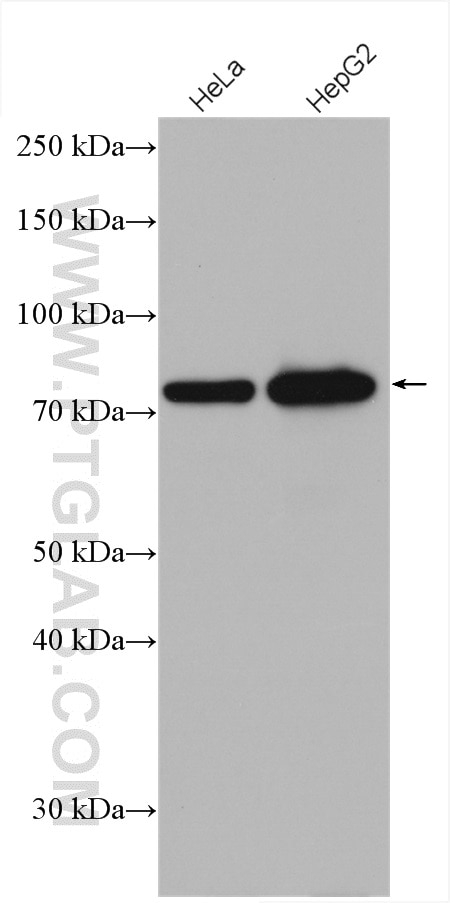
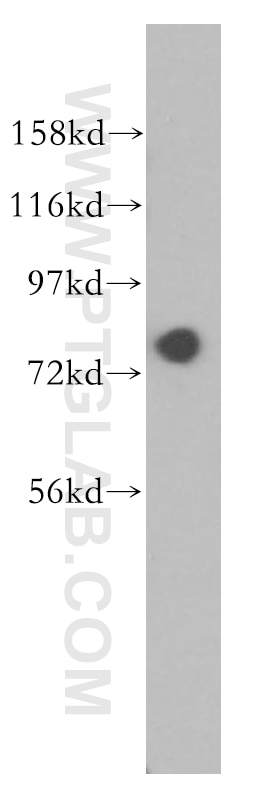
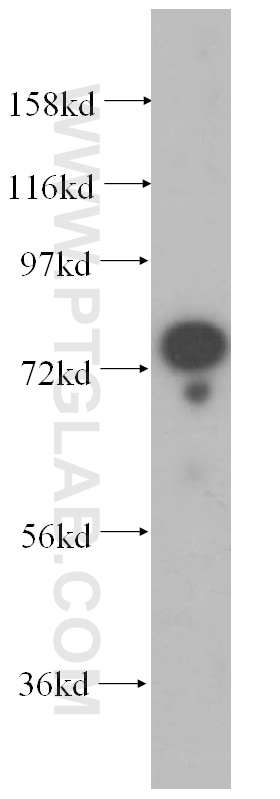
| Positive WB detected in | HeLa cells, mouse testis tissue, human kidney tissue, HepG2 cells |
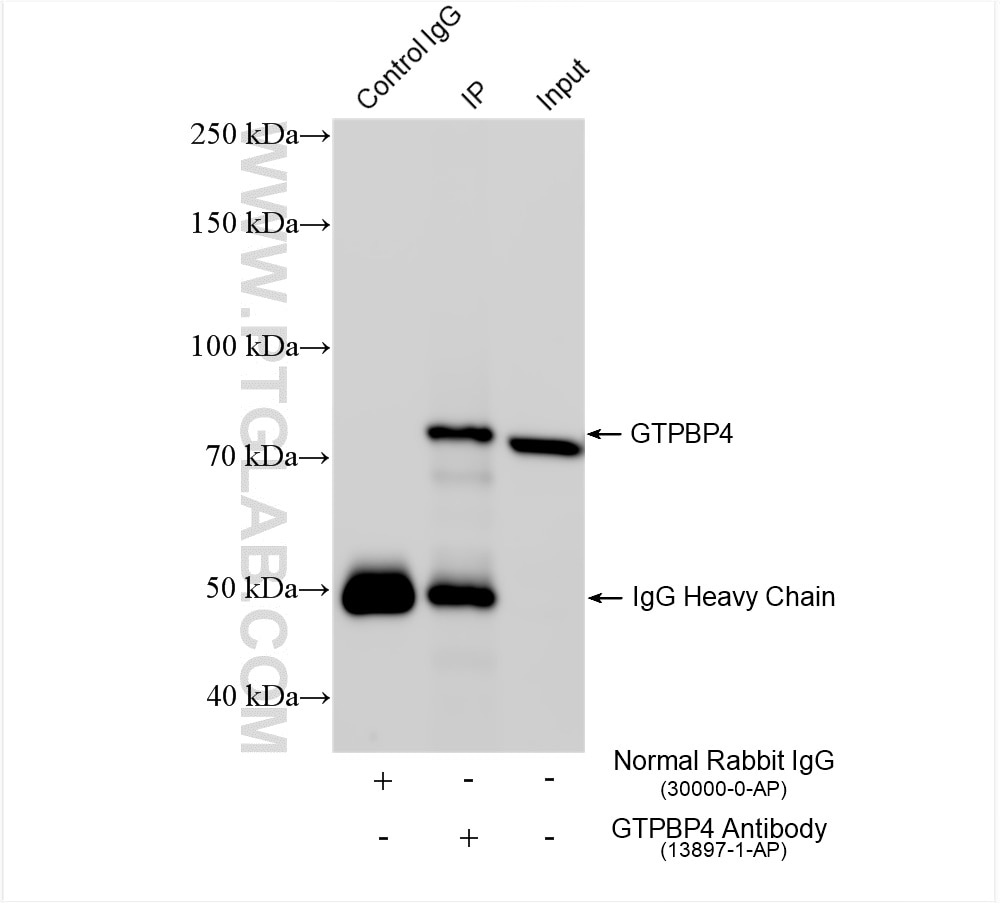
| Positive IP detected in | HeLa cells, mouse testis tissue |
| Positive IF/ICC detected in | MDCK cells |
Recommended dilution
| Application | Dilution |
|---|---|
| Western Blot (WB) | WB : 1:2000-1:8000 |
| Immunoprecipitation (IP) | IP : 0.5-4.0 ug for 1.0-3.0 mg of total protein lysate |
| Immunofluorescence (IF)/ICC | IF/ICC : 1:200-1:800 |
| It is recommended that this reagent should be titrated in each testing system to obtain optimal results. | |
| Sample-dependent, Check data in validation data gallery. | |
Product Information
13897-1-AP targets GTPBP4 in WB, IHC, IF/ICC, IP, ELISA applications and shows reactivity with human, mouse samples.
| Tested Reactivity | human, mouse |
| Cited Reactivity | human, mouse, goat, drosophila |
| Host / Isotype | Rabbit / IgG |
| Class | Polyclonal |
| Type | Antibody |
| Immunogen |
CatNo: Ag4859 Product name: Recombinant human GTPBP4 protein Source: e coli.-derived, PGEX-4T Tag: GST Domain: 332-634 aa of BC038975 Sequence: KTEACDRLLAHRVETKMKGNKVNEVLNRLHLAIPTRRDDKERPPFIPEGVVARRKRMETEESRKKRERDLELEMGDDYILDLQKYWDLMNLSEKHDKIPEIWEGHNIADYIDPAIMKKLEELEKEEELRTAAGEYDSVSESEDEEMLEIRQLAKQIREKKKLKILESKEKNTQGPRMPRTAKKVQRTVLEKEMRSLGVDMDDKDDAHYAVQARRSRSITRKRKREDSAPPSSVARSGSCSRTPRDVSGLRDVKMVKKAKTMMKNAQKKMNRLGKKGEADRHVFDMKPKHLLSGKRKAGKKDRR Predict reactive species |
| Full Name | GTP binding protein 4 |
| Calculated Molecular Weight | 634 aa, 74 kDa |
| Observed Molecular Weight | 74 kDa |
| GenBank Accession Number | BC038975 |
| Gene Symbol | GTPBP4 |
| Gene ID (NCBI) | 23560 |
| RRID | AB_2279486 |
| Conjugate | Unconjugated |
| Form | Liquid |
| Purification Method | Antigen affinity purification |
| UNIPROT ID | Q9BZE4 |
| Storage Buffer | PBS with 0.02% sodium azide and 50% glycerol, pH 7.3. |
| Storage Conditions | Store at -20°C. Stable for one year after shipment. Aliquoting is unnecessary for -20oC storage. 20ul sizes contain 0.1% BSA. |
Background Information
GTP-binding proteins are GTPases and function as molecular switches that can flip between two states: active, when GTP is bound, and inactive, when GDP is bound. 'Active' in this context usually means that the molecule acts as a signal to trigger other events in the cell. When an extracellular ligand binds to a G-protein-linked receptor, the receptor changes its conformation and switches on the trimeric G proteins that associate with it by causing them to eject their GDP and replace it with GTP. The switch is turned off when the G protein hydrolyzes its own bound GTP, converting it back to GDP. But before that occurs, the active protein has an opportunity to diffuse away from the receptor and deliver its message for a prolonged period to its downstream target.
Protocols
| Product Specific Protocols | |
|---|---|
| IF protocol for GTPBP4 antibody 13897-1-AP | Download protocol |
| IP protocol for GTPBP4 antibody 13897-1-AP | Download protocol |
| WB protocol for GTPBP4 antibody 13897-1-AP | Download protocol |
| Standard Protocols | |
|---|---|
| Click here to view our Standard Protocols |
Publications
What published studies show
The GTPBP4 Polyclonal antibody (Cat# 13897-1-AP) has 8 citations published in journals including Nucleic Acids Research, PNAS, Cell Reports, Cell Proliferation, Genes & Development, Biomedical Research International, Human Cell, and Biochemical and Biophysical Research Communications. Research fields span RNA biology and interferon response, p53 protein networks, colorectal and lung cancer, oocyte maturation, ribosome biogenesis in Shwachman-Diamond syndrome, myocardial fibrosis, and tumor metastasis. Applications include WB, IF, and IHC across human, mouse, goat, and Drosophila species.
| Species | Application | Title |
|---|---|---|
Nucleic Acids Res Distinct interactomes of ADAR1 nuclear and cytoplasmic protein isoforms and their responses to interferon induction | ||
Proc Natl Acad Sci U S A A genome-scale protein interaction profile of Drosophila p53 uncovers additional nodes of the human p53 network.
| ||
Cell Rep UTP18-mediated p21 mRNA instability drives adenoma-carcinoma progression in colorectal cancer | ||
Cell Prolif Decoding the Molecular Landscape of Prepubertal Oocyte Maturation: GTPBP4 as a Key Driver of In Vitro Developmental Competence | ||
Genes Dev Uncoupling of GTP hydrolysis from eIF6 release on the ribosome causes Shwachman-Diamond syndrome. | ||
Biomed Res Int Determining the Clinical Value and Critical Pathway of GTPBP4 in Lung Adenocarcinoma Using a Bioinformatics Strategy: A Study Based on Datasets from The Cancer Genome Atlas.
|
Reviews
What customers say
Able is busy answering your previous question. Please try again later.
The reviews below have been submitted by verified Proteintech customers who received an incentive for providing their feedback.
kaosheng (Verified Customer) (11-11-2019) | This antibody detects a very clear and specific band in polysome profiling fractions of human TF1 cells.
|

