
Tested Applications
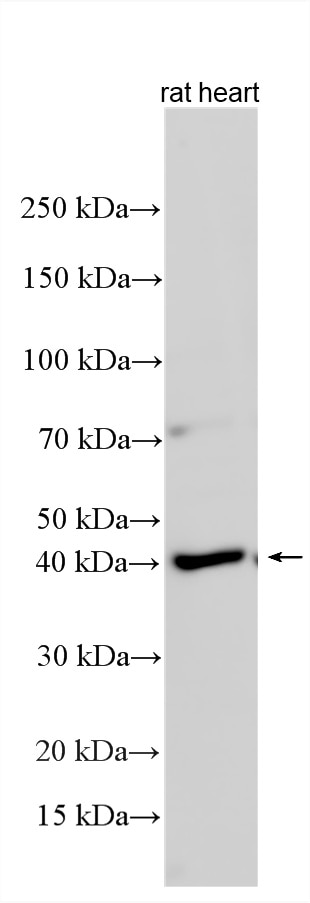
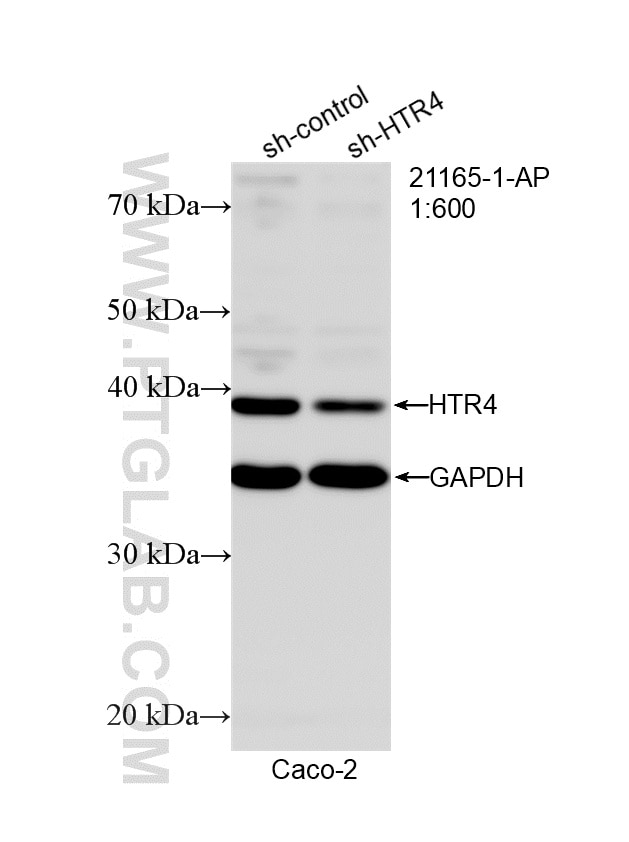
| Positive WB detected in | rat heart tissue, Caco-2 cells |
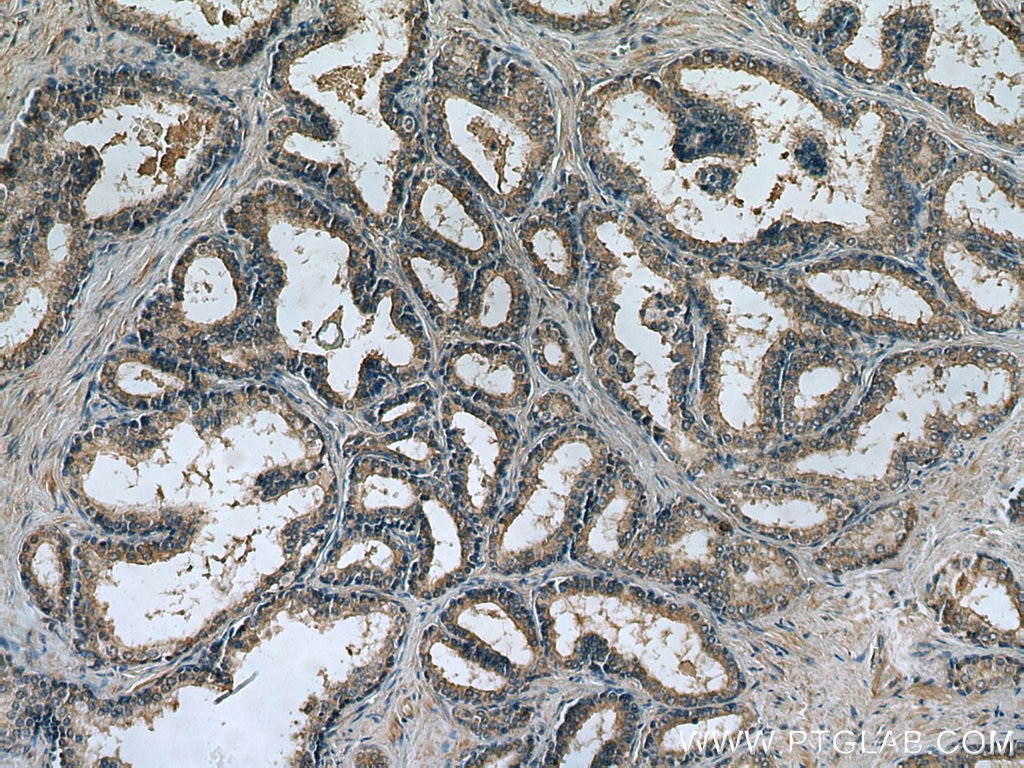
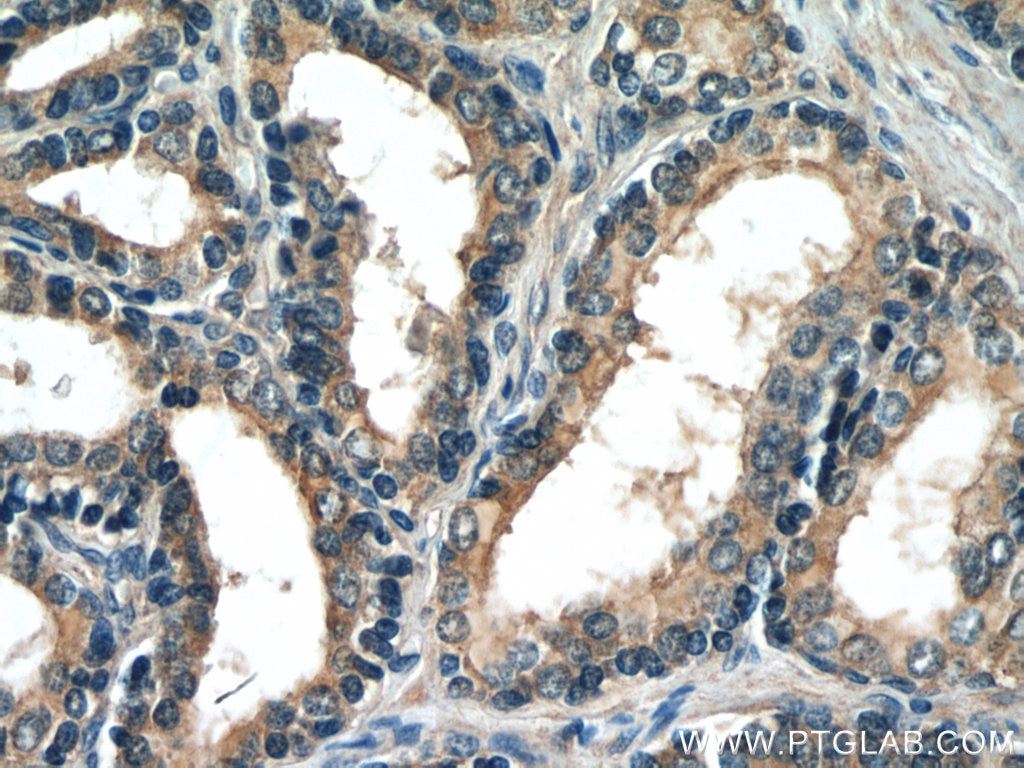
| Positive IHC detected in | human prostate hyperplasia tissue Note: suggested antigen retrieval with TE buffer pH 9.0; (*) Alternatively, antigen retrieval may be performed with citrate buffer pH 6.0 |
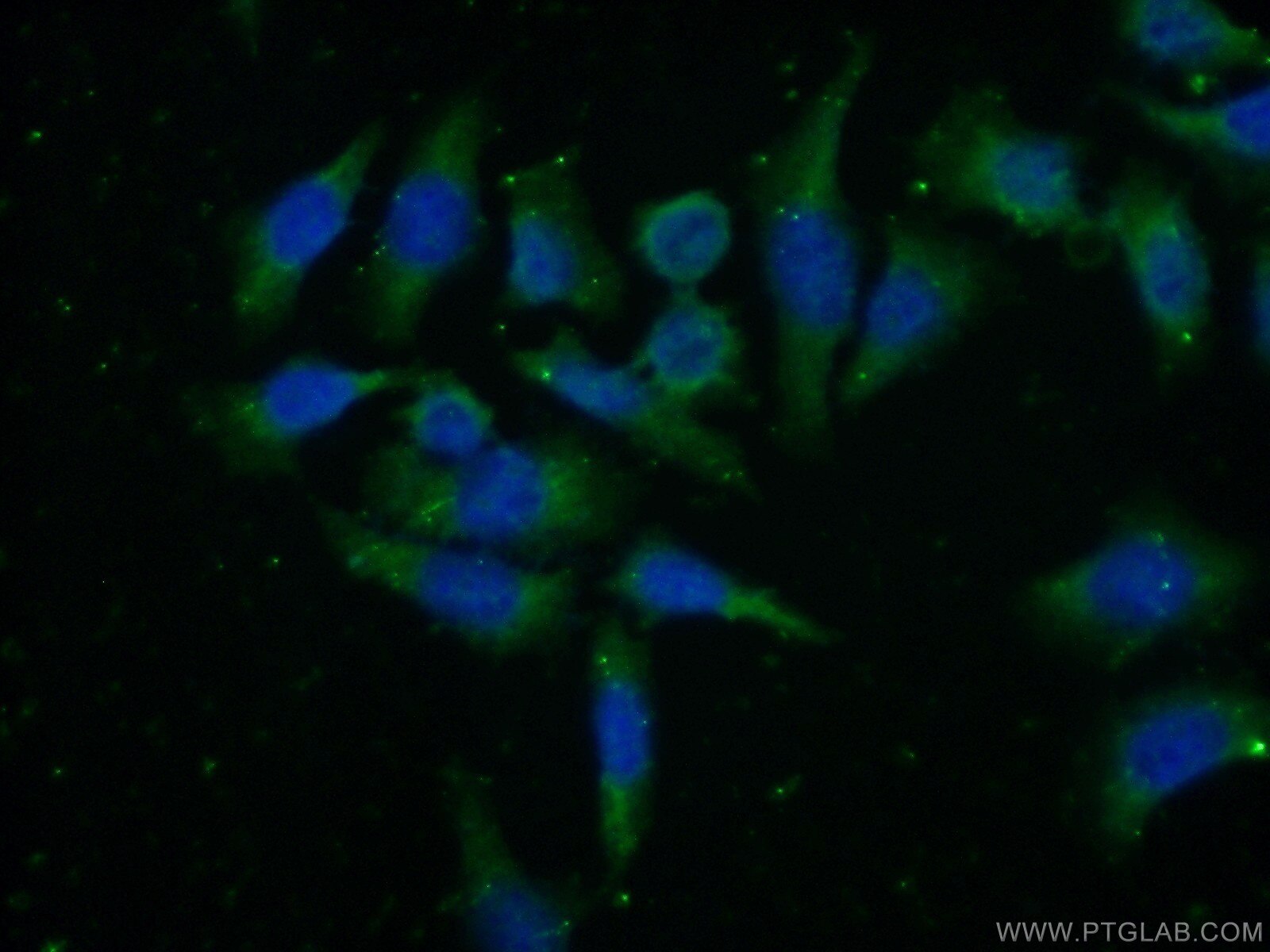
| Positive IF/ICC detected in | HeLa cells |
Recommended dilution
| Application | Dilution |
|---|---|
| Western Blot (WB) | WB : 1:1000-1:4000 |
| Immunohistochemistry (IHC) | IHC : 1:50-1:500 |
| Immunofluorescence (IF)/ICC | IF/ICC : 1:50-1:500 |
| It is recommended that this reagent should be titrated in each testing system to obtain optimal results. | |
| Sample-dependent, Check data in validation data gallery. | |
Product Information
21165-1-AP targets HTR4 in WB, IHC, IF/ICC, ELISA applications and shows reactivity with human, rat samples.
| Tested Reactivity | human, rat |
| Cited Reactivity | mouse |
| Host / Isotype | Rabbit / IgG |
| Class | Polyclonal |
| Type | Antibody |
| Immunogen |
CatNo: Ag15226 Product name: Recombinant human HTR4 protein Source: e coli.-derived, PGEX-4T Tag: GST Domain: 301-388 aa of BC074755 Sequence: GYINSGLNPFLYAFLNKSFRRAFLIILCCDDERYRRPSILGQTVPCSTTTINGSTHVLRDAVECGGQWESQCHPPATSPLVAAQPSDT Predict reactive species |
| Full Name | 5-hydroxytryptamine (serotonin) receptor 4 |
| Calculated Molecular Weight | 388 aa, 44 kDa |
| Observed Molecular Weight | 38 kDa |
| GenBank Accession Number | BC074755 |
| Gene Symbol | HTR4 |
| Gene ID (NCBI) | 3360 |
| RRID | AB_11182374 |
| Conjugate | Unconjugated |
| Form | Liquid |
| Purification Method | Antigen affinity purification |
| UNIPROT ID | Q13639 |
| Storage Buffer | PBS with 0.02% sodium azide and 50% glycerol, pH 7.3. |
| Storage Conditions | Store at -20°C. Stable for one year after shipment. Aliquoting is unnecessary for -20oC storage. 20ul sizes contain 0.1% BSA. |
Background Information
HTR4 (5-hydroxytryptamine receptor 4, 5-HT4) is a G protein-coupled receptor (GPCR) belonging to the serotonin receptor family. Activated by the neurotransmitter serotonin (5-hydroxytryptamine, 5-HT), HTR4 primarily couples to Gs proteins, leading to stimulation of adenylyl cyclase, increased intracellular cAMP levels, and activation of downstream signaling pathways. HTR4 is widely expressed in the gastrointestinal tract, central nervous system, and cardiovascular system, where it regulates gastrointestinal motility, neurotransmission, learning and memory, and cardiac function. In the nervous system, HTR4 has been implicated in cognitive processes and neuroprotection, while in the gut it promotes intestinal peristalsis and secretion.
Protocols
| Product Specific Protocols | |
|---|---|
| IF protocol for HTR4 antibody 21165-1-AP | Download protocol |
| IHC protocol for HTR4 antibody 21165-1-AP | Download protocol |
| WB protocol for HTR4 antibody 21165-1-AP | Download protocol |
| Standard Protocols | |
|---|---|
| Click here to view our Standard Protocols |
Publications
What published studies show
| Species | Application | Title |
|---|---|---|
Phytomedicine Study on the effects of the atractylodes macrocephala koidz-raphanus sativus l herb pair in alleviating senile constipation via the gut microbiota-SCFAs-5-HT axis | ||
Biomed Pharmacother Enteromorpha and polysaccharides from enteromorpha ameliorate loperamide-induced constipation in mice. | ||
Nutrients Living, Heat-Killed Limosilactobacillus mucosae and Its Cell-Free Supernatant Differentially Regulate Colonic Serotonin Receptors and Immune Response in Experimental Colitis | ||
J Dairy Sci Synbiotic yogurt containing konjac mannan oligosaccharides and Bifidobacterium animalis ssp. lactis BB12 alleviates constipation in mice by modulating the stem cell factor (SCF)/c-Kit pathway and gut microbiota. | ||
J Nutr Limosilactobacillus mucosae and Lactobacillus amylovorus protect against experimental colitis via upregulation of colonic HTR4 and TGF-beta 2 |

