
Tested Applications
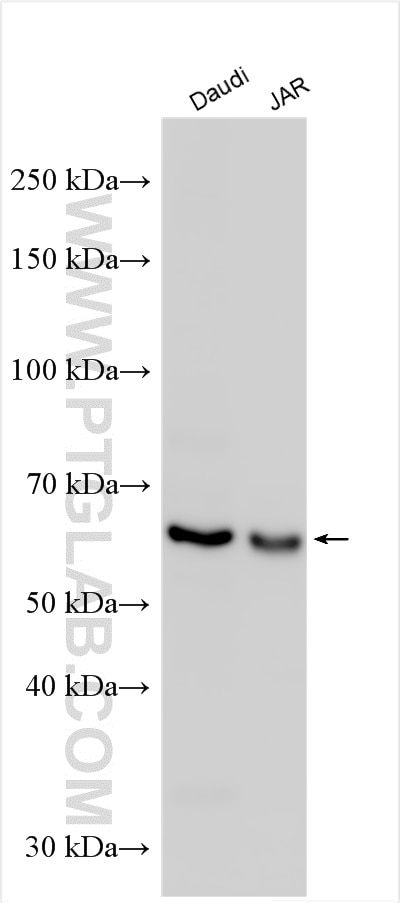
| Positive WB detected in | Daudi cells, JAR cells |
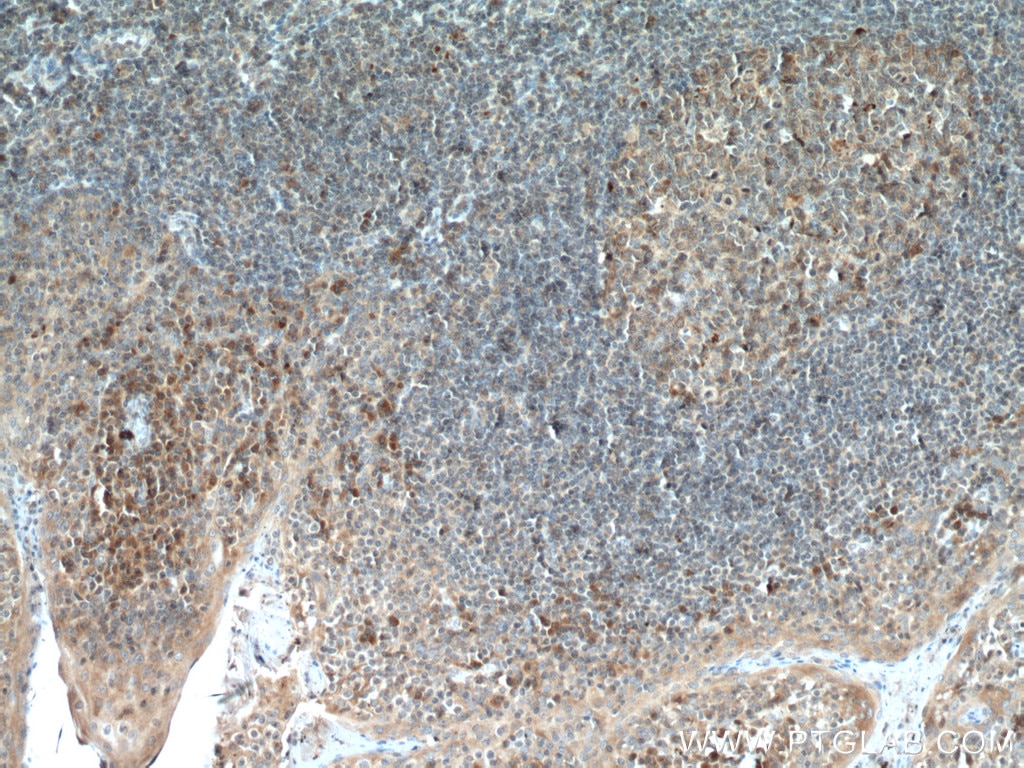
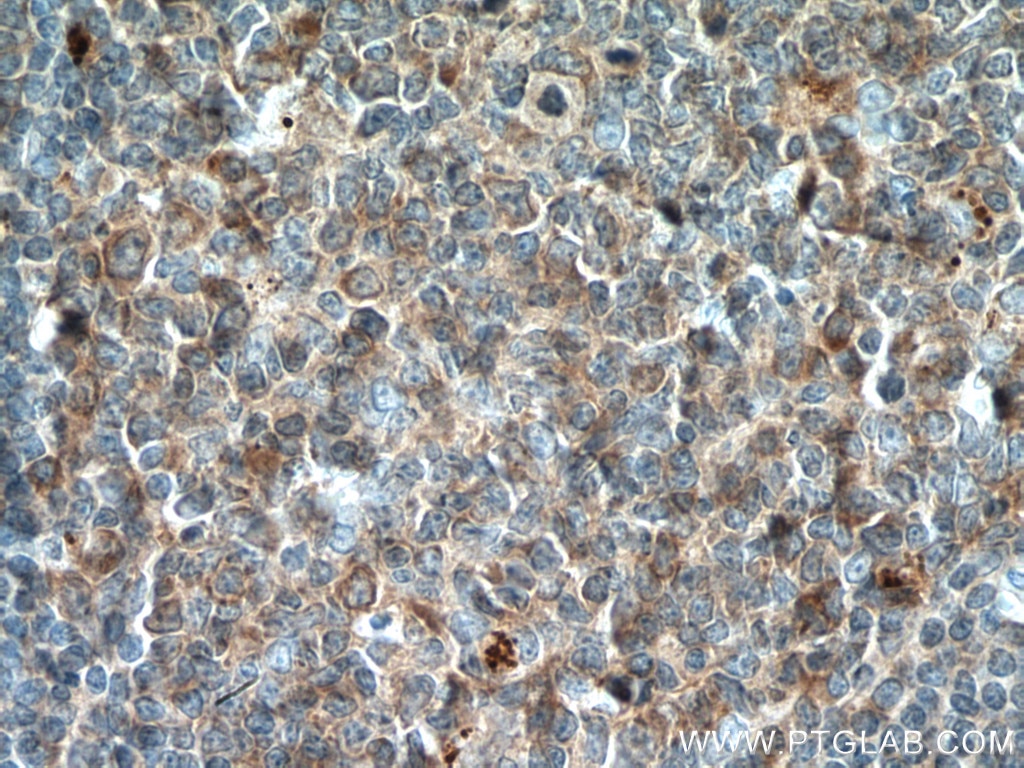
| Positive IHC detected in | human tonsillitis tissue Note: suggested antigen retrieval with TE buffer pH 9.0; (*) Alternatively, antigen retrieval may be performed with citrate buffer pH 6.0 |
Recommended dilution
| Application | Dilution |
|---|---|
| Western Blot (WB) | WB : 1:500-1:3000 |
| Immunohistochemistry (IHC) | IHC : 1:50-1:500 |
| It is recommended that this reagent should be titrated in each testing system to obtain optimal results. | |
| Sample-dependent, Check data in validation data gallery. | |
Product Information
14922-1-AP targets ICOSLG/B7-H2/CD275 in WB, IHC, ELISA applications and shows reactivity with human samples.
| Tested Reactivity | human |
| Cited Reactivity | human, mouse |
| Host / Isotype | Rabbit / IgG |
| Class | Polyclonal |
| Type | Antibody |
| Immunogen |
CatNo: Ag6392 Product name: Recombinant human ICOSLG protein Source: e coli.-derived, PGEX-4T Tag: GST Domain: 1-302 aa of BC064637 Sequence: MRLGSPGLLFLLFSSLRADTQEKEVRAMVGSDVELSCACPEGSRFDLNDVYVYWQTSESKTVVTYHIPQNSSLENVDSRYRNRALMSPAGMLRGDFSLRLFNVTPQDEQKFHCLVLSQSLGFQEVLSVEVTLHVAANFSVPVVSAPHSPSQDELTFTCTSINGYPRPNVYWINKTDNSLLDQALQNDTVFLNMRGLYDVVSVLRIARTPSVNIGCCIENVLLQQNLTVGSQTGNDIGERDKITENPVSTGEKNAATWSILAVLCLLVVVAVAIGWVCRDRCLQHSYAGAWAVSPETELTGHV Predict reactive species |
| Full Name | inducible T-cell co-stimulator ligand |
| Calculated Molecular Weight | 33 kDa, 34 kDa |
| Observed Molecular Weight | 60-70 kDa |
| GenBank Accession Number | BC064637 |
| Gene Symbol | ICOSLG |
| Gene ID (NCBI) | 23308 |
| RRID | AB_2122732 |
| Conjugate | Unconjugated |
| Form | Liquid |
| Purification Method | Antigen affinity purification |
| UNIPROT ID | O75144 |
| Storage Buffer | PBS with 0.02% sodium azide and 50% glycerol, pH 7.3. |
| Storage Conditions | Store at -20°C. Stable for one year after shipment. Aliquoting is unnecessary for -20oC storage. 20ul sizes contain 0.1% BSA. |
Background Information
ICOSLG, also known as B7H2 or GL50, is a type I transmembrane glycoprotein belonging to the B7 ligand family. ICOSLG is extensively expressed on professional antigen-presenting cells including B cells, macrophages, and dendritic cells, as well as non-lymphoid cells including mesenchymal stem cells, endothelial cells, fibroblasts, and tumor cells (PMID: 33756276; 35800767). It is a specific ligand for the T-cell-specific cell surface receptor ICOS and acts as a co-stimulatory molecule (PMID: 11023515; 11007762). The interaction of ICOSLG and ICOS plays important roles in the activation, proliferation, differentiation, and cytokine production of T cells as well as in the antibody secretion from B cells during secondary immune responses (PMID: 21851236).
Protocols
| Product Specific Protocols | |
|---|---|
| IHC protocol for ICOSLG/B7-H2/CD275 antibody 14922-1-AP | Download protocol |
| WB protocol for ICOSLG/B7-H2/CD275 antibody 14922-1-AP | Download protocol |
| Standard Protocols | |
|---|---|
| Click here to view our Standard Protocols |
Publications
What published studies show
| Species | Application | Title |
|---|---|---|
Cell Rep The hexosamine biosynthetic pathway drives tumor immune evasion via translational control of PD-L1 at the elongation level | ||
Cancers (Basel) Identification of Prognostic Markers of Gynecologic Cancers Utilizing Patient-Derived Xenograft Mouse Models. | ||
Cell Mol Gastroenterol Hepatol Sex Differences in Genomic Features of Hepatitis B-Associated Hepatocellular Carcinoma With Distinct Antitumor Immunity | ||
J Transl Med MX1(+) effector T cells hyperactivation at the maternal-fetal interface in unexplained recurrent pregnancy loss. | ||
Proc Natl Acad Sci U S A MiR-155-driven loss of ICOSL and SOCS1 in EBV+ gastric cancers renders abundant cytotoxic T cells ineffective, enabling immune evasion. |

