
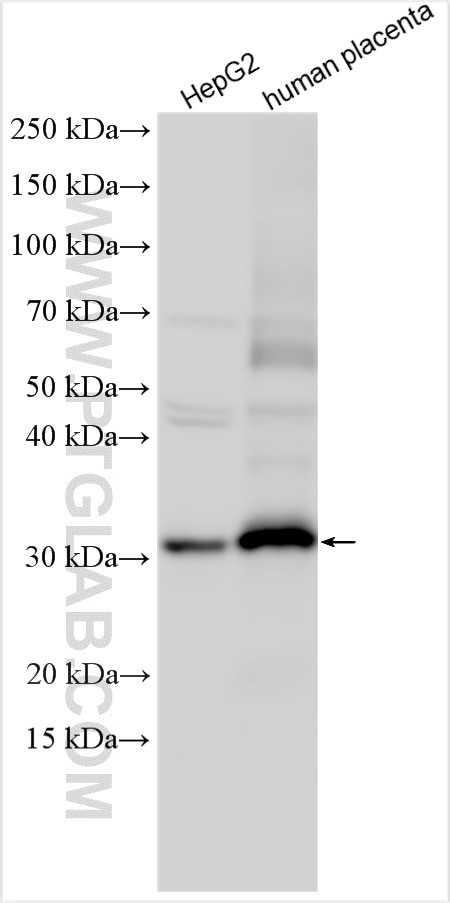
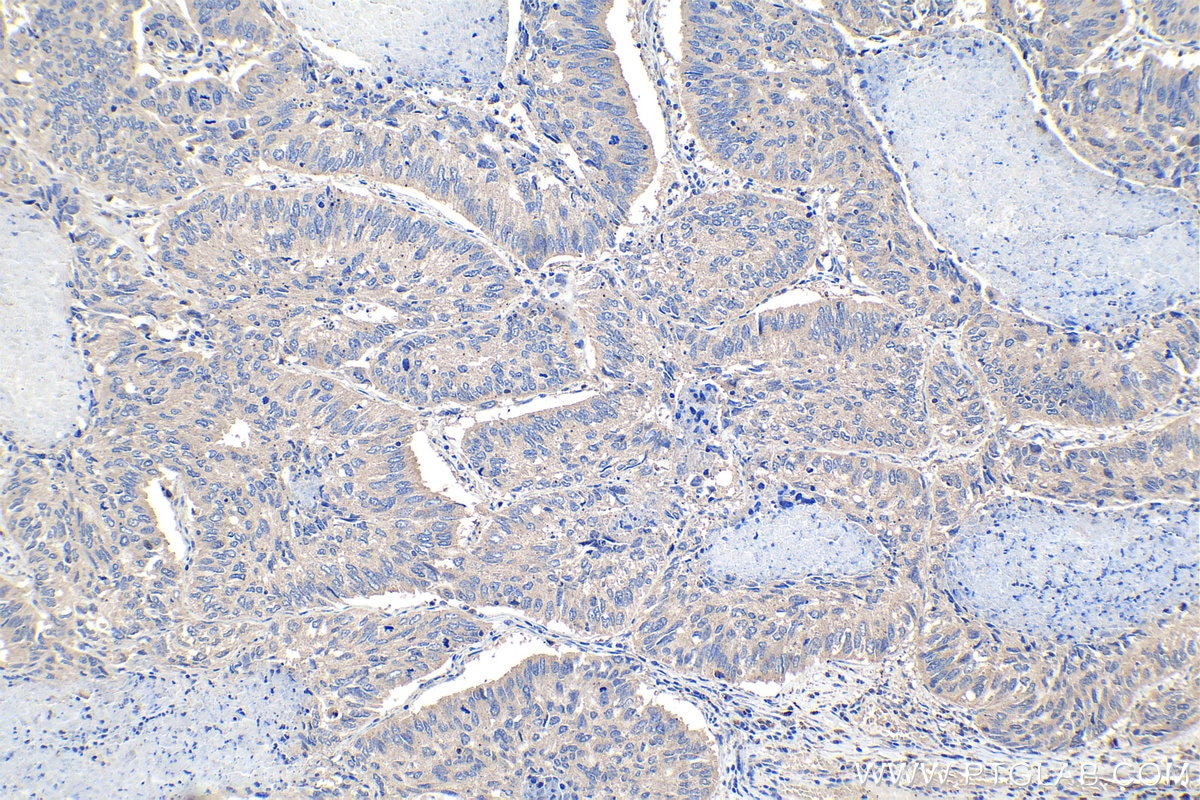
Tested Applications
| Positive WB detected in | HepG2 cells, human placenta |
| Positive IHC detected in | human lung cancer tissue Note: suggested antigen retrieval with TE buffer pH 9.0; (*) Alternatively, antigen retrieval may be performed with citrate buffer pH 6.0 |
Recommended dilution
| Application | Dilution |
|---|---|
| Western Blot (WB) | WB : 1:5000-1:50000 |
| Immunohistochemistry (IHC) | IHC : 1:500-1:2000 |
| It is recommended that this reagent should be titrated in each testing system to obtain optimal results. | |
| Sample-dependent, Check data in validation data gallery. | |
Product Information
13981-1-AP targets IGFBP1 in WB, IHC, IF, ELISA applications and shows reactivity with human samples.
| Tested Reactivity | human |
| Cited Reactivity | human, mouse |
| Host / Isotype | Rabbit / IgG |
| Class | Polyclonal |
| Type | Antibody |
| Immunogen |
CatNo: Ag5026 Product name: Recombinant human IGFBP1 protein Source: e coli.-derived, PGEX-4T Tag: GST Domain: 81-259 aa of BC057806 Sequence: GLSCRALPGEQQPLHALTRGQGACVQESDASAPHAAEAGSPESPESTEITEEELLDNFHLMAPSEEDHSIPWDAISTYDGSKALHVTNIKKWKEPCRIELYRVVESLAKAQETSGEEISKFYLPNCNKNGFYHSRQCETSMDGEAGLCWCVYPWNGKRIPGSPEIRGDPNCQIYFNVQN Predict reactive species |
| Full Name | IGF binding protein 1 |
| Calculated Molecular Weight | 28 kDa |
| Observed Molecular Weight | 28-35 kDa |
| GenBank Accession Number | BC057806 |
| Gene Symbol | IGFBP1 |
| Gene ID (NCBI) | 3484 |
| RRID | AB_2233481 |
| Conjugate | Unconjugated |
| Form | Liquid |
| Purification Method | Antigen affinity purification |
| UNIPROT ID | P08833 |
| Storage Buffer | PBS with 0.02% sodium azide and 50% glycerol, pH 7.3. |
| Storage Conditions | Store at -20°C. Stable for one year after shipment. Aliquoting is unnecessary for -20oC storage. 20ul sizes contain 0.1% BSA. |
Background Information
IGF-binding proteins (IGFBPs) family contains members like IGFBP-1, -2, -3, -4,-5 and-6. IGFBPs prolong the half-life of the IGFs and have been shown to either inhibit or stimulate the growth promoting effects of the IGFs on cell culture. They alter the interaction of IGFs with their cell surface receptors. IGF-I physically interacts with IGFBP-1 and that IGFBP-1 also binds to an integrin receptor, but the effect of IGFBP-1 on cell migration may be independent of IGF-I and is probably mediated through the alpha 5 beta 1 integrin. Transgenic mice models demonstrated that IGFBPs played important roles in the pathogenesis of obesity and INS resistance. Studies conducted in humans demonstrated the close relation between IGFBPs and the components of the metabolic syndrome.
Protocols
| Product Specific Protocols | |
|---|---|
| IHC protocol for IGFBP1 antibody 13981-1-AP | Download protocol |
| WB protocol for IGFBP1 antibody 13981-1-AP | Download protocol |
| Standard Protocols | |
|---|---|
| Click here to view our Standard Protocols |
Publications
What published studies show
| Species | Application | Title |
|---|---|---|
Clin Transl Med Melatonin inhibits lipid accumulation to repress prostate cancer progression by mediating the epigenetic modification of CES1. | ||
Lung Cancer Molecular profiling of thymoma with myasthenia gravis: Risk factors of developing myasthenia gravis in thymoma patients. | ||
Phytomedicine Effects of natural 24-epibrassinolide on inducing apoptosis and restricting metabolism in hepatocarcinoma cells | ||
Biol Reprod IGFBP1 Involved in the Decreased Birth Weight Due to Fetal High Estrogen Exposure in Mice. | ||
Reprod Biol Endocrinol Increased expression of prokineticin 2 and its receptor in endometrium of recurrent implantation failure patients decreased the expression of MMP9 important for decidualization. | ||

